US5232243A - Occupant sensing apparatus - Google Patents
Occupant sensing apparatus Download PDFInfo
- Publication number
- US5232243A US5232243A US07/682,908 US68290891A US5232243A US 5232243 A US5232243 A US 5232243A US 68290891 A US68290891 A US 68290891A US 5232243 A US5232243 A US 5232243A
- Authority
- US
- United States
- Prior art keywords
- occupant
- film
- airbag
- sensor
- seat
- Prior art date
- Legal status (The legal status is an assumption and is not a legal conclusion. Google has not performed a legal analysis and makes no representation as to the accuracy of the status listed.)
- Expired - Lifetime
Links
- 230000004044 response Effects 0.000 claims abstract description 13
- 230000008859 change Effects 0.000 claims description 11
- 230000010355 oscillation Effects 0.000 claims description 11
- 230000000694 effects Effects 0.000 claims description 4
- 230000002238 attenuated effect Effects 0.000 claims description 2
- 238000000034 method Methods 0.000 description 56
- 230000008569 process Effects 0.000 description 56
- 239000007789 gas Substances 0.000 description 46
- 230000006870 function Effects 0.000 description 10
- 239000000463 material Substances 0.000 description 7
- 238000012544 monitoring process Methods 0.000 description 6
- 239000011261 inert gas Substances 0.000 description 4
- 239000000758 substrate Substances 0.000 description 4
- 238000007789 sealing Methods 0.000 description 3
- 230000009471 action Effects 0.000 description 2
- 238000001514 detection method Methods 0.000 description 2
- 230000009977 dual effect Effects 0.000 description 2
- 238000012986 modification Methods 0.000 description 2
- 230000004048 modification Effects 0.000 description 2
- 239000000853 adhesive Substances 0.000 description 1
- 230000001070 adhesive effect Effects 0.000 description 1
- 230000000740 bleeding effect Effects 0.000 description 1
- 239000003990 capacitor Substances 0.000 description 1
- 238000002485 combustion reaction Methods 0.000 description 1
- 230000007423 decrease Effects 0.000 description 1
- 230000001419 dependent effect Effects 0.000 description 1
- 238000013461 design Methods 0.000 description 1
- 238000006073 displacement reaction Methods 0.000 description 1
- 230000005669 field effect Effects 0.000 description 1
- 238000010304 firing Methods 0.000 description 1
- 239000003999 initiator Substances 0.000 description 1
- 230000010354 integration Effects 0.000 description 1
- 238000005259 measurement Methods 0.000 description 1
- 230000000737 periodic effect Effects 0.000 description 1
- 230000010363 phase shift Effects 0.000 description 1
- 238000012545 processing Methods 0.000 description 1
- 238000012360 testing method Methods 0.000 description 1
Images




Classifications
-
- B—PERFORMING OPERATIONS; TRANSPORTING
- B60—VEHICLES IN GENERAL
- B60R—VEHICLES, VEHICLE FITTINGS, OR VEHICLE PARTS, NOT OTHERWISE PROVIDED FOR
- B60R21/00—Arrangements or fittings on vehicles for protecting or preventing injuries to occupants or pedestrians in case of accidents or other traffic risks
- B60R21/01—Electrical circuits for triggering passive safety arrangements, e.g. airbags, safety belt tighteners, in case of vehicle accidents or impending vehicle accidents
- B60R21/015—Electrical circuits for triggering passive safety arrangements, e.g. airbags, safety belt tighteners, in case of vehicle accidents or impending vehicle accidents including means for detecting the presence or position of passengers, passenger seats or child seats, and the related safety parameters therefor, e.g. speed or timing of airbag inflation in relation to occupant position or seat belt use
- B60R21/01512—Passenger detection systems
- B60R21/01516—Passenger detection systems using force or pressure sensing means
-
- B—PERFORMING OPERATIONS; TRANSPORTING
- B60—VEHICLES IN GENERAL
- B60N—SEATS SPECIALLY ADAPTED FOR VEHICLES; VEHICLE PASSENGER ACCOMMODATION NOT OTHERWISE PROVIDED FOR
- B60N2/00—Seats specially adapted for vehicles; Arrangement or mounting of seats in vehicles
- B60N2/002—Seats provided with an occupancy detection means mounted therein or thereon
-
- B—PERFORMING OPERATIONS; TRANSPORTING
- B60—VEHICLES IN GENERAL
- B60R—VEHICLES, VEHICLE FITTINGS, OR VEHICLE PARTS, NOT OTHERWISE PROVIDED FOR
- B60R21/00—Arrangements or fittings on vehicles for protecting or preventing injuries to occupants or pedestrians in case of accidents or other traffic risks
- B60R21/01—Electrical circuits for triggering passive safety arrangements, e.g. airbags, safety belt tighteners, in case of vehicle accidents or impending vehicle accidents
- B60R21/015—Electrical circuits for triggering passive safety arrangements, e.g. airbags, safety belt tighteners, in case of vehicle accidents or impending vehicle accidents including means for detecting the presence or position of passengers, passenger seats or child seats, and the related safety parameters therefor, e.g. speed or timing of airbag inflation in relation to occupant position or seat belt use
- B60R21/01512—Passenger detection systems
- B60R21/01516—Passenger detection systems using force or pressure sensing means
- B60R21/01526—Passenger detection systems using force or pressure sensing means using piezoelectric elements
-
- B—PERFORMING OPERATIONS; TRANSPORTING
- B60—VEHICLES IN GENERAL
- B60R—VEHICLES, VEHICLE FITTINGS, OR VEHICLE PARTS, NOT OTHERWISE PROVIDED FOR
- B60R21/00—Arrangements or fittings on vehicles for protecting or preventing injuries to occupants or pedestrians in case of accidents or other traffic risks
- B60R21/02—Occupant safety arrangements or fittings, e.g. crash pads
- B60R21/16—Inflatable occupant restraints or confinements designed to inflate upon impact or impending impact, e.g. air bags
- B60R21/26—Inflatable occupant restraints or confinements designed to inflate upon impact or impending impact, e.g. air bags characterised by the inflation fluid source or means to control inflation fluid flow
- B60R21/276—Inflatable occupant restraints or confinements designed to inflate upon impact or impending impact, e.g. air bags characterised by the inflation fluid source or means to control inflation fluid flow with means to vent the inflation fluid source, e.g. in case of overpressure
-
- G—PHYSICS
- G01—MEASURING; TESTING
- G01G—WEIGHING
- G01G19/00—Weighing apparatus or methods adapted for special purposes not provided for in the preceding groups
- G01G19/40—Weighing apparatus or methods adapted for special purposes not provided for in the preceding groups with provisions for indicating, recording, or computing price or other quantities dependent on the weight
- G01G19/413—Weighing apparatus or methods adapted for special purposes not provided for in the preceding groups with provisions for indicating, recording, or computing price or other quantities dependent on the weight using electromechanical or electronic computing means
- G01G19/414—Weighing apparatus or methods adapted for special purposes not provided for in the preceding groups with provisions for indicating, recording, or computing price or other quantities dependent on the weight using electromechanical or electronic computing means using electronic computing means only
- G01G19/4142—Weighing apparatus or methods adapted for special purposes not provided for in the preceding groups with provisions for indicating, recording, or computing price or other quantities dependent on the weight using electromechanical or electronic computing means using electronic computing means only for controlling activation of safety devices, e.g. airbag systems
-
- G—PHYSICS
- G01—MEASURING; TESTING
- G01G—WEIGHING
- G01G3/00—Weighing apparatus characterised by the use of elastically-deformable members, e.g. spring balances
- G01G3/12—Weighing apparatus characterised by the use of elastically-deformable members, e.g. spring balances wherein the weighing element is in the form of a solid body stressed by pressure or tension during weighing
- G01G3/13—Weighing apparatus characterised by the use of elastically-deformable members, e.g. spring balances wherein the weighing element is in the form of a solid body stressed by pressure or tension during weighing having piezoelectric or piezoresistive properties
-
- G—PHYSICS
- G01—MEASURING; TESTING
- G01L—MEASURING FORCE, STRESS, TORQUE, WORK, MECHANICAL POWER, MECHANICAL EFFICIENCY, OR FLUID PRESSURE
- G01L1/00—Measuring force or stress, in general
- G01L1/16—Measuring force or stress, in general using properties of piezoelectric devices
- G01L1/162—Measuring force or stress, in general using properties of piezoelectric devices using piezoelectric resonators
-
- B—PERFORMING OPERATIONS; TRANSPORTING
- B60—VEHICLES IN GENERAL
- B60R—VEHICLES, VEHICLE FITTINGS, OR VEHICLE PARTS, NOT OTHERWISE PROVIDED FOR
- B60R21/00—Arrangements or fittings on vehicles for protecting or preventing injuries to occupants or pedestrians in case of accidents or other traffic risks
- B60R21/02—Occupant safety arrangements or fittings, e.g. crash pads
- B60R21/16—Inflatable occupant restraints or confinements designed to inflate upon impact or impending impact, e.g. air bags
- B60R21/20—Arrangements for storing inflatable members in their non-use or deflated condition; Arrangement or mounting of air bag modules or components
- B60R21/217—Inflation fluid source retainers, e.g. reaction canisters; Connection of bags, covers, diffusers or inflation fluid sources therewith or together
- B60R2021/2173—Inflation fluid source retainers, e.g. reaction canisters; Connection of bags, covers, diffusers or inflation fluid sources therewith or together the module or part thereof being movably mounted on the vehicle
-
- B—PERFORMING OPERATIONS; TRANSPORTING
- B60—VEHICLES IN GENERAL
- B60R—VEHICLES, VEHICLE FITTINGS, OR VEHICLE PARTS, NOT OTHERWISE PROVIDED FOR
- B60R21/00—Arrangements or fittings on vehicles for protecting or preventing injuries to occupants or pedestrians in case of accidents or other traffic risks
- B60R21/02—Occupant safety arrangements or fittings, e.g. crash pads
- B60R21/16—Inflatable occupant restraints or confinements designed to inflate upon impact or impending impact, e.g. air bags
- B60R21/26—Inflatable occupant restraints or confinements designed to inflate upon impact or impending impact, e.g. air bags characterised by the inflation fluid source or means to control inflation fluid flow
- B60R21/276—Inflatable occupant restraints or confinements designed to inflate upon impact or impending impact, e.g. air bags characterised by the inflation fluid source or means to control inflation fluid flow with means to vent the inflation fluid source, e.g. in case of overpressure
- B60R2021/2765—Inflatable occupant restraints or confinements designed to inflate upon impact or impending impact, e.g. air bags characterised by the inflation fluid source or means to control inflation fluid flow with means to vent the inflation fluid source, e.g. in case of overpressure comprising means to control the venting
Definitions
- the present invention is directed to a vehicle occupant restraint system and is particularly directed to an occupant sensing apparatus in an occupant restraint system.
- Occupant restraint systems for use in vehicles are well known in the art.
- One such restraint system includes a crash sensor, an inflatable airbag, and an actuation circuit that controls deployment of the airbag in response to an output from the crash sensor.
- the crash sensor can be an accelerometer that provides an electrical signal having a value functionally related to the vehicle's deceleration.
- the actuation circuit includes a squib operatively connected to a source of inert gas.
- the vehicle's accelerometer provides a signal indicative of such crash condition.
- the actuation circuit thereby applies a current through the squib which causes the squib to ignite.
- the source of inert gas discharges gas into the airbag, which results in inflation of the airbag.
- Prior art occupant restraint systems having dual airbags have provided various forms of occupant sensors and have enabled the passenger side airbag only when an occupant is present in the passenger seat.
- the present invention is directed to a new and useful occupant sensing apparatus.
- An occupant sensing apparatus permits detection of (i) whether a vehicle seat is occupied, (ii) whether an object in the seat is animate or inanimate, (iii) the weight of an occupant, (iv) the position of an occupant in the seat, and (v) whether there is an electrical fault condition such as an electric open or short circuit in the occupant sensor.
- An occupant restraint system having the occupant sensing apparatus of the present invention, is enabled if either an occupant is present or an electrical fault condition exists in the occupant sensor.
- the passenger side airbag is positioned, i.e., aimed, in response to the detected position of the occupant.
- the deployment of the airbag is controlled in response to the weight and position of the occupant.
- an occupant sensing apparatus for an occupant restraint system comprises (a) a film having an electric characteristic with changeable states, and (b) a contact member. Means are provided for mounting the film and the contact member in a vehicle so that presence of an occupant effects physical contact between the contact member and the film.
- the electrical characteristic of the film has a first state when there is no contact between the film and contact member and a second state when there is contact between the film and the contact member.
- Electric circuit means are connected to the film for providing a first signal when the film has the first state indicative of an occupant not being present, a second signal when the film has the second state indicative of an occupant being present, and a third signal when the film does not have the first or second state, thereby indicating that an electrical fault condition exits.
- the sensor further includes means for enabling the occupant restraint system when either the second signal or the third signal is provided by the electric circuit means.
- the film is a piezoelectric film.
- the electric circuit means provides an unstable feedback loop around the piezoelectric film so that the film provides an electric output signal that oscillates. Contact between the contact member and the film effects a change in the output signal from the film.
- the electric circuit means provides the first, second, and third signals in response to the output signal from the film. Contact between the contact member and the film attenuates the oscillations.
- the oscillations are preferably within a predetermined frequency band and the electric circuit means includes a band pass filter designed to respond to the predetermined frequency band.
- the predetermined frequency is 2 kilohertz.
- a plurality of such piezoelectric films are mounted in a checker-board pattern with a plurality of individual force sensing resistor films so as to monitor weight and position of the occupant.
- FIG. 1 is a schematic of an occupant restraint system made in accordance with one embodiment of the present invention
- FIG. 2 is top plan view of a film sensor made in accordance with the present invention with certain parts removed for clarity;
- FIG. 3 is a sectional view along line 3--3 of FIG. 2;
- FIG. 4 is an exploded view of the film sensor shown in FIG. 2;
- FIG. 5 is a circuit schematic of an occupant restraint system made in accordance with one embodiment of the present invention.
- FIG. 6 is a circuit schematic showing the film drive circuit shown in FIG. 5;
- FIG. 7 is a circuit schematic showing the band pass filter circuit shown in FIG. 6;
- FIG. 8 is a graphical representation of the output of the drive circuit shown in FIG. 6;
- FIG. 9 is a schematic of an occupant restraint system made in accordance with another embodiment of the present invention.
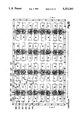
- FIG. 10 is a top plan view of the occupant position and weight sensor shown in FIG. 9;
- FIG. 11 is a side sectional view of the occupant position and weight sensor taken along line 11--11 of FIG. 10;
- FIG. 12 is a circuit schematic of a portion of the occupant restraint system of FIG. 9;
- FIG. 13 is a circuit schematic of a portion of the occupant restraint system of FIG. 9;
- FIG. 14 is a graph of resistance of the weight sensor shown in FIG. 9;
- FIG. 15 is a graph of the change of resistance of the weight sensor as a function of the weight of the occupant
- FIG. 16 is a graph of the percentage of gas discharged from the airbag shown in FIG. 9 as a function of distance between the occupant and the dashboard or as a function of the weight of the occupant;
- FIG. 17 is a graph depicting the angular position of the airbag shown in FIG. 9 as a function the occupant leftward and rightward position in the vehicle seat;
- FIG. 18 is a graph depicting the angular position of the airbag shown in FIG. 9 as a functions the occupant forward or rearward position in the vehicle seat;
- FIG. 19 is a graphical representation of the output of the humanistic sensor shown in FIG. 9;
- FIGS. 20-22 are flow charts depicting the control process followed by the controller shown in FIG. 9.
- FIG. 23 is a top plan view of a position and weight sensor in accordance with another embodiment of the present invention.
- an occupant restraint system 20 includes an airbag assembly 22 mounted in an opening of a dashboard 24 of a vehicle.
- the airbag assembly 22 includes a airbag 26 folded within the interior of an airbag housing 28.
- a cover 30 covers the airbag and is adapted to open easily upon inflation of the airbag 26.
- a source 32 of inert gas is mounted at the back of the housing 28 and is operatively connected to the airbag 26.
- Gas discharged from the source 32 which may be generated by combustion of pyrotechnic material or simply released from a pressurized container, fills the airbag 26 to its inflated condition 26'. Once inflated, as occurs during a vehicle crash, the airbag 26 cushions an occupant located in a vehicle seat 34.
- An electronic controller 36 such as a microcomputer, is operatively connected to a vehicle crash sensor 38.
- the crash sensor 38 can be any of several known types.
- the crash sensor 38 may be a mechanical inertia switch, such as a rolamite sensor, or an electrical accelerometer. If a normally open inertia switch closes, this is an indication that a crash is occurring. Likewise, if a signal from an electrical accelerometer reaches a predetermined level or a predetermined level for a predetermined time, this is an indication that a crash is occurring.
- the controller 36 determines that a vehicle crash is occurring for which deployment of the airbag is necessary to protect the vehicle occupants, the controller 36 ignites squib 40 which, in turn, actuates the gas source 32.
- the occupant seat 34 with which the occupant restraint system 20 is used is preferably the passenger seat in the vehicle.
- the seat 34 includes an occupant sensor 60 located in the bottom cushion 42 of the seat 34.
- the occupant sensor 60 is used to control whether deployment of the airbag is to be prevented.
- FIGS. 2-4 show one embodiment of the present invention, including an occupant presence sensor 60.
- the sensor 60 includes a housing 90 which incorporates a bottom support plate 92 and a top cover plate 94.
- the bottom plate 92 is rigidly mounted to a substantially inflexible bottom portion of the seat 42.
- the bottom plate 92 and the top plate 94 include interior surfaces 96, 98, respectively, which are spaced apart.
- An annular sealing member or gasket 100 is mounted between the support plate 92 and the upper plate 94.
- the sealing member 100 includes a central opening 106.
- the plates 92, 94 are secured together by means of a plurality of spaced apart screws 102.
- the top plate 94 has holes 103 and the bottom plate 92 has threaded holes 104.
- the gasket 100 has corresponding holes 105.
- the screws 102 extend through the holes 103 and 105 and are screwed into the holes 104.
- the bottom plate 92, the upper plate 94, and the sealing member 100 form a chamber 107 in which a piezoelectric film sensor 110 is mounted.
- the bottom plate 92 includes a recessed portion 112.
- the piezoelectric film sensor 110 spans the recess 112 and is secured along opposed edges at locations 114, 116 by appropriate means, such as adhesive.
- the bottom plate 92 further includes a second recessed portion 120.
- a film drive circuit 122 is secured to a substrate 124 which is mounted in the recess 120 by appropriate means.
- the drive circuit 122 is operatively connected to the piezoelectric film sensor 110 through terminals 126. Electrical wires 128 connect the drive circuit 122 to the controller 36.
- the piezoelectric film sensor 110 is a multi-layer structure including a first piezoelectric layer 130 and a second piezoelectric layer 136 separated by an insulating layer 138. The two piezoelectric layers and the insulating layer are secured together in an integral assembly by appropriate means.
- Each layer 130, 136 has an associated electrode silk-screened on each side of the layer.
- the electrodes of each piezoelectric layer 130, 136, is connected to an associated terminal 126. Specifically, the top electrode for layer 130 is connected to terminal 126'. The bottom electrode for layer 130 is connected to terminal 126". The top electrode for layer 136 is connected to terminal 126". The bottom electrode for layer 136 is connected to terminal 126'".
- the drive circuit 122 When energized by the film drive circuit 122, portions of the piezoelectric layers, under their associated electrodes, flex.
- the drive circuit 122 is adapted so that the piezoelectric film sensor 110 oscillates.
- the film oscillation physically occurs over the recessed portion 112 of the bottom plate 92. This area of the film sensor 110 is referred to as the bridge.
- the upper plate 94 includes an contact arm 140 that extends normal to the plate 94 and the surface 98 toward the film sensor 110.
- the upper plate 94 is made from a flexible material. When an occupant sits on the seat cushion 42, his weight is transferred through the material that makes up the seat cushion to the upper plate 94. The force applied to the upper plate 94 is functionally related to the occupant's weight. Since the bottom plate 92 is rigidly secured relative to the vehicle floor, the upper plate 94 flexes in response to the occupant's weight transferred through the seat material. As the upper plate 94 flexes, the contact arm 140 moves toward the layers 130, 136 of film sensor 110.
- the film oscillates.
- the output of the drive circuit oscillates with a certain peak-to-peak voltage value. If an occupant who has a weight greater than a predetermined weight then sits on the seat cushion, the upper plate 94 flexes an amount sufficient to insure that the contact arm 140 contacts the film 110. If the arm 140 contacts the film 110, the oscillations of the film 110 are attenuated.
- the resultant output from the film is a DC voltage value equal to approximately one-half the peak-to-peak voltage when no occupant is sitting on the seat cushion.
- FIGS. 5, 6 and 7, show a processing circuit, made in accordance with one embodiment of the present invention.
- the occupant sensor is the sensor 60.
- the sensor 60 is used to determine whether an occupant is sitting on the seat cushion 42.
- the controller 36 monitors the output signal from the sensor 60.
- the controller 36 enables actuation of the airbag when either the signal from the sensor 60 indicates that an occupant is sitting in the seat or the absence of a signal from the sensor 60 indicates that an electrical fault condition exists such as an open or short circuit between the sensor 60 and the controller 36.
- FIG. 6 shows the drive circuit 122 in detail.
- the top electrode of piezoelectric layer 130 is connected through terminal 126' to the inverting input of an op amp 144, connected as a differentiator, through a resistor.
- the differentiator with op amp 144 has a feedback resistor 145.
- the output of the op amp 144 is connected to the inverting input of an op amp 142, connected as an amplifier, through an input resistor 147.
- the amplifier 142 includes a feedback resistor 143.
- the output of the amplifier is connected to the bottom electrode of piezoelectric layer 136 through terminal 126"'.
- the bottom electrode of piezoelectric layer 130 and the top electrode of piezoelectric layer 136 are connected to a source of electrical energy -V cc through terminal 126".
- the noninverting inputs for the amplifiers 142, 144 are connected to a common ground having a voltage value between +V cc and -V cc established through a resistor divider network 149 with equal value resistors. If the vehicle battery is used as the source of electrical energy, -V cc is ground of the battery, and +V cc is the positive 12 VDC of the battery. Therefore, the common ground of the circuit 122 is at +6 VDC.
- the layers 130 and 136 have a predetermined amount of capacitance across their associated terminals.
- the layers 130, 136 have a capacitance of 1.5 nanofarads.
- the amplifier 142 with resistors 143, 147 has an extremely large gain. Because the amplifier 142 has a greater than 0 db gain at 180 degree phase shift, the output 148 of the amplifier 142 will oscillate at a frequency equal to: ##EQU1## where R is the value of resistor 145 and C is the series connected value of the capacitances of the layers 130, 136. In the example given, the series capacitance is 0.75 nanofarads.
- an output voltage is provided at a terminal 148 having a frequency of approximately 2 kilohertz. It should be noted that the continuous oscillations at the output of the film drive circuit 122 are dependent upon the freedom of the layers in the film 110 to move.
- the circuit must be placed in close proximity to the piezoelectric film 110 to avoid line capacitance that would occur in long lead lines.
- the drive circuit 122 is placed upon the substrate 124 so as to be close to the film 110.
- the output 148 is connected to the input of the controller 36.
- the controller 36 includes a bandpass filter 150, of standard design well known in the art, connected to the output 148 of the film drive circuit 122.
- the bandpass filter 150 is designed, in accordance with a preferred embodiment of the present invention, to pass frequencies of 2 kilohertz.
- the bandpass filter 150 may be external to the sensor 60 or can be placed upon the substrate 124 along with the drive circuit.
- the output 152 of the bandpass filter is an oscillating voltage between zero volts DC (battery ground) and a voltage value V+ (the positive battery terminal) at a frequency of 2 kilohertz.
- the time period P between pulses is equal to 0.5 msec., which is one divided by the frequency of 2 kilohertz.
- the line 154 shown in FIG. 8 represents force or stress against the top plate 94 of the sensor 60 as a result of an occupant sitting on the seat cushion 62.
- the occupant's weight deflects the top plate 94 a sufficient amount so that the contact arm 140 contacts the film 110.
- the output of the bandpass filter changes to a DC voltage equal to approximately one-half V+, as shown by the line 168.
- the voltage goes to one-half V+ because the common ground of circuits 122, 150 is at one-half V+.
- V+ is the positive terminal of the vehicle battery and chassis ground is the negative terminal of the vehicle battery.
- Common ground for the drive circuit 122 and the band pass filter 150 is at one-half the value of the battery voltage as is shown in FIG. 6. Therefore, when the oscillations of the piezoelectric layers stop, the output of the band pass filter and the drive circuit go to their common ground value, which is one-half V+, i.e., 6 VDC.
- a counter 158 also part of the controller 50, is connected to the output 152 of the bandpass filter 150 and counts the output pulses from the bandpass filter.
- the output of the counter 158 is connected to a first input 159 of a digital comparator 160.
- the second input 161 of the digital comparator 160 is connected to a hard wired count in digital form designated by 162 in FIG. 5.
- the counter is wired to be periodically reset by a reset circuit 163.
- the reset circuit 163 includes a clock 164 connected to a reset input of the counter 158 through a delay circuit.
- the delay circuit includes two inverters 165, 166 and a delay capacitor 167 connected to the output of the inverter 166.
- the output of the clock 164 is further connected to the strobe input of the digital comparator 160.
- the clock outputs a periodic pulse. For the purpose of explanation only, the pulse occurs once per second. Also, assume the count from the hard wired count is 2,000. The clock outputs a HIGH signal for the strobe and the reset of the counter 158. The delay circuit insures that the count from the counter is strobed into the digital comparator prior to the reset of the counter 158. If the counter 158 is reset once a second, the counter output at the end of that one second, i.e., just prior to reset, will be equal to a count of 2,000.
- the output of the digital comparator 160 has three outputs including an output 170 which changes states based on the input of the counter 158. If no occupant is sitting on the seat cushion 42, the output of the counter 158 will be a count value of 2,000. When this occurs, the output 170 is a digital HIGH. A digital HIGH at the output 170 thereby indicates no occupant is on the seat cushion. If an occupant sits on the seat cushion 42 so that the arm 140 contacts the film 110, the output of the band pass filter 150 assumes a DC value, and the counter 158 counts zero pulses. The output 170 of the digital comparator 160 then goes to a digital LOW.
- the output 148 will go to a DC voltage value equal to either zero volts DC (the battery ground) or V+ (the positive battery terminal) because input noise will result in saturation of one of the op amps 142, 144. In either case, the counter will count zero pulses when an electrical fault occurs between the sensor 60 and the controller 50. Therefore, if an electrical fault occurs between the sensor 60 and the controller 36, the output 170 goes to a digital LOW.
- the output 170 of the digital comparator 160 will be a digital HIGH only when (i) an occupant is not sitting on the cushion 42, (ii) the sensor film is properly operating, i.e., the sensor film is oscillating at 2 kilohertz, and (iii) all electrical wires are connected from the sensor film up to the digital comparator 160. Otherwise, the output 170 will be at a digital LOW.
- the output 170 of the digital comparator 160 is connected to the input of an inverter 172.
- the output of the inverter 172 is connected to a first input of an AND gate 174.
- the second input of the AND gate 175 is connected to the output of a read-only memory 180 in the controller 36.
- the read-only memory 180 is connected to the output of the crash sensor accelerometer 38.
- a control algorithm is programmed in the read-only memory 180 to process the output of the accelerometer 38.
- the control algorithm can take any of several forms. For example, if the accelerometer is of the type that provides a linear electric signal indicative of sensed deceleration (crash condition), the control algorithm may integrate the accelerometer signal.
- the algorithm provides a digital HIGH to the AND gate 174.
- the controller as a result of the algorithm 180, provides a digital HIGH signal when the signal from the accelerometer indicates that the vehicle is in a crash condition.
- the output of the AND gate 174 is a digital HIGH when a crash condition occurs and either (i) an occupant is sitting on the seat cushion 42 or (ii) an electrical fault exists between the sensor 60 and the controller 36 so that, in either case, the output of the inverter 172 is a digital HIGH. In all other situations, the output of the AND gate 174 is a digital LOW.
- the output of the AND gate 174 is connected to an input of an OR gate 183.
- the read-only memory 180 is connected to the other input of the OR gate 183 on line 185.
- the read-only memory also includes a control algorithm that determines the speed of the crash. Preferably, this is accomplished by monitoring the slope of an integration curve. If the speed of the crash exceeds a predetermined value, the control algorithm provides a digital HIGH on line 185. If the speed of the crash is greater than a predetermined value or the output of AND gate 174 is a digital HIGH, the output of OR gate 183 is switched to a digital HIGH.
- the output of OR gate 183 is connected to a drive circuit 184.
- the output of the drive circuit 184 is connected to an electric switch 186, such as a field-effect transistor ("FET").
- the FET 186 is connected in series with the squib 40 across a source of electrical energy.
- the drive circuit 184 turns the FET 186 ON when the output of the OR gate 183 is a digital HIGH. Turning the FET ON ignites the squib 54 which, in turn, actuates the gas source 32 and inflates the airbag 26.
- the controller 36 enables deployment of the airbag 26 upon the detection of both a vehicle crash condition (with crash speed less than the predetermined value) and either the presence of an occupant on the seat cushion 42 or the occurrence of an electrical open circuit between the film sensor 60 and the controller. Also, if the speed of the crash is greater than the predetermined value, the airbag is deployed by the control algorithm 180 and OR gate 183 independent of whether an occupant is present on the seat.
- An error detect circuit 188 which is part of the controller 36, is connected to the output 148 of the film drive circuit 122.
- An output 190 from the digital comparator is connected to an enable input of the error detect circuit 188.
- the output 190 of the digital comparator 160 is a digital HIGH. In other words, when output 170 is LOW, output 190 is HIGH.
- the error detect circuit 188 is enabled. When enabled, the error detect circuit monitors the output voltage at the output 148 from the film drive circuit 122.
- an error indicator 192 located in the dash board 24 is energized to warn the vehicle operator.
- the voltage on output 148 being outside of the window at one-half V+ indicates that an electrical fault has occurred. If the output 148 is within the window at one-half V+, plus or minus a predetermined value, such condition indicates that an occupant is sitting on the seat cushion 42.
- FIG. 9 shows an occupant restraint system 220 made in accordance with another embodiment of the present invention.
- the occupant restraint system 220 includes an airbag assembly 222 mounted in an opening of a dashboard 224 of a vehicle.
- the airbag assembly 222 includes an airbag 226 folded within the interior of an airbag housing 228.
- a cover 230 covers the airbag and is adapted to open easily upon the inflation of the airbag 226.
- Two sources 232, 233 of inert gas are mounted at the back of the housing 228 and are operatively connected to the airbag 226.
- the gas sources 232, 233 may be containers of combustible gas generating material or pressurized gas.
- the gas sources 232, 233 are actuated by electrical squibs or initiators 254, 255. Gases discharged by actuation of the gas sources 232, 233 fills the airbag 226 to its inflated condition 226'. Once inflated, as occurs during a vehicle crash, the airbag 226 cushions an occupant located in a vehicle seat 234.
- a vent valve 238 is operatively connected to the gas sources 232.
- a vent valve 239 is operatively connected to the gas source 233.
- the vent valves 238, 239 are used to control the inflation of the airbag 226. If the vent valves 238, 239 are fully closed upon actuation of the gas sources 232, 233, the airbag 226 inflates to its maximum volume, at maximum pressure and maximum inflation rate. By controlling whether one or both gas sources are actuated and by controlling the degree to which the vent valves 238, 239 are opened, the inflation rate and pressure of the airbag are controlled to values less than the maximum values.
- Electric motors 240, 242 are operatively connected to the housing 228 of the airbag assembly 222.
- the motor 240 is operatively connected to the housing 228 so as to control movement of the airbag assembly 222 angularly about a vertical axis 244 leftward or rightward, shown by arrow 245, as viewed by the occupant sitting in seat 234.
- the motor 242 is operatively connected to the housing 228 so as to move the airbag assembly 222 angularly about a horizontal axis 246 (normal to FIG. 9) upward or downward, shown by arrow 247, as viewed from the seat 234.
- the motors 240, 242 are used to control the orientation of the airbag assembly 222 relative to an occupant sitting in the seat 234.
- An electronic controller 250 such as a microcomputer, is operatively connected to a vehicle crash sensor 252.
- the crash sensor 252 can be any of several known types.
- the crash sensor 252 may be a mechanical inertia switch, such as a rolamite sensor, or an electrical accelerometer that provides an oscillating output signal indicative of whether the vehicle is in a crash condition. If a normally open inertia switch closes, this is an indication that a crash is occurring. Likewise, if the signal from an electrical accelerometer reaches a predetermined level or a predetermined level for a predetermined time, this is an indication that a crash is occurring.
- the controller 250 determines that a vehicle crash is occurring for which deployment of the airbag is necessary to protect the vehicle occupants, the controller 250 ignites at least one of the squibs 254, 255 which, in turn, respectively actuates one or both of the associated gas sources 232, 233.
- the controller 250 is also electrically connected to the vent valves 238, 239 and controls the amount of gas bled off from the gas sources 232, 233 during inflation of the airbag 226. By bleeding off a certain amount of gas from the gas sources, the speed of deployment, the size, and pressure of the airbag 226 are controlled.
- the occupant seat 234 with which the occupant restraint system 220 is used is preferably a passenger seat in the vehicle.
- the seat 234 includes an occupant position and weight sensor 260 located in the bottom cushion 262 of the seat 234.
- a humanistic sensor 264 is located near the top of the cushion 262.
- An occupant sensor 266 is located in the back cushion 268 of the seat 234.
- the occupant position and weight sensor 260 detects (i) if an object is present on the seat, (ii) the weight of the object, and (iii) the position of the object in the seat.
- the humanistic sensor 264 detects whether an object on the seat cushion 262 is animate or inanimate.
- the occupant sensor 266 detects whether an object is contacting the back cushion 268.
- a seat back incline sensor 270 is operatively connected between the lower cushion 262 and the upper cushion 268.
- the sensor 270 provides an electrical signal indicative of the angular displacement of the seat back cushion 268 relative to the vehicle floor.
- the seat back incline sensor 270 is a rotary potentiometer.
- a seat position sensor 272 is operatively connected to the lower cushion 262 and a sliding rail 274 upon which the seat 234 is slidably mounted in a manner well known in the art.
- the sensor 272 provides an electrical signal indicative of the forward and backward position of the seat 234 relative to a predetermined reference point.
- the seat position sensor 272 is a linear potentiometer. Based on the signal from the sensor 272, the distance from the front cover 230 to the seat back 268 can be determined.
- the sensors 260, 264, 266, 270 and 272 are collectively referred to as the seat and occupant sensors 280.
- the seat and occupant sensors 280 are electrically connected to the controller 250. Based upon (i) the presence or absence of an object on the seat, as indicated by the sensor 260, and (ii) whether the object is animate from the sensor 264, the controller 250 determines whether or not to enable the airbag assembly 222.
- the controller 250 controls the inflation rate, size, pressure, deployment orientation and deployment timing of the airbag 226.
- the controller 250 controls deployment orientation through a motor control drive circuit 282 operatively connected to the airbag position motors 240, 242.
- the occupant position and weight sensor 260 includes an N ⁇ M array of individual position sensors 300 and individual weight sensors 302.
- FIG. 10 shows a specific arrangement of sensors 300, 302. The array shown in an 8 ⁇ 8 array with the position and weight sensors alternately positioned in the array in a checkerboard pattern. It should be appreciated that the invention is neither limited to this specific array nor pattern of sensors.
- the sensors 300 are all identical in structure to the sensor 60 described with regard to FIGS. 2, 3, and 4.
- Each sensor 300 has its own multilayer piezoelectric film 308 and a drive circuit 304 mounted next to the film on an associated substrate 306.
- Each drive circuit 304 is identical to the drive circuit shown in FIG. 6 with regard to the sensor 60.
- the output of each drive circuit 304 is connected to the controller 250.
- Each film 308 is mounted across an associated recess 310 in a bottom support plate 312 that provides the recesses for all of the films.
- a top plate 314 which covers all of the films 308 and drive circuits 304 is secured to the bottom plate 312 by screws as described with regard to sensor 60.
- An annular gasket 316 is interposed between the top plate 314 and the bottom plate 312. The gasket 316, top plate 314, and bottom plate 312 form a chamber 318.
- the top plate has a plurality of contact arms 320 extending downward toward the bottom plate 312. Each sensor 300 has an associated contact arm 320 located over its film 308.
- the top plate 314 is made from a material that flexes in response to a force or load. The amount of flexure at any point on the upper plate 314 is a function of the weight of the occupant at the corresponding location on the seat cushion 262.
- the output signal from the associated drive circuit 304 changes in the same manner shown in FIG. 8 with regard to sensor 60.
- the controller 250 can control the orientation of the airbag assembly 222 and the time at which the airbag is deployed.
- sensors 300 also provide an indication of an electrical fault condition in the sensors such as an open circuit and a short to ground.
- Each of the sensors 302 includes a force sensing film 330 mounted across an associated recess 332 in the bottom plate 312.
- the force sensing film which is also referred to herein as weight sensing film, is a force sensing resistor ("FSR") film.
- FSR force sensing resistor
- This type of film has a predetermined amount of resistance seen across its connection terminals. The resistance across the terminals varies inversely with applied force.
- each sensor 302 has an associated contact arm 334 located above the film and extending downward from the top plate 314.
- Each sensor 302 also has an associated drive circuit 336.
- the top plate 314 is made from a material that flexes in response to an applied load or force.
- the amount of flexure at any point on the upper plate 314 is a function of the weight of the occupant at the corresponding location on the seat cushion 262.
- the output signal from the associated drive circuit 336 varies as a function of the occupant's weight at that location.
- the controller 250 can control deployment of the airbag.
- the sensors 300, 302 are designed so that a predetermined amount of weight must first be applied to the seat cushion before the arms 320, 334 contact their associated films 308, 330. For example, it is contemplated that twenty pounds would have to be placed upon the seat cushion 262 before the arms 320, 334 would contact their associated films 308, 330. For each force or weight sensor 302, any change in resistance will be functionally related to the weight of the occupant.
- FIG. 14 is a graph depicting the impedance of the sensor film 330. When no weight is on the seat cushion 262, the impedance of the film is quite high. As the weight increases, the impedance decreases. The graph shows the occupant sitting on the seat at time t 1 .
- FIG. 15 correlates changes in resistance of the film 330 to weights of theoretical males in these industrial standards. For example, a 95th percentile (denominated 95% in FIG. 15) male weighs 220 lbs., a 50th percentile male weighs 165 lbs., and a 3 year old child weighs 30 lbs.
- the controller 250 controls the deployment of the airbag 226 based on the change in resistance of the film 330 and the computed weight of the occupant. Depending upon the weight of the occupant and his related theoretical anatomical dimensions, the airbag 26 is deployed in a crash condition at a time after the onset of a crash which is derived from, preferably, a look-up table. Data stored in the look-up table is derived from historical data and/or empirical testing. The detected weight of the occupant is also used by the controller 250, together with the position of the occupant, to control the vent valves 238, 239.
- FIG. 16 is a multipurpose depiction of the control of the vent valves 238, 239. First, FIG.
- FIG. 16 depicts a percent of the gas dumped through the vent valves as a function of the determined weight of the occupant. The lighter the occupant sitting in the seat 234, the larger the percentage of gas from the gas sources 232, 233 which should be diverted away from the airbag 226 and dumped. Second, FIG. 16 depicts a percent of gas dumped through the vent valves as a function of the position of the occupant in the seat. The closer the occupant is to the cover 230, the larger the percentage of gas that should be dumped from the gas sources 232, 233. The amount of gas dump required for weight and distance are based from historical data including empirically determined data.
- the controller 250 further uses the occupant's weight to control whether one or both squibs are fired during a vehicle crash requiring deployment of the airbag. For example, if the occupant weight is determined to be less than a 50th percentile person, only one of the squibs 232, 233 may be fired. If the occupant weight is determined to be greater than a 50th percentile person, both of the squibs may be fired.
- the controller 250 monitors the distance between the occupant and the front cover 230 of the airbag assembly 222. This distance is determined by knowing the position of the seat 234 from the seat position sensor 272, the incline of the seat back from the sensor 270, and the position of the occupant in the seat 234 based upon the output signals from sensors 260 and 266. A determination is made as to whether the occupant is at a location relative to the airbag assembly for which the airbag would not provide effective protection in a crash condition. If it is determined that an occupant is sitting at this ineffective protection location, the airbag is not deployed upon a vehicle crash condition.
- the control of firing one or two squibs can also be controlled in response to the sensed position of the occupant.
- FIGS. 17 and 18 graphically depict orientation or aiming control for the airbag assembly 222 left/right and up/down, respectively. If it is determined that the occupant is sitting in the left portion of the seat from the position sensors 300, the airbag assembly 222 is rotated to the left. If it is determined that the occupant is sitting in the right portion of the seat from the position sensors 300, the airbag assembly 222 is rotated to the right. If it is determined that the occupant is sitting in the front portion of the seat from the position sensors 300, the airbag assembly 222 is rotated upward. If it is determined that the occupant is sitting in the back portion of the seat from the position sensors 300, the airbag assembly 222 is rotated downward.
- the aiming or orientation of the airbag assembly 222 is controlled through the motor drive control 282.
- the motor drive control 282 is a stepper motor controller with the motors 240, 242 preferably being stepper motors.
- the controller 250 outputs a horizontal position control, including a horizontal step input and a direction enable input.
- the controller 250 outputs a vertical position control, including a vertical step input and a direction enable input. Based upon these input signals from the controller 250, the motor controller 282 outputs the appropriate drive signals to the motors 240, 242 in a manner well known in the art.
- the sensor 264 in the seat cushion 262 is a piezoelectric film of the type that detects infrared energy. When an occupant sits in the seat 234, he gives off infrared energy which is sensed by the sensor 264. This sensor than provides a signal indicative of whether the object in the seat 234 is animate or inanimate. The sensor 264 is connected to the controller 250. If, during a crash condition, an inanimate object is on the seat cushion, the airbag 226 is not deployed.
- FIG. 19 depicts the output from the sensor 264.
- the output from the infrared sensor is a voltage having a value indicative of the change in temperature to which it is subjected.
- the controller 250 monitors a large voltage from the sensor 264, such indicates that an animate object is sitting in the seat.
- the graph depicts an occupant sitting on the seat at time t 1 .
- the seat back sensor 266 is preferably a piezoelectric sensor identical in structure to the sensors 60 and 300 and can either be a single sensor or an array.
- the sensor 266 is connected to the controller 250 and provides an indication as to whether the occupant is seated all the way back in the seat 262.
- the contact arm for the sensor 266 is located much closer to its associated film layer so that only a small amount of force is required against the back of the seat to effect a change in the condition of the electrical characteristic of the film.
- the controller 250 in this array embodiment, is preferably a microcomputer separately connected to the output of each of the sensors 300, 302, 270, 272, 264 and 266.
- the outputs of the microcomputer are connected to the individual squibs 254, 255.
- the microcomputer's outputs are also connected to the vent valves 238 and 239, as well as the motor drive control 282.
- FIGS. 20-22 provide a flow chart for the control process followed by the controller 250.
- the controller 250 is initialized by setting numbers used in the process to zero, resetting flags where applicable, initially enabling the airbag, and initially aiming the airbag to a middle position.
- the sensor outputs are scanned by the microcontroller.
- step 404 a determination is made as to whether an object is present in the seat. For the embodiment shown in FIG. 9, any of the sensors 300, 302, or 264 can be used to determine if an occupant is present.
- the sensors 300, 302 and 264 provide an indication of whether an object is in the seat independent of whether the object is animate or inanimate.
- step 404 determines whether the determination in step 404 is negative. If the determination in step 404 is negative, the process proceeds to step 406 where a value N is set equal to N+1. The process proceeds to step 408 where a determination is made as to whether N is equal to 10. The first determination in step 408 is negative since N was set equal to zero in step 400. The process then loops back to step 402. After 10 times through steps 402, 404, 408, the determination in step 408 is affirmative. When the determination in step 408 is affirmative, the process proceeds to step 410 where the airbag is disabled. The process then loops back to step 402.
- step 404 determines whether or not the object in the seat is a human. This is done by monitoring the output of the sensor 264. If the determination in step 412 is negative, the process proceeds to step 414 where the airbag is disabled.
- step 412 determines whether the determination in step 412 is affirmative. If the determination in step 412 is affirmative, the process proceeds to "step” 416 where the airbag is kept in an enabled condition. This "step” is non-functional and is shown in the flow chart as a reminder that the airbag is maintained enabled at this point in the process. The process proceeds to step 418 where the controller 250 determines which of the sensors 300 in the array 260 are ON. The position of the occupant is then determined in step 420 from the ON sensors in the array 260.
- step 422 A determination is then made in step 422 as to whether the occupant in the seat is out of position. Out of position means that the occupant is in a position for which the airbag can not provide effective protection during a crash condition. If the determination in step 422 is affirmative, the process proceeds to step 424 where the airbag is disabled.
- step 422 determines whether the occupant is located in the seat 234 in a location in which the airbag would provide effective crash protection. If the determination is step 422 is negative, which means that the occupant is located in the seat 234 in a location in which the airbag would provide effective crash protection, the process proceeds to step 450 (FIG. 21) where a determination is made as to whether the occupant is sitting in the back middle of the seat. If the determination in step 450 is affirmative, the process proceeds to step 452 where the weight of the occupant is determined. By the occupant being in the back middle of the seat 234, the airbag does not need further aiming since it was set to a middle position in step 400.
- step 450 determines whether the occupant is sitting in the front middle of the seat. If the determination in step 454 is affirmative, the process proceeds to step 456 where the airbag assembly 222 is rotated down toward the floor. The process then proceeds to step 452. If the determination in step 470 is negative, the process returns to step 450.
- step 454 determines whether the occupant is sitting in the front left of the seat. If the determination in step 458 is affirmative, the process proceeds to step 460 where the airbag assembly 222 is rotated down and to the left. The process then proceeds to step 452.
- step 458 determines whether the occupant is sitting in the front right of the seat. If the determination in step 462 is affirmative, the process proceeds to step 464 where the airbag assembly 222 is rotated down and to the right. The process then proceeds to step 452.
- step 462 determines whether the occupant is sitting in the back left of the seat. If the determination in step 466 is affirmative, the process proceeds to step 468 where the airbag assembly 222 is rotated up and to the left. The process then proceeds to step 452.
- step 466 determines whether the occupant is sitting in the back right of the seat. If the determination in step 470 is affirmative, the process proceeds to step 472 where the airbag assembly 222 is rotated up and to the right. The process then proceeds to step 452. If the process in step 470 is negative, the process returns to step 450.
- step 452 the occupant's weight is determined.
- step 480 a determination is made, based on the occupant's weight, as to whether the occupant is approximately the size of a theoretical 3 year old. This determination, as well as the other weight-based determinations described hereafter, will be based on the determined weight of the occupant being within a range of weights, rather equal to a specific weight. If the determination is affirmative, the process proceeds to step 482 where 75% of all gas discharged by one gas source is dumped via its associated vent valve. The other gas source is not actuated. From a negative determination in step 480, the process proceeds to step 484.
- step 484 a determination is made as to whether the occupant is the size of a 5th percentile person. If the determination is affirmative, the process proceeds to step 486 where 50% of all gas discharged by one gas source is dumped via its associated vent valve. The other gas source is not actuated. From a negative determination in step 484, the process proceeds to step 488.
- step 488 a determination is made as to whether the occupant is the size of a 25th percentile person. If the determination is affirmative, the process proceeds to step 490 where 25% of all gas discharged by one gas source is dumped via its associated vent valve. The other gas source is not actuated. From a negative determination in step 488, the process proceeds to step 492.
- step 492 a determination is made as to whether the occupant is the size of a 50th percentile person. If the determination is affirmative, the process proceeds to step 494 where the gas discharged by one gas source is not dumped at all. The other gas source is not actuated. Any weight detected greater than a 50th percentile person results in actuation of the second gas source. From a negative determination in step 492, the process proceeds to step 496.
- step 496 a determination is made as to whether the occupant is the size of a 75th percentile person. If the determination is affirmative, the process proceeds to step 498 where 50% of the gas discharged by the second gas source is dumped via its associated vent valve. From a negative determination in step 492, the process proceeds to step 500.
- step 500 a determination is made as to whether the occupant is the size of a 90th percentile person. If the determination is affirmative, the process proceeds to step 502 where 25% of the gas discharged by the second gas source is dumped via its associated vent valve. From a negative determination in step 500, the process proceeds to step 504.
- step 504 a determination is made as to whether the occupant is the size of a 99th percentile person. If the determination is negative, the process loops back to step 480. If the determination is affirmative, the process proceeds to step 506 where no gas is dumped from either of the gas sources. From any of the steps 482, 486, 490, 494, 498, 502, or 506, the process proceeds back to step 510 which is a determination of the occupant's position shown in FIG. 21.
- weight and position determination can occur in any order. Also, the weight determinations and vent valve adjustments can be made in smaller increments, if desired. Further, the occupant's position can be determined and then the process would branch to the appropriate action based upon that determined position. Similarly, the occupant's weight can be determined and the process would branch to the appropriate action based upon that determined weight.
- FIG. 23 shows another embodiment of the present invention.
- a plurality of piezoelectric film sensors 550 are secured to a rubber pad 540 and provide an electric pulse when deflected due to the weight of the occupant on the seat cushion. By monitoring which films 550 provide an electric pulse, position of the occupant can be determined.
- Weight sensors 560 are also secured to the rubber pad 540 and provide an indication of the occupant weight which is functionally related to the amount of film flexure.
- the position sensors 550 and weight sensors 560 are located on the rubber pad in a checker-board pattern as described above.
- the rubber pad is located in the seat cushion at a location which permits flexure of the pad in response to weight and position of the occupant.
- the controller in this embodiment processes the signals from the weight film sensors in the same manner as described above.
- the controller monitors the seat position sensors and determines the occupant's position in response to which position films provide a pulse output.
- the airbag deployment and direction are controlled as described above.
Abstract
Description
Claims (9)
Priority Applications (5)
| Application Number | Priority Date | Filing Date | Title |
|---|---|---|---|
| US07/682,908 US5232243A (en) | 1991-04-09 | 1991-04-09 | Occupant sensing apparatus |
| JP4089101A JP2535120B2 (en) | 1991-04-09 | 1992-04-09 | Occupant detection device |
| DE4212018A DE4212018B4 (en) | 1991-04-09 | 1992-04-09 | Insassenabfühlvorrichtung |
| US08/022,341 US5494311A (en) | 1991-04-09 | 1993-02-24 | Occupant sensing apparatus |
| US08/545,902 US5624132A (en) | 1991-04-09 | 1995-10-20 | Occupant sensing apparatus |
Applications Claiming Priority (1)
| Application Number | Priority Date | Filing Date | Title |
|---|---|---|---|
| US07/682,908 US5232243A (en) | 1991-04-09 | 1991-04-09 | Occupant sensing apparatus |
Related Child Applications (1)
| Application Number | Title | Priority Date | Filing Date |
|---|---|---|---|
| US08/022,341 Division US5494311A (en) | 1991-04-09 | 1993-02-24 | Occupant sensing apparatus |
Publications (1)
| Publication Number | Publication Date |
|---|---|
| US5232243A true US5232243A (en) | 1993-08-03 |
Family
ID=24741712
Family Applications (3)
| Application Number | Title | Priority Date | Filing Date |
|---|---|---|---|
| US07/682,908 Expired - Lifetime US5232243A (en) | 1991-04-09 | 1991-04-09 | Occupant sensing apparatus |
| US08/022,341 Expired - Fee Related US5494311A (en) | 1991-04-09 | 1993-02-24 | Occupant sensing apparatus |
| US08/545,902 Expired - Lifetime US5624132A (en) | 1991-04-09 | 1995-10-20 | Occupant sensing apparatus |
Family Applications After (2)
| Application Number | Title | Priority Date | Filing Date |
|---|---|---|---|
| US08/022,341 Expired - Fee Related US5494311A (en) | 1991-04-09 | 1993-02-24 | Occupant sensing apparatus |
| US08/545,902 Expired - Lifetime US5624132A (en) | 1991-04-09 | 1995-10-20 | Occupant sensing apparatus |
Country Status (3)
| Country | Link |
|---|---|
| US (3) | US5232243A (en) |
| JP (1) | JP2535120B2 (en) |
| DE (1) | DE4212018B4 (en) |
Cited By (277)
| Publication number | Priority date | Publication date | Assignee | Title |
|---|---|---|---|---|
| US5346254A (en) * | 1993-02-01 | 1994-09-13 | Trw Inc. | Inflator assembly |
| US5400487A (en) * | 1994-01-14 | 1995-03-28 | Automotive Systems Laboratory, Inc. | Variable inflation system for vehicle safety restraint |
| US5404128A (en) * | 1992-03-13 | 1995-04-04 | Matsushita Electric Industrial Co., Ltd. | Presence detecting and safety control apparatus |
| US5411289A (en) * | 1993-10-29 | 1995-05-02 | Morton International, Inc. | Air bag system for a motor vehicle |
| US5413378A (en) * | 1993-12-02 | 1995-05-09 | Trw Vehicle Safety Systems Inc. | Method and apparatus for controlling an actuatable restraining device in response to discrete control zones |
| GB2284072A (en) * | 1993-11-16 | 1995-05-24 | Daimler Benz Ag | Seat-occupancy-detection device in a motor vehicle |
| DE4442841A1 (en) * | 1993-12-02 | 1995-06-08 | Trw Vehicle Safety Systems | Seat occupant detection and restraint system for automobile |
| WO1995020233A1 (en) * | 1994-01-21 | 1995-07-27 | Davidson Textron Inc. | A horn actuator incorporating a transducer in a steering wheel |
| WO1995020791A1 (en) * | 1994-01-27 | 1995-08-03 | Automotive Systems Laboratory, Inc. | Method for minimalizing structural resonance on vehicle acceleration data |
| US5439249A (en) * | 1993-12-02 | 1995-08-08 | Trw Vehicle Safety Systems Inc. | Vehicle occupant restraint system including occupant position sensor mounted in seat back |
| US5446661A (en) * | 1993-04-15 | 1995-08-29 | Automotive Systems Laboratory, Inc. | Adjustable crash discrimination system with occupant position detection |
| US5454591A (en) * | 1993-11-03 | 1995-10-03 | Trw Vehicle Safety Systems Inc. | Method and apparatus for sensing a rearward facing child restraining seat |
| WO1995027635A1 (en) * | 1994-04-12 | 1995-10-19 | Aerojet General Corporation | Automotive occupant sensor system and method of operation by sensor fusion |
| US5463258A (en) * | 1992-04-29 | 1995-10-31 | Davidson Textron Inc. | Horn actuator incorporating a transducer in a steering wheel |
| US5466001A (en) * | 1991-03-22 | 1995-11-14 | Mazda Motor Corporation | Air bag system for an automotive vehicle |
| US5468013A (en) * | 1993-12-03 | 1995-11-21 | Trw Inc. | Dual air bag system for occupant restraint |
| US5474327A (en) * | 1995-01-10 | 1995-12-12 | Delco Electronics Corporation | Vehicle occupant restraint with seat pressure sensor |
| US5489806A (en) * | 1994-05-11 | 1996-02-06 | Morton International, Inc. | Airbag horn switch with temperature compensation |
| US5515933A (en) * | 1994-03-23 | 1996-05-14 | Mercedes-Benz Ag | Device for recognizing a child's seat which is strapped to the front passenger's seat of a motor vehicle |
| US5528698A (en) * | 1995-03-27 | 1996-06-18 | Rockwell International Corporation | Automotive occupant sensing device |
| US5531472A (en) * | 1995-05-01 | 1996-07-02 | Trw Vehicle Safety Systems, Inc. | Apparatus and method for controlling an occupant restraint system |
| US5544914A (en) * | 1994-12-27 | 1996-08-13 | Ford Motor Company | Air bag disabler control circuit |
| US5549323A (en) * | 1995-06-07 | 1996-08-27 | Larry J. Winget | Plastic air bag cover having an integrated occupant-sensing sensor module |
| US5564743A (en) * | 1995-03-22 | 1996-10-15 | Morton International, Inc. | Multiple stage air bag inflator system |
| US5565829A (en) * | 1995-04-06 | 1996-10-15 | Clark Equipment Company | Side pivot seat |
| US5570903A (en) * | 1995-02-21 | 1996-11-05 | Echlin, Inc. | Occupant and infant seat detection in a vehicle supplemental restraint system |
| US5602734A (en) * | 1994-09-23 | 1997-02-11 | Advanced Safety Concepts, Inc. | Automobile air bag systems |
| US5605348A (en) * | 1993-11-03 | 1997-02-25 | Trw Vehicle Safety Systems Inc. | Method and apparatus for sensing a rearward facing child seat |
| US5626359A (en) * | 1993-12-02 | 1997-05-06 | Trw Vehicle Safety Systems, Inc. | Method and apparatus for controlling an actuatable restraining device in response to discrete control zones |
| FR2744547A1 (en) * | 1996-02-07 | 1997-08-08 | Leteurtre Jean | Capacitance measurement system for detecting persons or objects |
| FR2744548A1 (en) * | 1996-02-07 | 1997-08-08 | Leteurtre Jean | SYSTEM AND METHOD FOR DETECTING THE PRESENCE OF A PERSON SITUATED IN A HABITACLE, IN PARTICULAR A PASSENGER OF A MOTOR VEHICLE |
| FR2744546A1 (en) * | 1996-02-07 | 1997-08-08 | Leteurtre Jean | Capacitance measurement system for detecting persons or objects |
| WO1997030864A1 (en) * | 1996-02-23 | 1997-08-28 | Nec Technologies, Inc. | Vehicle passenger sensing system and method |
| US5668528A (en) * | 1993-06-28 | 1997-09-16 | Sensor Technology Co. Ltd. | Apparatus for actuating the safety devices for vehicle occupants |
| US5670853A (en) * | 1994-12-06 | 1997-09-23 | Trw Vehicle Safety Systems Inc. | Method and apparatus for controlling vehicle occupant position |
| EP0796768A1 (en) | 1996-03-21 | 1997-09-24 | Trw Inc. | Apparatus for sensing occupant weight in an actuatable restraint system |
| WO1997035738A1 (en) * | 1996-03-25 | 1997-10-02 | Advanced Safety Concepts, Inc. | Motor vehicle occupant sensing systems |
| US5684701A (en) * | 1995-06-07 | 1997-11-04 | Automotive Technologies International, Inc. | Method and apparatus for sensing a vehicle crash |
| US5689421A (en) * | 1993-11-19 | 1997-11-18 | Goernig; Thomas | Vehicle safety system |
| US5702123A (en) * | 1995-03-31 | 1997-12-30 | Toyota Jidosha Kabushiki Kaisha | Air bag apparatus for passenger seat |
| US5703303A (en) * | 1996-12-19 | 1997-12-30 | Lear Corporation | Method and system for wear testing a seat by simulating human seating activity and robotic human body simulator for use therein |
| US5709405A (en) * | 1996-04-10 | 1998-01-20 | Morton International, Inc. | Variable mass flow airbag module |
| GB2315467A (en) * | 1996-07-18 | 1998-02-04 | Fuji Heavy Ind Ltd | Gas pressure regulator for automotive air bag system |
| EP0825070A2 (en) * | 1994-12-20 | 1998-02-25 | Kabushiki Kaisha Tokai-Rika-Denki-Seisakusho | Air bag apparatus for a passenger seat |
| US5732375A (en) * | 1995-12-01 | 1998-03-24 | Delco Electronics Corp. | Method of inhibiting or allowing airbag deployment |
| WO1998014345A2 (en) | 1996-10-03 | 1998-04-09 | I.E.E. International Electronics & Engineering S.A.R.L. | Method and device for determining several parameters of a seated person |
| US5739757A (en) * | 1997-01-30 | 1998-04-14 | Breed Automotive Technology, Inc. | Vehicle passenger weight sensor |
| US5742506A (en) * | 1994-06-20 | 1998-04-21 | Mitsubishi Jidosha Kogyo Kabushiki Kaisha | Starting device for a passenger protecting device |
| WO1998025112A2 (en) * | 1996-11-22 | 1998-06-11 | Breed Automotive Technology, Inc. | Seat occupant sensing system |
| US5779266A (en) * | 1995-10-10 | 1998-07-14 | Morton International, Inc. | Fluid fueled inflator with flow reversal |
| WO1998030411A1 (en) * | 1997-01-08 | 1998-07-16 | Automotive Systems Laboratory, Inc. | Automotive seat weight sensing system |
| WO1998030420A1 (en) * | 1997-01-08 | 1998-07-16 | Trustees Of Boston University | Center of weight sensor |
| US5783871A (en) * | 1996-09-24 | 1998-07-21 | Trw Inc. | Apparatus and method for sensing a rearward facing child seat |
| US5789827A (en) * | 1993-05-10 | 1998-08-04 | Sensitron, Inc. | Two-wire interface to automobile horn relay circuit |
| US5803492A (en) * | 1994-05-31 | 1998-09-08 | Morton International, Inc. | Fuel containment for fluid fueled airbag inflators |
| US5803491A (en) * | 1997-02-28 | 1998-09-08 | General Motors Corporation | Supplemental inflatable restraint disabling system |
| US5810392A (en) * | 1997-02-15 | 1998-09-22 | Breed Automotive Technology, Inc. | Seat occupant sensing system |
| US5836610A (en) * | 1994-05-31 | 1998-11-17 | Morton International, Inc. | Multiple level fluid fueled airbag inflator |
| WO1998051547A1 (en) * | 1997-05-12 | 1998-11-19 | Automotive Systems Laboratory, Inc. | Air bag suppression system and method |
| US5844415A (en) * | 1994-02-03 | 1998-12-01 | Massachusetts Institute Of Technology | Method for three-dimensional positions, orientation and mass distribution |
| WO1998054638A1 (en) * | 1997-05-29 | 1998-12-03 | Automotive Technologies International, Incorporated | Smart airbag system |
| EP0891898A1 (en) | 1997-07-18 | 1999-01-20 | I.E.E. International Electronics & Engineering S.à.r.l. | Method and apparatus for recording various parameters of a person seat on a support |
| WO1999003711A1 (en) * | 1997-07-14 | 1999-01-28 | Tabe Joseph A | Weight responsive supplemental restraint computer system |
| US5865463A (en) * | 1997-02-15 | 1999-02-02 | Breed Automotive Technology, Inc. | Airbag deployment controller |
| US5871232A (en) * | 1997-01-17 | 1999-02-16 | Automotive Systems, Laboratory, Inc. | Occupant position sensing system |
| US5877677A (en) * | 1996-11-22 | 1999-03-02 | Christopher Shoulders, L.L.C. | Control of air bag activation in vehicles by occupancy weight |
| US5878620A (en) * | 1997-01-23 | 1999-03-09 | Schlege Systems, Inc. | Conductive fabric sensor for vehicle seats |
| WO1999011483A1 (en) * | 1997-09-05 | 1999-03-11 | Automotive Systems Laboratory, Inc. | Seat weight sensor having self-regulating fluid filled bladder |
| WO1999012054A2 (en) * | 1997-09-05 | 1999-03-11 | Automotive Systems Laboratory, Inc. | Seat weight sensor having self-regulating fluid filled bladder |
| US5896090A (en) * | 1996-05-29 | 1999-04-20 | Aisin Seiki Kabushiki Kaisha | Occupant sensing apparatus |
| US5906393A (en) * | 1997-09-16 | 1999-05-25 | Trw Inc. | Occupant restraint system and control method with variable sense, sample, and determination rates |
| WO1999035012A1 (en) * | 1998-01-12 | 1999-07-15 | Autoliv Development Ab | A safety arrangement in a motor vehicle |
| US5927427A (en) * | 1997-09-05 | 1999-07-27 | Automotive Systems Laboratory, Inc. | Seat weight having self-regulating fluid filled bladder |
| US5936412A (en) * | 1994-02-03 | 1999-08-10 | Massachusetts Institute Of Technology | Method for resolving presence, orientation and activity in a defined space |
| US5957491A (en) * | 1996-12-19 | 1999-09-28 | Automotive Systems Laboratory, Inc. | Seat weight sensor having fluid filled bladder |
| WO1999048729A1 (en) * | 1998-03-26 | 1999-09-30 | Tabe Joseph A | Advanced weight responsive supplemental restraint computer system |
| US5964478A (en) * | 1997-03-07 | 1999-10-12 | Automotive Systems Laboratory, Inc | Electric field sensing air bag danger zone sensor |
| US5965856A (en) * | 1996-11-28 | 1999-10-12 | Aisin Seiki Kabushiki Kaisha | Pressure sensitive switch |
| US5971432A (en) * | 1997-02-15 | 1999-10-26 | Breed Automotive Technology, Inc. | Seat occupant sensing system |
| US5986221A (en) * | 1996-12-19 | 1999-11-16 | Automotive Systems Laboratory, Inc. | Membrane seat weight sensor |
| US6015163A (en) * | 1996-10-09 | 2000-01-18 | Langford; Gordon B. | System for measuring parameters related to automobile seat |
| US6021863A (en) * | 1997-11-17 | 2000-02-08 | Automotive Systems Laboratory, Inc. | Seat weight sensor using fluid filled tubing |
| US6024378A (en) * | 1996-10-22 | 2000-02-15 | Lear Corporation | Vehicle seat assembly including at least one occupant sensing system and method of making same |
| US6026340A (en) * | 1998-09-30 | 2000-02-15 | The Robert Bosch Corporation | Automotive occupant sensor system and method of operation by sensor fusion |
| US6039344A (en) * | 1998-01-09 | 2000-03-21 | Trw Inc. | Vehicle occupant weight sensor apparatus |
| WO2000020258A1 (en) * | 1998-10-01 | 2000-04-13 | Biosys Ab | A method and an apparatus for monitoring a seated person |
| US6056079A (en) * | 1996-12-19 | 2000-05-02 | Automotive Systems Laboratory, Inc. | Automotive seat weight sensing system |
| US6065773A (en) * | 1996-01-19 | 2000-05-23 | Klinger; Barney | Gas pressure restraint, sensing and release systems |
| US6070115A (en) * | 1997-11-12 | 2000-05-30 | Siemens Automotive Corporation | Method and system for determining weight and position of a vehicle seat occupant |
| US6078854A (en) * | 1995-06-07 | 2000-06-20 | Automotive Technologies International, Inc. | Apparatus and method for adjusting a vehicle component |
| US6081757A (en) * | 1995-06-07 | 2000-06-27 | Automotive Technologies International, Inc. | Seated-state detecting apparatus |
| US6088639A (en) * | 1997-10-03 | 2000-07-11 | Delco Electronics Corporation | Method of enabling and disabling occupant restraints |
| US6089106A (en) * | 1998-09-04 | 2000-07-18 | Breed Automotive Technology, Inc. | Force sensor assembly |
| US6094610A (en) * | 1998-03-30 | 2000-07-25 | Trw Vehicle Safety Systems Inc. | Characterizing a proximately located occupant body portion with a sensor matrix |
| US6104100A (en) * | 1998-01-27 | 2000-08-15 | Sheldahl, Inc. | Charge transfer load sensor |
| US6109117A (en) * | 1996-12-19 | 2000-08-29 | Automotive Systems Laboratory, Inc. | Seat weight sensor |
| US6113137A (en) * | 1996-10-16 | 2000-09-05 | Nippon Soken, Inc. | Passenger compartment state sensing apparatus |
| WO2000051853A1 (en) * | 1999-03-03 | 2000-09-08 | Flexpoint, Inc. | Mass profiling system |
| US6129168A (en) * | 1997-11-19 | 2000-10-10 | Breed Automotive Technology, Inc. | Weight sensor for vehicular safety restraint systems |
| US6131436A (en) * | 1999-03-01 | 2000-10-17 | Lear Corporation | Method and system for wear testing a seat by simulating human seating activity and robotic human body simulator for use therein |
| US6149190A (en) * | 1993-05-26 | 2000-11-21 | Kionix, Inc. | Micromechanical accelerometer for automotive applications |
| US6161070A (en) * | 1996-02-23 | 2000-12-12 | Nec Home Electronics, Inc. | Passenger detection system |
| US6161439A (en) * | 1997-05-12 | 2000-12-19 | Stanley; James Gregory | Seat belt tension prediction |
| EP0955203A3 (en) * | 1998-05-05 | 2001-01-31 | Delphi Technologies, Inc. | Load sensing mounting for a vehicle seat |
| US6186538B1 (en) | 1997-04-01 | 2001-02-13 | Toyota Jidosha Kabushiki Kaisha | Air bag control system for passenger seats |
| US6199895B1 (en) | 1999-03-25 | 2001-03-13 | Brian T. Seymour | Inflatable restraint system with selectable ventilation |
| US6199902B1 (en) | 1999-02-12 | 2001-03-13 | Trw Inc. | Apparatus and method for discerning at least one occupant characteristic via absorption of an energy signal |
| US6206452B1 (en) * | 1998-08-05 | 2001-03-27 | Rover Group Limited | Vehicle |
| US6212454B1 (en) | 1998-07-23 | 2001-04-03 | Trw Inc. | Method and apparatus for disabling an actuatable restraint based on determined crash velocity and displacement |
| US6218632B1 (en) | 1998-12-08 | 2001-04-17 | Trw Inc. | Capacitive weight sensor |
| US6220627B1 (en) | 1998-04-20 | 2001-04-24 | Automotive Systems Lab | Occupant detection system |
| US6231076B1 (en) * | 1999-11-16 | 2001-05-15 | Cts Corporation | Automobile seat having seat supporting brackets with a stepped weight sensor |
| US6236301B1 (en) | 1996-09-04 | 2001-05-22 | Sensitron, Inc. | Cantilevered deflection sensing system |
| US6240352B1 (en) | 1999-08-20 | 2001-05-29 | Trw Inc. | Vehicle arrangement with cooperating power seat and vehicle occupant protection systems |
| US6239695B1 (en) | 1997-08-28 | 2001-05-29 | Aisin Seiki Kabushiki Kaisha | Seat belt warning device |
| US6242820B1 (en) * | 1998-10-09 | 2001-06-05 | Trw Inc. | Apparatus for providing a digital representation of the weight of an object |
| US6242701B1 (en) | 1995-06-07 | 2001-06-05 | Automotive Technologies International, Inc. | Apparatus and method for measuring weight of an occupying item of a seat |
| US6252240B1 (en) | 1997-04-25 | 2001-06-26 | Edward J. Gillis | Vehicle occupant discrimination system and method |
| US6253134B1 (en) | 1995-06-07 | 2001-06-26 | Automotive Technologies International Inc. | Apparatus and methods for ascertaining the identity of objects in a vehicle and adjusting a vehicle component based thereon |
| US6250671B1 (en) | 1999-08-16 | 2001-06-26 | Cts Corporation | Vehicle occupant position detector and airbag control system |
| US6271760B1 (en) * | 1995-04-11 | 2001-08-07 | Matsushita Electric Industrial Co., Ltd. | Human body sensor for seat |
| US6275146B1 (en) | 1996-04-23 | 2001-08-14 | Philip W. Kithil | Vehicle occupant sensing |
| US6283503B1 (en) * | 1992-05-05 | 2001-09-04 | Automotive Technologies International Inc. | Methods and arrangements for determining the position of an occupant in a vehicle |
| US6288649B1 (en) | 2000-02-22 | 2001-09-11 | Trw Inc. | Weight sensing apparatus |
| US6290255B1 (en) | 1997-03-07 | 2001-09-18 | Automotive Systems Laboratory, Inc. | Occupant detection system |
| US6302438B1 (en) | 1998-04-21 | 2001-10-16 | Automotive Systems Laboratory, Inc. | Occupant detection system |
| US6311112B1 (en) | 1997-12-19 | 2001-10-30 | Trw Inc. | Occupant restraint system and method having smart process initiation control |
| US20010045733A1 (en) * | 2000-05-26 | 2001-11-29 | Stanley James Gregory | Occupant sensor |
| US6330501B1 (en) | 1995-06-07 | 2001-12-11 | Automotive Technologies International Inc. | Methods for identifying and classifying objects in a vehicle and methods for adjusting a vehicle component incorporating the same |
| US6337629B1 (en) | 1999-09-14 | 2002-01-08 | Biosys Ab | Method and a system for monitoring a person |
| US6345840B1 (en) * | 1999-02-10 | 2002-02-12 | Daimlerchrysler Ag | Vehicle seat having a seat face element and adjustable backrest element |
| US6360597B1 (en) | 1997-01-08 | 2002-03-26 | The Trustees Of Boston University | In-shoe remote telemetry gait analysis system |
| US6366200B1 (en) * | 1999-09-07 | 2002-04-02 | Takata Corporation | Method of determining the object on a seat for determining the deployment mode of a safety device |
| US6378899B1 (en) * | 1999-03-23 | 2002-04-30 | Toyota Jidosha Kabushiki Kaisha | Airbag control apparatus |
| US6392527B1 (en) | 1996-09-04 | 2002-05-21 | Sensitron, Inc. | Impact detection system |
| US6401855B1 (en) | 2000-07-13 | 2002-06-11 | Trw Inc. | Seat load sensing apparatus |
| US6412813B1 (en) | 1992-05-05 | 2002-07-02 | Automotive Technologies International Inc. | Method and system for detecting a child seat |
| US6416080B1 (en) | 2000-10-04 | 2002-07-09 | Trw Inc. | Apparatus and method for protecting a vehicle occupant utilizing a correlation between an occupant-associated center and a distance to an occupant-associated surface |
| US6422595B1 (en) | 1992-05-05 | 2002-07-23 | Automotive Technologies International, Inc. | Occupant position sensor and method and arrangement for controlling a vehicular component based on an occupant's position |
| US6431013B2 (en) | 1999-08-16 | 2002-08-13 | Cts Corporation | Strain gage having an attached unstrained area for the mounting of signal conditioning components |
| US6441363B1 (en) | 1999-02-24 | 2002-08-27 | Siemens Vdo Automotive Corporation | Vehicle occupant sensing system |
| US6442504B1 (en) | 1995-06-07 | 2002-08-27 | Automotive Technologies International, Inc. | Apparatus and method for measuring weight of an object in a seat |
| US6448512B1 (en) | 2000-08-22 | 2002-09-10 | Trw Inc. | Weight sensing apparatus |
| US6474683B1 (en) | 1992-05-05 | 2002-11-05 | Automotive Technologies International Inc. | Method and arrangement for obtaining and conveying information about occupancy of a vehicle |
| WO2002087927A1 (en) * | 2001-04-30 | 2002-11-07 | Control Devices, Inc. | Apparatus and method of determining position by means of a flexible resistive circuit |
| US6487483B1 (en) | 2001-06-01 | 2002-11-26 | Trw Inc. | System and method of occupant sensing |
| US6494482B2 (en) | 1999-06-25 | 2002-12-17 | Siemens Vdo Automotive Corporation | Weight sensor assembly for determining seat occupant weight |
| US6494284B1 (en) | 2000-11-03 | 2002-12-17 | Trw Inc. | Seat arrangement for a vehicle having an actuatable occupant protection device |
| US6508514B2 (en) | 2001-02-07 | 2003-01-21 | Trw Inc. | Parallelogram load sensing apparatus for a vehicle seat |
| US20030023362A1 (en) * | 1995-06-07 | 2003-01-30 | Breed David S. | Apparatus and method for controlling a vehicular component |
| US6513830B2 (en) | 1992-05-05 | 2003-02-04 | Automotive Technologies International Inc. | Method and apparatus for disabling an airbag system in a vehicle |
| US6517106B1 (en) * | 1998-12-30 | 2003-02-11 | Automotive Systems Laboratory, Inc. | Occupant detection system |
| US20030056997A1 (en) * | 1995-06-07 | 2003-03-27 | Breed David S. | Apparatus and method for measuring weight of an occupying item of a seat |
| US20030071491A1 (en) * | 2001-06-13 | 2003-04-17 | Kavlico Corporation | Seat weight measurement system |
| US20030074971A1 (en) * | 2001-10-02 | 2003-04-24 | Gaston Glock | Piezoelectric device |
| US6555766B2 (en) | 1995-06-07 | 2003-04-29 | Automotive Technologies International Inc. | Apparatus and method for measuring weight of an occupying item of a seat |
| US20030083795A1 (en) * | 2001-10-31 | 2003-05-01 | Automotive Systems Laboratory, Inc. | Occupant detection system |
| US6557424B1 (en) | 1999-02-24 | 2003-05-06 | Siemens Vdo Automotive Corporation | Method and apparatus for sensing seat occupant weight |
| US6578870B2 (en) | 2000-07-12 | 2003-06-17 | Siemens Ag | Vehicle occupant weight classification system |
| US6612614B2 (en) * | 2001-05-23 | 2003-09-02 | Trw Inc. | Vehicle seat position sensing apparatus |
| US6636792B2 (en) | 2000-09-29 | 2003-10-21 | Siemens Vdo Automotive Corporation | Weight classification system |
| US20030196495A1 (en) * | 2002-04-17 | 2003-10-23 | Darrel Saunders | Method and apparatus for sensing seat occupancy |
| US6649848B2 (en) * | 2001-09-04 | 2003-11-18 | Yefim G. Kriger | Vehicle with on-board dieters' weight progress indentifying and control system and method |
| US6653577B2 (en) | 1995-06-07 | 2003-11-25 | Automotive Technologies | Apparatus and method for measuring weight of an occupying item of a seat |
| US20030220766A1 (en) * | 2002-04-17 | 2003-11-27 | Darrel Saunders | Method and apparatus for sensing seat occupancy |
| US6675080B2 (en) | 2000-07-12 | 2004-01-06 | Siemens Ag | Hardware independent mapping of multiple sensor configurations for classification of persons |
| US6674024B2 (en) | 1996-12-19 | 2004-01-06 | Automotive Systems Laboratory, Inc | Seat weight sensor |
| US6672615B2 (en) * | 2000-01-07 | 2004-01-06 | Robert Bosch Gmbh | System for deactivating an airbag firing device |
| US6677538B2 (en) | 2000-02-25 | 2004-01-13 | Siemens Vdo Automotive Corporation | Signal processing in a vehicle weight classification system |
| GB2391316A (en) * | 2002-02-27 | 2004-02-04 | Ford Global Tech Inc | Occupant classification system |
| US20040036261A1 (en) * | 1995-06-07 | 2004-02-26 | Breed David S. | Method and apparatus for sensing a vehicle crash |
| US20040035613A1 (en) * | 2002-08-21 | 2004-02-26 | Trw Inc., Trw Vehicle Safety Systems Inc | Load sensing assembly for a vehicle seat |
| US20040045089A1 (en) * | 2002-09-10 | 2004-03-11 | Zucker Stefanie A. | Device for emergency transport of pediatric patients |
| US20040068354A1 (en) * | 1998-04-27 | 2004-04-08 | Tabe Joseph A. | Smart seatbelt control system |
| US20040066023A1 (en) * | 2000-10-20 | 2004-04-08 | Tabe Joseph | Advanced weight responsive supplemental restraint computer system |
| US6728616B1 (en) | 2000-10-20 | 2004-04-27 | Joseph A. Tabe | Smart seatbelt control system |
| US6729646B1 (en) | 1999-02-25 | 2004-05-04 | Siemens Vdo Automotive Corporation | Method and system for controlling a vehicle occupant safety system based on crash severity |
| US20040084226A1 (en) * | 2002-10-31 | 2004-05-06 | Alfred Wright | Auto weight |
| US20040094940A1 (en) * | 2002-11-15 | 2004-05-20 | Hawthorn Laura A. | Apparatus and methods of venting gas in an airbag module |
| US20040113403A1 (en) * | 2002-12-11 | 2004-06-17 | Trw Inc. | Apparatus for sensing vehicle seat position |
| US6759603B2 (en) | 2000-11-28 | 2004-07-06 | Siemens Vdo Automotive Corporation | Weight sensor assembly with overload spring |
| US20040129478A1 (en) * | 1992-05-05 | 2004-07-08 | Breed David S. | Weight measuring systems and methods for vehicles |
| DE4341500B4 (en) * | 1992-12-04 | 2004-07-22 | Trw Vehicle Safety Systems Inc., Lyndhurst | Method and device for detecting an occupant out of position |
| US6784379B2 (en) | 1995-06-07 | 2004-08-31 | Automotive Technologies International, Inc. | Arrangement for obtaining information about an occupying item of a seat |
| US20040174004A1 (en) * | 2003-03-07 | 2004-09-09 | Autoliv Asp, Inc. | Electronic seat occupant classification system |
| US20040178612A1 (en) * | 2000-10-20 | 2004-09-16 | Tabe Joseph Akwo | Advanced weight responsive supplemental restraint computer system |
| US6793242B2 (en) | 1994-05-09 | 2004-09-21 | Automotive Technologies International, Inc. | Method and arrangement for obtaining and conveying information about occupancy of a vehicle |
| US20040183553A1 (en) * | 2002-10-15 | 2004-09-23 | Post E. Rehmatulla | Three-dimensional characterization using a one-dimensional electrode array |
| US6804595B1 (en) | 1999-09-03 | 2004-10-12 | Siemens Vdo Automotive Corporation | Controller for occupant restraint system |
| US6810313B2 (en) | 2001-07-02 | 2004-10-26 | Trw Inc. | Combined occupant characteristic and acoustic crash sensor arrangement |
| US6820897B2 (en) | 1992-05-05 | 2004-11-23 | Automotive Technologies International, Inc. | Vehicle object detection system and method |
| US6825765B2 (en) | 1998-12-30 | 2004-11-30 | Automotive Systems Laboratory, Inc. | Occupant detection system |
| US6833516B2 (en) | 1995-06-07 | 2004-12-21 | Automotive Technologies International, Inc. | Apparatus and method for controlling a vehicular component |
| US20050001411A1 (en) * | 2001-09-06 | 2005-01-06 | Christian Theiss | Method for the determination of parameters of a seat passenger |
| US20050016786A1 (en) * | 2002-05-25 | 2005-01-27 | Frank Mack | Vehicle seat and control unit |
| GB2405250A (en) * | 2003-08-19 | 2005-02-23 | Autoliv Dev | A side air-bag with side crash sensor arrangement |
| US20050055145A1 (en) * | 2003-05-06 | 2005-03-10 | Miroslaw Bober | Occupant monitoring apparatus |
| US6869100B2 (en) | 1992-05-05 | 2005-03-22 | Automotive Technologies International, Inc. | Method and apparatus for controlling an airbag |
| US20050061643A1 (en) * | 2003-09-22 | 2005-03-24 | Rainey Robert R. | Vehicle seat weight sensor |
| US6891111B1 (en) | 1994-02-04 | 2005-05-10 | Siemens Vdo Automotive Corporation | Signal processing in a vehicle classification system |
| US20050097972A1 (en) * | 1999-02-24 | 2005-05-12 | Siemens Vdo Automotive Corporation | Method and apparatus for sensing seat occupant weight |
| US6910711B1 (en) | 1992-05-05 | 2005-06-28 | Automotive Technologies International, Inc. | Method for controlling deployment of an occupant protection device |
| US20050156457A1 (en) * | 1995-06-07 | 2005-07-21 | Breed David S. | Apparatus and method for controlling a vehicular component |
| US20050167959A1 (en) * | 2004-02-04 | 2005-08-04 | Frank H. Speckhart, Pe, Phd | Occupant sensor for a vehicle restraint system |
| US20050177289A1 (en) * | 2002-06-13 | 2005-08-11 | Bernhard Mattes | Protection device |
| US20050194192A1 (en) * | 2004-02-12 | 2005-09-08 | Yefim Kriger | Vehicle with on-board dieters' self-acquiring overweight preventive system and method |
| WO2005082678A1 (en) * | 2004-02-26 | 2005-09-09 | Robert Bosch Gmbh | Occupant protection device |
| US6942248B2 (en) | 1992-05-05 | 2005-09-13 | Automotive Technologies International, Inc. | Occupant restraint device control system and method |
| US20050209755A1 (en) * | 2004-03-16 | 2005-09-22 | Denso Corporation | Seat belt system having occupant sensing device |
| US6950022B2 (en) | 1992-05-05 | 2005-09-27 | Automotive Technologies International, Inc. | Method and arrangement for obtaining and conveying information about occupancy of a vehicle |
| FR2870489A1 (en) * | 2004-05-21 | 2005-11-25 | Faurecia Sieges Automobile | Motor vehicle seat, has detection unit with detectable unit and detector, where detector is adapted for detecting relative displacement of detectable unit with respect to detector in contactless manner |
| US20060082360A1 (en) * | 2004-10-13 | 2006-04-20 | Trw Automotive U.S. Llc | Apparatus and method for use with a seat of a vehicle |
| US20060148445A1 (en) * | 2002-12-19 | 2006-07-06 | Harald Kazmierczak | Device for the wireless transmission of a trigger signal |
| US20060244246A1 (en) * | 1992-05-05 | 2006-11-02 | Automotive Technologies International, Inc. | Airbag Deployment Control Based on Seat Parameters |
| US20070005202A1 (en) * | 1995-06-07 | 2007-01-04 | Automotive Technologies International, Inc. | Remote Vehicle Diagnostic Management |
| US20070035114A1 (en) * | 1992-05-05 | 2007-02-15 | Automotive Technologies International, Inc. | Device and Method for Deploying a Vehicular Occupant Protection System |
| US20070075919A1 (en) * | 1995-06-07 | 2007-04-05 | Breed David S | Vehicle with Crash Sensor Coupled to Data Bus |
| US20070083311A1 (en) * | 2000-10-20 | 2007-04-12 | Tabe Joseph A | Advanced weight responsive supplemental restraint computer system |
| US20070096445A1 (en) * | 1995-06-07 | 2007-05-03 | Automotive Technologies International, Inc. | Vehicle Component Control Based on Occupant Morphology |
| US20070120347A1 (en) * | 1998-11-17 | 2007-05-31 | Automotive Technologies International, Inc. | Vehicular Component Adjustment System and Method |
| US20070135982A1 (en) * | 1995-06-07 | 2007-06-14 | Automotive Technologies International, Inc. | Methods for Sensing Weight of an Occupying Item in a Vehicular Seat |
| US20070182139A1 (en) * | 2003-10-07 | 2007-08-09 | Joseph Tabe | Advanced Weight Responsive Supplemental Restraint Computer System |
| US20070193811A1 (en) * | 1992-05-05 | 2007-08-23 | Automotive Technologies International, Inc. | Vehicular Occupant Protection System Control Arrangement and Method Using Multiple Sensor Systems |
| US20070251749A1 (en) * | 1995-06-07 | 2007-11-01 | Automotive Technologies International, Inc. | Vehicular Seats with Weight Sensing Capability |
| US20070262574A1 (en) * | 1982-06-18 | 2007-11-15 | Intelligent Technologies International, Inc. | Optical Monitoring of Vehicle Interiors |
| US20070271014A1 (en) * | 1995-06-07 | 2007-11-22 | Automotive Technologies International, Inc. | Vehicle Diagnostic and Prognostic Methods and Systems |
| US20070282506A1 (en) * | 2002-09-03 | 2007-12-06 | Automotive Technologies International, Inc. | Image Processing for Vehicular Applications Applying Edge Detection Technique |
| US20080036580A1 (en) * | 1992-05-05 | 2008-02-14 | Intelligent Technologies International, Inc. | Optical Monitoring of Vehicle Interiors |
| US20080037803A1 (en) * | 1994-05-09 | 2008-02-14 | Automotive Technologies International, Inc. | Sound Management Techniques for Vehicles |
| US20080036185A1 (en) * | 1995-06-07 | 2008-02-14 | Automotive Technologies International, Inc. | Seat Load or Displacement Measuring System for Occupant Restraint System Control |
| US20080036252A1 (en) * | 1995-06-07 | 2008-02-14 | Automotive Technologies International, Inc. | Vehicular Seats with Fluid-Containing Weight Sensing Sysem |
| US20080042408A1 (en) * | 1995-06-07 | 2008-02-21 | Automotive Technologies International, Inc. | Vehicular Seats with Fluid-Containing Weight Sensing Sysem |
| US20080051957A1 (en) * | 2002-09-03 | 2008-02-28 | Automotive Technologies International, Inc. | Image Processing for Vehicular Applications Applying Image Comparisons |
| US20080067792A1 (en) * | 1991-07-09 | 2008-03-20 | Automotive Technologies International, Inc. | Airbag Deployment Control Based on Deployment Conditions |
| US20080144944A1 (en) * | 1992-05-05 | 2008-06-19 | Automotive Technologies International, Inc. | Neural Network Systems for Vehicles |
| US20080147271A1 (en) * | 1995-06-07 | 2008-06-19 | Automotives Technologies International, Inc. | Vehicle Component Control Methods and Systems |
| US20080143085A1 (en) * | 1992-05-05 | 2008-06-19 | Automotive Technologies International, Inc. | Vehicular Occupant Sensing Techniques |
| US20080147280A1 (en) * | 1995-06-07 | 2008-06-19 | Automotive Technologies International, Inc. | Method and apparatus for sensing a rollover |
| US20080161989A1 (en) * | 1995-06-07 | 2008-07-03 | Automotive Technologies International, Inc. | Vehicle Diagnostic or Prognostic Message Transmission Systems and Methods |
| US20080186034A1 (en) * | 2007-02-06 | 2008-08-07 | Ingrid Scheckenbach | Capacitive occupant detection system |
| US20080189053A1 (en) * | 1995-06-07 | 2008-08-07 | Automotive Technologies International, Inc. | Apparatus and Method for Analyzing Weight of an Occupying Item of a Vehicular Seat |
| US7409868B2 (en) * | 2005-03-18 | 2008-08-12 | Aisin Seiki Kabushiki Kaisha | Load detecting device |
| US20080211684A1 (en) * | 2002-07-25 | 2008-09-04 | Herman Miller, Inc. | Office Components, Seating Structures, Methods of Using Seating Structures, And Systems of Seating Structures |
| US20080234899A1 (en) * | 1992-05-05 | 2008-09-25 | Automotive Technologies International, Inc. | Vehicular Occupant Sensing and Component Control Techniques |
| US20080284575A1 (en) * | 1995-06-07 | 2008-11-20 | Automotive Technologies International, Inc. | Vehicle Diagnostic Techniques |
| US7467809B2 (en) | 1992-05-05 | 2008-12-23 | Automotive Technologies International, Inc. | Vehicular occupant characteristic determination system and method |
| DE102007031865A1 (en) | 2007-07-05 | 2009-01-08 | Sitech Sitztechnik Gmbh | Seat i.e. vehicle seat, wear testing and/or soiling behavior testing method for use during seating of human on seat, involves assigning different seat-specific characteristics to seat for standardizable wear and/or soiling testing of seat |
| US20090030576A1 (en) * | 2007-07-27 | 2009-01-29 | Peugeot Citroen Automobiles Sa | Method and device for detecting the position of an occupant of a vehicle seat |
| US20090043441A1 (en) * | 1995-06-07 | 2009-02-12 | Automotive Technologies International, Inc. | Information Management and Monitoring System and Method |
| US20090121854A1 (en) * | 2007-11-09 | 2009-05-14 | Emfit Oy | Occupancy detecting method and system |
| US20090138159A1 (en) * | 2005-05-17 | 2009-05-28 | Robert Bosch Gmbh | Safety System for a Vehicle |
| US20090193217A1 (en) * | 2008-01-25 | 2009-07-30 | Korecki Steven A | Occupancy analysis |
| US20090204293A1 (en) * | 2003-06-25 | 2009-08-13 | Autoliv Asp, Inc. | Seat control structure for occupant classification systems |
| US20090292423A1 (en) * | 1993-11-23 | 2009-11-26 | Peter Norton | Vehicle occupant presence and position sensing system |
| US7650212B2 (en) | 1995-06-07 | 2010-01-19 | Automotive Technologies International, Inc. | Pedal adjustment system and method |
| US7672756B2 (en) | 1995-06-07 | 2010-03-02 | Automotive Technologies International, Inc. | Vehicle communications using the internet |
| US20110140723A1 (en) * | 2009-12-10 | 2011-06-16 | Electronics And Telecommunications Research Institute | Seating sensing device and method of the same |
| US8036788B2 (en) | 1995-06-07 | 2011-10-11 | Automotive Technologies International, Inc. | Vehicle diagnostic or prognostic message transmission systems and methods |
| US8060282B2 (en) | 1995-06-07 | 2011-11-15 | Automotive Technologies International, Inc. | Vehicle component control methods and systems based on vehicle stability |
| US8151654B2 (en) | 1998-04-01 | 2012-04-10 | Methode Electronics, Inc. | Sensor pad for controlling airbag deployment and associated support |
| US8157047B2 (en) | 1995-06-07 | 2012-04-17 | Automotive Technologies International, Inc. | Occupant protection systems control techniques |
| DE102011107008A1 (en) | 2011-07-09 | 2013-01-10 | Volkswagen Aktiengesellschaft | Vehicle seat with seat heater, has control unit that is operated based on determined seat load and heating rate, for individually controlling or regulating heating circuits used for heating seat main portion and backrest |
| US8768573B2 (en) | 2003-08-11 | 2014-07-01 | American Vehicular Sciences, LLC | Technique for ensuring safe travel of a vehicle or safety of an occupant therein |
| US20150034395A1 (en) * | 2013-07-30 | 2015-02-05 | The Boeing Company | Modal acoustic aircraft weight system |
| US20150127224A1 (en) * | 2013-11-02 | 2015-05-07 | Joseph Akwo Tabe | Advanced weight responsive supplemental restraint and occupant classification system |
| CN104870245A (en) * | 2012-11-19 | 2015-08-26 | Iee国际电子工程股份公司 | Seat occupancy sensor unit at a lower b-surface side of a seat cushon |
| US20150291065A1 (en) * | 2010-12-20 | 2015-10-15 | Dorel Juvenile Group, Inc. | Child car seat having active protection means |
| US20160033584A1 (en) * | 2014-07-30 | 2016-02-04 | Semiconductor Components Industries, Llc | Method of forming a sequencing system and structure therefor |
| KR20170126778A (en) * | 2016-05-10 | 2017-11-20 | 삼성전자주식회사 | Electronic device and method for determining a state of a driver |
| US20180111576A1 (en) * | 2016-01-12 | 2018-04-26 | Tesla, Inc. | Load limiter configuration using multidimensional model |
| CN108349386A (en) * | 2015-11-13 | 2018-07-31 | 宝马股份公司 | Device and method for controlling the display equipment in motor vehicle |
| US10065651B2 (en) * | 2016-05-10 | 2018-09-04 | Samsung Electronics Co., Ltd | Electronic device and method for determining a state of a driver |
| CN109070756A (en) * | 2016-07-18 | 2018-12-21 | 宝马股份公司 | High-voltage battery system including safety device |
| US20190275974A1 (en) * | 2018-03-12 | 2019-09-12 | Lear Corporation | Occupant protection systems for a vehicle seat |
| US20190275979A1 (en) * | 2018-03-12 | 2019-09-12 | Ford Global Technologies, Llc | Vehicle including inflatable assembly supported by seat |
| US11021129B2 (en) * | 2018-02-14 | 2021-06-01 | Autoliv Development Ab | Occupant restraint device |
| US11019942B1 (en) | 2018-05-21 | 2021-06-01 | Pediatric Medical Llc | Cushions for safe, sanitary transportation of children |
Families Citing this family (123)
| Publication number | Priority date | Publication date | Assignee | Title |
|---|---|---|---|---|
| US6168198B1 (en) * | 1992-05-05 | 2001-01-02 | Automotive Technologies International, Inc. | Methods and arrangements for controlling an occupant restraint device in a vehicle |
| USRE37736E1 (en) | 1992-05-05 | 2002-06-11 | Automotive Technologies International Inc. | Vehicle occupant position and velocity sensor |
| DE4237404A1 (en) * | 1992-11-05 | 1994-05-11 | Base Ten Systems Electronics G | Vehicle side airbag trigger control - involves measuring degree and rate of deformation of strut or plate using pref. electric strain gauge |
| DE4410402A1 (en) * | 1993-03-27 | 1994-09-29 | Ruediger Urbansky | Air-bag safety device for child seat |
| DE4406897C1 (en) * | 1994-03-03 | 1995-05-24 | Daimler Benz Ag | Arrangement for detecting occupation of motor vehicle seats |
| DE4420114A1 (en) * | 1994-06-09 | 1995-12-14 | Telefunken Microelectron | Triggering device for personal protection devices in vehicles |
| JPH11510122A (en) * | 1995-07-29 | 1999-09-07 | ローベルト ボツシユ ゲゼルシヤフト ミツト ベシユレンクテル ハフツング | Vehicle seat occupancy type identification device |
| DE19529561C1 (en) * | 1995-08-11 | 1996-10-02 | Audi Ag | Gas unit with vol. variable dependent upon predetermined parameters |
| DE19529794A1 (en) * | 1995-08-12 | 1997-02-13 | Temic Bayern Chem Airbag Gmbh | Airbag protection system for reducing vehicle occupant kinetic energy during collision accident - with controlled inflation rate to match rate of impact and wt. of occupant. |
| LU88655A1 (en) * | 1995-09-12 | 1997-03-12 | Int Electronics & Engineering | Detection device for vehicle seats |
| US7744122B2 (en) * | 1995-12-12 | 2010-06-29 | Automotive Technologies International, Inc. | Driver side aspirated airbags |
| US5709404A (en) * | 1995-12-28 | 1998-01-20 | Brooks; Richard C. | Air bag system |
| US5844486A (en) * | 1997-01-02 | 1998-12-01 | Advanced Safety Concepts, Inc. | Integral capacitive sensor array |
| DE19625730A1 (en) * | 1996-06-27 | 1998-01-02 | Teves Gmbh Alfred | Tactile sensor matrix for vehicles |
| DE19625890B4 (en) * | 1996-06-27 | 2005-08-04 | Bayerische Motoren Werke Ag | Control method for a safety device of a vehicle |
| US5706909A (en) * | 1996-07-01 | 1998-01-13 | Bevins; Steven D. | Vehicle safety automatic braking apparatus |
| ES2227638T3 (en) * | 1996-07-08 | 2005-04-01 | Fiat Auto S.P.A. | A SYSTEM TO CONTROL THE ACTIVATION OF AN ONBOARD AIR BAG OF A MOTOR VEHICLE. |
| DE19638550B4 (en) * | 1996-09-20 | 2008-02-14 | Bayerische Motoren Werke Ag | Equipment part of vehicles with an outer contour affecting volume variable container |
| US5831342A (en) * | 1996-10-18 | 1998-11-03 | Alliedsignal Inc. | System for modifying the output of a component of a safety restraint system |
| JP3728711B2 (en) * | 1996-11-29 | 2005-12-21 | アイシン精機株式会社 | Seating detection device |
| JP3962959B2 (en) * | 1996-12-20 | 2007-08-22 | アイシン精機株式会社 | Pressure sensitive switch |
| JP3529252B2 (en) * | 1997-10-14 | 2004-05-24 | 古河電気工業株式会社 | Airbag device |
| DE19880187T1 (en) | 1997-01-13 | 1999-04-08 | Furukawa Electric Co Ltd | Seat with seat sensor, seat recognition device and airbag device |
| US5790031A (en) * | 1997-01-13 | 1998-08-04 | Trw Inc. | Apparatus and method for sensing a rearward facing child seat with error detection |
| US5983147A (en) * | 1997-02-06 | 1999-11-09 | Sandia Corporation | Video occupant detection and classification |
| DE19719455C2 (en) * | 1997-05-07 | 1999-03-18 | Siemens Ag | Sensor circuit, especially for motor vehicles |
| JP4079479B2 (en) * | 1997-06-13 | 2008-04-23 | タカタ株式会社 | Vehicle seat device and airbag device |
| DE19740020A1 (en) * | 1997-09-11 | 1999-03-25 | Siemens Ag | Device and method for controlling an airbag arrangement in a motor vehicle |
| JP3346245B2 (en) * | 1997-10-22 | 2002-11-18 | 日本電気株式会社 | Occupant detection system and occupant detection method |
| US5997033A (en) * | 1997-11-04 | 1999-12-07 | Delco Electronics Corp. | Adaptive airbag inflation method and apparatus |
| US6053529A (en) * | 1997-12-22 | 2000-04-25 | Ford Global Technologies, Inc. | Occupant restraint system with seat position sensor |
| US6060813A (en) * | 1998-01-08 | 2000-05-09 | Xerox Corporation | Vibration suppression and electromechanical damping apparatus for electrophotographic printing structures |
| GB2360597B (en) * | 1998-01-12 | 2002-08-28 | Honda Motor Co Ltd | Occupant detecting system |
| US6356194B1 (en) | 1998-01-12 | 2002-03-12 | Honda Giken Kogyo Kabushiki Kaisha | Occupant detecting system |
| DE19802581C2 (en) * | 1998-01-23 | 2003-06-12 | Siemens Ag | Device for determining a seat occupancy state of a vehicle seat |
| JP3685475B2 (en) * | 1998-03-26 | 2005-08-17 | タカタ株式会社 | Seat weight measuring device |
| US6092838A (en) * | 1998-04-06 | 2000-07-25 | Walker; Robert R. | System and method for determining the weight of a person in a seat in a vehicle |
| JPH11291803A (en) * | 1998-04-09 | 1999-10-26 | Nec Home Electron Ltd | Occupant detection system and method therefor |
| US6230088B1 (en) | 1998-04-24 | 2001-05-08 | Breed Automotive Technology, Inc. | Assembly of seat belt buckle and seat belt tension sensor |
| US5996421A (en) * | 1998-04-24 | 1999-12-07 | Breed Automotive Technology, Inc. | Seat belt tension sensor employing flexible potentiometer |
| US6081759A (en) * | 1998-04-24 | 2000-06-27 | Breed Automotive Technology, Inc. | Seat belt tension sensor |
| US6118208A (en) * | 1998-06-26 | 2000-09-12 | The Whitaker Corporation | Film tensioning apparatus |
| US6113139A (en) * | 1998-08-10 | 2000-09-05 | Trw Inc. | Apparatus for sensing a forward position of a vehicle seat |
| US6040532A (en) * | 1998-10-26 | 2000-03-21 | Trw Inc. | Vehicle occupant weight sensor |
| DE19852239A1 (en) * | 1998-11-12 | 2000-05-18 | Volkswagen Ag | Device and method for detecting the presence of a living person, in particular for detecting the type of occupancy of a vehicle seat |
| JP3640143B2 (en) * | 1998-12-25 | 2005-04-20 | 日産自動車株式会社 | Crew protection device |
| US6392542B1 (en) | 1999-07-12 | 2002-05-21 | Automotive Systems Laboratory, Inc. | Occupant sensor |
| DE60041663D1 (en) * | 1999-01-27 | 2009-04-09 | Furukawa Electric Co Ltd | Device for detecting the occupants of a vehicle |
| US6304179B1 (en) | 1999-02-27 | 2001-10-16 | Congress Financial Corporation | Ultrasonic occupant position sensing system |
| JP3521795B2 (en) * | 1999-03-18 | 2004-04-19 | トヨタ自動車株式会社 | Seat detection sensor and airbag device control system for passenger seat using the seat detection sensor |
| US6386023B1 (en) * | 1999-03-24 | 2002-05-14 | Delphi Technologies, Inc. | Sensor for increasing signal response time |
| US6378900B1 (en) * | 1999-05-11 | 2002-04-30 | Automotive Systems Laboratory, Inc. | Occupant detection system |
| US6571456B2 (en) | 1999-07-12 | 2003-06-03 | Gagetek Technologies Holdings Company | Method for making torsional sensing load cells |
| US6293585B1 (en) | 1999-07-12 | 2001-09-25 | Gagetek Technologies Holdings Company | Torsional sensing load cell |
| US6206416B1 (en) | 1999-10-01 | 2001-03-27 | Trw Inc. | Vehicle safety system |
| US6502860B1 (en) | 1999-10-08 | 2003-01-07 | Delphi Technologies, Inc. | Tension sensing switch assembly |
| US6520540B1 (en) | 1999-10-08 | 2003-02-18 | Delphi Technologies, Inc. | Tension sensing switch assembly |
| US6341252B1 (en) * | 1999-12-21 | 2002-01-22 | Trw Inc. | Method and apparatus for controlling an actuatable occupant protection device |
| US6554318B2 (en) | 2000-01-12 | 2003-04-29 | Delphi Technologies, Inc. | Seat belt tension sensor |
| US6595570B2 (en) | 2000-11-22 | 2003-07-22 | Lear Corporation | Vehicle seat assembly having load cell based seat occupant sensing system |
| US6508114B2 (en) | 2000-11-29 | 2003-01-21 | Casco Products Corporation | Webbing tension sensor |
| JP2002174556A (en) | 2000-12-08 | 2002-06-21 | Mitsubishi Electric Corp | Crew-detecting device |
| JP2002264700A (en) | 2001-03-05 | 2002-09-18 | Imasen Electric Ind Co Ltd | Sheet rail device having position detecting mechanism |
| DE10126452C1 (en) * | 2001-05-31 | 2002-07-25 | Daimler Chrysler Ag | Person or object classification device has counters for resetting characteristics filter and identified class holding stage upon non-presence of person or object |
| US7347108B2 (en) * | 2001-06-19 | 2008-03-25 | Cts Corporation | Seat belt tension sensor |
| US7272979B2 (en) * | 2001-06-19 | 2007-09-25 | Cts Corporation | Seat belt tension sensor having an integral connector |
| US7373845B2 (en) * | 2001-06-19 | 2008-05-20 | Cts Corporation | Seat belt tension sensor |
| US7263906B2 (en) * | 2001-06-19 | 2007-09-04 | Cts Corporation | Seat belt tension sensor |
| KR100427309B1 (en) * | 2001-07-11 | 2004-04-14 | 현대자동차주식회사 | Apparatus for side air bag inflating controlled of vehicle and method thereof |
| US6679524B2 (en) | 2001-11-14 | 2004-01-20 | Delphi Technologies, Inc. | Tension sensing assembly |
| DE10157710B4 (en) * | 2001-11-24 | 2004-07-29 | Daimlerchrysler Ag | A method for controlling a ventilation device of a vehicle airbag and vehicle occupant safety system |
| DE10159474A1 (en) * | 2001-12-04 | 2003-06-12 | Bosch Gmbh Robert | Device and method for measuring a force or moment component |
| EP1458588B1 (en) * | 2001-12-13 | 2008-07-02 | Intelligent Mechatronic Systems, Inc. | Occupant presence detection device |
| JP3570629B2 (en) * | 2002-02-20 | 2004-09-29 | 株式会社デンソー | Occupant determination device using load sensor |
| US6646452B2 (en) * | 2002-03-04 | 2003-11-11 | Motorola, Inc. | Sensing of seat occupant weight by cushion deformation |
| US6868745B2 (en) * | 2002-05-07 | 2005-03-22 | Delphi Technologies, Inc. | Seat restraint buckle and tension sensing assembly |
| US6957829B2 (en) * | 2002-05-10 | 2005-10-25 | Delphi Technologies, Inc. | Tension sensing assembly |
| US6725727B2 (en) | 2002-06-06 | 2004-04-27 | Delphi Technologies, Inc. | Tension sensing assembly |
| JP2004017671A (en) * | 2002-06-12 | 2004-01-22 | Mitsubishi Electric Corp | Occupant protection device |
| US7088113B2 (en) * | 2002-07-08 | 2006-08-08 | Intelligent Mechatronic Systems Inc. | Integrated occupant sensory system |
| US6729194B2 (en) | 2002-07-25 | 2004-05-04 | Cts Corporation | Hall effect seat belt tension sensor |
| US6997478B2 (en) | 2003-03-14 | 2006-02-14 | Delphi Technologies, Inc. | Tension sensing assembly |
| US7347452B2 (en) * | 2003-04-23 | 2008-03-25 | Delphi Technologies, Inc. | Tension sensing assembly |
| DE10319336A1 (en) * | 2003-04-30 | 2004-11-18 | Robert Bosch Gmbh | Device and method for monitoring at least one energy reserve capacitor in a restraint system |
| JP2005112335A (en) * | 2003-06-03 | 2005-04-28 | Bridgestone Corp | Seat with seating sensor and pad for seat |
| CN1297808C (en) * | 2003-09-09 | 2007-01-31 | 电子科技大学 | Multiple array copper-manganese thin film super high pressure transducer and method for making same |
| JP4007293B2 (en) * | 2003-09-17 | 2007-11-14 | アイシン精機株式会社 | Seating detection device |
| US7107133B2 (en) * | 2004-05-26 | 2006-09-12 | Key Safety Systems, Inc. | Simulated airbag squib interface |
| DE102004035358B3 (en) * | 2004-07-21 | 2005-07-14 | Daimlerchrysler Ag | Detecting load states on device based on load sensors for detecting vehicle seat occupancy involves outputting load state resulting from tension state of load sensors if load state value falls below lower threshold value |
| DE102006002919B4 (en) * | 2005-01-24 | 2008-09-04 | Denso Corp., Kariya | Capacitive sensor and occupant detection system |
| JP2006264366A (en) * | 2005-03-22 | 2006-10-05 | Aisin Seiki Co Ltd | Occupant discrimination device of vehicle |
| US7970517B2 (en) * | 2005-04-20 | 2011-06-28 | Continental Automotive Systems Us, Inc. | Passive control of vehicle interior features based upon occupant classification |
| JP4775111B2 (en) * | 2005-05-25 | 2011-09-21 | タカタ株式会社 | Crew protection device |
| DE102005030135B4 (en) * | 2005-06-28 | 2008-03-06 | Siemens Ag | Sound wave detector and method for picking up a wave |
| US20070052529A1 (en) * | 2005-08-23 | 2007-03-08 | Perez Signifredo C | Motor vehicle dual alarm system kit for child seats |
| DE102006034131A1 (en) * | 2006-07-20 | 2008-01-24 | Sitech Sitztechnik Gmbh | Seat reservation recognition system for motor vehicle, has thin film sensor applied at screw joints and bearing of seat structure, where joints and bearing lie in power flow and output signal of sensor corresponds to force and/or pressure |
| US20080129026A1 (en) * | 2006-12-01 | 2008-06-05 | Trw Automotive U.S. Llc | Apparatus and method for sensing displacement |
| DE102008053626B4 (en) * | 2007-10-31 | 2016-09-08 | Denso Corporation | Seat sensor |
| JP4434259B2 (en) * | 2007-10-31 | 2010-03-17 | 株式会社デンソー | Seating sensor |
| JP5146257B2 (en) * | 2008-10-27 | 2013-02-20 | トヨタ紡織株式会社 | Seat seating detection system |
| US8358208B2 (en) * | 2008-11-11 | 2013-01-22 | Infineon Technologies Ag | Method and device for sensing a body |
| JP4670940B2 (en) * | 2008-11-11 | 2011-04-13 | 株式会社デンソー | Electronic safing system |
| US20100292916A1 (en) * | 2009-05-13 | 2010-11-18 | Honda Motor Co., Ltd. | Navigation System For a Motor Vehicle |
| US8680390B2 (en) | 2009-10-16 | 2014-03-25 | Kesumo Llc | Foot-operated controller |
| US9076419B2 (en) | 2012-03-14 | 2015-07-07 | Bebop Sensors, Inc. | Multi-touch pad controller |
| LU92011B1 (en) | 2012-05-30 | 2013-12-02 | Iee Sarl | Vehicle seat suspension mat |
| LU92012B1 (en) * | 2012-05-30 | 2013-12-02 | Iee Sarl | Vehicle seat suspension mat |
| LU92013B1 (en) | 2012-05-30 | 2013-12-02 | Iee Sarl | Vehicle seat suspension mat |
| DE102013200242A1 (en) | 2013-01-10 | 2014-07-10 | Robert Bosch Gmbh | Piezoelectric component and method for producing a piezoelectric component |
| US9965076B2 (en) | 2014-05-15 | 2018-05-08 | Bebop Sensors, Inc. | Piezoresistive sensors and applications |
| US9442614B2 (en) | 2014-05-15 | 2016-09-13 | Bebop Sensors, Inc. | Two-dimensional sensor arrays |
| US9753568B2 (en) | 2014-05-15 | 2017-09-05 | Bebop Sensors, Inc. | Flexible sensors and applications |
| US10362989B2 (en) | 2014-06-09 | 2019-07-30 | Bebop Sensors, Inc. | Sensor system integrated with a glove |
| US9863823B2 (en) | 2015-02-27 | 2018-01-09 | Bebop Sensors, Inc. | Sensor systems integrated with footwear |
| US9889809B2 (en) * | 2015-03-06 | 2018-02-13 | Ford Global Technologies, Llc | Vehicle seat thermistor for classifying seat occupant type |
| US10082381B2 (en) | 2015-04-30 | 2018-09-25 | Bebop Sensors, Inc. | Sensor systems integrated with vehicle tires |
| US9827996B2 (en) | 2015-06-25 | 2017-11-28 | Bebop Sensors, Inc. | Sensor systems integrated with steering wheels |
| US20170305301A1 (en) * | 2016-04-22 | 2017-10-26 | Bebop Sensors, Inc. | Vehicle seat sensor systems for use with occupant classification systems |
| US10884496B2 (en) | 2018-07-05 | 2021-01-05 | Bebop Sensors, Inc. | One-size-fits-all data glove |
| US11480481B2 (en) | 2019-03-13 | 2022-10-25 | Bebop Sensors, Inc. | Alignment mechanisms sensor systems employing piezoresistive materials |
| US11011045B1 (en) | 2019-11-01 | 2021-05-18 | Honda Motor Co., Ltd. | Object detection and alert for autonomous ride-sharing vehicle |
| US11358078B2 (en) | 2019-11-01 | 2022-06-14 | Honda Motor Co., Ltd. | Conductive thread for vehicle maintenance |
| US11458816B2 (en) | 2019-11-01 | 2022-10-04 | Honda Motor Co., Ltd. | Self cleaning of ride sharing vehicle |
Citations (15)
| Publication number | Priority date | Publication date | Assignee | Title |
|---|---|---|---|---|
| US3172684A (en) * | 1962-11-15 | 1965-03-09 | Isaac Peter | Safety belt apparatus for vehicles |
| US3340523A (en) * | 1964-10-14 | 1967-09-05 | Robert L Whitman | Seat-belt safety systems |
| US3672699A (en) * | 1970-07-13 | 1972-06-27 | Eaton Corp | Automatic restraint system arming control |
| US3746844A (en) * | 1970-10-22 | 1973-07-17 | Aerospatiale | Apparatus for determining the center of gravity of passengers in a vehicle, namely an aircraft |
| US3992028A (en) * | 1973-11-06 | 1976-11-16 | Nissan Motor Co., Ltd. | Child restraining seat |
| US4700180A (en) * | 1983-05-04 | 1987-10-13 | Vance Dwight A | Apparatus to indicate when a patient has evacuated a bed |
| US4796013A (en) * | 1985-10-18 | 1989-01-03 | Aisin Seiki Kabushiki Kaisha | Capacitive occupancy detector apparatus |
| US4804859A (en) * | 1987-03-26 | 1989-02-14 | Siemens Aktiengesellschaft | Trigger circuit for a safety system |
| US4810005A (en) * | 1986-07-22 | 1989-03-07 | Trw Repa Gmbh | Gas cushion impact protection device for motor vehicles |
| US4833457A (en) * | 1987-11-23 | 1989-05-23 | Graebe Jr William F | Immersion control device and associated alarm system |
| US4876420A (en) * | 1987-06-02 | 1989-10-24 | Leda Logarithmic Electrical Devices For Automation S.R.L. | Continuous flexible electric conductor capable of functioning as an electric switch |
| US4876419A (en) * | 1987-06-02 | 1989-10-24 | Leda Logarithmic Electrical Devices For Automation S.R.L. | Two-dimensional electric conductor designed to function as an electric switch |
| EP0357225A1 (en) * | 1988-07-29 | 1990-03-07 | Mazda Motor Corporation | Air bag system for automobile |
| US5071160A (en) * | 1989-10-02 | 1991-12-10 | Automotive Systems Laboratory, Inc. | Passenger out-of-position sensor |
| US5079949A (en) * | 1990-07-06 | 1992-01-14 | Enix Corporation | Surface pressure distribution detecting element |
Family Cites Families (11)
| Publication number | Priority date | Publication date | Assignee | Title |
|---|---|---|---|---|
| US3443041A (en) * | 1965-06-28 | 1969-05-06 | Bell Telephone Labor Inc | Surface-barrier diode transducer using high dielectric semiconductor material |
| US3479536A (en) * | 1967-03-14 | 1969-11-18 | Singer General Precision | Piezoelectric force transducer |
| US3767002A (en) * | 1972-08-10 | 1973-10-23 | A Gillund | Seat occupancy responsive air cushion actuation and monitoring circuit |
| US4634917A (en) * | 1984-12-26 | 1987-01-06 | Battelle Memorial Institute | Active multi-layer piezoelectric tactile sensor apparatus and method |
| DE3642088A1 (en) * | 1986-12-10 | 1988-06-23 | Wolfgang Brunner | ARRANGEMENT FOR MEASURING POWER DISTRIBUTION |
| DE3803426A1 (en) * | 1988-02-05 | 1989-08-17 | Audi Ag | METHOD FOR ACTIVATING A SECURITY SYSTEM |
| DE3814950A1 (en) * | 1988-05-03 | 1989-11-16 | Bosch Gmbh Robert | ACCELERATOR |
| JP2669659B2 (en) * | 1988-07-29 | 1997-10-29 | マツダ株式会社 | Vehicle airbag control device |
| JPH02212239A (en) * | 1989-02-13 | 1990-08-23 | Tenryu Kogyo Kk | Air bag device for seat |
| JPH03110966A (en) * | 1989-09-26 | 1991-05-10 | Canon Inc | Original reader |
| DE4005598C2 (en) * | 1990-02-22 | 2000-06-15 | Bosch Gmbh Robert | Protection procedure for vehicle occupants and device for carrying out the procedure |
-
1991
- 1991-04-09 US US07/682,908 patent/US5232243A/en not_active Expired - Lifetime
-
1992
- 1992-04-09 JP JP4089101A patent/JP2535120B2/en not_active Expired - Fee Related
- 1992-04-09 DE DE4212018A patent/DE4212018B4/en not_active Expired - Fee Related
-
1993
- 1993-02-24 US US08/022,341 patent/US5494311A/en not_active Expired - Fee Related
-
1995
- 1995-10-20 US US08/545,902 patent/US5624132A/en not_active Expired - Lifetime
Patent Citations (16)
| Publication number | Priority date | Publication date | Assignee | Title |
|---|---|---|---|---|
| US3172684A (en) * | 1962-11-15 | 1965-03-09 | Isaac Peter | Safety belt apparatus for vehicles |
| US3340523A (en) * | 1964-10-14 | 1967-09-05 | Robert L Whitman | Seat-belt safety systems |
| US3672699A (en) * | 1970-07-13 | 1972-06-27 | Eaton Corp | Automatic restraint system arming control |
| US3746844A (en) * | 1970-10-22 | 1973-07-17 | Aerospatiale | Apparatus for determining the center of gravity of passengers in a vehicle, namely an aircraft |
| US3992028A (en) * | 1973-11-06 | 1976-11-16 | Nissan Motor Co., Ltd. | Child restraining seat |
| US4700180A (en) * | 1983-05-04 | 1987-10-13 | Vance Dwight A | Apparatus to indicate when a patient has evacuated a bed |
| US4796013A (en) * | 1985-10-18 | 1989-01-03 | Aisin Seiki Kabushiki Kaisha | Capacitive occupancy detector apparatus |
| US4810005A (en) * | 1986-07-22 | 1989-03-07 | Trw Repa Gmbh | Gas cushion impact protection device for motor vehicles |
| US4804859A (en) * | 1987-03-26 | 1989-02-14 | Siemens Aktiengesellschaft | Trigger circuit for a safety system |
| US4876420A (en) * | 1987-06-02 | 1989-10-24 | Leda Logarithmic Electrical Devices For Automation S.R.L. | Continuous flexible electric conductor capable of functioning as an electric switch |
| US4876419A (en) * | 1987-06-02 | 1989-10-24 | Leda Logarithmic Electrical Devices For Automation S.R.L. | Two-dimensional electric conductor designed to function as an electric switch |
| US4833457A (en) * | 1987-11-23 | 1989-05-23 | Graebe Jr William F | Immersion control device and associated alarm system |
| EP0357225A1 (en) * | 1988-07-29 | 1990-03-07 | Mazda Motor Corporation | Air bag system for automobile |
| US5074583A (en) * | 1988-07-29 | 1991-12-24 | Mazda Motor Corporation | Air bag system for automobile |
| US5071160A (en) * | 1989-10-02 | 1991-12-10 | Automotive Systems Laboratory, Inc. | Passenger out-of-position sensor |
| US5079949A (en) * | 1990-07-06 | 1992-01-14 | Enix Corporation | Surface pressure distribution detecting element |
Non-Patent Citations (4)
| Title |
|---|
| Interlink Electronics "Force and Position Sensing Resistors: An Emerging Technology". |
| Interlink Electronics Force and Position Sensing Resistors: An Emerging Technology . * |
| Kynar Piezo Film Technical Manual. * |
| Tekscan Corporate Capabillities. * |
Cited By (443)
| Publication number | Priority date | Publication date | Assignee | Title |
|---|---|---|---|---|
| US20070262574A1 (en) * | 1982-06-18 | 2007-11-15 | Intelligent Technologies International, Inc. | Optical Monitoring of Vehicle Interiors |
| US8948442B2 (en) | 1982-06-18 | 2015-02-03 | Intelligent Technologies International, Inc. | Optical monitoring of vehicle interiors |
| US7024295B2 (en) | 1990-01-25 | 2006-04-04 | Siemens Vdo Automotive Corporation | Method and system for determining weight and position of a vehicle seat occupant |
| US20050203688A1 (en) * | 1990-01-25 | 2005-09-15 | Siemens Automotive Corporation | Method and system for determining weight and position of a vehicle seat occupant |
| US5466001A (en) * | 1991-03-22 | 1995-11-14 | Mazda Motor Corporation | Air bag system for an automotive vehicle |
| US20080067792A1 (en) * | 1991-07-09 | 2008-03-20 | Automotive Technologies International, Inc. | Airbag Deployment Control Based on Deployment Conditions |
| US7648164B2 (en) * | 1991-07-09 | 2010-01-19 | Automotive Technologies International, Inc. | Airbag deployment control based on deployment conditions |
| US5404128A (en) * | 1992-03-13 | 1995-04-04 | Matsushita Electric Industrial Co., Ltd. | Presence detecting and safety control apparatus |
| US5463258A (en) * | 1992-04-29 | 1995-10-31 | Davidson Textron Inc. | Horn actuator incorporating a transducer in a steering wheel |
| US5539259A (en) * | 1992-04-29 | 1996-07-23 | Davidson Textron, Inc. | Horn actuator incorporating a transducer in a steering wheel |
| US6869100B2 (en) | 1992-05-05 | 2005-03-22 | Automotive Technologies International, Inc. | Method and apparatus for controlling an airbag |
| US9290146B2 (en) | 1992-05-05 | 2016-03-22 | Intelligent Technologies International, Inc. | Optical monitoring of vehicle interiors |
| US6820897B2 (en) | 1992-05-05 | 2004-11-23 | Automotive Technologies International, Inc. | Vehicle object detection system and method |
| US7467809B2 (en) | 1992-05-05 | 2008-12-23 | Automotive Technologies International, Inc. | Vehicular occupant characteristic determination system and method |
| US20070035114A1 (en) * | 1992-05-05 | 2007-02-15 | Automotive Technologies International, Inc. | Device and Method for Deploying a Vehicular Occupant Protection System |
| US8152198B2 (en) | 1992-05-05 | 2012-04-10 | Automotive Technologies International, Inc. | Vehicular occupant sensing techniques |
| US7243945B2 (en) | 1992-05-05 | 2007-07-17 | Automotive Technologies International, Inc. | Weight measuring systems and methods for vehicles |
| US6950022B2 (en) | 1992-05-05 | 2005-09-27 | Automotive Technologies International, Inc. | Method and arrangement for obtaining and conveying information about occupancy of a vehicle |
| US20080234899A1 (en) * | 1992-05-05 | 2008-09-25 | Automotive Technologies International, Inc. | Vehicular Occupant Sensing and Component Control Techniques |
| US20070193811A1 (en) * | 1992-05-05 | 2007-08-23 | Automotive Technologies International, Inc. | Vehicular Occupant Protection System Control Arrangement and Method Using Multiple Sensor Systems |
| US20040129478A1 (en) * | 1992-05-05 | 2004-07-08 | Breed David S. | Weight measuring systems and methods for vehicles |
| US6412813B1 (en) | 1992-05-05 | 2002-07-02 | Automotive Technologies International Inc. | Method and system for detecting a child seat |
| US20080144944A1 (en) * | 1992-05-05 | 2008-06-19 | Automotive Technologies International, Inc. | Neural Network Systems for Vehicles |
| US7887089B2 (en) | 1992-05-05 | 2011-02-15 | Automotive Technologies International, Inc. | Vehicular occupant protection system control arrangement and method using multiple sensor systems |
| US6422595B1 (en) | 1992-05-05 | 2002-07-23 | Automotive Technologies International, Inc. | Occupant position sensor and method and arrangement for controlling a vehicular component based on an occupant's position |
| US7407029B2 (en) | 1992-05-05 | 2008-08-05 | Automotive Technologies International, Inc. | Weight measuring systems and methods for vehicles |
| US6283503B1 (en) * | 1992-05-05 | 2001-09-04 | Automotive Technologies International Inc. | Methods and arrangements for determining the position of an occupant in a vehicle |
| US6942248B2 (en) | 1992-05-05 | 2005-09-13 | Automotive Technologies International, Inc. | Occupant restraint device control system and method |
| US6513830B2 (en) | 1992-05-05 | 2003-02-04 | Automotive Technologies International Inc. | Method and apparatus for disabling an airbag system in a vehicle |
| US6910711B1 (en) | 1992-05-05 | 2005-06-28 | Automotive Technologies International, Inc. | Method for controlling deployment of an occupant protection device |
| US7401807B2 (en) | 1992-05-05 | 2008-07-22 | Automotive Technologies International, Inc. | Airbag deployment control based on seat parameters |
| US6474683B1 (en) | 1992-05-05 | 2002-11-05 | Automotive Technologies International Inc. | Method and arrangement for obtaining and conveying information about occupancy of a vehicle |
| US7660437B2 (en) | 1992-05-05 | 2010-02-09 | Automotive Technologies International, Inc. | Neural network systems for vehicles |
| US20060244246A1 (en) * | 1992-05-05 | 2006-11-02 | Automotive Technologies International, Inc. | Airbag Deployment Control Based on Seat Parameters |
| US20080036580A1 (en) * | 1992-05-05 | 2008-02-14 | Intelligent Technologies International, Inc. | Optical Monitoring of Vehicle Interiors |
| US20080143085A1 (en) * | 1992-05-05 | 2008-06-19 | Automotive Technologies International, Inc. | Vehicular Occupant Sensing Techniques |
| US20050017488A1 (en) * | 1992-05-05 | 2005-01-27 | Breed David S. | Weight measuring systems and methods for vehicles |
| DE4341500B4 (en) * | 1992-12-04 | 2004-07-22 | Trw Vehicle Safety Systems Inc., Lyndhurst | Method and device for detecting an occupant out of position |
| US5346254A (en) * | 1993-02-01 | 1994-09-13 | Trw Inc. | Inflator assembly |
| US5446661A (en) * | 1993-04-15 | 1995-08-29 | Automotive Systems Laboratory, Inc. | Adjustable crash discrimination system with occupant position detection |
| US5490069A (en) * | 1993-04-15 | 1996-02-06 | Automotive Systems Laboratory, Inc. | Multiple-strategy crash discrimination system |
| US5789827A (en) * | 1993-05-10 | 1998-08-04 | Sensitron, Inc. | Two-wire interface to automobile horn relay circuit |
| US6149190A (en) * | 1993-05-26 | 2000-11-21 | Kionix, Inc. | Micromechanical accelerometer for automotive applications |
| US5668528A (en) * | 1993-06-28 | 1997-09-16 | Sensor Technology Co. Ltd. | Apparatus for actuating the safety devices for vehicle occupants |
| US5411289A (en) * | 1993-10-29 | 1995-05-02 | Morton International, Inc. | Air bag system for a motor vehicle |
| US5605348A (en) * | 1993-11-03 | 1997-02-25 | Trw Vehicle Safety Systems Inc. | Method and apparatus for sensing a rearward facing child seat |
| US5454591A (en) * | 1993-11-03 | 1995-10-03 | Trw Vehicle Safety Systems Inc. | Method and apparatus for sensing a rearward facing child restraining seat |
| GB2284072B (en) * | 1993-11-16 | 1997-10-01 | Daimler Benz Ag | Seat loading or occupancy-detection device and related function control in a motor vehicle |
| US5602425A (en) * | 1993-11-16 | 1997-02-11 | Mercedes-Benz Ag | Motor vehicle seat-occupancy-detection device |
| GB2284072A (en) * | 1993-11-16 | 1995-05-24 | Daimler Benz Ag | Seat-occupancy-detection device in a motor vehicle |
| US5689421A (en) * | 1993-11-19 | 1997-11-18 | Goernig; Thomas | Vehicle safety system |
| US8285454B2 (en) | 1993-11-23 | 2012-10-09 | Peter Norton | Vehicle occupant presence and position sensing system |
| US20090292423A1 (en) * | 1993-11-23 | 2009-11-26 | Peter Norton | Vehicle occupant presence and position sensing system |
| US5413378A (en) * | 1993-12-02 | 1995-05-09 | Trw Vehicle Safety Systems Inc. | Method and apparatus for controlling an actuatable restraining device in response to discrete control zones |
| US5626359A (en) * | 1993-12-02 | 1997-05-06 | Trw Vehicle Safety Systems, Inc. | Method and apparatus for controlling an actuatable restraining device in response to discrete control zones |
| US5439249A (en) * | 1993-12-02 | 1995-08-08 | Trw Vehicle Safety Systems Inc. | Vehicle occupant restraint system including occupant position sensor mounted in seat back |
| DE4442841A1 (en) * | 1993-12-02 | 1995-06-08 | Trw Vehicle Safety Systems | Seat occupant detection and restraint system for automobile |
| DE4442841C2 (en) * | 1993-12-02 | 1998-02-26 | Trw Vehicle Safety Systems | Device and method for approximating the actual weight of an occupant of a vehicle seat |
| US5573269A (en) * | 1993-12-02 | 1996-11-12 | Trw Vehicle Safety Systems Inc. | Apparatus and method for sensing and restraining an occupant of a vehicle seat |
| US5468013A (en) * | 1993-12-03 | 1995-11-21 | Trw Inc. | Dual air bag system for occupant restraint |
| WO1995019278A1 (en) * | 1994-01-14 | 1995-07-20 | Automotive Systems Laboratory, Inc. | Variable inflation system for vehicle safety restraint |
| US5400487A (en) * | 1994-01-14 | 1995-03-28 | Automotive Systems Laboratory, Inc. | Variable inflation system for vehicle safety restraint |
| WO1995020233A1 (en) * | 1994-01-21 | 1995-07-27 | Davidson Textron Inc. | A horn actuator incorporating a transducer in a steering wheel |
| US5461566A (en) * | 1994-01-27 | 1995-10-24 | Automotive Systems Laboratory, Inc. | Method for minimalizing structural resonance on vehicle acceleration data |
| GB2300271A (en) * | 1994-01-27 | 1996-10-30 | Automotive Systems Lab | |
| GB2300271B (en) * | 1994-01-27 | 1998-02-11 | Automotive Systems Lab | Method for minimalizing structural resonance on vehicle acceleration data |
| WO1995020791A1 (en) * | 1994-01-27 | 1995-08-03 | Automotive Systems Laboratory, Inc. | Method for minimalizing structural resonance on vehicle acceleration data |
| US5936412A (en) * | 1994-02-03 | 1999-08-10 | Massachusetts Institute Of Technology | Method for resolving presence, orientation and activity in a defined space |
| US5844415A (en) * | 1994-02-03 | 1998-12-01 | Massachusetts Institute Of Technology | Method for three-dimensional positions, orientation and mass distribution |
| US7082360B2 (en) | 1994-02-04 | 2006-07-25 | Siemens Vdo Automotive Corporation | Method and system for determining weight and position of a vehicle seat occupant |
| US6891111B1 (en) | 1994-02-04 | 2005-05-10 | Siemens Vdo Automotive Corporation | Signal processing in a vehicle classification system |
| US5515933A (en) * | 1994-03-23 | 1996-05-14 | Mercedes-Benz Ag | Device for recognizing a child's seat which is strapped to the front passenger's seat of a motor vehicle |
| WO1995027635A1 (en) * | 1994-04-12 | 1995-10-19 | Aerojet General Corporation | Automotive occupant sensor system and method of operation by sensor fusion |
| US6272411B1 (en) | 1994-04-12 | 2001-08-07 | Robert Bosch Corporation | Method of operating a vehicle occupancy state sensor system |
| US5482314A (en) * | 1994-04-12 | 1996-01-09 | Aerojet General Corporation | Automotive occupant sensor system and method of operation by sensor fusion |
| EP0757635A4 (en) * | 1994-04-12 | 1998-06-17 | Bosch Robert Corp | Automotive occupant sensor system and method of operation by sensor fusion |
| CN1074366C (en) * | 1994-04-12 | 2001-11-07 | 罗伯特博希公司 | Automative occupant sensor system and method of operation by sensor fusion |
| EP0757635A1 (en) * | 1994-04-12 | 1997-02-12 | Robert Bosch Corporation | Automotive occupant sensor system and method of operation by sensor fusion |
| US5890085A (en) * | 1994-04-12 | 1999-03-30 | Robert Bosch Corporation | Methods of occupancy state determination and computer programs |
| US6793242B2 (en) | 1994-05-09 | 2004-09-21 | Automotive Technologies International, Inc. | Method and arrangement for obtaining and conveying information about occupancy of a vehicle |
| US20080037803A1 (en) * | 1994-05-09 | 2008-02-14 | Automotive Technologies International, Inc. | Sound Management Techniques for Vehicles |
| US8189825B2 (en) | 1994-05-09 | 2012-05-29 | Breed David S | Sound management techniques for vehicles |
| US5489806A (en) * | 1994-05-11 | 1996-02-06 | Morton International, Inc. | Airbag horn switch with temperature compensation |
| US5836610A (en) * | 1994-05-31 | 1998-11-17 | Morton International, Inc. | Multiple level fluid fueled airbag inflator |
| US5803492A (en) * | 1994-05-31 | 1998-09-08 | Morton International, Inc. | Fuel containment for fluid fueled airbag inflators |
| US5742506A (en) * | 1994-06-20 | 1998-04-21 | Mitsubishi Jidosha Kogyo Kabushiki Kaisha | Starting device for a passenger protecting device |
| EP0689967A1 (en) | 1994-06-21 | 1996-01-03 | Trw Vehicle Safety Systems Inc. | Method and apparatus for sensing a rearward facing child restraining seat |
| US5802479A (en) * | 1994-09-23 | 1998-09-01 | Advanced Safety Concepts, Inc. | Motor vehicle occupant sensing systems |
| US6014602A (en) * | 1994-09-23 | 2000-01-11 | Advanced Safety Concepts, Inc. | Motor vehicle occupant sensing systems |
| US5602734A (en) * | 1994-09-23 | 1997-02-11 | Advanced Safety Concepts, Inc. | Automobile air bag systems |
| US5670853A (en) * | 1994-12-06 | 1997-09-23 | Trw Vehicle Safety Systems Inc. | Method and apparatus for controlling vehicle occupant position |
| EP0718159B1 (en) * | 1994-12-20 | 1999-03-03 | Kabushiki Kaisha Tokai-Rika-Denki-Seisakusho | Air bag apparatus for a passenger seat |
| EP0825070A2 (en) * | 1994-12-20 | 1998-02-25 | Kabushiki Kaisha Tokai-Rika-Denki-Seisakusho | Air bag apparatus for a passenger seat |
| EP0825070B1 (en) * | 1994-12-20 | 2004-04-28 | Kabushiki Kaisha Tokai-Rika-Denki-Seisakusho | Air bag apparatus for a passenger seat |
| US5544914A (en) * | 1994-12-27 | 1996-08-13 | Ford Motor Company | Air bag disabler control circuit |
| US5474327A (en) * | 1995-01-10 | 1995-12-12 | Delco Electronics Corporation | Vehicle occupant restraint with seat pressure sensor |
| US5678854A (en) * | 1995-02-21 | 1997-10-21 | Echlin, Inc. | Occupant and infant seat detection in a vehicle supplemental restraint system |
| US5570903A (en) * | 1995-02-21 | 1996-11-05 | Echlin, Inc. | Occupant and infant seat detection in a vehicle supplemental restraint system |
| DE19610833B4 (en) * | 1995-03-22 | 2005-11-24 | Trw Vehicle Safety Systems Inc., Lyndhurst | Device for controlling a vehicle occupant restraint system |
| US5564743A (en) * | 1995-03-22 | 1996-10-15 | Morton International, Inc. | Multiple stage air bag inflator system |
| US5528698A (en) * | 1995-03-27 | 1996-06-18 | Rockwell International Corporation | Automotive occupant sensing device |
| US5702123A (en) * | 1995-03-31 | 1997-12-30 | Toyota Jidosha Kabushiki Kaisha | Air bag apparatus for passenger seat |
| US5565829A (en) * | 1995-04-06 | 1996-10-15 | Clark Equipment Company | Side pivot seat |
| US6271760B1 (en) * | 1995-04-11 | 2001-08-07 | Matsushita Electric Industrial Co., Ltd. | Human body sensor for seat |
| DE19617405B4 (en) * | 1995-05-01 | 2005-11-03 | Trw Vehicle Safety Systems Inc., Lyndhurst | Apparatus and method for controlling an occupant restraint system |
| US5531472A (en) * | 1995-05-01 | 1996-07-02 | Trw Vehicle Safety Systems, Inc. | Apparatus and method for controlling an occupant restraint system |
| US7762582B2 (en) | 1995-06-07 | 2010-07-27 | Automotive Technologies International, Inc. | Vehicle component control based on occupant morphology |
| US20060144630A1 (en) * | 1995-06-07 | 2006-07-06 | Breed David S | Weight measuring systems and methods for vehicles |
| US20090043441A1 (en) * | 1995-06-07 | 2009-02-12 | Automotive Technologies International, Inc. | Information Management and Monitoring System and Method |
| US7413048B2 (en) | 1995-06-07 | 2008-08-19 | Automotive Technologies International, Inc. | Weight measuring systems and methods for vehicles |
| US7630802B2 (en) | 1995-06-07 | 2009-12-08 | Automotive Technologies International, Inc. | Information management and monitoring system and method |
| US5549323A (en) * | 1995-06-07 | 1996-08-27 | Larry J. Winget | Plastic air bag cover having an integrated occupant-sensing sensor module |
| US20030056997A1 (en) * | 1995-06-07 | 2003-03-27 | Breed David S. | Apparatus and method for measuring weight of an occupying item of a seat |
| US20080189053A1 (en) * | 1995-06-07 | 2008-08-07 | Automotive Technologies International, Inc. | Apparatus and Method for Analyzing Weight of an Occupying Item of a Vehicular Seat |
| US6555766B2 (en) | 1995-06-07 | 2003-04-29 | Automotive Technologies International Inc. | Apparatus and method for measuring weight of an occupying item of a seat |
| US7650212B2 (en) | 1995-06-07 | 2010-01-19 | Automotive Technologies International, Inc. | Pedal adjustment system and method |
| US7650210B2 (en) | 1995-06-07 | 2010-01-19 | Automotive Technologies International, Inc. | Remote vehicle diagnostic management |
| US20080161989A1 (en) * | 1995-06-07 | 2008-07-03 | Automotive Technologies International, Inc. | Vehicle Diagnostic or Prognostic Message Transmission Systems and Methods |
| US20080147280A1 (en) * | 1995-06-07 | 2008-06-19 | Automotive Technologies International, Inc. | Method and apparatus for sensing a rollover |
| US7672756B2 (en) | 1995-06-07 | 2010-03-02 | Automotive Technologies International, Inc. | Vehicle communications using the internet |
| US6442504B1 (en) | 1995-06-07 | 2002-08-27 | Automotive Technologies International, Inc. | Apparatus and method for measuring weight of an object in a seat |
| US20080147271A1 (en) * | 1995-06-07 | 2008-06-19 | Automotives Technologies International, Inc. | Vehicle Component Control Methods and Systems |
| US6078854A (en) * | 1995-06-07 | 2000-06-20 | Automotive Technologies International, Inc. | Apparatus and method for adjusting a vehicle component |
| US6081757A (en) * | 1995-06-07 | 2000-06-27 | Automotive Technologies International, Inc. | Seated-state detecting apparatus |
| US20030023362A1 (en) * | 1995-06-07 | 2003-01-30 | Breed David S. | Apparatus and method for controlling a vehicular component |
| US7387183B2 (en) | 1995-06-07 | 2008-06-17 | Automotive Technologies International, Inc. | Weight measuring systems and methods for vehicles |
| US6653577B2 (en) | 1995-06-07 | 2003-11-25 | Automotive Technologies | Apparatus and method for measuring weight of an occupying item of a seat |
| US20080042408A1 (en) * | 1995-06-07 | 2008-02-21 | Automotive Technologies International, Inc. | Vehicular Seats with Fluid-Containing Weight Sensing Sysem |
| US20080036252A1 (en) * | 1995-06-07 | 2008-02-14 | Automotive Technologies International, Inc. | Vehicular Seats with Fluid-Containing Weight Sensing Sysem |
| US6689962B2 (en) | 1995-06-07 | 2004-02-10 | Automotive Technologies International, Inc | Weight measuring system and method used with a spring system of a seat |
| US20080036185A1 (en) * | 1995-06-07 | 2008-02-14 | Automotive Technologies International, Inc. | Seat Load or Displacement Measuring System for Occupant Restraint System Control |
| US7770920B2 (en) | 1995-06-07 | 2010-08-10 | Automotive Technologies International, Inc. | Vehicular seats with fluid-containing weight sensing system |
| US6134492A (en) * | 1995-06-07 | 2000-10-17 | Automotive Technologies International Inc. | Apparatus and method for adjusting pedals in a vehicle |
| US7779956B2 (en) | 1995-06-07 | 2010-08-24 | Automotive Technologies International, Inc.. | Vehicular seats with weight sensing capability |
| US7815219B2 (en) | 1995-06-07 | 2010-10-19 | Automotive Technologies International, Inc. | Weight measuring systems and methods for vehicles |
| US20040036261A1 (en) * | 1995-06-07 | 2004-02-26 | Breed David S. | Method and apparatus for sensing a vehicle crash |
| US20070271014A1 (en) * | 1995-06-07 | 2007-11-22 | Automotive Technologies International, Inc. | Vehicle Diagnostic and Prognostic Methods and Systems |
| US7900736B2 (en) | 1995-06-07 | 2011-03-08 | Automotive Technologies International, Inc. | Vehicular seats with fluid-containing weight sensing system |
| US20070251749A1 (en) * | 1995-06-07 | 2007-11-01 | Automotive Technologies International, Inc. | Vehicular Seats with Weight Sensing Capability |
| US7284769B2 (en) | 1995-06-07 | 2007-10-23 | Automotive Technologies International, Inc. | Method and apparatus for sensing a vehicle crash |
| US7976060B2 (en) * | 1995-06-07 | 2011-07-12 | Automotive Technologies International, Inc. | Seat load or displacement measuring system for occupant restraint system control |
| US8019501B2 (en) | 1995-06-07 | 2011-09-13 | Automotive Technologies International, Inc. | Vehicle diagnostic and prognostic methods and systems |
| US20070135982A1 (en) * | 1995-06-07 | 2007-06-14 | Automotive Technologies International, Inc. | Methods for Sensing Weight of an Occupying Item in a Vehicular Seat |
| US20070096445A1 (en) * | 1995-06-07 | 2007-05-03 | Automotive Technologies International, Inc. | Vehicle Component Control Based on Occupant Morphology |
| US20070075919A1 (en) * | 1995-06-07 | 2007-04-05 | Breed David S | Vehicle with Crash Sensor Coupled to Data Bus |
| US6784379B2 (en) | 1995-06-07 | 2004-08-31 | Automotive Technologies International, Inc. | Arrangement for obtaining information about an occupying item of a seat |
| US20070005202A1 (en) * | 1995-06-07 | 2007-01-04 | Automotive Technologies International, Inc. | Remote Vehicle Diagnostic Management |
| US8024084B2 (en) | 1995-06-07 | 2011-09-20 | Automotive Technologies International, Inc. | Vehicle diagnostic techniques |
| US8036788B2 (en) | 1995-06-07 | 2011-10-11 | Automotive Technologies International, Inc. | Vehicle diagnostic or prognostic message transmission systems and methods |
| US5684701A (en) * | 1995-06-07 | 1997-11-04 | Automotive Technologies International, Inc. | Method and apparatus for sensing a vehicle crash |
| US20080284575A1 (en) * | 1995-06-07 | 2008-11-20 | Automotive Technologies International, Inc. | Vehicle Diagnostic Techniques |
| US8060282B2 (en) | 1995-06-07 | 2011-11-15 | Automotive Technologies International, Inc. | Vehicle component control methods and systems based on vehicle stability |
| US20050269810A1 (en) * | 1995-06-07 | 2005-12-08 | Breed David S | Weight measuring systems and methods for vehicles |
| US20120001463A1 (en) * | 1995-06-07 | 2012-01-05 | Breed David S | Arrangement for sensing weight of an occupying item in a vehicular seat |
| US6242701B1 (en) | 1995-06-07 | 2001-06-05 | Automotive Technologies International, Inc. | Apparatus and method for measuring weight of an occupying item of a seat |
| US6833516B2 (en) | 1995-06-07 | 2004-12-21 | Automotive Technologies International, Inc. | Apparatus and method for controlling a vehicular component |
| US6253134B1 (en) | 1995-06-07 | 2001-06-26 | Automotive Technologies International Inc. | Apparatus and methods for ascertaining the identity of objects in a vehicle and adjusting a vehicle component based thereon |
| US6958451B2 (en) | 1995-06-07 | 2005-10-25 | Automotive Technologies International, Inc. | Apparatus and method for measuring weight of an occupying item of a seat |
| US8157047B2 (en) | 1995-06-07 | 2012-04-17 | Automotive Technologies International, Inc. | Occupant protection systems control techniques |
| US6330501B1 (en) | 1995-06-07 | 2001-12-11 | Automotive Technologies International Inc. | Methods for identifying and classifying objects in a vehicle and methods for adjusting a vehicle component incorporating the same |
| US8229624B2 (en) | 1995-06-07 | 2012-07-24 | American Vehicular Sciences Llc | Vehicle diagnostic information generating and transmission systems and methods |
| US8820782B2 (en) * | 1995-06-07 | 2014-09-02 | American Vehicular Sciences Llc | Arrangement for sensing weight of an occupying item in vehicular seat |
| US8235416B2 (en) * | 1995-06-07 | 2012-08-07 | American Vehicular Sciences Llc | Arrangement for sensing weight of an occupying item in a vehicular seat |
| US20050156457A1 (en) * | 1995-06-07 | 2005-07-21 | Breed David S. | Apparatus and method for controlling a vehicular component |
| US5779266A (en) * | 1995-10-10 | 1998-07-14 | Morton International, Inc. | Fluid fueled inflator with flow reversal |
| US5732375A (en) * | 1995-12-01 | 1998-03-24 | Delco Electronics Corp. | Method of inhibiting or allowing airbag deployment |
| US6065773A (en) * | 1996-01-19 | 2000-05-23 | Klinger; Barney | Gas pressure restraint, sensing and release systems |
| FR2744547A1 (en) * | 1996-02-07 | 1997-08-08 | Leteurtre Jean | Capacitance measurement system for detecting persons or objects |
| FR2744548A1 (en) * | 1996-02-07 | 1997-08-08 | Leteurtre Jean | SYSTEM AND METHOD FOR DETECTING THE PRESENCE OF A PERSON SITUATED IN A HABITACLE, IN PARTICULAR A PASSENGER OF A MOTOR VEHICLE |
| FR2744546A1 (en) * | 1996-02-07 | 1997-08-08 | Leteurtre Jean | Capacitance measurement system for detecting persons or objects |
| WO1997028989A1 (en) * | 1996-02-07 | 1997-08-14 | Jean Leteurtre | System and method for detecting the presence of and identifying a person or object in a given environment |
| WO1997030864A1 (en) * | 1996-02-23 | 1997-08-28 | Nec Technologies, Inc. | Vehicle passenger sensing system and method |
| US5948031A (en) * | 1996-02-23 | 1999-09-07 | Nec Technologies, Inc. | Vehicle passenger sensing system and method |
| US6161070A (en) * | 1996-02-23 | 2000-12-12 | Nec Home Electronics, Inc. | Passenger detection system |
| US5864295A (en) * | 1996-03-21 | 1999-01-26 | Trw Inc. | Apparatus for sensing occupant weight in an actuatable restraint system |
| EP0796768A1 (en) | 1996-03-21 | 1997-09-24 | Trw Inc. | Apparatus for sensing occupant weight in an actuatable restraint system |
| WO1997035738A1 (en) * | 1996-03-25 | 1997-10-02 | Advanced Safety Concepts, Inc. | Motor vehicle occupant sensing systems |
| US5709405A (en) * | 1996-04-10 | 1998-01-20 | Morton International, Inc. | Variable mass flow airbag module |
| US6275146B1 (en) | 1996-04-23 | 2001-08-14 | Philip W. Kithil | Vehicle occupant sensing |
| US5896090A (en) * | 1996-05-29 | 1999-04-20 | Aisin Seiki Kabushiki Kaisha | Occupant sensing apparatus |
| GB2315467B (en) * | 1996-07-18 | 1998-09-16 | Fuji Heavy Ind Ltd | Gas pressure regulator for automotive air bag system |
| GB2315467A (en) * | 1996-07-18 | 1998-02-04 | Fuji Heavy Ind Ltd | Gas pressure regulator for automotive air bag system |
| US6392527B1 (en) | 1996-09-04 | 2002-05-21 | Sensitron, Inc. | Impact detection system |
| US6236301B1 (en) | 1996-09-04 | 2001-05-22 | Sensitron, Inc. | Cantilevered deflection sensing system |
| US5783871A (en) * | 1996-09-24 | 1998-07-21 | Trw Inc. | Apparatus and method for sensing a rearward facing child seat |
| US6348663B1 (en) * | 1996-10-03 | 2002-02-19 | I.E.E. International Electronics & Engineering S.A.R.L. | Method and device for determining several parameters of a seated person |
| WO1998014345A2 (en) | 1996-10-03 | 1998-04-09 | I.E.E. International Electronics & Engineering S.A.R.L. | Method and device for determining several parameters of a seated person |
| WO1998014345A3 (en) * | 1996-10-03 | 1998-06-04 | Iee Sarl | Method and device for determining several parameters of a seated person |
| US6015163A (en) * | 1996-10-09 | 2000-01-18 | Langford; Gordon B. | System for measuring parameters related to automobile seat |
| US6113137A (en) * | 1996-10-16 | 2000-09-05 | Nippon Soken, Inc. | Passenger compartment state sensing apparatus |
| US6024378A (en) * | 1996-10-22 | 2000-02-15 | Lear Corporation | Vehicle seat assembly including at least one occupant sensing system and method of making same |
| US5991676A (en) * | 1996-11-22 | 1999-11-23 | Breed Automotive Technology, Inc. | Seat occupant sensing system |
| WO1998025112A3 (en) * | 1996-11-22 | 1999-08-26 | Breed Automotive Tech | Seat occupant sensing system |
| US5877677A (en) * | 1996-11-22 | 1999-03-02 | Christopher Shoulders, L.L.C. | Control of air bag activation in vehicles by occupancy weight |
| GB2335750B (en) * | 1996-11-22 | 2001-02-07 | Breed Automotive Tech | Seat occupant sensing system |
| WO1998025112A2 (en) * | 1996-11-22 | 1998-06-11 | Breed Automotive Technology, Inc. | Seat occupant sensing system |
| US5965856A (en) * | 1996-11-28 | 1999-10-12 | Aisin Seiki Kabushiki Kaisha | Pressure sensitive switch |
| US6674024B2 (en) | 1996-12-19 | 2004-01-06 | Automotive Systems Laboratory, Inc | Seat weight sensor |
| US6109117A (en) * | 1996-12-19 | 2000-08-29 | Automotive Systems Laboratory, Inc. | Seat weight sensor |
| US6286861B1 (en) * | 1996-12-19 | 2001-09-11 | Automotive Systems Laboratory, Inc. | Seat weight sensor |
| US5753834A (en) * | 1996-12-19 | 1998-05-19 | Lear Corporation | Method and system for wear testing a seat by simulating human seating activity and robotic human body simulator for use therein |
| US5703303A (en) * | 1996-12-19 | 1997-12-30 | Lear Corporation | Method and system for wear testing a seat by simulating human seating activity and robotic human body simulator for use therein |
| US6056079A (en) * | 1996-12-19 | 2000-05-02 | Automotive Systems Laboratory, Inc. | Automotive seat weight sensing system |
| US5957491A (en) * | 1996-12-19 | 1999-09-28 | Automotive Systems Laboratory, Inc. | Seat weight sensor having fluid filled bladder |
| US5986221A (en) * | 1996-12-19 | 1999-11-16 | Automotive Systems Laboratory, Inc. | Membrane seat weight sensor |
| WO1998030420A1 (en) * | 1997-01-08 | 1998-07-16 | Trustees Of Boston University | Center of weight sensor |
| US6360597B1 (en) | 1997-01-08 | 2002-03-26 | The Trustees Of Boston University | In-shoe remote telemetry gait analysis system |
| US5821633A (en) * | 1997-01-08 | 1998-10-13 | Trustees Of Boston University | Center of weight sensor |
| WO1998030411A1 (en) * | 1997-01-08 | 1998-07-16 | Automotive Systems Laboratory, Inc. | Automotive seat weight sensing system |
| US6223606B1 (en) | 1997-01-08 | 2001-05-01 | Trustees Of Boston University | Center of weight sensor |
| US5871232A (en) * | 1997-01-17 | 1999-02-16 | Automotive Systems, Laboratory, Inc. | Occupant position sensing system |
| US5878620A (en) * | 1997-01-23 | 1999-03-09 | Schlege Systems, Inc. | Conductive fabric sensor for vehicle seats |
| WO1998034205A1 (en) * | 1997-01-30 | 1998-08-06 | Breed Automotive Technology, Inc. | Vehicle passenger weight sensors |
| US5739757A (en) * | 1997-01-30 | 1998-04-14 | Breed Automotive Technology, Inc. | Vehicle passenger weight sensor |
| US5810392A (en) * | 1997-02-15 | 1998-09-22 | Breed Automotive Technology, Inc. | Seat occupant sensing system |
| US5865463A (en) * | 1997-02-15 | 1999-02-02 | Breed Automotive Technology, Inc. | Airbag deployment controller |
| US5971432A (en) * | 1997-02-15 | 1999-10-26 | Breed Automotive Technology, Inc. | Seat occupant sensing system |
| US5803491A (en) * | 1997-02-28 | 1998-09-08 | General Motors Corporation | Supplemental inflatable restraint disabling system |
| US6290255B1 (en) | 1997-03-07 | 2001-09-18 | Automotive Systems Laboratory, Inc. | Occupant detection system |
| US5964478A (en) * | 1997-03-07 | 1999-10-12 | Automotive Systems Laboratory, Inc | Electric field sensing air bag danger zone sensor |
| US6186538B1 (en) | 1997-04-01 | 2001-02-13 | Toyota Jidosha Kabushiki Kaisha | Air bag control system for passenger seats |
| US6252240B1 (en) | 1997-04-25 | 2001-06-26 | Edward J. Gillis | Vehicle occupant discrimination system and method |
| USRE40096E1 (en) * | 1997-05-12 | 2008-02-26 | Tk Holdings Inc. | Seat belt tension prediction |
| US6161439A (en) * | 1997-05-12 | 2000-12-19 | Stanley; James Gregory | Seat belt tension prediction |
| WO1998051547A1 (en) * | 1997-05-12 | 1998-11-19 | Automotive Systems Laboratory, Inc. | Air bag suppression system and method |
| US6260879B1 (en) | 1997-05-12 | 2001-07-17 | Automotive Systems Laboratory, Inc. | Air bag suppression system using a weight sensor, a seat belt tension monitor, and a capacitive sensor in the instrument panel |
| USRE41790E1 (en) | 1997-05-12 | 2010-10-05 | Tk Holdings Inc. | Seat belt tension prediction |
| GB2340978B (en) * | 1997-05-29 | 2000-12-27 | Automotive Tech Int | Smart airbag system |
| US6532408B1 (en) | 1997-05-29 | 2003-03-11 | Automotive Technologies International, Inc. | Smart airbag system |
| GB2340978A (en) * | 1997-05-29 | 2000-03-01 | Automotive Tech Int | Smart airbag system |
| WO1998054638A1 (en) * | 1997-05-29 | 1998-12-03 | Automotive Technologies International, Incorporated | Smart airbag system |
| WO1999003711A1 (en) * | 1997-07-14 | 1999-01-28 | Tabe Joseph A | Weight responsive supplemental restraint computer system |
| EP0891898A1 (en) | 1997-07-18 | 1999-01-20 | I.E.E. International Electronics & Engineering S.à.r.l. | Method and apparatus for recording various parameters of a person seat on a support |
| US6239695B1 (en) | 1997-08-28 | 2001-05-29 | Aisin Seiki Kabushiki Kaisha | Seat belt warning device |
| WO1999012054A2 (en) * | 1997-09-05 | 1999-03-11 | Automotive Systems Laboratory, Inc. | Seat weight sensor having self-regulating fluid filled bladder |
| GB2333605B (en) * | 1997-09-05 | 2001-10-10 | Automotive Systems Lab | Seat weight sensor having self-regulating fluid filled bladder |
| US5927427A (en) * | 1997-09-05 | 1999-07-27 | Automotive Systems Laboratory, Inc. | Seat weight having self-regulating fluid filled bladder |
| WO1999012054A3 (en) * | 1997-09-05 | 1999-05-06 | Automotive Systems Lab | Seat weight sensor having self-regulating fluid filled bladder |
| US5979585A (en) * | 1997-09-05 | 1999-11-09 | Automotive Systems Laboratory, Inc. | Seat weight sensor having self-regulating fluid filled bladder |
| GB2333605A (en) * | 1997-09-05 | 1999-07-28 | Automotive Systems Lab | Seat weight sensor having self-regulating fluid filled bladder |
| WO1999011483A1 (en) * | 1997-09-05 | 1999-03-11 | Automotive Systems Laboratory, Inc. | Seat weight sensor having self-regulating fluid filled bladder |
| US5906393A (en) * | 1997-09-16 | 1999-05-25 | Trw Inc. | Occupant restraint system and control method with variable sense, sample, and determination rates |
| US6088639A (en) * | 1997-10-03 | 2000-07-11 | Delco Electronics Corporation | Method of enabling and disabling occupant restraints |
| US6070115A (en) * | 1997-11-12 | 2000-05-30 | Siemens Automotive Corporation | Method and system for determining weight and position of a vehicle seat occupant |
| US6243634B1 (en) * | 1997-11-12 | 2001-06-05 | Siemens Automotive Corporation | Method and system for determining weight and position of a vehicle seat occupant |
| US6021863A (en) * | 1997-11-17 | 2000-02-08 | Automotive Systems Laboratory, Inc. | Seat weight sensor using fluid filled tubing |
| US6129168A (en) * | 1997-11-19 | 2000-10-10 | Breed Automotive Technology, Inc. | Weight sensor for vehicular safety restraint systems |
| US6311112B1 (en) | 1997-12-19 | 2001-10-30 | Trw Inc. | Occupant restraint system and method having smart process initiation control |
| US6039344A (en) * | 1998-01-09 | 2000-03-21 | Trw Inc. | Vehicle occupant weight sensor apparatus |
| WO1999035012A1 (en) * | 1998-01-12 | 1999-07-15 | Autoliv Development Ab | A safety arrangement in a motor vehicle |
| US6428039B1 (en) | 1998-01-12 | 2002-08-06 | Autoliv Development Ab | Safety arrangement in a motor vehicle |
| US6104100A (en) * | 1998-01-27 | 2000-08-15 | Sheldahl, Inc. | Charge transfer load sensor |
| WO1999048729A1 (en) * | 1998-03-26 | 1999-09-30 | Tabe Joseph A | Advanced weight responsive supplemental restraint computer system |
| US6094610A (en) * | 1998-03-30 | 2000-07-25 | Trw Vehicle Safety Systems Inc. | Characterizing a proximately located occupant body portion with a sensor matrix |
| US8151654B2 (en) | 1998-04-01 | 2012-04-10 | Methode Electronics, Inc. | Sensor pad for controlling airbag deployment and associated support |
| US6220627B1 (en) | 1998-04-20 | 2001-04-24 | Automotive Systems Lab | Occupant detection system |
| US6302438B1 (en) | 1998-04-21 | 2001-10-16 | Automotive Systems Laboratory, Inc. | Occupant detection system |
| US7426429B2 (en) * | 1998-04-27 | 2008-09-16 | Joseph A Tabe | Smart seatbelt control system |
| US20040068354A1 (en) * | 1998-04-27 | 2004-04-08 | Tabe Joseph A. | Smart seatbelt control system |
| EP0955203A3 (en) * | 1998-05-05 | 2001-01-31 | Delphi Technologies, Inc. | Load sensing mounting for a vehicle seat |
| US6212454B1 (en) | 1998-07-23 | 2001-04-03 | Trw Inc. | Method and apparatus for disabling an actuatable restraint based on determined crash velocity and displacement |
| US6206452B1 (en) * | 1998-08-05 | 2001-03-27 | Rover Group Limited | Vehicle |
| US6089106A (en) * | 1998-09-04 | 2000-07-18 | Breed Automotive Technology, Inc. | Force sensor assembly |
| US6026340A (en) * | 1998-09-30 | 2000-02-15 | The Robert Bosch Corporation | Automotive occupant sensor system and method of operation by sensor fusion |
| WO2000020258A1 (en) * | 1998-10-01 | 2000-04-13 | Biosys Ab | A method and an apparatus for monitoring a seated person |
| US6242820B1 (en) * | 1998-10-09 | 2001-06-05 | Trw Inc. | Apparatus for providing a digital representation of the weight of an object |
| US20070120347A1 (en) * | 1998-11-17 | 2007-05-31 | Automotive Technologies International, Inc. | Vehicular Component Adjustment System and Method |
| US7766383B2 (en) | 1998-11-17 | 2010-08-03 | Automotive Technologies International, Inc. | Vehicular component adjustment system and method |
| US6218632B1 (en) | 1998-12-08 | 2001-04-17 | Trw Inc. | Capacitive weight sensor |
| US6517106B1 (en) * | 1998-12-30 | 2003-02-11 | Automotive Systems Laboratory, Inc. | Occupant detection system |
| US6825765B2 (en) | 1998-12-30 | 2004-11-30 | Automotive Systems Laboratory, Inc. | Occupant detection system |
| US6577023B1 (en) | 1998-12-30 | 2003-06-10 | Automotive Systems Laboratory, Inc. | Occupant detection system |
| US6520535B1 (en) * | 1998-12-30 | 2003-02-18 | Automotive Systems Laboratory, Inc. | Occupant detection system |
| US6345840B1 (en) * | 1999-02-10 | 2002-02-12 | Daimlerchrysler Ag | Vehicle seat having a seat face element and adjustable backrest element |
| US6199902B1 (en) | 1999-02-12 | 2001-03-13 | Trw Inc. | Apparatus and method for discerning at least one occupant characteristic via absorption of an energy signal |
| US20050097972A1 (en) * | 1999-02-24 | 2005-05-12 | Siemens Vdo Automotive Corporation | Method and apparatus for sensing seat occupant weight |
| US7584667B2 (en) | 1999-02-24 | 2009-09-08 | Continental Automotive Systems Us, Inc. | Method and apparatus for sensing seat occupant weight |
| US20050097971A1 (en) * | 1999-02-24 | 2005-05-12 | Siemens Vdo Automotive Corporation | Method and apparatus for sensing seat occupant weight |
| US6988413B1 (en) | 1999-02-24 | 2006-01-24 | Siemens Vdo Automotive Corporation | Method and apparatus for sensing seat occupant weight |
| US6441363B1 (en) | 1999-02-24 | 2002-08-27 | Siemens Vdo Automotive Corporation | Vehicle occupant sensing system |
| US7578198B2 (en) | 1999-02-24 | 2009-08-25 | Continental Automotive Systems Us, Inc. | Method and apparatus for sensing seat occupant weight |
| US6557424B1 (en) | 1999-02-24 | 2003-05-06 | Siemens Vdo Automotive Corporation | Method and apparatus for sensing seat occupant weight |
| US20050241872A1 (en) * | 1999-02-24 | 2005-11-03 | Siemens Vdo Automotive Corporation | Method and apparatus for sensing seat occupant weight |
| US6729646B1 (en) | 1999-02-25 | 2004-05-04 | Siemens Vdo Automotive Corporation | Method and system for controlling a vehicle occupant safety system based on crash severity |
| US6131436A (en) * | 1999-03-01 | 2000-10-17 | Lear Corporation | Method and system for wear testing a seat by simulating human seating activity and robotic human body simulator for use therein |
| WO2000051853A1 (en) * | 1999-03-03 | 2000-09-08 | Flexpoint, Inc. | Mass profiling system |
| US6497430B1 (en) * | 1999-03-03 | 2002-12-24 | Sensitron Inc. | Mass profiling system |
| US6378899B1 (en) * | 1999-03-23 | 2002-04-30 | Toyota Jidosha Kabushiki Kaisha | Airbag control apparatus |
| US6199895B1 (en) | 1999-03-25 | 2001-03-13 | Brian T. Seymour | Inflatable restraint system with selectable ventilation |
| US6824165B2 (en) | 1999-06-25 | 2004-11-30 | Siemens Vdo Automotive Corporation | Weight sensor assembly for determining seat occupant weight |
| US6494482B2 (en) | 1999-06-25 | 2002-12-17 | Siemens Vdo Automotive Corporation | Weight sensor assembly for determining seat occupant weight |
| US6764094B1 (en) | 1999-06-25 | 2004-07-20 | Siemens Vdo Automotive Corporation | Weight sensor assembly for determining seat occupant weight |
| US6250671B1 (en) | 1999-08-16 | 2001-06-26 | Cts Corporation | Vehicle occupant position detector and airbag control system |
| US6431013B2 (en) | 1999-08-16 | 2002-08-13 | Cts Corporation | Strain gage having an attached unstrained area for the mounting of signal conditioning components |
| US6240352B1 (en) | 1999-08-20 | 2001-05-29 | Trw Inc. | Vehicle arrangement with cooperating power seat and vehicle occupant protection systems |
| US6804595B1 (en) | 1999-09-03 | 2004-10-12 | Siemens Vdo Automotive Corporation | Controller for occupant restraint system |
| US6366200B1 (en) * | 1999-09-07 | 2002-04-02 | Takata Corporation | Method of determining the object on a seat for determining the deployment mode of a safety device |
| US6337629B1 (en) | 1999-09-14 | 2002-01-08 | Biosys Ab | Method and a system for monitoring a person |
| US6231076B1 (en) * | 1999-11-16 | 2001-05-15 | Cts Corporation | Automobile seat having seat supporting brackets with a stepped weight sensor |
| US6672615B2 (en) * | 2000-01-07 | 2004-01-06 | Robert Bosch Gmbh | System for deactivating an airbag firing device |
| US6288649B1 (en) | 2000-02-22 | 2001-09-11 | Trw Inc. | Weight sensing apparatus |
| US6677538B2 (en) | 2000-02-25 | 2004-01-13 | Siemens Vdo Automotive Corporation | Signal processing in a vehicle weight classification system |
| US20010045733A1 (en) * | 2000-05-26 | 2001-11-29 | Stanley James Gregory | Occupant sensor |
| US6703845B2 (en) | 2000-05-26 | 2004-03-09 | Automotive Systems Laboratory, Inc. | Occupant sensor |
| US7098674B2 (en) | 2000-05-26 | 2006-08-29 | Automotive Systems Laboratory, Inc. | Occupant sensor |
| US20040113634A1 (en) * | 2000-05-26 | 2004-06-17 | Automotive Systems Laboratory, Inc. | Occupant sensor |
| US6876912B2 (en) | 2000-07-12 | 2005-04-05 | Siemens Ag | Hardware independent mapping of multiple sensor configurations for classification of persons |
| US6823959B2 (en) | 2000-07-12 | 2004-11-30 | Siemens Ag | Vehicle occupant weight classification system |
| US6578870B2 (en) | 2000-07-12 | 2003-06-17 | Siemens Ag | Vehicle occupant weight classification system |
| US6845339B2 (en) | 2000-07-12 | 2005-01-18 | Siemens Ag | Vehicle occupant weight classification system |
| US6735508B2 (en) | 2000-07-12 | 2004-05-11 | Siemens Ag | Hardware independent mapping of multiple sensor configurations for classification of persons |
| US7548808B2 (en) | 2000-07-12 | 2009-06-16 | Siemens, Ag | Hardware independent mapping of multiple sensor configurations for classification of persons |
| US20080281493A1 (en) * | 2000-07-12 | 2008-11-13 | Gerd Winkler | Vehicle occupant weight classification system |
| US6675080B2 (en) | 2000-07-12 | 2004-01-06 | Siemens Ag | Hardware independent mapping of multiple sensor configurations for classification of persons |
| US8016319B2 (en) * | 2000-07-12 | 2011-09-13 | Siemens Ag | Vehicle occupant weight classification system |
| US20050090959A1 (en) * | 2000-07-12 | 2005-04-28 | Siemens Automotive Corporation | Hardware independent mapping of multiple sensor configurations for classification of persons |
| US7460938B2 (en) | 2000-07-12 | 2008-12-02 | Continental Automotive Systems Us, Inc. | Hardware independent mapping of multiple sensor configurations for classification of persons |
| US6685222B2 (en) | 2000-07-12 | 2004-02-03 | Siemens Ag | Vehicle occupant weight classification system |
| US20080140288A1 (en) * | 2000-07-12 | 2008-06-12 | Continental Automotive Systems Us, Inc. | Hardware Independent Mapping of Multiple Sensor Configurations for Classification of Persons |
| US7464960B2 (en) | 2000-07-12 | 2008-12-16 | Continental Automotive Systems Us, Inc. | Vehicle occupant weight classification system |
| US20040073347A1 (en) * | 2000-07-12 | 2004-04-15 | Gerd Winkler | Hardware independent mapping of multiple sensor configurations for classification of persons |
| US6401855B1 (en) | 2000-07-13 | 2002-06-11 | Trw Inc. | Seat load sensing apparatus |
| US6448512B1 (en) | 2000-08-22 | 2002-09-10 | Trw Inc. | Weight sensing apparatus |
| US6636792B2 (en) | 2000-09-29 | 2003-10-21 | Siemens Vdo Automotive Corporation | Weight classification system |
| US7503417B2 (en) | 2000-09-29 | 2009-03-17 | Continental Automotive Systems Us, Inc. | Sensor assembly for seat occupant weight classification system |
| US7048085B2 (en) | 2000-09-29 | 2006-05-23 | Siemens Vdo Automotive Corporation | Weight classification system |
| US20040016577A1 (en) * | 2000-09-29 | 2004-01-29 | Harald Lichtinger | Weight classification system |
| US20060124377A1 (en) * | 2000-09-29 | 2006-06-15 | Siemens Vdo Automotive Corporation | Weight classification system |
| US6416080B1 (en) | 2000-10-04 | 2002-07-09 | Trw Inc. | Apparatus and method for protecting a vehicle occupant utilizing a correlation between an occupant-associated center and a distance to an occupant-associated surface |
| US20040178612A1 (en) * | 2000-10-20 | 2004-09-16 | Tabe Joseph Akwo | Advanced weight responsive supplemental restraint computer system |
| US20070083311A1 (en) * | 2000-10-20 | 2007-04-12 | Tabe Joseph A | Advanced weight responsive supplemental restraint computer system |
| US8251397B2 (en) * | 2000-10-20 | 2012-08-28 | Joseph Akwo Tabe | Advanced weight responsive supplemental restraint computer system |
| US6728616B1 (en) | 2000-10-20 | 2004-04-27 | Joseph A. Tabe | Smart seatbelt control system |
| US20040066023A1 (en) * | 2000-10-20 | 2004-04-08 | Tabe Joseph | Advanced weight responsive supplemental restraint computer system |
| US6494284B1 (en) | 2000-11-03 | 2002-12-17 | Trw Inc. | Seat arrangement for a vehicle having an actuatable occupant protection device |
| US6759603B2 (en) | 2000-11-28 | 2004-07-06 | Siemens Vdo Automotive Corporation | Weight sensor assembly with overload spring |
| US6508514B2 (en) | 2001-02-07 | 2003-01-21 | Trw Inc. | Parallelogram load sensing apparatus for a vehicle seat |
| WO2002087927A1 (en) * | 2001-04-30 | 2002-11-07 | Control Devices, Inc. | Apparatus and method of determining position by means of a flexible resistive circuit |
| US6612614B2 (en) * | 2001-05-23 | 2003-09-02 | Trw Inc. | Vehicle seat position sensing apparatus |
| US6487483B1 (en) | 2001-06-01 | 2002-11-26 | Trw Inc. | System and method of occupant sensing |
| US6849807B2 (en) | 2001-06-13 | 2005-02-01 | Kavlico Corporation | Seat weight measurement system |
| US20030071491A1 (en) * | 2001-06-13 | 2003-04-17 | Kavlico Corporation | Seat weight measurement system |
| US7513475B2 (en) * | 2001-06-13 | 2009-04-07 | Kavlico Corporation | Weight transfer link |
| US20050151046A1 (en) * | 2001-06-13 | 2005-07-14 | Kavlico Corporation | Seat weight measurement system |
| US6810313B2 (en) | 2001-07-02 | 2004-10-26 | Trw Inc. | Combined occupant characteristic and acoustic crash sensor arrangement |
| US6649848B2 (en) * | 2001-09-04 | 2003-11-18 | Yefim G. Kriger | Vehicle with on-board dieters' weight progress indentifying and control system and method |
| US20050001411A1 (en) * | 2001-09-06 | 2005-01-06 | Christian Theiss | Method for the determination of parameters of a seat passenger |
| US7269533B2 (en) * | 2001-09-06 | 2007-09-11 | Iee International Electronics & Engineering S.A. | Method for the determination of parameters of a seat passenger |
| US20030074971A1 (en) * | 2001-10-02 | 2003-04-24 | Gaston Glock | Piezoelectric device |
| US6817239B2 (en) | 2001-10-02 | 2004-11-16 | Gaston Glock | Piezoelectric device |
| US20030083795A1 (en) * | 2001-10-31 | 2003-05-01 | Automotive Systems Laboratory, Inc. | Occupant detection system |
| GB2391316B (en) * | 2002-02-27 | 2005-06-29 | Ford Global Tech Inc | An occupant classification system |
| US6697723B2 (en) | 2002-02-27 | 2004-02-24 | Ford Global Technologies, Llc | Occupant based frequency analysis algorithm |
| GB2391316A (en) * | 2002-02-27 | 2004-02-04 | Ford Global Tech Inc | Occupant classification system |
| US20030220766A1 (en) * | 2002-04-17 | 2003-11-27 | Darrel Saunders | Method and apparatus for sensing seat occupancy |
| US7046158B2 (en) | 2002-04-17 | 2006-05-16 | Darrel Saunders | Method and apparatus for sensing seat occupancy |
| US7026946B2 (en) | 2002-04-17 | 2006-04-11 | Darrel Saunders | Method and apparatus for sensing seat occupancy |
| US20030196495A1 (en) * | 2002-04-17 | 2003-10-23 | Darrel Saunders | Method and apparatus for sensing seat occupancy |
| US20050016786A1 (en) * | 2002-05-25 | 2005-01-27 | Frank Mack | Vehicle seat and control unit |
| US7226076B2 (en) * | 2002-06-13 | 2007-06-05 | Robert Bosch Gmbh | Protection device |
| US20050177289A1 (en) * | 2002-06-13 | 2005-08-11 | Bernhard Mattes | Protection device |
| US20080211684A1 (en) * | 2002-07-25 | 2008-09-04 | Herman Miller, Inc. | Office Components, Seating Structures, Methods of Using Seating Structures, And Systems of Seating Structures |
| US7735918B2 (en) | 2002-07-25 | 2010-06-15 | Herman Miller | Office components, seating structures, methods of using seating structures, and systems of seating structures |
| US6835899B2 (en) | 2002-08-21 | 2004-12-28 | Trw Inc. | Load sensing assembly for a vehicle seat |
| US20040035613A1 (en) * | 2002-08-21 | 2004-02-26 | Trw Inc., Trw Vehicle Safety Systems Inc | Load sensing assembly for a vehicle seat |
| US20070282506A1 (en) * | 2002-09-03 | 2007-12-06 | Automotive Technologies International, Inc. | Image Processing for Vehicular Applications Applying Edge Detection Technique |
| US20080051957A1 (en) * | 2002-09-03 | 2008-02-28 | Automotive Technologies International, Inc. | Image Processing for Vehicular Applications Applying Image Comparisons |
| US7769513B2 (en) | 2002-09-03 | 2010-08-03 | Automotive Technologies International, Inc. | Image processing for vehicular applications applying edge detection technique |
| US7676062B2 (en) | 2002-09-03 | 2010-03-09 | Automotive Technologies International Inc. | Image processing for vehicular applications applying image comparisons |
| US20040045089A1 (en) * | 2002-09-10 | 2004-03-11 | Zucker Stefanie A. | Device for emergency transport of pediatric patients |
| US6898811B2 (en) * | 2002-09-10 | 2005-05-31 | Pediatric Medical Devices, Inc. | Device for emergency transport of pediatric patients |
| US20040183553A1 (en) * | 2002-10-15 | 2004-09-23 | Post E. Rehmatulla | Three-dimensional characterization using a one-dimensional electrode array |
| US6891382B2 (en) | 2002-10-15 | 2005-05-10 | Massachusetts Instiute Of Technology | Three-dimensional characterization using a one-dimensional electrode array |
| US20040084226A1 (en) * | 2002-10-31 | 2004-05-06 | Alfred Wright | Auto weight |
| US20040094940A1 (en) * | 2002-11-15 | 2004-05-20 | Hawthorn Laura A. | Apparatus and methods of venting gas in an airbag module |
| US6799777B2 (en) | 2002-11-15 | 2004-10-05 | Delphi Technologies, Inc. | Apparatus and methods of venting gas in an airbag module |
| US20050040635A1 (en) * | 2002-11-15 | 2005-02-24 | Delphi Technologies, Inc. | Apparatus and methods of venting gas in an airbag module |
| US6921107B2 (en) | 2002-12-11 | 2005-07-26 | Trw Inc. | Apparatus for sensing vehicle seat position |
| US20040113403A1 (en) * | 2002-12-11 | 2004-06-17 | Trw Inc. | Apparatus for sensing vehicle seat position |
| US20060148445A1 (en) * | 2002-12-19 | 2006-07-06 | Harald Kazmierczak | Device for the wireless transmission of a trigger signal |
| US7505754B2 (en) * | 2002-12-19 | 2009-03-17 | Robert Bosch Gmbh | Deployment of vehicle safety restraint via wireless trigger signal |
| US6918612B2 (en) | 2003-03-07 | 2005-07-19 | Autoliv Asp, Inc. | Electronic seat occupant classification system |
| US20040174004A1 (en) * | 2003-03-07 | 2004-09-09 | Autoliv Asp, Inc. | Electronic seat occupant classification system |
| WO2004091978A1 (en) * | 2003-04-16 | 2004-10-28 | Darrel Saunders | Method and apparatus for sensing seat occupancy |
| US20050055145A1 (en) * | 2003-05-06 | 2005-03-10 | Miroslaw Bober | Occupant monitoring apparatus |
| US7641229B2 (en) | 2003-06-25 | 2010-01-05 | Autoliv Asp, Inc. | Seat control structure for occupant classification systems |
| US20090204293A1 (en) * | 2003-06-25 | 2009-08-13 | Autoliv Asp, Inc. | Seat control structure for occupant classification systems |
| US8768573B2 (en) | 2003-08-11 | 2014-07-01 | American Vehicular Sciences, LLC | Technique for ensuring safe travel of a vehicle or safety of an occupant therein |
| GB2405250A (en) * | 2003-08-19 | 2005-02-23 | Autoliv Dev | A side air-bag with side crash sensor arrangement |
| US6969809B2 (en) | 2003-09-22 | 2005-11-29 | Cts Corporation | Vehicle seat weight sensor |
| US20050061643A1 (en) * | 2003-09-22 | 2005-03-24 | Rainey Robert R. | Vehicle seat weight sensor |
| US20070182139A1 (en) * | 2003-10-07 | 2007-08-09 | Joseph Tabe | Advanced Weight Responsive Supplemental Restraint Computer System |
| US8814208B2 (en) * | 2003-10-07 | 2014-08-26 | Joseph Tabe | Advanced weight responsive supplemental restraint computer system |
| US20050167959A1 (en) * | 2004-02-04 | 2005-08-04 | Frank H. Speckhart, Pe, Phd | Occupant sensor for a vehicle restraint system |
| US7249649B2 (en) | 2004-02-04 | 2007-07-31 | Frank H. Speckhart | Occupant sensor for a vehicle restraint system |
| US7465272B2 (en) | 2004-02-12 | 2008-12-16 | Yefim Kriger | Vehicle with on-board dieters' self-acquiring overweight preventive system and method |
| US20050194192A1 (en) * | 2004-02-12 | 2005-09-08 | Yefim Kriger | Vehicle with on-board dieters' self-acquiring overweight preventive system and method |
| US20080030012A1 (en) * | 2004-02-26 | 2008-02-07 | Bernhard Mattes | Passenger Protection Device |
| WO2005082678A1 (en) * | 2004-02-26 | 2005-09-09 | Robert Bosch Gmbh | Occupant protection device |
| US20050209755A1 (en) * | 2004-03-16 | 2005-09-22 | Denso Corporation | Seat belt system having occupant sensing device |
| US7299119B2 (en) * | 2004-03-16 | 2007-11-20 | Denso Corporation | Seat belt system having occupant sensing device |
| FR2870489A1 (en) * | 2004-05-21 | 2005-11-25 | Faurecia Sieges Automobile | Motor vehicle seat, has detection unit with detectable unit and detector, where detector is adapted for detecting relative displacement of detectable unit with respect to detector in contactless manner |
| US20060082360A1 (en) * | 2004-10-13 | 2006-04-20 | Trw Automotive U.S. Llc | Apparatus and method for use with a seat of a vehicle |
| US7409868B2 (en) * | 2005-03-18 | 2008-08-12 | Aisin Seiki Kabushiki Kaisha | Load detecting device |
| US20090138159A1 (en) * | 2005-05-17 | 2009-05-28 | Robert Bosch Gmbh | Safety System for a Vehicle |
| US20080186034A1 (en) * | 2007-02-06 | 2008-08-07 | Ingrid Scheckenbach | Capacitive occupant detection system |
| US7656169B2 (en) | 2007-02-06 | 2010-02-02 | Iee International Electronics & Engineering S.A. | Capacitive occupant detection system |
| DE102007031865A1 (en) | 2007-07-05 | 2009-01-08 | Sitech Sitztechnik Gmbh | Seat i.e. vehicle seat, wear testing and/or soiling behavior testing method for use during seating of human on seat, involves assigning different seat-specific characteristics to seat for standardizable wear and/or soiling testing of seat |
| US20090030576A1 (en) * | 2007-07-27 | 2009-01-29 | Peugeot Citroen Automobiles Sa | Method and device for detecting the position of an occupant of a vehicle seat |
| US20090121854A1 (en) * | 2007-11-09 | 2009-05-14 | Emfit Oy | Occupancy detecting method and system |
| US7808395B2 (en) | 2007-11-09 | 2010-10-05 | Emfit Oy | Occupancy detecting method and system |
| US8577711B2 (en) | 2008-01-25 | 2013-11-05 | Herman Miller, Inc. | Occupancy analysis |
| US20090193217A1 (en) * | 2008-01-25 | 2009-07-30 | Korecki Steven A | Occupancy analysis |
| US8493082B2 (en) * | 2009-12-10 | 2013-07-23 | Electronics And Telecommunications Research Institute | Seating sensing device and method of the same |
| US20110140723A1 (en) * | 2009-12-10 | 2011-06-16 | Electronics And Telecommunications Research Institute | Seating sensing device and method of the same |
| US9707868B2 (en) * | 2010-12-20 | 2017-07-18 | Dorel Juvenile Group, Inc. | Child car seat having active protection means |
| US20150291065A1 (en) * | 2010-12-20 | 2015-10-15 | Dorel Juvenile Group, Inc. | Child car seat having active protection means |
| DE102011107008A1 (en) | 2011-07-09 | 2013-01-10 | Volkswagen Aktiengesellschaft | Vehicle seat with seat heater, has control unit that is operated based on determined seat load and heating rate, for individually controlling or regulating heating circuits used for heating seat main portion and backrest |
| US20150283923A1 (en) * | 2012-11-19 | 2015-10-08 | Iee International Electronics & Engineering S.A. | Seat occupancy sensor unit at a lower b-surface side of a seat cushion |
| CN104870245A (en) * | 2012-11-19 | 2015-08-26 | Iee国际电子工程股份公司 | Seat occupancy sensor unit at a lower b-surface side of a seat cushon |
| US9533603B2 (en) * | 2012-11-19 | 2017-01-03 | Iee International Electronics & Engineering S.A. | Seat occupancy sensor unit at a lower B-surface side of a seat cushion |
| CN104870245B (en) * | 2012-11-19 | 2017-03-08 | Iee国际电子工程股份公司 | Seat occupancy sensor unit in the lower B surface side of seat cushion |
| CN104870245B8 (en) * | 2012-11-19 | 2017-09-05 | Iee国际电子工程股份公司 | Seat occupancy sensor unit in the lower B surface sides of seat cushion |
| US9551609B2 (en) * | 2013-07-30 | 2017-01-24 | The Boeing Company | Modal acoustic aircraft weight system |
| US20150034395A1 (en) * | 2013-07-30 | 2015-02-05 | The Boeing Company | Modal acoustic aircraft weight system |
| US20150127224A1 (en) * | 2013-11-02 | 2015-05-07 | Joseph Akwo Tabe | Advanced weight responsive supplemental restraint and occupant classification system |
| US20160033584A1 (en) * | 2014-07-30 | 2016-02-04 | Semiconductor Components Industries, Llc | Method of forming a sequencing system and structure therefor |
| US9913355B2 (en) * | 2014-07-30 | 2018-03-06 | Semiconductor Components Industries, Llc | Method of forming a sequencing system and structure therefor |
| CN108349386A (en) * | 2015-11-13 | 2018-07-31 | 宝马股份公司 | Device and method for controlling the display equipment in motor vehicle |
| US10668884B2 (en) * | 2016-01-12 | 2020-06-02 | Tesla, Inc. | Load limiter configuration using multidimensional model |
| US20180111576A1 (en) * | 2016-01-12 | 2018-04-26 | Tesla, Inc. | Load limiter configuration using multidimensional model |
| US10065651B2 (en) * | 2016-05-10 | 2018-09-04 | Samsung Electronics Co., Ltd | Electronic device and method for determining a state of a driver |
| KR20170126778A (en) * | 2016-05-10 | 2017-11-20 | 삼성전자주식회사 | Electronic device and method for determining a state of a driver |
| KR102549797B1 (en) | 2016-05-10 | 2023-06-30 | 삼성전자주식회사 | Electronic device and method for determining a state of a driver |
| CN109070756A (en) * | 2016-07-18 | 2018-12-21 | 宝马股份公司 | High-voltage battery system including safety device |
| US11021065B2 (en) * | 2016-07-18 | 2021-06-01 | Bayerische Motoren Werke Aktiengesellschaft | High-voltage battery system having a safety device |
| CN109070756B (en) * | 2016-07-18 | 2021-10-26 | 宝马股份公司 | High voltage battery system including safety device |
| US11021129B2 (en) * | 2018-02-14 | 2021-06-01 | Autoliv Development Ab | Occupant restraint device |
| US20190275974A1 (en) * | 2018-03-12 | 2019-09-12 | Lear Corporation | Occupant protection systems for a vehicle seat |
| US20190275979A1 (en) * | 2018-03-12 | 2019-09-12 | Ford Global Technologies, Llc | Vehicle including inflatable assembly supported by seat |
| US10926733B2 (en) * | 2018-03-12 | 2021-02-23 | Ford Global Technologies, Llc | Vehicle including inflatable assembly supported by seat |
| US11440495B2 (en) * | 2018-03-12 | 2022-09-13 | Lear Corporation | Occupant protection system for a vehicle seat |
| US11019942B1 (en) | 2018-05-21 | 2021-06-01 | Pediatric Medical Llc | Cushions for safe, sanitary transportation of children |
Also Published As
| Publication number | Publication date |
|---|---|
| US5624132A (en) | 1997-04-29 |
| JPH05139233A (en) | 1993-06-08 |
| US5494311A (en) | 1996-02-27 |
| DE4212018B4 (en) | 2004-04-29 |
| DE4212018A1 (en) | 1992-10-15 |
| JP2535120B2 (en) | 1996-09-18 |
Similar Documents
| Publication | Publication Date | Title |
|---|---|---|
| US5232243A (en) | Occupant sensing apparatus | |
| US6109117A (en) | Seat weight sensor | |
| US5411289A (en) | Air bag system for a motor vehicle | |
| US5986221A (en) | Membrane seat weight sensor | |
| US5770997A (en) | Vehicle occupant sensing system | |
| US6158768A (en) | Apparatus and method for discerning certain occupant characteristics using a plurality of capacitive sensors | |
| US6341252B1 (en) | Method and apparatus for controlling an actuatable occupant protection device | |
| US5454591A (en) | Method and apparatus for sensing a rearward facing child restraining seat | |
| US6094610A (en) | Characterizing a proximately located occupant body portion with a sensor matrix | |
| EP0518501A1 (en) | Reconfigurable air bag firing circuit | |
| JPH07186880A (en) | Restraint device for occupant on seat | |
| JP3358517B2 (en) | Occupant detection system and occupant detection method | |
| JP3037895U (en) | Vehicle collision deformation detection device | |
| US5656991A (en) | Apparatus for testing an actuatable restraint system | |
| US6494284B1 (en) | Seat arrangement for a vehicle having an actuatable occupant protection device | |
| US6581961B1 (en) | Deactivation of second stage of air bag inflator | |
| EP1104725B1 (en) | Vehicle occupant protection apparatus and method having multiple stage control | |
| US6810313B2 (en) | Combined occupant characteristic and acoustic crash sensor arrangement | |
| JPH0516759A (en) | Air bag device for automobile | |
| JP3322296B2 (en) | Occupant detection system and occupant detection method | |
| JPH115509A (en) | Occupant detecting system and occupant detecting method | |
| JPH1111253A (en) | System and method for occupant detection | |
| JPH1111205A (en) | Occupant detection system and method | |
| JPH082367A (en) | Occupant protecting device and judging device therefor |
Legal Events
| Date | Code | Title | Description |
|---|---|---|---|
| AS | Assignment |
Owner name: TRW VEHICLE SAFETY SYSTEMS INC., LYNDHURST CUYAHOG Free format text: ASSIGNMENT OF ASSIGNORS INTEREST.;ASSIGNORS:BLACKBURN, BRIAN K.;MAZUR, JOSEPH F.;GENTRY, SCOTT B.;REEL/FRAME:005677/0207 Effective date: 19910405 |
|
| STCF | Information on status: patent grant |
Free format text: PATENTED CASE |
|
| FEPP | Fee payment procedure |
Free format text: PAYOR NUMBER ASSIGNED (ORIGINAL EVENT CODE: ASPN); ENTITY STATUS OF PATENT OWNER: LARGE ENTITY |
|
| FPAY | Fee payment |
Year of fee payment: 4 |
|
| FPAY | Fee payment |
Year of fee payment: 8 |
|
| AS | Assignment |
Owner name: JPMORGAN CHASE BANK, NEW YORK Free format text: THE US GUARANTEE AND COLLATERAL AGREEMENT;ASSIGNOR:TRW VEHICLE SAFETY SYSTEMS, INC.;REEL/FRAME:013964/0290 Effective date: 20030228 |
|
| FPAY | Fee payment |
Year of fee payment: 12 |