US5918017A - System and method for providing dynamically alterable computer clusters for message routing - Google Patents
System and method for providing dynamically alterable computer clusters for message routing Download PDFInfo
- Publication number
- US5918017A US5918017A US08/701,939 US70193996A US5918017A US 5918017 A US5918017 A US 5918017A US 70193996 A US70193996 A US 70193996A US 5918017 A US5918017 A US 5918017A
- Authority
- US
- United States
- Prior art keywords
- subset
- cluster
- message
- node
- routing
- Prior art date
- Legal status (The legal status is an assumption and is not a legal conclusion. Google has not performed a legal analysis and makes no representation as to the accuracy of the status listed.)
- Expired - Lifetime
Links
Images




Classifications
-
- G—PHYSICS
- G06—COMPUTING; CALCULATING OR COUNTING
- G06F—ELECTRIC DIGITAL DATA PROCESSING
- G06F15/00—Digital computers in general; Data processing equipment in general
- G06F15/16—Combinations of two or more digital computers each having at least an arithmetic unit, a program unit and a register, e.g. for a simultaneous processing of several programs
- G06F15/163—Interprocessor communication
- G06F15/173—Interprocessor communication using an interconnection network, e.g. matrix, shuffle, pyramid, star, snowflake
-
- H—ELECTRICITY
- H04—ELECTRIC COMMUNICATION TECHNIQUE
- H04L—TRANSMISSION OF DIGITAL INFORMATION, e.g. TELEGRAPHIC COMMUNICATION
- H04L9/00—Cryptographic mechanisms or cryptographic arrangements for secret or secure communications; Network security protocols
- H04L9/40—Network security protocols
-
- H—ELECTRICITY
- H04—ELECTRIC COMMUNICATION TECHNIQUE
- H04L—TRANSMISSION OF DIGITAL INFORMATION, e.g. TELEGRAPHIC COMMUNICATION
- H04L69/00—Network arrangements, protocols or services independent of the application payload and not provided for in the other groups of this subclass
- H04L69/22—Parsing or analysis of headers
-
- H—ELECTRICITY
- H04—ELECTRIC COMMUNICATION TECHNIQUE
- H04L—TRANSMISSION OF DIGITAL INFORMATION, e.g. TELEGRAPHIC COMMUNICATION
- H04L69/00—Network arrangements, protocols or services independent of the application payload and not provided for in the other groups of this subclass
- H04L69/30—Definitions, standards or architectural aspects of layered protocol stacks
- H04L69/32—Architecture of open systems interconnection [OSI] 7-layer type protocol stacks, e.g. the interfaces between the data link level and the physical level
- H04L69/322—Intralayer communication protocols among peer entities or protocol data unit [PDU] definitions
- H04L69/325—Intralayer communication protocols among peer entities or protocol data unit [PDU] definitions in the network layer [OSI layer 3], e.g. X.25
-
- H—ELECTRICITY
- H04—ELECTRIC COMMUNICATION TECHNIQUE
- H04L—TRANSMISSION OF DIGITAL INFORMATION, e.g. TELEGRAPHIC COMMUNICATION
- H04L69/00—Network arrangements, protocols or services independent of the application payload and not provided for in the other groups of this subclass
- H04L69/30—Definitions, standards or architectural aspects of layered protocol stacks
- H04L69/32—Architecture of open systems interconnection [OSI] 7-layer type protocol stacks, e.g. the interfaces between the data link level and the physical level
- H04L69/322—Intralayer communication protocols among peer entities or protocol data unit [PDU] definitions
- H04L69/326—Intralayer communication protocols among peer entities or protocol data unit [PDU] definitions in the transport layer [OSI layer 4]
Definitions
- This invention relates to the field of networked computing. More specifically, the invention relates to the clustering of computers to support a set of remote services.
- An Encapsulated Cluster is characterized by a Connection-Router (CR) node and multiple server hosts providing a set of services (e.g. Web service, NFS, etc.).
- CR Connection-Router
- An example of a system which provides encapsulated clustering is described in U.S. Pat. No. 5,371,852, entitled “METHOD AND APPARATUS FOR MAKING A CLUSTER OF COMPUTERS APPEAR AS A SINGLE HOST ON A COMPUTER NETWORK".
- Remote clients request services from the EC using protocols based, for example, on TCP/IP (e.g. HTTP).
- TCP/IP e.g. HTTP
- the service time for each request varies depending on the type of service, and the availability of the corresponding server applications.
- a naive allocation of connections quickly creates a skewed allocation that under utilizes the available EC resources, and introduces unnecessary delay to the requests.
- An EC provides a single system image of a collection of services, typically over a collection of hosts.
- services may be allocated according to specific user policies, which can be dynamic. For example, a specific subset of the hosts may be allocated for secure transactions on a merchant Web server, while video on demand services is supported by another subset of hosts which include specialized hardware.
- An object of this invention is to improve the overall throughput of an Encapsulated Cluster.
- Another object of this invention is to reduce the aggregate delay of the remote service requests.
- a further object of this invention is to provide means for a designated node to take over the operation of a failed connection-router in such a way that network clients experience no interruption of service.
- an Encapsulated Cluster is characterized by a Gateway node and server hosts.
- the gateway node (1) divides an EC into several Virtual EC (VECS), (2) dynamically distributes incoming connections within a VEC based on current server load metrics according to a configurable policy and (3) supports dynamic configuration of the cluster.
- VECS Virtual EC
- a system and method are provided to enable transparent recovery from the failure of a gateway node in order to provide uninterrupted service to the clients.
- each node in a cluster or VEC maintains a copy of a subset of state information held at the gateway.
- the gateway fails, the state information is transferred to a backup gateway.
- the EC can appear as (1) a VEC (a single IP address for all the remote clients) or (2) as multiple VECs (aliasing several IP addresses.)
- the TCP-CR node owns these IP addresses and receives all their TCP connection requests. Each IP address is associated with a VEC.
- the TCP-CR distributes new TCP connections to hosts within each VEC according to the weights associated with the VEC.
- the TCP-CR supports dynamic configuration that allows: Dynamic definition of VECS. Dynamic configuration of the weights associated with a VEC. Automatic or manual management of VECS (adding or removing hosts, services, etc.). This solution allows for dynamic configuration, addition and removal of server hosts, while avoiding the problem of cached server names in the network.
- FIG. 1 shows a prior art encapsulated cluster system
- FIG. 2 shows a prior art message switch
- FIG. 3 shows a virtual encapsulated cluster system according to an embodiment of the present invention
- FIG. 4 Shows a virtual encapsulated cluster system according to an alternative embodiment of the present invention
- FIG. 5 is a more detailed diagram of the executor of FIGS. 3 and 4;
- FIG. 6 is a more detailed diagram of the manager of FIGS. 3 and 4;
- FIGS. 7A-7C are a flow chart of the executor
- FIG. 8 shows the data structures of the executor
- FIG. 9 is a flow chart of the manager.
- FIG. 10 shows a cluster having a high availability gateway according to an embodiment of the present invention.
- FIG. 1 shows an embodiment of the encapsulated cluster invention of U.S. Pat. No. 5,371,852.
- the present system routes TCP information that crosses the boundary of a computer cluster.
- the information is in the form of port type messages.
- Incoming messages are routed and the servers respond so that each cluster appears as a single computer image to the external host.
- a cluster is divided into a number of virtual clusters (virtual encapsulated clusters).
- Each virtual encapsulated cluster appears as a single host to other hosts on the network which are outside the cluster.
- the messages are routed to members of each virtual encapsulated cluster in a way that keeps the load balanced among the set of cluster nodes.
- FIG. 3 shows an embodiment of a Connection Router for the TCP family of protocols, the TCP-Connection-Router (TCP-CR) 300.
- the apparatus comprises two or more computer nodes (105-109) connected together by a communication link, called an interconnect 110, to form a cluster.
- the interconnect can be a network.
- One of the computers in the cluster, serving as a gateway 109, is connected to one or more external computers and/or clusters (hosts) through another communication link called a network 120.
- a gateway can be connected to more than one network and more than one node in the cluster can be a gateway.
- Each gateway connection to a network, i.e., boundary can have multiple addresses on the network.
- Each gateway has a TCP-Connection-Router (TCP-CR) 300 which consists of a Manager 320 and an Executor 340 and an optional Recovery Manager as described in FIG. 10.
- TCP-CR TCP-Connection-Router
- the Manager controls the routing by sending command requests 344 to the Executor and evaluating the responses 346.
- the Executor consists of a message switch 140 similar to that of U.S. Pat. No. 5,371,852, and a VEC router 310.
- FIG. 4 shows an alternate embodiment of the present invention.
- the nodes 107 of the cluster communicate their responses directly back to the clients 130.
- there is no dedicated interconnect 110 (as shown in FIG. 3)
- all cluster nodes are connected by the external network 120.
- the TCP-Connection-router remains the same.
- a sample request 348 goes from a client 130 through the Gateway 109 and onto a cluster node 107 via the external network 120.
- the corresponding response 350 goes directly from node 107, to the client 130 via the external network 120.
- the Manager 320 component implements connection allocation policies and enables dynamic configuration of the virtual encapsulated clusters.
- the Manager monitors and evaluates the current load on the members of each encapsulated cluster via a dynamic feedback control loop.
- the Manager implements connection allocation policies that perform intelligent spreading of incoming connections across the virtual encapsulated cluster servers to speed up the service of client requests.
- the new weight assignments are computed via a Manager algorithm that can be configured by the cluster administrators.
- the inputs of this decision algorithm for weights assignment include evaluated load metrics, and administrator configurable parameters such as time thresholds.
- Incoming connections are dynamically allocated to each VEC based on the above inputs ensuring that the cluster resources are allocated to provide fastest service to the clients.
- the Manager also includes a command interface which is used by administrators to dynamically configure the virtual encapsulated clusters. A more detailed description of the Manager is presented in Section 3.
- TCP-connection-router node 109 If the TCP-connection-router node 109 should cease to operate, all the nodes of the cluster will be unable to provide service to their remote clients.
- a Recovery Manager which becomes active in the designated backup Gateway node when a functioning Gateway fails, and enhance the server nodes to keep recovery data. Clients need not take any action to recover from a Gateway failure, and continue to receive uninterrupted service from the cluster. A more detailed description of the Recovery Manager is presented in Section 4.
- FIG. 5 shows the preferred embodiment of the executor 340.
- the executor consists of a command processor 540, message switch 140, and VEC router 310.
- the command processor 540 receives request for the executor 340 and returns responses 346.
- the command processor interacts with the message switch 140 and VEC router 310 to preform request and construct responses.
- the command processor may affect the connection table 510, VEC table 550, port table 520 or server table 530.
- the message switch 140 and connection table 510 are the same as the message switch and connection table of U.S. Pat. No. 5,371,852.
- this invention the VEC router 310 does not modify incoming packets. Packets are forwarded to servers which have been configured so that responses will be sent directly to the clients from the internal nodes.
- the message switch 140 is essentially the same as the message switch in U.S. Pat. No. 5,371,852. However, because of the present invention the message switch in the preferred embodiment has been optimized and an additional check has been added to the message switch. The message switch must check to see if the message is for a VEC known to the VEC router.
- the VEC router keeps a set of addresses which represent each VEC to clients on the external network.
- the VEC router forwards requests to internal nodes of the cluster without modifying the received request.
- Each internal node of the cluster is associated wit one or more VES and only receives requests for VECs which it is associate with.
- the internal nodes are configured to accept packets sent to the address representing a VEC and reply directly to the clients.
- the message switch 140 had to rewrite packet headers for incoming request (FIG. 1 140) and rewrite packet headers for responses (FIG. 1 120) to request. In the present invention rewriting packet headers is not necessary.
- the prior art can be used with the present invention.
- the performance of the present invention is better than the prior art because packet headers are not rewritten and the response packets do not flow through the gateway node 109. Because response packets do not flow through the TCP-Connection-router the message switch does not receive any response packets from nodes internal to the cluster. As a result in the preferred embodiment the header rewriting has been eliminated and checking for response packets from internal nodes has been eliminated.
- connection table can be accurately maintained.
- Connection table entries are considered to be in one of two states ACTIVE or FIN. Whenever a new connection is established a connection table entry is created and placed in the active state. Whenever a packet flows on a connection for which there is an entry in the connection table the connection entry is time stamped. When the VEC router seen a FIN flow from the client to the node providing services, the associated connection table entry is placed in the FIN state. (Packets may continue to flow on connections placed in FIN state.) A connection table entry is considered closed and available for purging when the amount of time identified by the FIN time out has expired since the last packet was forwarded from the client to the server on that connection. If the client fails without sending a FIN the connection record entry remains. The stale timeout specifies how long to wait after the last packet has flowed on an active conversation before purging the connection table entry.
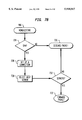
- FIGS. 7A-7C show the flow chart of the VEC router 310.
- the VEC router waits for a packet 702.
- the VEC router checks 704 whether the packet is for an existing TCP connection or is for a new TCP connection. If the packet is for an existing TCP connection then it checks 708 to see if the packet is a FIN, SYN, or RST (all packet types known to the art). If the packet is not one of these it forwards 722 the packet to the internal node associated with the connection. Otherwise, it checks 710 to see if the packet is an RST.
- the conversation is purged from the connection table resetting the connection 712 and the packet is forwarded 722 to the internal node that was associated with the connection.
- the VEC router 310 checks 714 to see if the packet is a SYN. If the packet is a SYN it established the connection 716 which brings the connection into active state even though the connection previously existed. The VEC router 310 then checks 718 to see if the packet is a FIN. If the packet is a FIN the connection is place in FIN state 720. After FIN processing or if the packet was not a FIN it is forwarded to the server associated with the connection 722.
- FIG. 7B shows the non existing connection flow chart.
- the VEC router first checks 724 to see if the packet is a SYN. If the packet is not a SYN it is discarded 726. If the packet is a SYN a connection is set 728 up in active state, a server is selected 730, and the packet is forwarded 722 to the server that was selected.
- FIG. 7C shows the flow chart for the process of selecting a server 730 for a new connection.
- this function implements the weighted routing.
- the internal nodes of a VEC are considered to be numbered from one to n. For example if a VEC has seven nodes, the numbers are 1,2,3,4,5,6 and 7.
- selecting a server eligible weights are considered to be numbered from the maximum legal value to one. For example if the max legal value is five the eligible weights would be 5, 4, 3, 2, and 1. Zero is a special value. Weights are also selected in decreasing order.
- the present invention associates a weight with each internal node providing a specific service. It guarantees for each service that at least one of the nodes has the maximum non zero weight or all of the nodes have zero weight.
- the function which selects a server 730 first picks the number corresponding to the next highest server 734 and the current eligible weight. It then checks 735 to see if this number is too large. If the number is not to large it checks 746 to see if the server corresponding to this number is a good choice. (This check will be described more later.) If the number was too large it picks the first server 736 and the next lower weight. It then checks 738 to see if the next lower weight would be zero. If the next lower weight would not be zero it is used instead of the current eligible weight and this function checks 746 to see if the current server is a good choice. After selecting the first server and the maximum weight, this function checks 742 to see if there are any servers available to rout packets to.
- the selecting a server function will always terminate. For the case when there are node with positive weights the function which selects a server distributes packets base on a ratio of the weights. For example between any two internal nodes if one has weight 3 and the other has weight 2, the node with weight 3 will get three packets for every two packets the node with weight 2 receives.
- FIG. 8 shows an embodiment of the data structures used by the VEC router.
- the VEC table 550 contains the set of addresses which are the VEC addresses on the external network. All parameters which are associated specifically with a VEC are also contained in this table.
- Each VEC is associated with a port table 520 which contains the set of ports 802 that the VEC is providing service for.
- Each port entry 802 has associated with it a stale timeout 804, FIN timeout 806 and other port specific attributes 808.
- Each port has associated with is a subset of the internal nodes of the VEC which are used to provide the services associated with that port.
- the node table 530 contains addresses of the nodes 820 associate with the port, the current weight 822 associated with this node, and other node specific information 830.
- the Node Table 530 also contains the state necessary for the function which selects a server to implementing weighted routing over the set of node in this table.
- the node table contains the total number of nodes 810, last chosen node 812, current eligible weight 814, maximum weight 816, and weight bound 818. The weight bound is used to limit the variance of the maximum weight. No node is allowed to have a weight greater than the weight bound.
- the Connection-Router-Manager (Manager 320) invention is a method and apparatus for dynamically distributing incoming connections using several load metrics according to a configurable policy.
- the Manager provides a control loop that dynamically modifies the weights of the Executor 340 routing algorithm to optimize the allocation of cluster resources.
- the goal of this invention is to improve the overall throughput of the cluster and to reduce the aggregate delay of the service requests, by distributing incoming TCP connections according to the current state of the cluster.
- this invention describes a method to distribute the connections to the server hosts that improves the utilization of the servers and reduces the delay of serving the requests.
- FIG. 6 shows a sample embodiment of the Manager 320 of the present invention within a cluster 600 of five nodes (105, 106, 107, 108, and 109).
- FIG. 6 uses the alternative network configuration of FIG. 4, but the configuration of FIG. 3 is also possible.
- One of the nodes is a gateway 109 which connects to an external network 120 and executes the TCP-Connection-Router 300 (the Executor 340 and the Manager 320).
- the Manager 320 consists of 5 generic components, a load manager (Mbuddy) 610, an external control interface (Callbuddy) 620, a cluster host metric manager (Hostmonitor) 630, a Forward Metric Generator (FMG) 640, and a User Programmable Metric Manager (UPMM) 650.
- a load manager Mbuddy
- Callbuddy external control interface
- Hostmonitor cluster host metric manager
- FMG Forward Metric Generator
- UPMM User Programmable Metric Manager
- Mbuddy 610 can use four different classes of metrics to compute a weights function for the executor: input metrics, host metrics, service metrics, and user metrics. Mbuddy 610 receives these metrics and other relevant information from the Executor interface 346, the Callbuddy interface 624, the Hostmonitor interface 634, the FMG interface 644, and the UPMM interface 654. Mbuddy controls the weights associated with the executor routing algorithm for each VEC port server via interface 344.
- Mbuddy 610 will periodically request from the Executor 340 the values of the internal counters associated with each server via interface 346. For example, it will periodically request the values of the counters of the total number of connections established for each server. By substracting two counters of a server polled at times T1 and T2, Mbuddy 610 can compute a metric variable that represents the number of connections received during the time period T1-T2. The aggregation of such input metrics provide an approximation to the characteristic rate of connection requests for each VEC and each port service.
- the Hostmonitor 630 will periodically send information to Mbuddy 610 about the state of each host in the cluster via a message interface 634.
- the Hostmonitor may use monitoring agents 635 that execute program scripts to evaluate host specific metrics. For example, a script may evaluate the current level of utilization of memory buffers for network connections. If a metric report is not received within a policy-specific threshold time, then the corresponding host metric is given a special value, and the manager may decide that a host is unreacheable, and hence no more connection requests are forwarded to it.
- the Hostmonitor 630 will coordinate the reports of all the monitoring agents and present it to Mbuddy.
- the Forward Metric Generator (FMG) 640 produces and evaluates application-specific or service-specific metrics using forward requests, that is, they originate at the Gateway 109 computer.
- the evaluation consists in producing appropriate requests for each of the cluster host servers and measuring their answering delays. For example, to obtain a forward delay metric on an HTTP server, the FMG may generate an HTTP "GET /" request to each HTTP server in the cluster serving a particular port (e.g. port 80).
- the FMG 640 will then measure the corresponding delays of servicing the HTTP request and forward a metrics vector to Mbuddy 610. If the request is not answered by a policy-specific threshold time, then the FMG will mark the corresponding service node as temporarily not receiving new requests of the particular service type. This information is used by the manager to decide that a service at a particular host is temporarily unreacheable, and hence no more connection requests of this type should be forwarded to it.
- the User Programmable Metric Manager (UPMM) 650 allows users of this invention to define arbitrary new metrics to be considered for management of the connections. Such metrics may describe arbitrary policies that any given cluster installation may want to enforce. For example, an arbitrary policy may require that a certain set of cluster hosts should not receive any TCP connections during certain periods of time due to administrative considerations.
- the UPMM 650 communicates those policies as metrics to Mbuddy via interface 654.
- the Callbuddy 620 component enables administrators to dynamically adjust any of the parameters of Mbuddy 610.
- Callbuddy allows an administrator to configure the algorithm to compute the weight assignment implemented by Mbuddy. For example, administrators may want to dynamically change the weights associated with each of the current metrics. An administrator may, for instance, choose to (1) raise the weight of the host metrics, (2) lower the weight of the service metrics and (3) increase the frequency of polling the Executor 340 for input metrics.
- the Callbuddy 620 component receives administrator requests via interface 622 and informs Mbuddy 610 via interface 624.
- the Mbuddy 610 component is a load manager that establishes a dynamic feedback control loop between the servers and the Connection Router Gateway node. Mbuddy adjusts the weights of the Executor 610 routing algorithm so that servers which are lightly loaded according to the load metrics will receive a larger portion of the incoming TCP connections of their type. Given an arbitrary set of load and policy metrics as defined above, Mbuddy will compute a new relative weight for each server of each port in each VEC, based on its current metrics and its current weight.
- the weight assignments are computed for each port on every VEC as follows: (1) Compute all the aggregate metrics (AM) for all the executing servers. (2) Compute all the current weight proportions for each executing server (CWP). (2) For each metric M compute for each server S the metric proportion (MP) of its value (relative to the aggregate AM). (3) For each server compute a new weight NW: (3a) If the server has been quiesced set is NW to 0. (3b) If the server has a sticky weight W use the value of W as the NW. (3c) compute a vector NWV, where each entry NWV i! is based on a single metric M i!, by the following formula:
- FIG. 9 is a flowchart description of how the metrics are received by the Manager and the weights assignments are computed by the present invention.
- Box 910 at the top shows the Manager Mbuddy component waiting for an event which is either a message or a timeout.
- Decision block 920 determines the type of event that occurred. If there was a timeout that requires refreshing values, then in block 930 the Executor is queried to obtain a set of counter values that provide input metrics (935). If block 920 decides that the event is a request for updating parameters, the corresponding parameters are updated (928). For instance, an administrator may update the weights associated with any metric, or the polling period.
- Block 920 determines that the event was the receipt of a metrics update, then in Block 925 the metrics are retrieved and the internal variables are set accordingly. If new metrics have arrived, in Block 940 the algorithm will compute the current proportions of all the metrics and the current weights. Then, in Block 950 the new weights will be computed for each of the server nodes, NW, using the formulas described above. This Block creates a new vector of weights NW i! where each server i has a weight entry. Decision block 960 determines if the computed new vector of weights NW i! is different than the current weights vector by an arbitrary threshold function. If the new vector is different, then in Block 970 the executor is informed of the new weights, else the algorithm returns to the TOP state, waiting for a new event.
- the recovery manager in the designated backup gateway Upon detection of a failure of a functioning gateway, the recovery manager in the designated backup gateway becomes active. Failure detection can be done conventionally such as is described in A. Bhide et al., "A highly Available Network File Server", USENIX Conference, Winter 1991, Dallas, Tex., Page 199; or F. Jahanian et al., "Processor Group Membership Protocols: Specification, Design and Implementation", Proceedings of the 12th Symposium of Reliable Distributed Systems, Pages 2-11, Princeton, N.J., October 1993, IEEE Computer Society.
- the recovery manager first removes the network connection from the failed Gateway, as is taught in HA/NFS (4), then interrogates all active server nodes to obtain state information from their shadow connection tables, and constructs from this information the connection table in the message switch of the Gateway.
- the takeover process must complete within the timeout interval of TCP/IP, so that existing connections are not lost.
- interior nodes execute a novel hybrid algorithm (described later) to sense when connections have become inactive and remove them from their shadow connection tables, so that only active connections are described to the taking-over Gateway.
- the Recovery Manager executing in the backup Gateway enables its own network interface so as to receive packets addressed to the cluster ip-address. This last step completes the work needed to allow the backup Gateway to be operational.
- Relatively static configuration data used by the Manager component is kept in a file shared between primary and backup Gateway, and is read by the backup during takeover.
- connection information in duplicate at the backup Gateway would require a "two-phase" protocol between primary and backup Gateways on each established and terminated connection, and was rejected because of the severe performance cost.
- FIG. 10 illustrates the configuration of an encapsulated cluster with a highly available Gateway.
- the primary Gateway 1050 is actively connected to the external network 120.
- the designated backup Gateway 1030 contains a physical but inactive connection to network 120.
- each Gateway contains a Recovery Manager 1020. (The primary Gateway may become the backup after failure and recovery.)
- Each server node 107 contains a shadow connection table 1010 in which it maintains information about its active connections to the external network 120.
- Messages arrive at the cluster gateway, directed to a particular TCP or UDP protocol port.
- the message switch within the Gateway allows a message routing function to be installed for a protocol port.
- the routing function is called for each message arriving for the associated port, and is responsible for selecting the internal node and port to which the message is forwarded.
- Information specifying the established connection and the cluster node holding the connection is recorded in a table in the Gateway; this table is used by the message switch to route incoming packets on established connections to the correct cluster node.
- Relatively static information such as which server ports have installed message switch functions is maintained, and other manager configuration information is kept in a shared file, accessible to both primary and backup Gateway.
- Current connection information changes very rapidly and is managed according to the techniques described herein.
- Each interior node 107 keeps a shadow 1010 of the Gateways routing table for its own connections (not for any connections to other nodes).
- This shadow table is used by the node to respond to the taking-over Gateway's request from the Recovery Manager 1020 in the backup Gateway 1030 during takeover.
- This table greatly reduces the amount of time the interior node needs to respond to the taking-over Gateway, and this is very important because, to keep established connections live, the takeover Gateway must be operational within the "time-out" period that the connection-based protocol allows for successful completion of a communication.
- Connections are either in one of two states, Active or FIN.
- Connection table entries are time stamped on every reference.
- a user configurable timer called the FIN -- TIME -- OUT is kept. This timer represents the point in time after the last reference to a conversation in FIN state that it will be assumed to be closed.
- the timers can be either global, per service address, or per port.
- the intent of active close (one side of the connection has sent FIN but the other continues to send on the connection) is that the server would be allowed to continue sending data to a client and at the end of the data transmission the conversation would be closed.
- the client is allowed to actively close the conversation as a means of telling the server that no further request from the client will be sent.
- This protocol works because the server continues to send data which will be acked. The router and consequently the server will see the acks and continually time stamp the connection table entries. Once the server completes sending data to the client and closes its "half" of the conversation the final ack will flow to the server from the client. After FIN -- TIME -- OUT time has elapsed the server can purge the connection entry. A second timer, STALE -- TIME -- OUT is kept by the Gateway. Any connection which is in Active state with no activity for longer than STALE -- TIME -- OUT can be purged.
- connection reconstruction algorithm is executed also in the interior nodes to reclaim space for entries in the shadow of the connection table which the interior node keeps to support the takeover process by the backup Gateway. In this way we keep the number of entries in the shadow tables as small as possible, and this in turn allows the takeover process to proceed as quickly as possible.
- the FIN -- TIME -- OUT should be set to a value which is three times the minimum segment length (MSL) of TCP.
- MSL minimum segment length
- the default STALE -- TIME -- OUT should be longer than TCPs stale time out. More reasonable values for FIN -- TIME -- OUT can be figured out by taking into account the protocol which the timer is associated with.
- the backup Gateway removes the primary Gateway's network connection; this step is required to ensure that the Gateway which is presumed down is in fact prevented from accepting messages from the network. Without this step, it would be possible for a type of failure, i.e., a "partially-failed Gateway" to continue to receive messages and perform processing, which could compromise the integrity of the system.
- the backup Gateway interrogates each functioning node of the cluster, requesting descriptions of all UDP ports allocated at the respective node, and TCP connections established through the primary Gateway between itself and hosts outside the cluster; the backup Gateway does this using a private ip-based protocol.
- the shadow connection table kept in each node allows immediate response from the nodes, increasing the probability that established connections do not time out during Gateway takeover.
- the algorithm described above for recognizing closed connections and reclaiming the space used to support them minimizes the size of the shadow connection table and contributes to reducing the time required to accomplish Gateway takeover.
- the backup Gateway records responses from each functioning node, and records the node's UDP ports and TCP connections in the connection table 510 of FIG. 5 in the backup Gateway's Executor 340 FIG. 10.
- the backup Gateway enables its own network interface so as to receive packets addressed to the cluster ip-address. This last step completes the work needed to allow the backup Gateway to be operational.
Abstract
Description
NWV i!=AW+ (CWP-MP)/SF!
NW=NWV 1!*W 1!+NWV 2!*W 2!+. . . +NWV i!* W i!
Claims (11)
Priority Applications (7)
| Application Number | Priority Date | Filing Date | Title |
|---|---|---|---|
| US08/701,939 US5918017A (en) | 1996-08-23 | 1996-08-23 | System and method for providing dynamically alterable computer clusters for message routing |
| KR1019970025076A KR100255626B1 (en) | 1996-08-23 | 1997-06-17 | Recoverable virtual encapsulated cluster |
| CNB971154376A CN1146186C (en) | 1996-08-23 | 1997-07-22 | Virtual enclosed cluster capable of recovery |
| EP97305990A EP0838931A3 (en) | 1996-08-23 | 1997-08-06 | Recoverable virtual encapsulated cluster |
| TW086111432A TW340921B (en) | 1996-08-23 | 1997-08-09 | Recoverable virtual encapsulated cluster |
| JP22351697A JP3452466B2 (en) | 1996-08-23 | 1997-08-20 | Method and system for routing incoming messages |
| US09/289,225 US6496866B2 (en) | 1996-08-23 | 1999-04-09 | System and method for providing dynamically alterable computer clusters for message routing |
Applications Claiming Priority (1)
| Application Number | Priority Date | Filing Date | Title |
|---|---|---|---|
| US08/701,939 US5918017A (en) | 1996-08-23 | 1996-08-23 | System and method for providing dynamically alterable computer clusters for message routing |
Related Child Applications (1)
| Application Number | Title | Priority Date | Filing Date |
|---|---|---|---|
| US09/289,225 Division US6496866B2 (en) | 1996-08-23 | 1999-04-09 | System and method for providing dynamically alterable computer clusters for message routing |
Publications (1)
| Publication Number | Publication Date |
|---|---|
| US5918017A true US5918017A (en) | 1999-06-29 |
Family
ID=24819290
Family Applications (2)
| Application Number | Title | Priority Date | Filing Date |
|---|---|---|---|
| US08/701,939 Expired - Lifetime US5918017A (en) | 1996-08-23 | 1996-08-23 | System and method for providing dynamically alterable computer clusters for message routing |
| US09/289,225 Expired - Fee Related US6496866B2 (en) | 1996-08-23 | 1999-04-09 | System and method for providing dynamically alterable computer clusters for message routing |
Family Applications After (1)
| Application Number | Title | Priority Date | Filing Date |
|---|---|---|---|
| US09/289,225 Expired - Fee Related US6496866B2 (en) | 1996-08-23 | 1999-04-09 | System and method for providing dynamically alterable computer clusters for message routing |
Country Status (6)
| Country | Link |
|---|---|
| US (2) | US5918017A (en) |
| EP (1) | EP0838931A3 (en) |
| JP (1) | JP3452466B2 (en) |
| KR (1) | KR100255626B1 (en) |
| CN (1) | CN1146186C (en) |
| TW (1) | TW340921B (en) |
Cited By (169)
| Publication number | Priority date | Publication date | Assignee | Title |
|---|---|---|---|---|
| US6173319B1 (en) * | 1998-05-08 | 2001-01-09 | Attachmate Corporation | Using a systems network architecture logical unit activation request unit as a dynamic configuration definition in a gateway |
| US6205477B1 (en) * | 1998-10-20 | 2001-03-20 | Cisco Technology, Inc. | Apparatus and method for performing traffic redirection in a distributed system using a portion metric |
| US6253230B1 (en) * | 1998-09-22 | 2001-06-26 | International Business Machines Corporation | Distributed scalable device for selecting a server from a server cluster and a switched path to the selected server |
| US6260070B1 (en) | 1998-06-30 | 2001-07-10 | Dhaval N. Shah | System and method for determining a preferred mirrored service in a network by evaluating a border gateway protocol |
| US6298381B1 (en) | 1998-10-20 | 2001-10-02 | Cisco Technology, Inc. | System and method for information retrieval regarding services |
| US6308216B1 (en) * | 1997-11-14 | 2001-10-23 | International Business Machines Corporation | Service request routing using quality-of-service data and network resource information |
| US6324161B1 (en) * | 1997-08-27 | 2001-11-27 | Alcatel Usa Sourcing, L.P. | Multiple network configuration with local and remote network redundancy by dual media redirect |
| US6324177B1 (en) * | 1997-05-02 | 2001-11-27 | Cisco Technology | Method and apparatus for managing connections based on a client IP address |
| US6337862B1 (en) * | 2000-02-26 | 2002-01-08 | 3Com Corporation | Network switch with truncated trie look-up facility |
| US6345316B1 (en) * | 1998-02-12 | 2002-02-05 | International Business Machines Corporation | Apparatus, method and computer program product for client/server computing with the ability to select which servers are capable of creating transaction state data |
| US6366558B1 (en) * | 1997-05-02 | 2002-04-02 | Cisco Technology, Inc. | Method and apparatus for maintaining connection state between a connection manager and a failover device |
| US6370583B1 (en) * | 1998-08-17 | 2002-04-09 | Compaq Information Technologies Group, L.P. | Method and apparatus for portraying a cluster of computer systems as having a single internet protocol image |
| US20020052931A1 (en) * | 2000-10-10 | 2002-05-02 | Christopher Peiffer | HTTP multiplexor/demultiplexor |
| US20020051458A1 (en) * | 1998-04-24 | 2002-05-02 | Avici Systems | Composite trunking |
| US20020052825A1 (en) * | 2000-05-01 | 2002-05-02 | Ndex Systems Inc. | System and method for anonymously matching products or services with a consumer |
| US6385657B1 (en) * | 1997-06-27 | 2002-05-07 | Sun Microsystems, Inc. | Chain transaction transfers between ring computer systems coupled by bridge modules |
| US6389465B1 (en) | 1998-05-08 | 2002-05-14 | Attachmate Corporation | Using a systems network architecture logical unit activation request unit as a dynamic configuration definition in a gateway |
| US6430155B1 (en) * | 1998-11-30 | 2002-08-06 | Cisco Technology, Inc. | Congestion avoidance on communications networks |
| US6430610B1 (en) * | 1998-09-02 | 2002-08-06 | Steeleye Technology, Inc. | TCP/IP address protection mechanism in a clustered server environment |
| US20020112085A1 (en) * | 2000-12-21 | 2002-08-15 | Berg Mitchell T. | Method and system for communicating an information packet through multiple networks |
| US20020116605A1 (en) * | 2000-12-21 | 2002-08-22 | Berg Mitchell T. | Method and system for initiating execution of software in response to a state |
| US20020116532A1 (en) * | 2000-12-21 | 2002-08-22 | Berg Mitchell T. | Method and system for communicating an information packet and identifying a data structure |
| US20020116475A1 (en) * | 2000-12-21 | 2002-08-22 | Berg Mitchell T. | Method and system for communicating a request packet in response to a state |
| US20020116397A1 (en) * | 2000-12-21 | 2002-08-22 | Berg Mitchell T. | Method and system for communicating an information packet through multiple router devices |
| US20020120761A1 (en) * | 2000-12-21 | 2002-08-29 | Berg Mitchell T. | Method and system for executing protocol stack instructions to form a packet for causing a computing device to perform an operation |
| US6446121B1 (en) | 1998-05-26 | 2002-09-03 | Cisco Technology, Inc. | System and method for measuring round trip times in a network using a TCP packet |
| US20020124089A1 (en) * | 2000-08-17 | 2002-09-05 | Aiken John Andrew | Methods, systems and computer program products for cluster workload distribution without preconfigured port identification |
| US20020143699A1 (en) * | 2001-03-28 | 2002-10-03 | International Business Machines Corporation | System and method for automating invoice processing with positive confirmation |
| US20020154703A1 (en) * | 2000-01-26 | 2002-10-24 | Ichiro Kubota | Data transmission system |
| US6484206B2 (en) * | 1998-10-07 | 2002-11-19 | Nortel Networks Limited | Efficient recovery of multiple connections in a communication network |
| US20020174420A1 (en) * | 2000-09-25 | 2002-11-21 | Naveen Kumar | Apparatus and method for automated creation of resource types |
| US6487582B2 (en) * | 1997-08-06 | 2002-11-26 | Samsung Electronics Co., Ltd. | Multi-user interactive web server and communication method between users using the same |
| US20020178265A1 (en) * | 2001-05-22 | 2002-11-28 | Aiken John Andrew | Methods systems and computer program products for source address selection |
| US20020178268A1 (en) * | 2001-05-22 | 2002-11-28 | Aiken John Andrew | Methods, systems and computer program products for port assignments of multiple application instances using the same source IP address |
| US20030023798A1 (en) * | 2001-07-30 | 2003-01-30 | International Business Machines Corporation | Method, system, and program products for distributed content throttling in a computing environment |
| US6549538B1 (en) * | 1998-12-31 | 2003-04-15 | Compaq Information Technologies Group, L.P. | Computer method and apparatus for managing network ports cluster-wide using a lookaside list |
| US6564261B1 (en) | 1999-05-10 | 2003-05-13 | Telefonaktiebolaget Lm Ericsson (Publ) | Distributed system to intelligently establish sessions between anonymous users over various networks |
| US6587866B1 (en) * | 2000-01-10 | 2003-07-01 | Sun Microsystems, Inc. | Method for distributing packets to server nodes using network client affinity and packet distribution table |
| US6597704B1 (en) | 1998-10-07 | 2003-07-22 | Nortel Networks Limited | System for translating a message from a first transmission protocol to a second transmission protocol |
| US20030137935A1 (en) * | 2002-01-22 | 2003-07-24 | Michael Kagan | Static flow rate control |
| US20030159084A1 (en) * | 2000-01-10 | 2003-08-21 | Sun Microsystems, Inc. | Controlled take over of services by remaining nodes of clustered computing system |
| US6618359B1 (en) | 1998-10-07 | 2003-09-09 | Nortel Networks Limited | Error recovery in a mixed protocol networks |
| US20030177182A1 (en) * | 1999-06-14 | 2003-09-18 | International Business Machines Corporation | Ensuring a given transactional unit of work arrives at an appropriate server instance |
| US6665304B2 (en) * | 1998-12-31 | 2003-12-16 | Hewlett-Packard Development Company, L.P. | Method and apparatus for providing an integrated cluster alias address |
| US6667980B1 (en) | 1999-10-21 | 2003-12-23 | Sun Microsystems, Inc. | Method and apparatus for providing scalable services using a packet distribution table |
| US6671273B1 (en) | 1998-12-31 | 2003-12-30 | Compaq Information Technologies Group L.P. | Method for using outgoing TCP/IP sequence number fields to provide a desired cluster node |
| US20040006640A1 (en) * | 2002-07-03 | 2004-01-08 | Inderieden Daniel W. | Notification to routing protocols of changes to routing information base |
| US6724724B1 (en) | 1999-01-21 | 2004-04-20 | Cisco Technology, Inc. | System and method for resolving an electronic address |
| US6735205B1 (en) | 2000-01-10 | 2004-05-11 | Sun Microsystems, Inc. | Method and apparatus for fast packet forwarding in cluster networking |
| US6735206B1 (en) | 2000-01-10 | 2004-05-11 | Sun Microsystems, Inc. | Method and apparatus for performing a fast service lookup in cluster networking |
| US6748437B1 (en) | 2000-01-10 | 2004-06-08 | Sun Microsystems, Inc. | Method for creating forwarding lists for cluster networking |
| US20040122903A1 (en) * | 2002-12-20 | 2004-06-24 | Thomas Saulpaugh | Role-based message addressing for a computer network |
| US6757836B1 (en) | 2000-01-10 | 2004-06-29 | Sun Microsystems, Inc. | Method and apparatus for resolving partial connectivity in a clustered computing system |
| US6769008B1 (en) | 2000-01-10 | 2004-07-27 | Sun Microsystems, Inc. | Method and apparatus for dynamically altering configurations of clustered computer systems |
| US6795860B1 (en) | 1999-04-05 | 2004-09-21 | Cisco Technology, Inc. | System and method for selecting a service with dynamically changing information |
| US20040210623A1 (en) * | 2003-03-06 | 2004-10-21 | Aamer Hydrie | Virtual network topology generation |
| US20040255019A1 (en) * | 2000-09-28 | 2004-12-16 | Intel Corporation, A Delaware Corporation | Speed sensitive content delivery in a client-server network |
| US20040264481A1 (en) * | 2003-06-30 | 2004-12-30 | Darling Christopher L. | Network load balancing with traffic routing |
| US20040268357A1 (en) * | 2003-06-30 | 2004-12-30 | Joy Joseph M. | Network load balancing with session information |
| US6839321B1 (en) | 2000-07-18 | 2005-01-04 | Alcatel | Domain based congestion management |
| US6847993B1 (en) | 2000-05-31 | 2005-01-25 | International Business Machines Corporation | Method, system and program products for managing cluster configurations |
| WO2005008493A1 (en) * | 2002-05-31 | 2005-01-27 | Unisys Corporation | Improving transaction-processing performance by preferentially reusing frequently used processes |
| US6862613B1 (en) | 2000-01-10 | 2005-03-01 | Sun Microsystems, Inc. | Method and apparatus for managing operations of clustered computer systems |
| US20050088976A1 (en) * | 2003-10-22 | 2005-04-28 | Chafle Girish B. | Methods, apparatus and computer programs for managing performance and resource utilization within cluster-based systems |
| US20050141506A1 (en) * | 2000-08-17 | 2005-06-30 | Aiken John A.Jr. | Methods, systems and computer program products for cluster workload distribution |
| US20050160133A1 (en) * | 2004-01-16 | 2005-07-21 | Greenlee Gordan G. | Virtual clustering and load balancing servers |
| US6938031B1 (en) | 2001-10-19 | 2005-08-30 | Data Return Llc | System and method for accessing information in a replicated database |
| US6941384B1 (en) | 2000-08-17 | 2005-09-06 | International Business Machines Corporation | Methods, systems and computer program products for failure recovery for routed virtual internet protocol addresses |
| WO2005091136A1 (en) * | 2004-03-13 | 2005-09-29 | Cluster Resources, Inc. | System and method for a self-optimizing reservation in time of compute resources |
| US6963917B1 (en) | 2000-10-20 | 2005-11-08 | International Business Machines Corporation | Methods, systems and computer program products for policy based distribution of workload to subsets of potential servers |
| US6965930B1 (en) | 2000-10-20 | 2005-11-15 | International Business Machines Corporation | Methods, systems and computer program products for workload distribution based on end-to-end quality of service |
| US6965938B1 (en) * | 2000-09-07 | 2005-11-15 | International Business Machines Corporation | System and method for clustering servers for performance and load balancing |
| US6970425B1 (en) * | 2000-04-27 | 2005-11-29 | At&T Corp. | Method and apparatus for throttling and distributing data transmissions across a network |
| US6975630B1 (en) * | 1999-11-26 | 2005-12-13 | Juniper Networks, Inc. | System and method of avoiding cell disposal in buffer |
| US20050283643A1 (en) * | 2004-06-17 | 2005-12-22 | International Business Machines Corporation | Method and system for self-healing in routers |
| US20060015870A1 (en) * | 2002-05-31 | 2006-01-19 | Charles Loboz | Transaction-processing performance by preferentially reusing frequently used processes |
| US6993591B1 (en) * | 1998-09-30 | 2006-01-31 | Lucent Technologies Inc. | Method and apparatus for prefetching internet resources based on estimated round trip time |
| US6996617B1 (en) | 2000-08-17 | 2006-02-07 | International Business Machines Corporation | Methods, systems and computer program products for non-disruptively transferring a virtual internet protocol address between communication protocol stacks |
| US7000016B1 (en) | 2001-10-19 | 2006-02-14 | Data Return Llc | System and method for multi-site clustering in a network |
| US20060074700A1 (en) * | 2004-09-28 | 2006-04-06 | International Business Machines Corporation | Method, system and program product for planning and managing a call center study |
| US20060085506A1 (en) * | 2004-10-14 | 2006-04-20 | Don Meyers | Controlling receipt of undesired electronic mail |
| US7039008B1 (en) | 1997-05-02 | 2006-05-02 | Cisco Technology, Inc. | Method and apparatus for maintaining connection state between a connection manager and a failover device |
| US7062556B1 (en) * | 1999-11-22 | 2006-06-13 | Motorola, Inc. | Load balancing method in a communication network |
| US20060224725A1 (en) * | 2005-04-05 | 2006-10-05 | Bali Bahri B | On-demand global server load balancing system and method of use |
| US20060271647A1 (en) * | 2005-05-11 | 2006-11-30 | Applied Voice & Speech Tech., Inc. | Messaging system configurator |
| US20070022425A1 (en) * | 2004-03-13 | 2007-01-25 | Jackson David B | System and method for providing advanced reservations in a compute environment |
| US20070030811A1 (en) * | 2005-08-02 | 2007-02-08 | Skypilot Networks, Inc. | Method and apparatus for maximizing data transmission capacity of a mesh network |
| US20070061417A1 (en) * | 2000-12-21 | 2007-03-15 | Berg Mitchell T | Method and system for selectively initiating execution of a software object |
| US20070094665A1 (en) * | 2004-03-13 | 2007-04-26 | Cluster Resources, Inc. | System and method of co-allocating a reservation spanning different compute resources types |
| US7228337B1 (en) * | 2001-09-11 | 2007-06-05 | Cisco Technology, Inc. | Methods and apparatus for providing a network service to a virtual machine |
| US20070130355A1 (en) * | 2001-06-15 | 2007-06-07 | Cisco Technology, Inc. | System and Method for Determining a Preferred Mirrored Service in a Network by Evaluating a Border Gateway Protocol |
| US20070162363A1 (en) * | 2000-09-07 | 2007-07-12 | Jean-Paul Chollon | System and method for front end business logic and validation |
| US20070179894A1 (en) * | 2001-03-22 | 2007-08-02 | Cirulli Susan B | System and method for leveraging procurement across companies and company groups |
| US20070192827A1 (en) * | 2002-03-18 | 2007-08-16 | Mark Maxted | Method and apparatus for policy management in a network device |
| US7292585B1 (en) | 2002-12-20 | 2007-11-06 | Symantec Operating Corporation | System and method for storing and utilizing routing information in a computer network |
| US20070265955A1 (en) * | 2001-03-02 | 2007-11-15 | International Business Machines Corporation | System and method for managing internet trading networks |
| US7327741B1 (en) | 2002-12-20 | 2008-02-05 | Symantec Operating Corporation | Detecting and breaking cycles in a computer network |
| US20080043759A1 (en) * | 2006-08-17 | 2008-02-21 | Northrop Grumman Systems Corporation | System, Apparatus, Method and Computer Program Product for an Intercom System |
| US20080071653A1 (en) * | 2001-03-23 | 2008-03-20 | Cirulli Susan B | System and method for processing tax codes by company group |
| US20080091578A1 (en) * | 2001-03-22 | 2008-04-17 | Kane Timothy R | System and method for synchronizing ledger accounts by company group |
| US20080112557A1 (en) * | 2006-11-14 | 2008-05-15 | International Business Machines Corporation | Method and system for analyzing contact studies |
| US20080120212A1 (en) * | 2001-03-22 | 2008-05-22 | Thomas Alexander Aber | System and method for invoice imaging through negative confirmation process |
| US7404006B1 (en) | 2002-12-20 | 2008-07-22 | Symantec Operating Corporation | Publishing a network address in a computer network |
| US20080222642A1 (en) * | 2007-03-08 | 2008-09-11 | Oracle International Corporation | Dynamic resource profiles for clusterware-managed resources |
| US7467194B1 (en) | 2002-12-20 | 2008-12-16 | Symantec Operating Corporation | Re-mapping a location-independent address in a computer network |
| US7490165B1 (en) * | 2001-07-18 | 2009-02-10 | Cisco Technology, Inc. | Method and apparatus for computing a path in a system with nodal and link diverse constraints |
| US7512686B2 (en) * | 2000-12-21 | 2009-03-31 | Berg Mitchell T | Method and system for establishing a data structure of a connection with a client |
| US7533385B1 (en) * | 2004-07-07 | 2009-05-12 | Sprint Communications Company Lp | Virtualization and server imaging system for allocation of computer hardware and software |
| US7555527B1 (en) | 2003-11-07 | 2009-06-30 | Symantec Operating Corporation | Efficiently linking storage object replicas in a computer network |
| US7570600B1 (en) | 2003-12-17 | 2009-08-04 | Symantec Operating Corporation | Overlay network with efficient routing and recovery |
| US7574343B2 (en) | 2000-10-24 | 2009-08-11 | Microsoft Corporation | System and method for logical modeling of distributed computer systems |
| US7590736B2 (en) | 2003-06-30 | 2009-09-15 | Microsoft Corporation | Flexible network load balancing |
| US7606929B2 (en) | 2003-06-30 | 2009-10-20 | Microsoft Corporation | Network load balancing with connection manipulation |
| US7606898B1 (en) | 2000-10-24 | 2009-10-20 | Microsoft Corporation | System and method for distributed management of shared computers |
| US7630877B2 (en) | 2003-03-06 | 2009-12-08 | Microsoft Corporation | Architecture for distributed computing system and automated design, deployment, and management of distributed applications |
| US7636917B2 (en) | 2003-06-30 | 2009-12-22 | Microsoft Corporation | Network load balancing with host status information |
| US20100011126A1 (en) * | 2000-09-26 | 2010-01-14 | Foundry Networks, Inc. | Global server load balancing |
| US20100011102A1 (en) * | 2008-07-11 | 2010-01-14 | International Business Machines Corporation | Method for placing composite applications in a federated environment |
| US7653059B1 (en) | 2002-12-20 | 2010-01-26 | Symantec Operating Corporation | Communication sessions for a computer network |
| US20100057837A1 (en) * | 2008-09-03 | 2010-03-04 | Microsoft Corporation | Shared hosting using host name affinity |
| US7680950B1 (en) | 2003-11-07 | 2010-03-16 | Symantec Operating Corporation | Efficient search for storage objects in a network |
| US20100100960A1 (en) * | 2008-10-16 | 2010-04-22 | Chunghwa Telecom Co., Ltd. | System and method for protecting data of network users |
| US20100223621A1 (en) * | 2002-08-01 | 2010-09-02 | Foundry Networks, Inc. | Statistical tracking for global server load balancing |
| US7941309B2 (en) | 2005-11-02 | 2011-05-10 | Microsoft Corporation | Modeling IT operations/policies |
| US20110138056A1 (en) * | 2004-03-13 | 2011-06-09 | Adaptive Computing Enterprises, Inc. | System and method of providing reservation masks within a compute environment |
| US20110191459A1 (en) * | 2004-05-06 | 2011-08-04 | Foundry Networks, Llc | Configurable geographic prefixes for global server load balancing |
| US8024761B1 (en) * | 1999-04-01 | 2011-09-20 | Cox Communications, Inc. | Method and apparatus of load sharing and fault tolerance in an interactive video distribution system |
| US8060619B1 (en) | 2003-11-07 | 2011-11-15 | Symantec Operating Corporation | Direct connections to a plurality of storage object replicas in a computer network |
| US8275864B1 (en) | 2002-12-20 | 2012-09-25 | Symantec Operating Corporation | Peer-to-peer network with recovery capability |
| US8321871B1 (en) | 2004-06-18 | 2012-11-27 | Adaptive Computing Enterprises, Inc. | System and method of using transaction IDS for managing reservations of compute resources within a compute environment |
| US8370523B1 (en) | 2002-12-20 | 2013-02-05 | Symantec Operating Corporation | Managing routing information for a computer network |
| US8549148B2 (en) | 2010-10-15 | 2013-10-01 | Brocade Communications Systems, Inc. | Domain name system security extensions (DNSSEC) for global server load balancing |
| US8559341B2 (en) | 2010-11-08 | 2013-10-15 | Cisco Technology, Inc. | System and method for providing a loop free topology in a network environment |
| US8572253B2 (en) | 2005-06-17 | 2013-10-29 | Adaptive Computing Enterprises, Inc. | System and method for providing dynamic roll-back |
| US8612541B2 (en) | 2011-04-29 | 2013-12-17 | Blue Coat Systems, Inc. | Method and apparatus for multi-tenant policy management in a network device |
| US8670326B1 (en) | 2011-03-31 | 2014-03-11 | Cisco Technology, Inc. | System and method for probing multiple paths in a network environment |
| US8724517B1 (en) | 2011-06-02 | 2014-05-13 | Cisco Technology, Inc. | System and method for managing network traffic disruption |
| US8755279B2 (en) | 2004-08-23 | 2014-06-17 | Brocade Communications Systems, Inc. | Smoothing algorithm for round trip time (RTT) measurements |
| US8774010B2 (en) | 2010-11-02 | 2014-07-08 | Cisco Technology, Inc. | System and method for providing proactive fault monitoring in a network environment |
| US8782225B2 (en) | 2006-04-21 | 2014-07-15 | International Business Machines Corporation | On-demand global server load balancing system and method of use |
| US8830875B1 (en) | 2011-06-15 | 2014-09-09 | Cisco Technology, Inc. | System and method for providing a loop free topology in a network environment |
| US8862740B2 (en) | 2004-05-06 | 2014-10-14 | Brocade Communications Systems, Inc. | Host-level policies for global server load balancing |
| US8886705B1 (en) | 2003-06-30 | 2014-11-11 | Symantec Operating Corporation | Goal-oriented storage management for a distributed data storage network |
| US8982733B2 (en) | 2011-03-04 | 2015-03-17 | Cisco Technology, Inc. | System and method for managing topology changes in a network environment |
| US9015323B2 (en) | 2000-09-26 | 2015-04-21 | Brocade Communications Systems, Inc. | Global server load balancing |
| US9130954B2 (en) | 2000-09-26 | 2015-09-08 | Brocade Communications Systems, Inc. | Distributed health check for global server load balancing |
| US9210616B2 (en) | 2001-02-05 | 2015-12-08 | Ipr Licensing, Inc. | Application specific traffic optimization in a wireless link |
| US20160043933A1 (en) * | 2014-08-05 | 2016-02-11 | Dell Products L.P. | Peer-influenced aggregate member selection |
| US9450846B1 (en) | 2012-10-17 | 2016-09-20 | Cisco Technology, Inc. | System and method for tracking packets in a network environment |
| US9544364B2 (en) | 2012-12-06 | 2017-01-10 | A10 Networks, Inc. | Forwarding policies on a virtual service network |
| US9584360B2 (en) | 2003-09-29 | 2017-02-28 | Foundry Networks, Llc | Global server load balancing support for private VIP addresses |
| US9661026B2 (en) | 2006-10-17 | 2017-05-23 | A10 Networks, Inc. | Applying security policy to an application session |
| US9742879B2 (en) | 2012-03-29 | 2017-08-22 | A10 Networks, Inc. | Hardware-based packet editor |
| US9942152B2 (en) | 2014-03-25 | 2018-04-10 | A10 Networks, Inc. | Forwarding data packets using a service-based forwarding policy |
| US9954899B2 (en) | 2006-10-17 | 2018-04-24 | A10 Networks, Inc. | Applying a network traffic policy to an application session |
| US9992107B2 (en) | 2013-03-15 | 2018-06-05 | A10 Networks, Inc. | Processing data packets using a policy based network path |
| US10038693B2 (en) | 2013-05-03 | 2018-07-31 | A10 Networks, Inc. | Facilitating secure network traffic by an application delivery controller |
| US10193852B2 (en) | 2002-08-07 | 2019-01-29 | Avago Technologies International Sales Pte. Limited | Canonical name (CNAME) handling for global server load balancing |
| US10268467B2 (en) | 2014-11-11 | 2019-04-23 | A10 Networks, Inc. | Policy-driven management of application traffic for providing services to cloud-based applications |
| US20200045015A1 (en) * | 2018-07-31 | 2020-02-06 | Ca, Inc. | Dynamically controlling firewall ports based on server transactions to reduce risks |
| US10733028B2 (en) | 2004-03-13 | 2020-08-04 | Iii Holdings 12, Llc | Co-allocating a reservation spanning different compute resources types |
| US11494235B2 (en) | 2004-11-08 | 2022-11-08 | Iii Holdings 12, Llc | System and method of providing system jobs within a compute environment |
| US11496415B2 (en) | 2005-04-07 | 2022-11-08 | Iii Holdings 12, Llc | On-demand access to compute resources |
| US11522952B2 (en) | 2007-09-24 | 2022-12-06 | The Research Foundation For The State University Of New York | Automatic clustering for self-organizing grids |
| US11526304B2 (en) | 2009-10-30 | 2022-12-13 | Iii Holdings 2, Llc | Memcached server functionality in a cluster of data processing nodes |
| US11630704B2 (en) | 2004-08-20 | 2023-04-18 | Iii Holdings 12, Llc | System and method for a workload management and scheduling module to manage access to a compute environment according to local and non-local user identity information |
| US11650857B2 (en) | 2006-03-16 | 2023-05-16 | Iii Holdings 12, Llc | System and method for managing a hybrid computer environment |
| US11658916B2 (en) | 2005-03-16 | 2023-05-23 | Iii Holdings 12, Llc | Simple integration of an on-demand compute environment |
| US11720290B2 (en) | 2009-10-30 | 2023-08-08 | Iii Holdings 2, Llc | Memcached server functionality in a cluster of data processing nodes |
Families Citing this family (38)
| Publication number | Priority date | Publication date | Assignee | Title |
|---|---|---|---|---|
| US5999712A (en) * | 1997-10-21 | 1999-12-07 | Sun Microsystems, Inc. | Determining cluster membership in a distributed computer system |
| US6751191B1 (en) * | 1999-06-29 | 2004-06-15 | Cisco Technology, Inc. | Load sharing and redundancy scheme |
| US6917626B1 (en) * | 1999-11-30 | 2005-07-12 | Cisco Technology, Inc. | Apparatus and method for automatic cluster network device address assignment |
| US6636499B1 (en) | 1999-12-02 | 2003-10-21 | Cisco Technology, Inc. | Apparatus and method for cluster network device discovery |
| US6601101B1 (en) * | 2000-03-15 | 2003-07-29 | 3Com Corporation | Transparent access to network attached devices |
| US7711790B1 (en) | 2000-08-24 | 2010-05-04 | Foundry Networks, Inc. | Securing an accessible computer system |
| US7725587B1 (en) | 2000-08-24 | 2010-05-25 | Aol Llc | Deep packet scan hacker identification |
| US20020129095A1 (en) * | 2000-12-29 | 2002-09-12 | Hatalkar Atul N. | Broadcast communication system with dynamic client-group memberships |
| JP2004518335A (en) * | 2001-01-11 | 2004-06-17 | ノーテル・ネットワークス・リミテッド | How to process large amounts of data |
| US7171453B2 (en) * | 2001-04-19 | 2007-01-30 | Hitachi, Ltd. | Virtual private volume method and system |
| US20020178245A1 (en) * | 2001-05-25 | 2002-11-28 | David Funk | Network element management |
| US6772224B2 (en) * | 2001-08-22 | 2004-08-03 | Spatial Communications Technologies, Inc. | Method and system for processing load distribution for a packetized telecommunication network entity |
| JP2003141057A (en) * | 2001-11-06 | 2003-05-16 | Mitsubishi Electric Corp | Dma transfer control circuit |
| US7440394B2 (en) * | 2002-06-24 | 2008-10-21 | Nokia Corporation | Method and system for redundant IP forwarding in a telecommunications network |
| US7000221B2 (en) * | 2002-07-31 | 2006-02-14 | International Business Machines Corporation | Script evaluator |
| US7152111B2 (en) * | 2002-08-15 | 2006-12-19 | Digi International Inc. | Method and apparatus for a client connection manager |
| DE60324567D1 (en) * | 2002-09-20 | 2008-12-18 | Matsushita Electric Ind Co Ltd | TES NETWORK ELEMENT FOR CONNECTING DATA COMMUNICATION NETWORKS |
| US7483980B2 (en) * | 2002-11-07 | 2009-01-27 | Hewlett-Packard Development Company, L.P. | Method and system for managing connections in a computer network |
| US8051176B2 (en) | 2002-11-07 | 2011-11-01 | Hewlett-Packard Development Company, L.P. | Method and system for predicting connections in a computer network |
| US7284147B2 (en) | 2003-08-27 | 2007-10-16 | International Business Machines Corporation | Reliable fault resolution in a cluster |
| US8224937B2 (en) * | 2004-03-04 | 2012-07-17 | International Business Machines Corporation | Event ownership assigner with failover for multiple event server system |
| JP4366323B2 (en) * | 2005-03-15 | 2009-11-18 | キヤノン株式会社 | COMMUNICATION DEVICE AND ITS CONTROL METHOD |
| JP4356997B2 (en) * | 2005-03-15 | 2009-11-04 | キヤノン株式会社 | Communication apparatus and communication method thereof |
| US9225663B2 (en) | 2005-03-16 | 2015-12-29 | Adaptive Computing Enterprises, Inc. | System and method providing a virtual private cluster |
| WO2006107531A2 (en) | 2005-03-16 | 2006-10-12 | Cluster Resources, Inc. | Simple integration of an on-demand compute environment |
| US7725901B2 (en) * | 2005-04-14 | 2010-05-25 | International Business Machines Corporation | Method and system for performance balancing in a distributed computer system |
| US7707314B2 (en) | 2005-11-21 | 2010-04-27 | Limelight Networks, Inc. | Domain name resolution resource allocation |
| US20070118667A1 (en) * | 2005-11-21 | 2007-05-24 | Limelight Networks, Inc. | Domain name resolution based dynamic resource assignment |
| US20070136465A1 (en) * | 2005-12-12 | 2007-06-14 | Fernandes Lilian S | Method for allowing multiple authorized applications to share the same port |
| CN100461697C (en) * | 2006-04-18 | 2009-02-11 | 华为技术有限公司 | Service take-over method based on device disaster tolerance, service switching device and backup machine |
| US7996510B2 (en) * | 2007-09-28 | 2011-08-09 | Intel Corporation | Virtual clustering for scalable network control and management |
| US20090144446A1 (en) * | 2007-11-29 | 2009-06-04 | Joseph Olakangil | Remediation management for a network with multiple clients |
| WO2010082076A1 (en) * | 2009-01-16 | 2010-07-22 | Telefonaktiebolaget L M Ericsson (Publ) | Systems and methods for recovering from the failure of a gateway server |
| US20100250646A1 (en) * | 2009-03-25 | 2010-09-30 | Microsoft Corporation | Mechanism for geo distributing application data |
| US9231785B2 (en) | 2009-12-18 | 2016-01-05 | At&T Intellectual Property I, L.P. | Method and apparatus for clearing hang calls |
| CN102932485B (en) * | 2012-11-20 | 2016-03-30 | 无锡城市云计算中心有限公司 | The querying method of server connection state and device |
| JP6256904B2 (en) | 2013-04-18 | 2018-01-10 | インターナショナル・ビジネス・マシーンズ・コーポレーションInternational Business Machines Corporation | Apparatus and method for distributing processing requests |
| US10681145B1 (en) * | 2014-12-22 | 2020-06-09 | Chelsio Communications, Inc. | Replication in a protocol offload network interface controller |
Citations (9)
| Publication number | Priority date | Publication date | Assignee | Title |
|---|---|---|---|---|
| US4112488A (en) * | 1975-03-07 | 1978-09-05 | The Charles Stark Draper Laboratory, Inc. | Fault-tolerant network with node branching |
| US5261096A (en) * | 1991-03-01 | 1993-11-09 | Bull Hn Information Systems Inc. | Interprocess message passing method in a distributed digital data system |
| US5353412A (en) * | 1990-10-03 | 1994-10-04 | Thinking Machines Corporation | Partition control circuit for separately controlling message sending of nodes of tree-shaped routing network to divide the network into a number of partitions |
| US5357632A (en) * | 1990-01-09 | 1994-10-18 | Hughes Aircraft Company | Dynamic task allocation in a multi-processor system employing distributed control processors and distributed arithmetic processors |
| US5371852A (en) * | 1992-10-14 | 1994-12-06 | International Business Machines Corporation | Method and apparatus for making a cluster of computers appear as a single host on a network |
| US5459864A (en) * | 1993-02-02 | 1995-10-17 | International Business Machines Corporation | Load balancing, error recovery, and reconfiguration control in a data movement subsystem with cooperating plural queue processors |
| US5515509A (en) * | 1992-07-17 | 1996-05-07 | Sun Microsystems, Inc. | Method and apparatus for implementing self-organization in a wireless local area network |
| US5539883A (en) * | 1991-10-31 | 1996-07-23 | International Business Machines Corporation | Load balancing of network by maintaining in each computer information regarding current load on the computer and load on some other computers in the network |
| US5675736A (en) * | 1995-05-24 | 1997-10-07 | International Business Machines Corporation | Multi-node network with internode switching performed within processor nodes, each node separately processing data and control messages |
Family Cites Families (5)
| Publication number | Priority date | Publication date | Assignee | Title |
|---|---|---|---|---|
| US4665520A (en) * | 1985-02-01 | 1987-05-12 | International Business Machines Corporation | Optimistic recovery in a distributed processing system |
| US5319774A (en) * | 1990-05-16 | 1994-06-07 | International Business Machines Corporation | Recovery facility for incomplete sync points for distributed application |
| KR0128271B1 (en) * | 1994-02-22 | 1998-04-15 | 윌리암 티. 엘리스 | Remote data duplexing |
| US5644706A (en) * | 1994-06-20 | 1997-07-01 | Microsoft Corporation | Failure detection and reporting for a computer mail gateway |
| US6047323A (en) * | 1995-10-19 | 2000-04-04 | Hewlett-Packard Company | Creation and migration of distributed streams in clusters of networked computers |
-
1996
- 1996-08-23 US US08/701,939 patent/US5918017A/en not_active Expired - Lifetime
-
1997
- 1997-06-17 KR KR1019970025076A patent/KR100255626B1/en not_active IP Right Cessation
- 1997-07-22 CN CNB971154376A patent/CN1146186C/en not_active Expired - Fee Related
- 1997-08-06 EP EP97305990A patent/EP0838931A3/en not_active Withdrawn
- 1997-08-09 TW TW086111432A patent/TW340921B/en not_active IP Right Cessation
- 1997-08-20 JP JP22351697A patent/JP3452466B2/en not_active Expired - Fee Related
-
1999
- 1999-04-09 US US09/289,225 patent/US6496866B2/en not_active Expired - Fee Related
Patent Citations (9)
| Publication number | Priority date | Publication date | Assignee | Title |
|---|---|---|---|---|
| US4112488A (en) * | 1975-03-07 | 1978-09-05 | The Charles Stark Draper Laboratory, Inc. | Fault-tolerant network with node branching |
| US5357632A (en) * | 1990-01-09 | 1994-10-18 | Hughes Aircraft Company | Dynamic task allocation in a multi-processor system employing distributed control processors and distributed arithmetic processors |
| US5353412A (en) * | 1990-10-03 | 1994-10-04 | Thinking Machines Corporation | Partition control circuit for separately controlling message sending of nodes of tree-shaped routing network to divide the network into a number of partitions |
| US5261096A (en) * | 1991-03-01 | 1993-11-09 | Bull Hn Information Systems Inc. | Interprocess message passing method in a distributed digital data system |
| US5539883A (en) * | 1991-10-31 | 1996-07-23 | International Business Machines Corporation | Load balancing of network by maintaining in each computer information regarding current load on the computer and load on some other computers in the network |
| US5515509A (en) * | 1992-07-17 | 1996-05-07 | Sun Microsystems, Inc. | Method and apparatus for implementing self-organization in a wireless local area network |
| US5371852A (en) * | 1992-10-14 | 1994-12-06 | International Business Machines Corporation | Method and apparatus for making a cluster of computers appear as a single host on a network |
| US5459864A (en) * | 1993-02-02 | 1995-10-17 | International Business Machines Corporation | Load balancing, error recovery, and reconfiguration control in a data movement subsystem with cooperating plural queue processors |
| US5675736A (en) * | 1995-05-24 | 1997-10-07 | International Business Machines Corporation | Multi-node network with internode switching performed within processor nodes, each node separately processing data and control messages |
Non-Patent Citations (2)
| Title |
|---|
| Cisco Internet Solutions, LocalDirector, "More Information About LocalDirector" Jun. 18, 1996. |
| Cisco Internet Solutions, LocalDirector, More Information About LocalDirector Jun. 18, 1996. * |
Cited By (298)
| Publication number | Priority date | Publication date | Assignee | Title |
|---|---|---|---|---|
| US7039008B1 (en) | 1997-05-02 | 2006-05-02 | Cisco Technology, Inc. | Method and apparatus for maintaining connection state between a connection manager and a failover device |
| US6324177B1 (en) * | 1997-05-02 | 2001-11-27 | Cisco Technology | Method and apparatus for managing connections based on a client IP address |
| US6366558B1 (en) * | 1997-05-02 | 2002-04-02 | Cisco Technology, Inc. | Method and apparatus for maintaining connection state between a connection manager and a failover device |
| US6859844B2 (en) | 1997-06-27 | 2005-02-22 | Sun Microsystems, Inc. | Electro-optically connected multiprocessor configuration including a ring structured shift-register |
| US20020091865A1 (en) * | 1997-06-27 | 2002-07-11 | Sun Microsystems, Inc. | Electro-optically connected multiprocessor configuration |
| US6385657B1 (en) * | 1997-06-27 | 2002-05-07 | Sun Microsystems, Inc. | Chain transaction transfers between ring computer systems coupled by bridge modules |
| US6487582B2 (en) * | 1997-08-06 | 2002-11-26 | Samsung Electronics Co., Ltd. | Multi-user interactive web server and communication method between users using the same |
| US6324161B1 (en) * | 1997-08-27 | 2001-11-27 | Alcatel Usa Sourcing, L.P. | Multiple network configuration with local and remote network redundancy by dual media redirect |
| US6308216B1 (en) * | 1997-11-14 | 2001-10-23 | International Business Machines Corporation | Service request routing using quality-of-service data and network resource information |
| US6345316B1 (en) * | 1998-02-12 | 2002-02-05 | International Business Machines Corporation | Apparatus, method and computer program product for client/server computing with the ability to select which servers are capable of creating transaction state data |
| US20020051458A1 (en) * | 1998-04-24 | 2002-05-02 | Avici Systems | Composite trunking |
| US7920555B2 (en) * | 1998-04-24 | 2011-04-05 | Futurewei Technologies, Inc. | Composite trunking |
| US6173319B1 (en) * | 1998-05-08 | 2001-01-09 | Attachmate Corporation | Using a systems network architecture logical unit activation request unit as a dynamic configuration definition in a gateway |
| US6389465B1 (en) | 1998-05-08 | 2002-05-14 | Attachmate Corporation | Using a systems network architecture logical unit activation request unit as a dynamic configuration definition in a gateway |
| US6292832B1 (en) | 1998-05-26 | 2001-09-18 | Cisco Technology, Inc. | System and method for determining a preferred service in a network |
| US6446121B1 (en) | 1998-05-26 | 2002-09-03 | Cisco Technology, Inc. | System and method for measuring round trip times in a network using a TCP packet |
| US7143184B1 (en) | 1998-05-26 | 2006-11-28 | Cisco Technology, Inc. | System and method for measuring round trip times in a network using a TCP packet |
| US7457877B1 (en) | 1998-05-26 | 2008-11-25 | Cisco Technology, Inc. | System and method for measuring round trip times in a network using a TCP packet |
| US7185100B2 (en) | 1998-06-30 | 2007-02-27 | Cisco Technology, Inc. | System and method for determining a preferred mirrored service in a network by evaluating a border gateway protocol |
| US6260070B1 (en) | 1998-06-30 | 2001-07-10 | Dhaval N. Shah | System and method for determining a preferred mirrored service in a network by evaluating a border gateway protocol |
| US6370583B1 (en) * | 1998-08-17 | 2002-04-09 | Compaq Information Technologies Group, L.P. | Method and apparatus for portraying a cluster of computer systems as having a single internet protocol image |
| US6430610B1 (en) * | 1998-09-02 | 2002-08-06 | Steeleye Technology, Inc. | TCP/IP address protection mechanism in a clustered server environment |
| US6253230B1 (en) * | 1998-09-22 | 2001-06-26 | International Business Machines Corporation | Distributed scalable device for selecting a server from a server cluster and a switched path to the selected server |
| US6993591B1 (en) * | 1998-09-30 | 2006-01-31 | Lucent Technologies Inc. | Method and apparatus for prefetching internet resources based on estimated round trip time |
| US6618359B1 (en) | 1998-10-07 | 2003-09-09 | Nortel Networks Limited | Error recovery in a mixed protocol networks |
| US6597704B1 (en) | 1998-10-07 | 2003-07-22 | Nortel Networks Limited | System for translating a message from a first transmission protocol to a second transmission protocol |
| US6484206B2 (en) * | 1998-10-07 | 2002-11-19 | Nortel Networks Limited | Efficient recovery of multiple connections in a communication network |
| US6883028B1 (en) | 1998-10-20 | 2005-04-19 | Cisco Technology, Inc. | Apparatus and method for performing traffic redirection in a distributed system using a portion metric |
| US7200596B2 (en) * | 1998-10-20 | 2007-04-03 | Cisco Technology, Inc. | System and method for information retrieval regarding services |
| US6298381B1 (en) | 1998-10-20 | 2001-10-02 | Cisco Technology, Inc. | System and method for information retrieval regarding services |
| US20020049762A1 (en) * | 1998-10-20 | 2002-04-25 | Shah Dhaval N. | System and method for information retrieval regarding services |
| US6205477B1 (en) * | 1998-10-20 | 2001-03-20 | Cisco Technology, Inc. | Apparatus and method for performing traffic redirection in a distributed system using a portion metric |
| US6430155B1 (en) * | 1998-11-30 | 2002-08-06 | Cisco Technology, Inc. | Congestion avoidance on communications networks |
| US20040073683A1 (en) * | 1998-12-31 | 2004-04-15 | Beck Paul R. | Method and apparatus for providing an integrated cluster alias address |
| US6671273B1 (en) | 1998-12-31 | 2003-12-30 | Compaq Information Technologies Group L.P. | Method for using outgoing TCP/IP sequence number fields to provide a desired cluster node |
| US6665304B2 (en) * | 1998-12-31 | 2003-12-16 | Hewlett-Packard Development Company, L.P. | Method and apparatus for providing an integrated cluster alias address |
| US6549538B1 (en) * | 1998-12-31 | 2003-04-15 | Compaq Information Technologies Group, L.P. | Computer method and apparatus for managing network ports cluster-wide using a lookaside list |
| US6724724B1 (en) | 1999-01-21 | 2004-04-20 | Cisco Technology, Inc. | System and method for resolving an electronic address |
| US8024761B1 (en) * | 1999-04-01 | 2011-09-20 | Cox Communications, Inc. | Method and apparatus of load sharing and fault tolerance in an interactive video distribution system |
| US6795860B1 (en) | 1999-04-05 | 2004-09-21 | Cisco Technology, Inc. | System and method for selecting a service with dynamically changing information |
| US6564261B1 (en) | 1999-05-10 | 2003-05-13 | Telefonaktiebolaget Lm Ericsson (Publ) | Distributed system to intelligently establish sessions between anonymous users over various networks |
| US20030177182A1 (en) * | 1999-06-14 | 2003-09-18 | International Business Machines Corporation | Ensuring a given transactional unit of work arrives at an appropriate server instance |
| US20060167999A1 (en) * | 1999-06-14 | 2006-07-27 | International Business Machines Corporation | Ensuring a given transactional unit of work arrives at an appropriate server instance |
| US6667980B1 (en) | 1999-10-21 | 2003-12-23 | Sun Microsystems, Inc. | Method and apparatus for providing scalable services using a packet distribution table |
| US7062556B1 (en) * | 1999-11-22 | 2006-06-13 | Motorola, Inc. | Load balancing method in a communication network |
| US7289515B2 (en) | 1999-11-26 | 2007-10-30 | Juniper Networks, Inc. | Buffer reading priority |
| US20050286420A1 (en) * | 1999-11-26 | 2005-12-29 | Yuichi Kusumoto | System and method of avoiding cell disposal in buffer |
| US7106745B2 (en) * | 1999-11-26 | 2006-09-12 | Juniper Networks, Inc. | System and method of avoiding cell disposal in buffer |
| US20060233102A1 (en) * | 1999-11-26 | 2006-10-19 | Juniper Networks, Inc. | System and method of avoiding cell disposal in buffer |
| US6975630B1 (en) * | 1999-11-26 | 2005-12-13 | Juniper Networks, Inc. | System and method of avoiding cell disposal in buffer |
| US6862613B1 (en) | 2000-01-10 | 2005-03-01 | Sun Microsystems, Inc. | Method and apparatus for managing operations of clustered computer systems |
| US6735205B1 (en) | 2000-01-10 | 2004-05-11 | Sun Microsystems, Inc. | Method and apparatus for fast packet forwarding in cluster networking |
| US6735206B1 (en) | 2000-01-10 | 2004-05-11 | Sun Microsystems, Inc. | Method and apparatus for performing a fast service lookup in cluster networking |
| US6748437B1 (en) | 2000-01-10 | 2004-06-08 | Sun Microsystems, Inc. | Method for creating forwarding lists for cluster networking |
| US20030159084A1 (en) * | 2000-01-10 | 2003-08-21 | Sun Microsystems, Inc. | Controlled take over of services by remaining nodes of clustered computing system |
| US6757836B1 (en) | 2000-01-10 | 2004-06-29 | Sun Microsystems, Inc. | Method and apparatus for resolving partial connectivity in a clustered computing system |
| US6769008B1 (en) | 2000-01-10 | 2004-07-27 | Sun Microsystems, Inc. | Method and apparatus for dynamically altering configurations of clustered computer systems |
| US6789213B2 (en) | 2000-01-10 | 2004-09-07 | Sun Microsystems, Inc. | Controlled take over of services by remaining nodes of clustered computing system |
| US6587866B1 (en) * | 2000-01-10 | 2003-07-01 | Sun Microsystems, Inc. | Method for distributing packets to server nodes using network client affinity and packet distribution table |
| US20020154703A1 (en) * | 2000-01-26 | 2002-10-24 | Ichiro Kubota | Data transmission system |
| US7340764B2 (en) * | 2000-01-26 | 2008-03-04 | Sony Corporation | Data transmission system |
| US6337862B1 (en) * | 2000-02-26 | 2002-01-08 | 3Com Corporation | Network switch with truncated trie look-up facility |
| US6970425B1 (en) * | 2000-04-27 | 2005-11-29 | At&T Corp. | Method and apparatus for throttling and distributing data transmissions across a network |
| US8266048B2 (en) | 2000-05-01 | 2012-09-11 | Ndex Systems Inc. | System and method for anonymously matching products or services with a consumer |
| US20020052825A1 (en) * | 2000-05-01 | 2002-05-02 | Ndex Systems Inc. | System and method for anonymously matching products or services with a consumer |
| US8311927B2 (en) | 2000-05-01 | 2012-11-13 | Ndex Systems Inc. | System and method for anonymously matching products or services with a consumer |
| US6847993B1 (en) | 2000-05-31 | 2005-01-25 | International Business Machines Corporation | Method, system and program products for managing cluster configurations |
| US6839321B1 (en) | 2000-07-18 | 2005-01-04 | Alcatel | Domain based congestion management |
| US20050141506A1 (en) * | 2000-08-17 | 2005-06-30 | Aiken John A.Jr. | Methods, systems and computer program products for cluster workload distribution |
| US20020124089A1 (en) * | 2000-08-17 | 2002-09-05 | Aiken John Andrew | Methods, systems and computer program products for cluster workload distribution without preconfigured port identification |
| US7430611B2 (en) | 2000-08-17 | 2008-09-30 | International Business Machines Corporation | System having a single IP address associated with communication protocol stacks in a cluster of processing systems |
| US6941384B1 (en) | 2000-08-17 | 2005-09-06 | International Business Machines Corporation | Methods, systems and computer program products for failure recovery for routed virtual internet protocol addresses |
| US6996631B1 (en) * | 2000-08-17 | 2006-02-07 | International Business Machines Corporation | System having a single IP address associated with communication protocol stacks in a cluster of processing systems |
| US6954784B2 (en) | 2000-08-17 | 2005-10-11 | International Business Machines Corporation | Systems, method and computer program products for cluster workload distribution without preconfigured port identification by utilizing a port of multiple ports associated with a single IP address |
| US6996617B1 (en) | 2000-08-17 | 2006-02-07 | International Business Machines Corporation | Methods, systems and computer program products for non-disruptively transferring a virtual internet protocol address between communication protocol stacks |
| US6965938B1 (en) * | 2000-09-07 | 2005-11-15 | International Business Machines Corporation | System and method for clustering servers for performance and load balancing |
| US20070162363A1 (en) * | 2000-09-07 | 2007-07-12 | Jean-Paul Chollon | System and method for front end business logic and validation |
| US7293255B2 (en) * | 2000-09-25 | 2007-11-06 | Sun Microsystems, Inc. | Apparatus and method for automated creation of resource types |
| US20020174420A1 (en) * | 2000-09-25 | 2002-11-21 | Naveen Kumar | Apparatus and method for automated creation of resource types |
| US9479574B2 (en) | 2000-09-26 | 2016-10-25 | Brocade Communications Systems, Inc. | Global server load balancing |
| US9130954B2 (en) | 2000-09-26 | 2015-09-08 | Brocade Communications Systems, Inc. | Distributed health check for global server load balancing |
| US9015323B2 (en) | 2000-09-26 | 2015-04-21 | Brocade Communications Systems, Inc. | Global server load balancing |
| US8504721B2 (en) | 2000-09-26 | 2013-08-06 | Brocade Communications Systems, Inc. | Global server load balancing |
| US9225775B2 (en) | 2000-09-26 | 2015-12-29 | Brocade Communications Systems, Inc. | Global server load balancing |
| US20100011126A1 (en) * | 2000-09-26 | 2010-01-14 | Foundry Networks, Inc. | Global server load balancing |
| US20100293296A1 (en) * | 2000-09-26 | 2010-11-18 | Foundry Networks, Inc. | Global server load balancing |
| US7673026B2 (en) | 2000-09-28 | 2010-03-02 | Intel Corporation | Speed sensitive content delivery in a client-server network |
| US20040255019A1 (en) * | 2000-09-28 | 2004-12-16 | Intel Corporation, A Delaware Corporation | Speed sensitive content delivery in a client-server network |
| US7231446B2 (en) * | 2000-10-10 | 2007-06-12 | Juniper Networks, Inc. | HTTP multiplexor/demultiplexor |
| US20020052931A1 (en) * | 2000-10-10 | 2002-05-02 | Christopher Peiffer | HTTP multiplexor/demultiplexor |
| US6965930B1 (en) | 2000-10-20 | 2005-11-15 | International Business Machines Corporation | Methods, systems and computer program products for workload distribution based on end-to-end quality of service |
| US6963917B1 (en) | 2000-10-20 | 2005-11-08 | International Business Machines Corporation | Methods, systems and computer program products for policy based distribution of workload to subsets of potential servers |
| US7739380B2 (en) | 2000-10-24 | 2010-06-15 | Microsoft Corporation | System and method for distributed management of shared computers |
| US7606898B1 (en) | 2000-10-24 | 2009-10-20 | Microsoft Corporation | System and method for distributed management of shared computers |
| US7574343B2 (en) | 2000-10-24 | 2009-08-11 | Microsoft Corporation | System and method for logical modeling of distributed computer systems |
| US7711121B2 (en) | 2000-10-24 | 2010-05-04 | Microsoft Corporation | System and method for distributed management of shared computers |
| US20070061470A1 (en) * | 2000-12-21 | 2007-03-15 | Berg Mitchell T | Method and system for selecting a computing device for maintaining a client session in response to a request packet |
| US7512686B2 (en) * | 2000-12-21 | 2009-03-31 | Berg Mitchell T | Method and system for establishing a data structure of a connection with a client |
| US20020112085A1 (en) * | 2000-12-21 | 2002-08-15 | Berg Mitchell T. | Method and system for communicating an information packet through multiple networks |
| US7421505B2 (en) | 2000-12-21 | 2008-09-02 | Noatak Software Llc | Method and system for executing protocol stack instructions to form a packet for causing a computing device to perform an operation |
| US7418522B2 (en) | 2000-12-21 | 2008-08-26 | Noatak Software Llc | Method and system for communicating an information packet through multiple networks |
| US7406538B2 (en) | 2000-12-21 | 2008-07-29 | Noatak Software Llc | Method and system for identifying a computing device in response to an information packet |
| US20020120761A1 (en) * | 2000-12-21 | 2002-08-29 | Berg Mitchell T. | Method and system for executing protocol stack instructions to form a packet for causing a computing device to perform an operation |
| US7287090B1 (en) * | 2000-12-21 | 2007-10-23 | Noatak Software, Llc | Method and system for identifying a computing device in response to a request packet |
| US8341290B2 (en) | 2000-12-21 | 2012-12-25 | Noatak Software Llc | Method and system for selecting a computing device for maintaining a client session in response to a request packet |
| US20020116397A1 (en) * | 2000-12-21 | 2002-08-22 | Berg Mitchell T. | Method and system for communicating an information packet through multiple router devices |
| US20070061417A1 (en) * | 2000-12-21 | 2007-03-15 | Berg Mitchell T | Method and system for selectively initiating execution of a software object |
| US20070061418A1 (en) * | 2000-12-21 | 2007-03-15 | Berg Mitchell T | Method and system for initiating execution of software in response to a state |
| US7506063B2 (en) | 2000-12-21 | 2009-03-17 | Noatak Software Llc | Method and system for initiating execution of software in response to a state |
| US20070061437A1 (en) * | 2000-12-21 | 2007-03-15 | Berg Mitchell T | Method and system for identifying a computing device in response to an information packet |
| US20070067046A1 (en) * | 2000-12-21 | 2007-03-22 | Berg Mitchell T | Method and system for communicating an information packet through multiple networks |
| US7649876B2 (en) | 2000-12-21 | 2010-01-19 | Berg Mitchell T | Method and system for communicating an information packet through multiple router devices |
| US20070086360A1 (en) * | 2000-12-21 | 2007-04-19 | Berg Mitchell T | Method and system for communicating an information packet through multiple router devices |
| US9100409B2 (en) | 2000-12-21 | 2015-08-04 | Noatak Software Llc | Method and system for selecting a computing device for maintaining a client session in response to a request packet |
| US7640298B2 (en) | 2000-12-21 | 2009-12-29 | Berg Mitchell T | Method and system for communicating an information packet through multiple router devices |
| US7546369B2 (en) | 2000-12-21 | 2009-06-09 | Berg Mitchell T | Method and system for communicating a request packet in response to a state |
| US20020116605A1 (en) * | 2000-12-21 | 2002-08-22 | Berg Mitchell T. | Method and system for initiating execution of software in response to a state |
| US20020116532A1 (en) * | 2000-12-21 | 2002-08-22 | Berg Mitchell T. | Method and system for communicating an information packet and identifying a data structure |
| US20020116475A1 (en) * | 2000-12-21 | 2002-08-22 | Berg Mitchell T. | Method and system for communicating a request packet in response to a state |
| US20060098630A1 (en) * | 2000-12-21 | 2006-05-11 | Reba Technologies, Inc. | Method and system for communicating an information packet through multiple router devices |
| US9686713B2 (en) | 2001-02-05 | 2017-06-20 | Ipr Licensing, Inc. | Application specific traffic optimization in a wireless link |
| US9210616B2 (en) | 2001-02-05 | 2015-12-08 | Ipr Licensing, Inc. | Application specific traffic optimization in a wireless link |
| US8589251B2 (en) | 2001-03-02 | 2013-11-19 | International Business Machines Corporation | Method, system, and storage device for managing trading network packages for a plurality of trading networks |
| US20070265955A1 (en) * | 2001-03-02 | 2007-11-15 | International Business Machines Corporation | System and method for managing internet trading networks |
| US7983958B2 (en) | 2001-03-02 | 2011-07-19 | International Business Machines Corporation | Method and program storage device for managing a supplier for participation in a plurality of trading networks |
| US8332280B2 (en) | 2001-03-02 | 2012-12-11 | International Business Machines Corporation | System for managing a supplier for participation in a plurality of trading networks |
| US20080091578A1 (en) * | 2001-03-22 | 2008-04-17 | Kane Timothy R | System and method for synchronizing ledger accounts by company group |
| US20080120212A1 (en) * | 2001-03-22 | 2008-05-22 | Thomas Alexander Aber | System and method for invoice imaging through negative confirmation process |
| US8666903B2 (en) | 2001-03-22 | 2014-03-04 | International Business Machines Corporation | System and method for leveraging procurement across companies and company groups |
| US20070179894A1 (en) * | 2001-03-22 | 2007-08-02 | Cirulli Susan B | System and method for leveraging procurement across companies and company groups |
| US20080071653A1 (en) * | 2001-03-23 | 2008-03-20 | Cirulli Susan B | System and method for processing tax codes by company group |
| US8589275B2 (en) | 2001-03-23 | 2013-11-19 | Ebay Inc. | System and method for processing tax codes by company group |
| US8229814B2 (en) | 2001-03-28 | 2012-07-24 | International Business Machines Corporation | System for processing a purchase request for goods or services |
| US20020143699A1 (en) * | 2001-03-28 | 2002-10-03 | International Business Machines Corporation | System and method for automating invoice processing with positive confirmation |
| US8027892B2 (en) | 2001-03-28 | 2011-09-27 | International Business Machines Corporation | System and method for automating invoice processing with positive confirmation |
| US20020178265A1 (en) * | 2001-05-22 | 2002-11-28 | Aiken John Andrew | Methods systems and computer program products for source address selection |
| US20020178268A1 (en) * | 2001-05-22 | 2002-11-28 | Aiken John Andrew | Methods, systems and computer program products for port assignments of multiple application instances using the same source IP address |
| US7711831B2 (en) | 2001-05-22 | 2010-05-04 | International Business Machines Corporation | Methods, systems and computer program products for source address selection |
| US7120697B2 (en) | 2001-05-22 | 2006-10-10 | International Business Machines Corporation | Methods, systems and computer program products for port assignments of multiple application instances using the same source IP address |
| US20070130355A1 (en) * | 2001-06-15 | 2007-06-07 | Cisco Technology, Inc. | System and Method for Determining a Preferred Mirrored Service in a Network by Evaluating a Border Gateway Protocol |
| US7657643B2 (en) | 2001-06-15 | 2010-02-02 | Cisco Technology, Inc. | System and method for determining a preferred mirrored service in a network by evaluating a border gateway protocol |
| US7490165B1 (en) * | 2001-07-18 | 2009-02-10 | Cisco Technology, Inc. | Method and apparatus for computing a path in a system with nodal and link diverse constraints |
| US20030023798A1 (en) * | 2001-07-30 | 2003-01-30 | International Business Machines Corporation | Method, system, and program products for distributed content throttling in a computing environment |
| US7032048B2 (en) | 2001-07-30 | 2006-04-18 | International Business Machines Corporation | Method, system, and program products for distributed content throttling in a computing environment |
| US7228337B1 (en) * | 2001-09-11 | 2007-06-05 | Cisco Technology, Inc. | Methods and apparatus for providing a network service to a virtual machine |
| US6938031B1 (en) | 2001-10-19 | 2005-08-30 | Data Return Llc | System and method for accessing information in a replicated database |
| US20060004733A1 (en) * | 2001-10-19 | 2006-01-05 | Zoltan William B | System and method for accessing information in a replicated database |
| US8682847B2 (en) | 2001-10-19 | 2014-03-25 | Verizon Patent And Licensing Inc. | System and method for accessing information in a replicated database |
| US7000016B1 (en) | 2001-10-19 | 2006-02-14 | Data Return Llc | System and method for multi-site clustering in a network |
| US7224669B2 (en) * | 2002-01-22 | 2007-05-29 | Mellandx Technologies Ltd. | Static flow rate control |
| US20030137935A1 (en) * | 2002-01-22 | 2003-07-24 | Michael Kagan | Static flow rate control |
| US7447755B1 (en) * | 2002-03-18 | 2008-11-04 | Blue Coat Systems, Inc. | Method and apparatus for policy management in a network device |
| US7555552B2 (en) | 2002-03-18 | 2009-06-30 | Blue Coat Systems, Inc. | Method and apparatus for policy management in a network device |
| US20070192827A1 (en) * | 2002-03-18 | 2007-08-16 | Mark Maxted | Method and apparatus for policy management in a network device |
| US20060015870A1 (en) * | 2002-05-31 | 2006-01-19 | Charles Loboz | Transaction-processing performance by preferentially reusing frequently used processes |
| US7222178B2 (en) | 2002-05-31 | 2007-05-22 | Unisys Corporation | Transaction-processing performance by preferentially reusing frequently used processes |
| WO2005008493A1 (en) * | 2002-05-31 | 2005-01-27 | Unisys Corporation | Improving transaction-processing performance by preferentially reusing frequently used processes |
| US20040006640A1 (en) * | 2002-07-03 | 2004-01-08 | Inderieden Daniel W. | Notification to routing protocols of changes to routing information base |
| US20100223621A1 (en) * | 2002-08-01 | 2010-09-02 | Foundry Networks, Inc. | Statistical tracking for global server load balancing |
| US8949850B2 (en) | 2002-08-01 | 2015-02-03 | Brocade Communications Systems, Inc. | Statistical tracking for global server load balancing |
| US10193852B2 (en) | 2002-08-07 | 2019-01-29 | Avago Technologies International Sales Pte. Limited | Canonical name (CNAME) handling for global server load balancing |
| US11095603B2 (en) | 2002-08-07 | 2021-08-17 | Avago Technologies International Sales Pte. Limited | Canonical name (CNAME) handling for global server load balancing |
| US7327741B1 (en) | 2002-12-20 | 2008-02-05 | Symantec Operating Corporation | Detecting and breaking cycles in a computer network |
| US8370523B1 (en) | 2002-12-20 | 2013-02-05 | Symantec Operating Corporation | Managing routing information for a computer network |
| US20040122903A1 (en) * | 2002-12-20 | 2004-06-24 | Thomas Saulpaugh | Role-based message addressing for a computer network |
| US8275864B1 (en) | 2002-12-20 | 2012-09-25 | Symantec Operating Corporation | Peer-to-peer network with recovery capability |
| US7467194B1 (en) | 2002-12-20 | 2008-12-16 | Symantec Operating Corporation | Re-mapping a location-independent address in a computer network |
| US7406535B2 (en) | 2002-12-20 | 2008-07-29 | Symantec Operating Corporation | Role-based message addressing for a computer network |
| US7292585B1 (en) | 2002-12-20 | 2007-11-06 | Symantec Operating Corporation | System and method for storing and utilizing routing information in a computer network |
| US7653059B1 (en) | 2002-12-20 | 2010-01-26 | Symantec Operating Corporation | Communication sessions for a computer network |
| US7404006B1 (en) | 2002-12-20 | 2008-07-22 | Symantec Operating Corporation | Publishing a network address in a computer network |
| US7630877B2 (en) | 2003-03-06 | 2009-12-08 | Microsoft Corporation | Architecture for distributed computing system and automated design, deployment, and management of distributed applications |
| US20040210623A1 (en) * | 2003-03-06 | 2004-10-21 | Aamer Hydrie | Virtual network topology generation |
| US8886705B1 (en) | 2003-06-30 | 2014-11-11 | Symantec Operating Corporation | Goal-oriented storage management for a distributed data storage network |
| US20040268357A1 (en) * | 2003-06-30 | 2004-12-30 | Joy Joseph M. | Network load balancing with session information |
| US7613822B2 (en) | 2003-06-30 | 2009-11-03 | Microsoft Corporation | Network load balancing with session information |
| US7636917B2 (en) | 2003-06-30 | 2009-12-22 | Microsoft Corporation | Network load balancing with host status information |
| US20040264481A1 (en) * | 2003-06-30 | 2004-12-30 | Darling Christopher L. | Network load balancing with traffic routing |
| US7590736B2 (en) | 2003-06-30 | 2009-09-15 | Microsoft Corporation | Flexible network load balancing |
| US7606929B2 (en) | 2003-06-30 | 2009-10-20 | Microsoft Corporation | Network load balancing with connection manipulation |
| US7567504B2 (en) | 2003-06-30 | 2009-07-28 | Microsoft Corporation | Network load balancing with traffic routing |
| US9584360B2 (en) | 2003-09-29 | 2017-02-28 | Foundry Networks, Llc | Global server load balancing support for private VIP addresses |
| US20080170579A1 (en) * | 2003-10-22 | 2008-07-17 | International Business Machines Corporation | Methods, apparatus and computer programs for managing performance and resource utilization within cluster-based systems |
| US7773522B2 (en) | 2003-10-22 | 2010-08-10 | International Business Machines Corporation | Methods, apparatus and computer programs for managing performance and resource utilization within cluster-based systems |
| US20050088976A1 (en) * | 2003-10-22 | 2005-04-28 | Chafle Girish B. | Methods, apparatus and computer programs for managing performance and resource utilization within cluster-based systems |
| US7388839B2 (en) | 2003-10-22 | 2008-06-17 | International Business Machines Corporation | Methods, apparatus and computer programs for managing performance and resource utilization within cluster-based systems |
| US7555527B1 (en) | 2003-11-07 | 2009-06-30 | Symantec Operating Corporation | Efficiently linking storage object replicas in a computer network |
| US8060619B1 (en) | 2003-11-07 | 2011-11-15 | Symantec Operating Corporation | Direct connections to a plurality of storage object replicas in a computer network |
| US7680950B1 (en) | 2003-11-07 | 2010-03-16 | Symantec Operating Corporation | Efficient search for storage objects in a network |
| US7570600B1 (en) | 2003-12-17 | 2009-08-04 | Symantec Operating Corporation | Overlay network with efficient routing and recovery |
| US20050160133A1 (en) * | 2004-01-16 | 2005-07-21 | Greenlee Gordan G. | Virtual clustering and load balancing servers |
| US7693991B2 (en) | 2004-01-16 | 2010-04-06 | International Business Machines Corporation | Virtual clustering and load balancing servers |
| US9268607B2 (en) | 2004-03-13 | 2016-02-23 | Adaptive Computing Enterprises, Inc. | System and method of providing a self-optimizing reservation in space of compute resources |
| US8413155B2 (en) | 2004-03-13 | 2013-04-02 | Adaptive Computing Enterprises, Inc. | System and method for a self-optimizing reservation in time of compute resources |
| US20110138056A1 (en) * | 2004-03-13 | 2011-06-09 | Adaptive Computing Enterprises, Inc. | System and method of providing reservation masks within a compute environment |
| US10871999B2 (en) | 2004-03-13 | 2020-12-22 | Iii Holdings 12, Llc | System and method for a self-optimizing reservation in time of compute resources |
| US11467883B2 (en) | 2004-03-13 | 2022-10-11 | Iii Holdings 12, Llc | Co-allocating a reservation spanning different compute resources types |
| US10733028B2 (en) | 2004-03-13 | 2020-08-04 | Iii Holdings 12, Llc | Co-allocating a reservation spanning different compute resources types |
| US7620706B2 (en) | 2004-03-13 | 2009-11-17 | Adaptive Computing Enterprises Inc. | System and method for providing advanced reservations in a compute environment |
| US8150972B2 (en) | 2004-03-13 | 2012-04-03 | Adaptive Computing Enterprises, Inc. | System and method of providing reservation masks within a compute environment |
| US9959140B2 (en) | 2004-03-13 | 2018-05-01 | Iii Holdings 12, Llc | System and method of co-allocating a reservation spanning different compute resources types |
| US9959141B2 (en) | 2004-03-13 | 2018-05-01 | Iii Holdings 12, Llc | System and method of providing a self-optimizing reservation in space of compute resources |
| US9886322B2 (en) | 2004-03-13 | 2018-02-06 | Iii Holdings 12, Llc | System and method for providing advanced reservations in a compute environment |
| US20070220152A1 (en) * | 2004-03-13 | 2007-09-20 | Jackson David B | System and method for providing advanced reservations in a compute environment |
| US20100023949A1 (en) * | 2004-03-13 | 2010-01-28 | Cluster Resources, Inc. | System and method for providing advanced reservations in a compute environment |
| US20070022425A1 (en) * | 2004-03-13 | 2007-01-25 | Jackson David B | System and method for providing advanced reservations in a compute environment |
| US7971204B2 (en) | 2004-03-13 | 2011-06-28 | Adaptive Computing Enterprises, Inc. | System and method of co-allocating a reservation spanning different compute resources types |
| WO2005091136A1 (en) * | 2004-03-13 | 2005-09-29 | Cluster Resources, Inc. | System and method for a self-optimizing reservation in time of compute resources |
| US20090012930A1 (en) * | 2004-03-13 | 2009-01-08 | Cluster Resources, Inc. | System and method for a self-optimizing reservation in time of compute resources |
| US20070094665A1 (en) * | 2004-03-13 | 2007-04-26 | Cluster Resources, Inc. | System and method of co-allocating a reservation spanning different compute resources types |
| US7725583B2 (en) | 2004-03-13 | 2010-05-25 | Adaptive Computing Enterprises, Inc. | System and method for providing advanced reservations in a compute environment |
| US11960937B2 (en) | 2004-03-13 | 2024-04-16 | Iii Holdings 12, Llc | System and method for an optimizing reservation in time of compute resources based on prioritization function and reservation policy parameter |
| US8418186B2 (en) | 2004-03-13 | 2013-04-09 | Adaptive Computing Enterprises, Inc. | System and method of co-allocating a reservation spanning different compute resources types |
| US9128767B2 (en) | 2004-03-13 | 2015-09-08 | Adaptive Computing Enterprises, Inc. | Canceling and locking personal reservation if the workload associated with personal reservation exceeds window of time allocated within a resource reservation |
| US8862740B2 (en) | 2004-05-06 | 2014-10-14 | Brocade Communications Systems, Inc. | Host-level policies for global server load balancing |
| US8510428B2 (en) | 2004-05-06 | 2013-08-13 | Brocade Communications Systems, Inc. | Configurable geographic prefixes for global server load balancing |
| US8280998B2 (en) | 2004-05-06 | 2012-10-02 | Brocade Communications Systems, Inc. | Configurable geographic prefixes for global server load balancing |
| US20110191459A1 (en) * | 2004-05-06 | 2011-08-04 | Foundry Networks, Llc | Configurable geographic prefixes for global server load balancing |
| US20050283643A1 (en) * | 2004-06-17 | 2005-12-22 | International Business Machines Corporation | Method and system for self-healing in routers |
| US7284148B2 (en) | 2004-06-17 | 2007-10-16 | International Business Machines Corporation | Method and system for self-healing in routers |
| CN100407695C (en) * | 2004-06-17 | 2008-07-30 | 国际商业机器公司 | Method and system for self-healing in routers |
| US8984524B2 (en) | 2004-06-18 | 2015-03-17 | Adaptive Computing Enterprises, Inc. | System and method of using transaction IDS for managing reservations of compute resources within a compute environment |
| US11652706B2 (en) | 2004-06-18 | 2023-05-16 | Iii Holdings 12, Llc | System and method for providing dynamic provisioning within a compute environment |
| US8321871B1 (en) | 2004-06-18 | 2012-11-27 | Adaptive Computing Enterprises, Inc. | System and method of using transaction IDS for managing reservations of compute resources within a compute environment |
| US7533385B1 (en) * | 2004-07-07 | 2009-05-12 | Sprint Communications Company Lp | Virtualization and server imaging system for allocation of computer hardware and software |
| US8327372B1 (en) | 2004-07-07 | 2012-12-04 | Sprint Communications Company L.P. | Virtualization and server imaging system for allocation of computer hardware and software |
| US11630704B2 (en) | 2004-08-20 | 2023-04-18 | Iii Holdings 12, Llc | System and method for a workload management and scheduling module to manage access to a compute environment according to local and non-local user identity information |
| US8755279B2 (en) | 2004-08-23 | 2014-06-17 | Brocade Communications Systems, Inc. | Smoothing algorithm for round trip time (RTT) measurements |
| US20060074700A1 (en) * | 2004-09-28 | 2006-04-06 | International Business Machines Corporation | Method, system and program product for planning and managing a call center study |
| US8019636B2 (en) | 2004-09-28 | 2011-09-13 | International Business Machines Corporation | Method, system and program product for planning and managing a call center study |
| US8495145B2 (en) * | 2004-10-14 | 2013-07-23 | Intel Corporation | Controlling receipt of undesired electronic mail |
| US20060085506A1 (en) * | 2004-10-14 | 2006-04-20 | Don Meyers | Controlling receipt of undesired electronic mail |
| US11861404B2 (en) | 2004-11-08 | 2024-01-02 | Iii Holdings 12, Llc | System and method of providing system jobs within a compute environment |
| US11537435B2 (en) | 2004-11-08 | 2022-12-27 | Iii Holdings 12, Llc | System and method of providing system jobs within a compute environment |
| US11886915B2 (en) | 2004-11-08 | 2024-01-30 | Iii Holdings 12, Llc | System and method of providing system jobs within a compute environment |
| US11494235B2 (en) | 2004-11-08 | 2022-11-08 | Iii Holdings 12, Llc | System and method of providing system jobs within a compute environment |
| US11656907B2 (en) | 2004-11-08 | 2023-05-23 | Iii Holdings 12, Llc | System and method of providing system jobs within a compute environment |
| US11762694B2 (en) | 2004-11-08 | 2023-09-19 | Iii Holdings 12, Llc | System and method of providing system jobs within a compute environment |
| US11709709B2 (en) | 2004-11-08 | 2023-07-25 | Iii Holdings 12, Llc | System and method of providing system jobs within a compute environment |
| US11537434B2 (en) | 2004-11-08 | 2022-12-27 | Iii Holdings 12, Llc | System and method of providing system jobs within a compute environment |
| US11658916B2 (en) | 2005-03-16 | 2023-05-23 | Iii Holdings 12, Llc | Simple integration of an on-demand compute environment |
| US9160792B2 (en) * | 2005-04-05 | 2015-10-13 | International Business Machines Corporation | On-demand global server load balancing system and method of use |
| US20060224725A1 (en) * | 2005-04-05 | 2006-10-05 | Bali Bahri B | On-demand global server load balancing system and method of use |
| US11533274B2 (en) | 2005-04-07 | 2022-12-20 | Iii Holdings 12, Llc | On-demand access to compute resources |
| US11522811B2 (en) | 2005-04-07 | 2022-12-06 | Iii Holdings 12, Llc | On-demand access to compute resources |
| US11496415B2 (en) | 2005-04-07 | 2022-11-08 | Iii Holdings 12, Llc | On-demand access to compute resources |
| US11765101B2 (en) | 2005-04-07 | 2023-09-19 | Iii Holdings 12, Llc | On-demand access to compute resources |
| US11831564B2 (en) | 2005-04-07 | 2023-11-28 | Iii Holdings 12, Llc | On-demand access to compute resources |
| US7895308B2 (en) | 2005-05-11 | 2011-02-22 | Tindall Steven J | Messaging system configurator |
| US20060271647A1 (en) * | 2005-05-11 | 2006-11-30 | Applied Voice & Speech Tech., Inc. | Messaging system configurator |
| US8572253B2 (en) | 2005-06-17 | 2013-10-29 | Adaptive Computing Enterprises, Inc. | System and method for providing dynamic roll-back |
| US8943207B2 (en) | 2005-06-17 | 2015-01-27 | Adaptive Computing Enterprises, Inc. | System and method for providing dynamic roll-back reservations in time |
| US20070030811A1 (en) * | 2005-08-02 | 2007-02-08 | Skypilot Networks, Inc. | Method and apparatus for maximizing data transmission capacity of a mesh network |
| US7688739B2 (en) | 2005-08-02 | 2010-03-30 | Trilliant Networks, Inc. | Method and apparatus for maximizing data transmission capacity of a mesh network |
| US7941309B2 (en) | 2005-11-02 | 2011-05-10 | Microsoft Corporation | Modeling IT operations/policies |
| US11650857B2 (en) | 2006-03-16 | 2023-05-16 | Iii Holdings 12, Llc | System and method for managing a hybrid computer environment |
| US8782225B2 (en) | 2006-04-21 | 2014-07-15 | International Business Machines Corporation | On-demand global server load balancing system and method of use |
| US20080043759A1 (en) * | 2006-08-17 | 2008-02-21 | Northrop Grumman Systems Corporation | System, Apparatus, Method and Computer Program Product for an Intercom System |
| US9661026B2 (en) | 2006-10-17 | 2017-05-23 | A10 Networks, Inc. | Applying security policy to an application session |
| US9954899B2 (en) | 2006-10-17 | 2018-04-24 | A10 Networks, Inc. | Applying a network traffic policy to an application session |
| US10305859B2 (en) | 2006-10-17 | 2019-05-28 | A10 Networks, Inc. | Applying security policy to an application session |
| US9846846B2 (en) | 2006-11-14 | 2017-12-19 | International Business Machines Corporation | Method and system for analyzing contact studies |
| US20080112557A1 (en) * | 2006-11-14 | 2008-05-15 | International Business Machines Corporation | Method and system for analyzing contact studies |
| US11574258B2 (en) | 2006-11-14 | 2023-02-07 | Kyndryl, Inc. | Method and system for analyzing contact studies |
| US8209417B2 (en) * | 2007-03-08 | 2012-06-26 | Oracle International Corporation | Dynamic resource profiles for clusterware-managed resources |
| US20080222642A1 (en) * | 2007-03-08 | 2008-09-11 | Oracle International Corporation | Dynamic resource profiles for clusterware-managed resources |
| US11522952B2 (en) | 2007-09-24 | 2022-12-06 | The Research Foundation For The State University Of New York | Automatic clustering for self-organizing grids |
| US20100011102A1 (en) * | 2008-07-11 | 2010-01-14 | International Business Machines Corporation | Method for placing composite applications in a federated environment |
| US7856500B2 (en) * | 2008-07-11 | 2010-12-21 | International Business Machines Corporation | Method for placing composite applications in a federated environment |
| US8533333B2 (en) * | 2008-09-03 | 2013-09-10 | Microsoft Corporation | Shared hosting using host name affinity |
| US20100057837A1 (en) * | 2008-09-03 | 2010-03-04 | Microsoft Corporation | Shared hosting using host name affinity |
| US20100100960A1 (en) * | 2008-10-16 | 2010-04-22 | Chunghwa Telecom Co., Ltd. | System and method for protecting data of network users |
| US11526304B2 (en) | 2009-10-30 | 2022-12-13 | Iii Holdings 2, Llc | Memcached server functionality in a cluster of data processing nodes |
| US11720290B2 (en) | 2009-10-30 | 2023-08-08 | Iii Holdings 2, Llc | Memcached server functionality in a cluster of data processing nodes |
| US8549148B2 (en) | 2010-10-15 | 2013-10-01 | Brocade Communications Systems, Inc. | Domain name system security extensions (DNSSEC) for global server load balancing |
| US9338182B2 (en) | 2010-10-15 | 2016-05-10 | Brocade Communications Systems, Inc. | Domain name system security extensions (DNSSEC) for global server load balancing |
| US8774010B2 (en) | 2010-11-02 | 2014-07-08 | Cisco Technology, Inc. | System and method for providing proactive fault monitoring in a network environment |
| US8559341B2 (en) | 2010-11-08 | 2013-10-15 | Cisco Technology, Inc. | System and method for providing a loop free topology in a network environment |
| US8982733B2 (en) | 2011-03-04 | 2015-03-17 | Cisco Technology, Inc. | System and method for managing topology changes in a network environment |
| US8670326B1 (en) | 2011-03-31 | 2014-03-11 | Cisco Technology, Inc. | System and method for probing multiple paths in a network environment |
| US8612541B2 (en) | 2011-04-29 | 2013-12-17 | Blue Coat Systems, Inc. | Method and apparatus for multi-tenant policy management in a network device |
| US8724517B1 (en) | 2011-06-02 | 2014-05-13 | Cisco Technology, Inc. | System and method for managing network traffic disruption |
| US8830875B1 (en) | 2011-06-15 | 2014-09-09 | Cisco Technology, Inc. | System and method for providing a loop free topology in a network environment |
| US10069946B2 (en) | 2012-03-29 | 2018-09-04 | A10 Networks, Inc. | Hardware-based packet editor |
| US9742879B2 (en) | 2012-03-29 | 2017-08-22 | A10 Networks, Inc. | Hardware-based packet editor |
| US9450846B1 (en) | 2012-10-17 | 2016-09-20 | Cisco Technology, Inc. | System and method for tracking packets in a network environment |
| US10341427B2 (en) | 2012-12-06 | 2019-07-02 | A10 Networks, Inc. | Forwarding policies on a virtual service network |
| US9544364B2 (en) | 2012-12-06 | 2017-01-10 | A10 Networks, Inc. | Forwarding policies on a virtual service network |
| US9992107B2 (en) | 2013-03-15 | 2018-06-05 | A10 Networks, Inc. | Processing data packets using a policy based network path |
| US10659354B2 (en) | 2013-03-15 | 2020-05-19 | A10 Networks, Inc. | Processing data packets using a policy based network path |
| US10038693B2 (en) | 2013-05-03 | 2018-07-31 | A10 Networks, Inc. | Facilitating secure network traffic by an application delivery controller |
| US10305904B2 (en) | 2013-05-03 | 2019-05-28 | A10 Networks, Inc. | Facilitating secure network traffic by an application delivery controller |
| US9942152B2 (en) | 2014-03-25 | 2018-04-10 | A10 Networks, Inc. | Forwarding data packets using a service-based forwarding policy |
| US20160043933A1 (en) * | 2014-08-05 | 2016-02-11 | Dell Products L.P. | Peer-influenced aggregate member selection |
| US9397926B2 (en) * | 2014-08-05 | 2016-07-19 | Dell Products L.P. | Peer-influenced aggregate member selection |
| US10268467B2 (en) | 2014-11-11 | 2019-04-23 | A10 Networks, Inc. | Policy-driven management of application traffic for providing services to cloud-based applications |
| US10834056B2 (en) * | 2018-07-31 | 2020-11-10 | Ca, Inc. | Dynamically controlling firewall ports based on server transactions to reduce risks |
| US20200045015A1 (en) * | 2018-07-31 | 2020-02-06 | Ca, Inc. | Dynamically controlling firewall ports based on server transactions to reduce risks |
Also Published As
| Publication number | Publication date |
|---|---|
| CN1175147A (en) | 1998-03-04 |
| KR100255626B1 (en) | 2000-05-01 |
| EP0838931A3 (en) | 2003-12-03 |
| JP3452466B2 (en) | 2003-09-29 |
| CN1146186C (en) | 2004-04-14 |
| US6496866B2 (en) | 2002-12-17 |
| TW340921B (en) | 1998-09-21 |
| JPH1093655A (en) | 1998-04-10 |
| EP0838931A2 (en) | 1998-04-29 |
| US20020166080A1 (en) | 2002-11-07 |
| KR19980018141A (en) | 1998-06-05 |
Similar Documents
| Publication | Publication Date | Title |
|---|---|---|
| US5918017A (en) | System and method for providing dynamically alterable computer clusters for message routing | |
| JP3372455B2 (en) | Packet relay control method, packet relay device, and program storage medium | |
| Hunt et al. | Network dispatcher: A connection router for scalable internet services | |
| US6154776A (en) | Quality of service allocation on a network | |
| Savage et al. | Detour: Informed Internet routing and transport | |
| US7343413B2 (en) | Method and system for optimizing a network by independently scaling control segments and data flow | |
| US7467225B2 (en) | System, method and apparatus for network service load and reliability management | |
| US8510468B2 (en) | Route aware network link acceleration | |
| US7346686B2 (en) | Load balancing using distributed forwarding agents with application based feedback for different virtual machines | |
| US7257634B2 (en) | Method and apparatus for directing a flow of packets based on request and server attributes | |
| US7554992B2 (en) | Mobile device communications system and method | |
| US6665304B2 (en) | Method and apparatus for providing an integrated cluster alias address | |
| US20030172163A1 (en) | Server load balancing system, server load balancing device, and content management device | |
| US7058015B1 (en) | Distributed solution for regulating network traffic | |
| Gan et al. | LSMAC vs. LSNAT: Scalable cluster‐based Web servers | |
| Hinden et al. | The DARPA Internet: interconnecting heterogeneous computer networks with gateways | |
| JP3517781B2 (en) | Method and system for improving total network response time during file exchange between telnet 3270 server and telnet 3270 client | |
| US6819673B1 (en) | Method and system for establishing SNA sessions over wide area networks | |
| WO2000052906A1 (en) | System, method and apparatus for network service load and reliability management | |
| Cisco | Release Notes for the Cisco 2500 Series Routers for Cisco IOS Release 11.2 | |
| Hashim et al. | An active anycast rtt-based server selection technique | |
| Anerousis et al. | View-based management of services in a programmable internetwork. | |
| Sookavatana et al. | A measurement based architecture for adaptive network environments | |
| Gan et al. | LSMAC: An improved load sharing network service dispatcher |
Legal Events
| Date | Code | Title | Description |
|---|---|---|---|
| AS | Assignment |
Owner name: IBM CORPORATION, NEW YORK Free format text: ASSIGNMENT OF ASSIGNORS INTEREST;ASSIGNORS:ATTANASIO, CLEMENT R.;GOLDSZMIDT, GERMAN S.;HUNT, GUERNEY D.H.;AND OTHERS;REEL/FRAME:008169/0011 Effective date: 19960823 |
|
| STCF | Information on status: patent grant |
Free format text: PATENTED CASE |
|
| FEPP | Fee payment procedure |
Free format text: PAYOR NUMBER ASSIGNED (ORIGINAL EVENT CODE: ASPN); ENTITY STATUS OF PATENT OWNER: LARGE ENTITY |
|
| FPAY | Fee payment |
Year of fee payment: 4 |
|
| FPAY | Fee payment |
Year of fee payment: 8 |
|
| FPAY | Fee payment |
Year of fee payment: 12 |