US6152363A - Sleeve construction for improved paperboard cup insulation - Google Patents
Sleeve construction for improved paperboard cup insulation Download PDFInfo
- Publication number
- US6152363A US6152363A US09/303,759 US30375999A US6152363A US 6152363 A US6152363 A US 6152363A US 30375999 A US30375999 A US 30375999A US 6152363 A US6152363 A US 6152363A
- Authority
- US
- United States
- Prior art keywords
- sleeve
- cup
- paperboard
- construction
- entitled
- Prior art date
- Legal status (The legal status is an assumption and is not a legal conclusion. Google has not performed a legal analysis and makes no representation as to the accuracy of the status listed.)
- Expired - Fee Related
Links
Images

Classifications
-
- B—PERFORMING OPERATIONS; TRANSPORTING
- B65—CONVEYING; PACKING; STORING; HANDLING THIN OR FILAMENTARY MATERIAL
- B65D—CONTAINERS FOR STORAGE OR TRANSPORT OF ARTICLES OR MATERIALS, e.g. BAGS, BARRELS, BOTTLES, BOXES, CANS, CARTONS, CRATES, DRUMS, JARS, TANKS, HOPPERS, FORWARDING CONTAINERS; ACCESSORIES, CLOSURES, OR FITTINGS THEREFOR; PACKAGING ELEMENTS; PACKAGES
- B65D81/00—Containers, packaging elements, or packages, for contents presenting particular transport or storage problems, or adapted to be used for non-packaging purposes after removal of contents
- B65D81/38—Containers, packaging elements, or packages, for contents presenting particular transport or storage problems, or adapted to be used for non-packaging purposes after removal of contents with thermal insulation
- B65D81/3865—Containers, packaging elements, or packages, for contents presenting particular transport or storage problems, or adapted to be used for non-packaging purposes after removal of contents with thermal insulation drinking cups or like containers
Definitions
- This invention relates to the construction of sleeves for use with paperboard cups.
- Such structures of this type generally, employ a paperboard sleeve backed with hot-melt glue dots which are used to improve the insulating characteristics of a paperboard cup to the same level of common polystyrene cups.
- Common single-use coffee cups are primarily made of paperboard or polystyrene. It is well known that the thermal insulation characteristics of polystyrene cups are far superior to those of either kraft or bleached paperboard cups.
- the cup surface temperature rises to a maximum in a few seconds, then slowly cools with the coffee back to ambient temperature. If the maximum cup surface temperature exceeds about 140° F., it is painful for an individual to hold the cup.
- the surface of a common polystyrene cup nominally 0.090 in. thick, does not reach this threshold, but that of any single paperboard cup almost always exceeds it.
- cup designs that emphasize insulation.
- Exemplary of such cup designs are U.S. Pat. No. 4,007,670 ('670) to J. V. Albano et al., entitled “Insulated Container,” U.S. Pat. No. 4,261,501 ('501) to J. B. Watkins et al., entitled “Laminated Insulated Hot Drink Cup,” U.S. Pat. No. 4,435,344 ('344) to A. Iioka, entitled “Method for Producing a Heat-Insulating Paper Container From a Paper Coated or Laminated With a Thermoplastic Synthetic Resin Film,” U.S. Pat. No. 5,145,107 ('107) to V. K.
- this invention fulfills these needs by providing a sleeve construction for providing insulation for a container, comprising a substantially smooth paperboard sleeve having a predetermined length and height and first and second sides, a plurality of air-gap means rigidly attached to the first side of the sleeve such that the air-gap means are individually spaced along the length, height, and first side of the sleeve in columns and rows, and a layer of printed graphics located substantially on the second side of the sleeve.
- the plurality of air-gap means includes hot-melt glue dots and/or pieces of syntactic foam.
- the paperboard sleeve backed with the plurality of air-gap means is used to improve the insulating characteristics of a paperboard cup to the same level of common polystyrene cups.
- the preferred sleeve construction offers the following advantages: lightness in weight; ease of assembly; good disability; good durability; excellent economy; excellent insulation characteristics; and an ability to be printed upon.
- these factors of lightness in weight, ease of assembly, excellent economy, excellent insulation, and an ability to be printed upon are optimized to an extent that is considerably higher than heretofore achieved in prior, known sleeve constructions.
- FIG. 1 is a front view of a sleeve construction for providing insulation for a container, according to the present invention
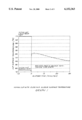
- GRAPH 1 is a graphical illustration of cup surface temperature in ° F. versus elapsed time in minutes
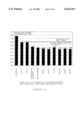
- GRAPH 2 is a grahical illustration of cup surface temperature in ° F. versus cup and sleeve configuration
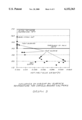
- GRAPH 3 is a graphical illustration of cup surface temperature in ° F. versus air gap in inches.
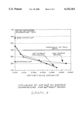
- GRAPH 4 is a graphical illustration of cup surface temperature in ° F. versus Air gap in inches.
- Heat transfer is the mechanism of transferring energy across a system boundary from a system of higher temperature to one of lower temperature.
- the hot liquid represents the hot system
- the cup represents the system boundary and heat transfer interface
- your fingers and the surroundings represent the lower temperature system.
- Equation 1 q is the rate at which heat is transferred in Btu/hr
- A is the cross-sectional area of the heat transfer interface in ft 2 .
- dT/dx is the temperature gradient across the heat transfer interface in ° F./ft
- k is the thermal conductivity in Btu/(hr ft ° F.).
- the electrical analogy is a tool for analyzing one-dimensional conduction, and combined conduction/convection problems.
- the electrical analogy is given below in Equation 2: ##EQU2##
- thermal conductivity The combination of thermal conductivity, thickness of the insulating material, and interface area combine to create resistance to heat flow.
- R-value A popular way to describe the performance of insulating materials for buildings is the R-value.
- the R-value is defined below in Equation 4 is: ##EQU5## where: ⁇ x is the material's thickness, ft, and
- k is the thermal conductivity, (Btu/hr ft ° F.).
- thermal conductivity For high insulating ability, one wants a thick material with a low thermal conductivity. Values of thermal conductivity for paperboard and other materials and the relationship to insulation performance are well known.
- Coffee drinkers are not particularly interested in the thermal conductivity or caliper of the cup. Their main concern is the surface temperature, T surf . 140° F. is commonly used as a pain threshold for hot surface insulation guidelines. This guideline appears to be consistent with observed behavior.
- the purpose of the basic experiment is to quantify the surface temperature of candidate coffee cups and sleeve configurations through their useful lives.
- a measured, 6.7 oz. (200 ml) container of water is heated in a microwave to over 170° F., usually to the boiling point.
- the water temperature is monitored by a conventional thermocouple probe until it cools to 170° F.
- the water is quickly poured into the candidate coffee cup.
- a conventional infrared temperature gun is positioned 24 in. away from the cup surface, about at the middle of the cup. This position corresponds to a 0.9 in. diameter target.
- the instrument measures infrared radiation to infer the surface temperature. An emissivity of 0.95 was used for all tests.
- the infrared gun's interface is connected to a conventional computer and conventional software is used to record the surface temperature on 4 sec intervals for approximately 30 minutes.
- cup stock with calipers or thicknesses ranging from 12 pt to 20 pt were tested. 12 pt corresponds to a thickness of 0.012 inches.
- Cup sleeves backed with hot-melt glue dots were fabricated from these samples.
- Graph 1 An example of the surface temperature test is shown in Graph 1 for a single Nyman cup fitted with a 15 pt 46# paperboard sleeve, constructed according to the present invention.
- the maximum surface temperature occurs a few seconds after pouring the hot water into the cup. In this case the maximum temperature was 123° F., about the same as a commercial polystyrene cup, both being significantly below the 140° F. threshold of pain.
- the classical first-order temperature decay can be observed following the initial condition.
- the additional candidate cups and configurations were studied.
- the maximum surface temperatures achieved by all the configurations and the range of sleeves are shown in Graph 2.
- the multi-layer cups achieved maximum surface temperature below the 140° F. threshold of pain, but did not approach the thermal performance of the polystyrene benchmark.
- the air gap created by the hot-melt dots was determined by subtraction once the sleeve was fixed onto the Nyman cup.
- the total cup/sleeve thickness was caliper-measured between two neighboring glue dots, so the air gap reported is about 0.015 in. less than the maximum height of a glue dot. Nonetheless, the measurement was made in a repeatable manner.
- the maximum cup surface temperatures are plotted as a function of the air gap for all the sleeves tested, regardless of grade, in Graph 3.
Abstract
Description
Claims (5)
Priority Applications (1)
| Application Number | Priority Date | Filing Date | Title |
|---|---|---|---|
| US09/303,759 US6152363A (en) | 1999-05-03 | 1999-05-03 | Sleeve construction for improved paperboard cup insulation |
Applications Claiming Priority (1)
| Application Number | Priority Date | Filing Date | Title |
|---|---|---|---|
| US09/303,759 US6152363A (en) | 1999-05-03 | 1999-05-03 | Sleeve construction for improved paperboard cup insulation |
Publications (1)
| Publication Number | Publication Date |
|---|---|
| US6152363A true US6152363A (en) | 2000-11-28 |
Family
ID=23173566
Family Applications (1)
| Application Number | Title | Priority Date | Filing Date |
|---|---|---|---|
| US09/303,759 Expired - Fee Related US6152363A (en) | 1999-05-03 | 1999-05-03 | Sleeve construction for improved paperboard cup insulation |
Country Status (1)
| Country | Link |
|---|---|
| US (1) | US6152363A (en) |
Cited By (58)
| Publication number | Priority date | Publication date | Assignee | Title |
|---|---|---|---|---|
| WO2002087994A1 (en) * | 2001-05-01 | 2002-11-07 | Adrian Mark Weintroub | Insulating holder for beverage container |
| US6601728B1 (en) * | 2002-10-28 | 2003-08-05 | Raymond Newkirk | Thermal cup holder |
| US6814253B2 (en) | 2002-10-15 | 2004-11-09 | Double Team Inc. | Insulating sleeve for grasping container and manufacturing method |
| US20050029337A1 (en) * | 2001-07-20 | 2005-02-10 | Fort James Corporation | Liquid container with uninterrupted comfort band and method of forming same |
| US20050056654A1 (en) * | 2003-09-12 | 2005-03-17 | Bernard Leung | Insulating sleeve |
| US20060196923A1 (en) * | 2005-03-01 | 2006-09-07 | Tedford Richard A Jr | Insulated container |
| US20060219722A1 (en) * | 2005-04-04 | 2006-10-05 | Benak James D | Drink container attachment |
| US20060231606A1 (en) * | 2005-04-15 | 2006-10-19 | Katchko John E | Thermal sleeve, method for manufacturing a thermal sleeve, and combination cup and thermal sleeve |
| US20070114271A1 (en) * | 2001-07-20 | 2007-05-24 | Dixie Consumer Products Llc. | Blank for a disposable thermally insulated container |
| US20070138188A1 (en) * | 2005-12-15 | 2007-06-21 | Kimberly-Clark Worldwide, Inc. | Drink sleeve |
| US20070228134A1 (en) * | 2006-04-03 | 2007-10-04 | Cook Matthew R | Thermally activatable insulating packaging |
| US20080047967A1 (en) * | 2006-08-24 | 2008-02-28 | Kimberly-Clark Worldwide, Inc. | Insulation sleeve for beverage containers |
| WO2008042378A1 (en) * | 2006-09-29 | 2008-04-10 | International Paper Company | Double wall container with internal spacer |
| US20080087677A1 (en) * | 2006-10-12 | 2008-04-17 | Robertson Ronald D | Multi walled container and method |
| US20080164270A1 (en) * | 2007-01-08 | 2008-07-10 | Puerini Russell A | Container holder |
| US20090090642A1 (en) * | 2007-10-03 | 2009-04-09 | Christopher Trimarco | Foldable beverage receptacle |
| US20090170679A1 (en) * | 2005-06-30 | 2009-07-02 | Hartjes Timothy P | Method of making a container employing inner liner and vents for thermal insulation |
| US20090242578A1 (en) * | 2008-03-28 | 2009-10-01 | Larry Bonilla | Insulated beverage container holder |
| US20090242574A1 (en) * | 2008-03-25 | 2009-10-01 | Li Hsin-Chieh | Heat-insulating cup |
| US20090277935A1 (en) * | 2008-05-08 | 2009-11-12 | Violet Hanson | Single-sheeted-type and dual-handled-type carrier for suspending a drinking cup by one hand and method |
| US20090308022A1 (en) * | 2008-06-13 | 2009-12-17 | Itt Manufacturing Enterprises, Inc. | Thermal Barrier System |
| US20090321508A1 (en) * | 2006-04-03 | 2009-12-31 | Thomas Fu | Insulating packaging |
| US20100001012A1 (en) * | 2006-06-08 | 2010-01-07 | Charles Wilson | Container Wrap |
| US7694843B2 (en) | 2005-05-27 | 2010-04-13 | Prairie Packaging, Inc. | Reinforced plastic foam cup, method of and apparatus for manufacturing same |
| USD613554S1 (en) | 2008-03-14 | 2010-04-13 | Solo Cup Operating Corporation | Cup |
| US7704347B2 (en) | 2005-05-27 | 2010-04-27 | Prairie Packaging, Inc. | Reinforced plastic foam cup, method of and apparatus for manufacturing same |
| US20100213205A1 (en) * | 2009-07-30 | 2010-08-26 | Ryan Kang | Beverage cup sleeve with integrated fold-out handles |
| US20100219195A1 (en) * | 2009-02-27 | 2010-09-02 | Cook Matthew R | Sleeve for a container |
| US7814647B2 (en) | 2005-05-27 | 2010-10-19 | Prairie Packaging, Inc. | Reinforced plastic foam cup, method of and apparatus for manufacturing same |
| US7818866B2 (en) | 2005-05-27 | 2010-10-26 | Prairie Packaging, Inc. | Method of reinforcing a plastic foam cup |
| USD627596S1 (en) * | 2008-06-18 | 2010-11-23 | Solo Cup Operating Corporation | Cup |
| US20110064926A1 (en) * | 2008-05-15 | 2011-03-17 | Meadwestvaco Corporation | Combined boards without corrugated medium having enhanced surface properties |
| US7922031B1 (en) | 2006-03-01 | 2011-04-12 | Prince Kevin R | Insulator sleeve for a beverage container |
| US20110114657A1 (en) * | 2009-11-13 | 2011-05-19 | Nygaard Leann M | Beverage container holder and edible film package assembly |
| US20110210164A1 (en) * | 2009-05-05 | 2011-09-01 | Vladislav Babinsky | Packaging Materials With Enhanced Thermal-Insulating Performance |
| USD675107S1 (en) * | 2012-07-20 | 2013-01-29 | Multi Packaging Solutions, Inc. | Wrap packaging |
| USD676337S1 (en) * | 2012-07-20 | 2013-02-19 | Multi Packaging Solutions, Inc. | Wrap packaging |
| US8529723B2 (en) | 2010-09-01 | 2013-09-10 | Lbp Manufacturing, Inc. | Process of expediting activation of heat-expandable adhesives/coatings used in making packaging substrates |
| US8608018B2 (en) | 2012-05-21 | 2013-12-17 | Meadwestvaco Corporation | Insulated container with comfort zone |
| US8622232B2 (en) | 2005-06-30 | 2014-01-07 | Dixie Consumer Products Llc | Method of making a container employing inner liner and vents for thermal insulation |
| US8828170B2 (en) | 2010-03-04 | 2014-09-09 | Pactiv LLC | Apparatus and method for manufacturing reinforced containers |
| US20140366483A1 (en) * | 2005-11-03 | 2014-12-18 | Strategic Solutions International, Llc | Insulating Container |
| US9022251B2 (en) | 2003-06-11 | 2015-05-05 | Laurent Hechmati | Foldable air insulating sleeve |
| US9168714B2 (en) | 2005-06-30 | 2015-10-27 | Dixie Consumer Products Llc | Methods for making paperboard blanks and paperboard products therefrom |
| US20150327701A1 (en) * | 2009-09-22 | 2015-11-19 | Michael K. Colby | Cup Sleeve |
| USD747928S1 (en) * | 2014-09-11 | 2016-01-26 | O2Cool, Llc | Bottle with decorative belt |
| US9290312B2 (en) | 2013-08-14 | 2016-03-22 | Dart Container Corporation | Double-walled container |
| US9522772B2 (en) | 2006-04-03 | 2016-12-20 | Lbp Manufacturing Llc | Insulating packaging |
| US9826850B2 (en) | 2015-08-11 | 2017-11-28 | Fisnik T. Hasani | Cup sleeve with hinged bottom |
| US9926098B2 (en) | 2012-06-25 | 2018-03-27 | Gpcp Ip Holdings Llc | Paperboard blanks having a shrinkable film adhered thereto and paperboard container made therefrom |
| US10183458B2 (en) | 2006-04-03 | 2019-01-22 | Lbp Manufacturing Llc | Insulated packaging and method of making same |
| US20200087017A1 (en) * | 2018-09-17 | 2020-03-19 | Shlomo Harush | Paper cup |
| US10759578B2 (en) | 2016-02-24 | 2020-09-01 | Bemis Company, Inc. | Multilayer pouch with heat-shrinkable layer |
| US11401100B2 (en) | 2018-04-13 | 2022-08-02 | Graphic Packaging International, Llc | Container with scalable features |
| US11661263B2 (en) | 2020-12-15 | 2023-05-30 | Pactiv LLC | Unitary blank for forming a cup sleeve |
| US11745933B2 (en) * | 2008-03-12 | 2023-09-05 | Ptm Packaging Tools Machinery Pte. Ltd. | Double-walled cup |
| US11760529B2 (en) | 2019-04-05 | 2023-09-19 | Huhtamaki, Inc. | Container and bottom end construction therefor |
| US11945641B2 (en) | 2018-04-13 | 2024-04-02 | Graphic Packaging International, Llc | Container with insulating features |
Citations (46)
| Publication number | Priority date | Publication date | Assignee | Title |
|---|---|---|---|---|
| US35830A (en) * | 1862-07-08 | Improvement in harvesters | ||
| US2617549A (en) * | 1952-11-11 | Coastear type holder | ||
| US2661889A (en) * | 1948-07-20 | 1953-12-08 | Delbert E Phinney | Thermal coffee cup |
| US2675954A (en) * | 1952-03-03 | 1954-04-20 | Frank W Vogel | Drinking cup |
| US4007670A (en) * | 1974-02-28 | 1977-02-15 | St. Regis Paper Company | Insulated container |
| US4261501A (en) * | 1979-10-31 | 1981-04-14 | Hallmark Cards Incorporated | Laminated insulated hot drink cup |
| US4435344A (en) * | 1980-12-29 | 1984-03-06 | Nihon Dixie Company, Limited | Method for producing a heat-insulating paper container from a paper coated or laminated with a thermoplastic synthetic resin film |
| US4548349A (en) * | 1984-04-03 | 1985-10-22 | Whitey's Ice Cream Manufacturers, Inc. | Protective sleeve for a paper cup |
| US5092485A (en) * | 1991-03-08 | 1992-03-03 | King Car Food Industrial Co., Ltd. | Thermos paper cup |
| US5145107A (en) * | 1991-12-10 | 1992-09-08 | International Paper Company | Insulated paper cup |
| US5203490A (en) * | 1992-06-25 | 1993-04-20 | Roe Mark E | Hot cup with heat-insulating hand-grip |
| US5205473A (en) * | 1992-03-19 | 1993-04-27 | Design By Us Company | Recyclable corrugated beverage container and holder |
| US5209367A (en) * | 1989-05-03 | 1993-05-11 | Musscher Ronald F Van | Sleeve for a container |
| US5222656A (en) * | 1992-09-02 | 1993-06-29 | Carlson Joel A | Insulative sleeve for beverage cup |
| US5226585A (en) * | 1991-11-19 | 1993-07-13 | Sherwood Tool, Inc. | Disposable biodegradable insulated container and method for making |
| US5259529A (en) * | 1992-12-10 | 1993-11-09 | Coalewrap Company | Collapsible insulated receptacle for beverage containers |
| US5326019A (en) * | 1993-05-03 | 1994-07-05 | Wolff Steven K | Double walled paper cup |
| US5363982A (en) * | 1994-03-07 | 1994-11-15 | Sadlier Claus E | Multi-layered insulated cup formed of one continuous sheet |
| US5385260A (en) * | 1994-01-19 | 1995-01-31 | Sherwood Industries, Inc. | Disposable cup assembly system and method |
| US5425497A (en) * | 1993-11-09 | 1995-06-20 | Sorensen; Jay | Cup holder |
| US5445315A (en) * | 1994-04-01 | 1995-08-29 | John R. Sexton | Insulated beverage receptacle holder |
| US5454484A (en) * | 1992-02-28 | 1995-10-03 | Sleevco | Paper cup insulation |
| US5460323A (en) * | 1995-01-10 | 1995-10-24 | California Environmental Cup, Inc. | Disposable insulated container |
| US5490631A (en) * | 1993-12-22 | 1996-02-13 | Nihon Dixie Company Limited | Heat-insulating paper container and method for producing the same |
| US5524817A (en) * | 1995-04-04 | 1996-06-11 | Paper Machinery Corporation | Dual walled container |
| US5542599A (en) * | 1995-08-07 | 1996-08-06 | Sobol; Ronald E. | Biodegradable thermally insulated beverage cup |
| US5628453A (en) * | 1996-01-16 | 1997-05-13 | Packaging Resources, Inc. | Cup with thermally insulated side wall |
| US5660326A (en) * | 1995-08-18 | 1997-08-26 | Sherwood Tool Incorporated | Multi-layered insulated cup formed from folded sheet |
| US5667135A (en) * | 1996-04-17 | 1997-09-16 | Sweetheart Cup Company, Inc. | Thermal insulating sleeve for drink cups |
| US5669553A (en) * | 1996-08-08 | 1997-09-23 | Sealright Co., Inc. | Insulating cup sleeve |
| US5713512A (en) * | 1996-09-03 | 1998-02-03 | Polytainers, Inc. | Polymeric insulated container |
| US5746372A (en) * | 1996-12-12 | 1998-05-05 | American Excelsior Company | Biodegradable cup holder |
| US5752653A (en) * | 1996-05-13 | 1998-05-19 | Razzaghi; Mahmoud | Paper cup with air insulation |
| US5753308A (en) * | 1992-08-11 | 1998-05-19 | E. Khashoggi Industries, Llc | Methods for manufacturing food and beverage containers from inorganic aggregates and polysaccharide, protein, or synthetic organic binders |
| US5759624A (en) * | 1996-06-14 | 1998-06-02 | Insulation Dimension Corporation | Method of making syntactic insulated containers |
| US5766709A (en) * | 1996-02-23 | 1998-06-16 | James River Corporation Of Virginia | Insulated stock material and containers and methods of making the same |
| US5769311A (en) * | 1994-08-02 | 1998-06-23 | Toppan Printing Co., Ltd. | Heat insulating cup and method of manufacturing the same |
| US5772111A (en) * | 1996-03-12 | 1998-06-30 | Kirsch; John M. | Container structure |
| US5775577A (en) * | 1996-10-15 | 1998-07-07 | Baldocci, Modena, Scherrer, Stanghellini Family Trust, And Titus | Disposable insulated container with microflute structure |
| US5794843A (en) * | 1996-11-08 | 1998-08-18 | Sanchez; Rafael S. | Cup wrap |
| US5820016A (en) * | 1996-05-13 | 1998-10-13 | Dunkin' Donuts Incorporated | Cup and lid |
| US5826786A (en) * | 1996-03-06 | 1998-10-27 | Dickert; James | Cup holder sleeve in pre-assembled flat-folded form |
| US5839653A (en) * | 1996-07-12 | 1998-11-24 | Zadravetz; Robert B. | Container with corrugated wall |
| US5842633A (en) * | 1996-03-26 | 1998-12-01 | Ivex Corporation | Sleeve for beverage cups |
| US5857615A (en) * | 1997-01-13 | 1999-01-12 | New Dimensions Folding Carton, Inc. | Container holder |
| US6068182A (en) * | 1997-11-27 | 2000-05-30 | Tokunaga; Keiiti | Insulated container |
-
1999
- 1999-05-03 US US09/303,759 patent/US6152363A/en not_active Expired - Fee Related
Patent Citations (47)
| Publication number | Priority date | Publication date | Assignee | Title |
|---|---|---|---|---|
| US35830A (en) * | 1862-07-08 | Improvement in harvesters | ||
| US2617549A (en) * | 1952-11-11 | Coastear type holder | ||
| US2661889A (en) * | 1948-07-20 | 1953-12-08 | Delbert E Phinney | Thermal coffee cup |
| US2675954A (en) * | 1952-03-03 | 1954-04-20 | Frank W Vogel | Drinking cup |
| US4007670A (en) * | 1974-02-28 | 1977-02-15 | St. Regis Paper Company | Insulated container |
| US4261501A (en) * | 1979-10-31 | 1981-04-14 | Hallmark Cards Incorporated | Laminated insulated hot drink cup |
| US4435344A (en) * | 1980-12-29 | 1984-03-06 | Nihon Dixie Company, Limited | Method for producing a heat-insulating paper container from a paper coated or laminated with a thermoplastic synthetic resin film |
| US4548349A (en) * | 1984-04-03 | 1985-10-22 | Whitey's Ice Cream Manufacturers, Inc. | Protective sleeve for a paper cup |
| US5209367A (en) * | 1989-05-03 | 1993-05-11 | Musscher Ronald F Van | Sleeve for a container |
| US5092485A (en) * | 1991-03-08 | 1992-03-03 | King Car Food Industrial Co., Ltd. | Thermos paper cup |
| US5226585A (en) * | 1991-11-19 | 1993-07-13 | Sherwood Tool, Inc. | Disposable biodegradable insulated container and method for making |
| US5145107A (en) * | 1991-12-10 | 1992-09-08 | International Paper Company | Insulated paper cup |
| US5454484A (en) * | 1992-02-28 | 1995-10-03 | Sleevco | Paper cup insulation |
| US5205473A (en) * | 1992-03-19 | 1993-04-27 | Design By Us Company | Recyclable corrugated beverage container and holder |
| US5203490A (en) * | 1992-06-25 | 1993-04-20 | Roe Mark E | Hot cup with heat-insulating hand-grip |
| US5753308A (en) * | 1992-08-11 | 1998-05-19 | E. Khashoggi Industries, Llc | Methods for manufacturing food and beverage containers from inorganic aggregates and polysaccharide, protein, or synthetic organic binders |
| US5222656A (en) * | 1992-09-02 | 1993-06-29 | Carlson Joel A | Insulative sleeve for beverage cup |
| US5259529A (en) * | 1992-12-10 | 1993-11-09 | Coalewrap Company | Collapsible insulated receptacle for beverage containers |
| US5326019A (en) * | 1993-05-03 | 1994-07-05 | Wolff Steven K | Double walled paper cup |
| US5425497A (en) * | 1993-11-09 | 1995-06-20 | Sorensen; Jay | Cup holder |
| US5490631A (en) * | 1993-12-22 | 1996-02-13 | Nihon Dixie Company Limited | Heat-insulating paper container and method for producing the same |
| US5385260A (en) * | 1994-01-19 | 1995-01-31 | Sherwood Industries, Inc. | Disposable cup assembly system and method |
| US5363982A (en) * | 1994-03-07 | 1994-11-15 | Sadlier Claus E | Multi-layered insulated cup formed of one continuous sheet |
| US5445315A (en) * | 1994-04-01 | 1995-08-29 | John R. Sexton | Insulated beverage receptacle holder |
| US5769311A (en) * | 1994-08-02 | 1998-06-23 | Toppan Printing Co., Ltd. | Heat insulating cup and method of manufacturing the same |
| US5460323A (en) * | 1995-01-10 | 1995-10-24 | California Environmental Cup, Inc. | Disposable insulated container |
| US5524817A (en) * | 1995-04-04 | 1996-06-11 | Paper Machinery Corporation | Dual walled container |
| US5542599A (en) * | 1995-08-07 | 1996-08-06 | Sobol; Ronald E. | Biodegradable thermally insulated beverage cup |
| US5660326A (en) * | 1995-08-18 | 1997-08-26 | Sherwood Tool Incorporated | Multi-layered insulated cup formed from folded sheet |
| US5697550A (en) * | 1995-08-18 | 1997-12-16 | Insul-Air Holdings, Inc. | Multi-layered insulated cup formed from folded sheet |
| US5628453A (en) * | 1996-01-16 | 1997-05-13 | Packaging Resources, Inc. | Cup with thermally insulated side wall |
| US5766709A (en) * | 1996-02-23 | 1998-06-16 | James River Corporation Of Virginia | Insulated stock material and containers and methods of making the same |
| US5826786A (en) * | 1996-03-06 | 1998-10-27 | Dickert; James | Cup holder sleeve in pre-assembled flat-folded form |
| US5772111A (en) * | 1996-03-12 | 1998-06-30 | Kirsch; John M. | Container structure |
| US5842633A (en) * | 1996-03-26 | 1998-12-01 | Ivex Corporation | Sleeve for beverage cups |
| US5667135A (en) * | 1996-04-17 | 1997-09-16 | Sweetheart Cup Company, Inc. | Thermal insulating sleeve for drink cups |
| US5820016A (en) * | 1996-05-13 | 1998-10-13 | Dunkin' Donuts Incorporated | Cup and lid |
| US5752653A (en) * | 1996-05-13 | 1998-05-19 | Razzaghi; Mahmoud | Paper cup with air insulation |
| US5759624A (en) * | 1996-06-14 | 1998-06-02 | Insulation Dimension Corporation | Method of making syntactic insulated containers |
| US5839653A (en) * | 1996-07-12 | 1998-11-24 | Zadravetz; Robert B. | Container with corrugated wall |
| US5669553A (en) * | 1996-08-08 | 1997-09-23 | Sealright Co., Inc. | Insulating cup sleeve |
| US5713512A (en) * | 1996-09-03 | 1998-02-03 | Polytainers, Inc. | Polymeric insulated container |
| US5775577A (en) * | 1996-10-15 | 1998-07-07 | Baldocci, Modena, Scherrer, Stanghellini Family Trust, And Titus | Disposable insulated container with microflute structure |
| US5794843A (en) * | 1996-11-08 | 1998-08-18 | Sanchez; Rafael S. | Cup wrap |
| US5746372A (en) * | 1996-12-12 | 1998-05-05 | American Excelsior Company | Biodegradable cup holder |
| US5857615A (en) * | 1997-01-13 | 1999-01-12 | New Dimensions Folding Carton, Inc. | Container holder |
| US6068182A (en) * | 1997-11-27 | 2000-05-30 | Tokunaga; Keiiti | Insulated container |
Cited By (90)
| Publication number | Priority date | Publication date | Assignee | Title |
|---|---|---|---|---|
| WO2002087994A1 (en) * | 2001-05-01 | 2002-11-07 | Adrian Mark Weintroub | Insulating holder for beverage container |
| US20090121007A1 (en) * | 2001-07-20 | 2009-05-14 | Van Handel Gerald J | Disposable thermally insulated cup and blank therefor |
| US20050029337A1 (en) * | 2001-07-20 | 2005-02-10 | Fort James Corporation | Liquid container with uninterrupted comfort band and method of forming same |
| US7600669B2 (en) | 2001-07-20 | 2009-10-13 | Dixie Consumer Products Llc | Blank for a disposable thermally insulated container |
| US7614993B2 (en) | 2001-07-20 | 2009-11-10 | Dixie Consumer Products Llc | Liquid container with uninterrupted comfort band and method of forming same |
| US7938313B1 (en) | 2001-07-20 | 2011-05-10 | Dixie Consumer Products Llc | Disposable thermally insulated cup and blank therefor |
| US20100044424A1 (en) * | 2001-07-20 | 2010-02-25 | Dixie Consumer Products Llc | Liquid container with uninterrupted comfort band and method of forming same |
| US7913873B2 (en) | 2001-07-20 | 2011-03-29 | Dixie Consumer Products Llc | Liquid container with uninterrupted comfort band and method of forming same |
| US20070114271A1 (en) * | 2001-07-20 | 2007-05-24 | Dixie Consumer Products Llc. | Blank for a disposable thermally insulated container |
| US20110108615A9 (en) * | 2001-07-20 | 2011-05-12 | Van Handel Gerald J | Disposable thermally insulated cup and blank therefor |
| US6814253B2 (en) | 2002-10-15 | 2004-11-09 | Double Team Inc. | Insulating sleeve for grasping container and manufacturing method |
| US6601728B1 (en) * | 2002-10-28 | 2003-08-05 | Raymond Newkirk | Thermal cup holder |
| US9022251B2 (en) | 2003-06-11 | 2015-05-05 | Laurent Hechmati | Foldable air insulating sleeve |
| US20050056654A1 (en) * | 2003-09-12 | 2005-03-17 | Bernard Leung | Insulating sleeve |
| US6986438B2 (en) | 2003-09-12 | 2006-01-17 | Bernard Leung | Insulating sleeve |
| US20060196923A1 (en) * | 2005-03-01 | 2006-09-07 | Tedford Richard A Jr | Insulated container |
| US20060219722A1 (en) * | 2005-04-04 | 2006-10-05 | Benak James D | Drink container attachment |
| US8251277B2 (en) | 2005-04-15 | 2012-08-28 | Wausau Paper Mills, Llc | Thermal sleeve, method for manufacturing a thermal sleeve, and combination cup and thermal sleeve |
| US20060231606A1 (en) * | 2005-04-15 | 2006-10-19 | Katchko John E | Thermal sleeve, method for manufacturing a thermal sleeve, and combination cup and thermal sleeve |
| US7918016B2 (en) | 2005-05-27 | 2011-04-05 | Prairie Packaging, Inc. | Reinforced plastic foam cup, method of and apparatus for manufacturing same |
| US8622208B2 (en) | 2005-05-27 | 2014-01-07 | Pactiv LLC | Reinforced cup |
| US7818866B2 (en) | 2005-05-27 | 2010-10-26 | Prairie Packaging, Inc. | Method of reinforcing a plastic foam cup |
| US7918005B2 (en) | 2005-05-27 | 2011-04-05 | Prairie Packaging, Inc. | Reinforced foam cup, method of and apparatus for manufacturing same |
| US7814647B2 (en) | 2005-05-27 | 2010-10-19 | Prairie Packaging, Inc. | Reinforced plastic foam cup, method of and apparatus for manufacturing same |
| US7704347B2 (en) | 2005-05-27 | 2010-04-27 | Prairie Packaging, Inc. | Reinforced plastic foam cup, method of and apparatus for manufacturing same |
| US8087147B2 (en) | 2005-05-27 | 2012-01-03 | Prairie Packaging, Inc. | Method of reinforcing a plastic foam cup |
| US7694843B2 (en) | 2005-05-27 | 2010-04-13 | Prairie Packaging, Inc. | Reinforced plastic foam cup, method of and apparatus for manufacturing same |
| US9168714B2 (en) | 2005-06-30 | 2015-10-27 | Dixie Consumer Products Llc | Methods for making paperboard blanks and paperboard products therefrom |
| US8622232B2 (en) | 2005-06-30 | 2014-01-07 | Dixie Consumer Products Llc | Method of making a container employing inner liner and vents for thermal insulation |
| US20090170679A1 (en) * | 2005-06-30 | 2009-07-02 | Hartjes Timothy P | Method of making a container employing inner liner and vents for thermal insulation |
| US7841974B2 (en) | 2005-06-30 | 2010-11-30 | Dixie Consumer Products Llc | Method of making a container employing inner liner and vents for thermal insulation |
| US20140366483A1 (en) * | 2005-11-03 | 2014-12-18 | Strategic Solutions International, Llc | Insulating Container |
| US10167130B2 (en) * | 2005-11-03 | 2019-01-01 | Strategic Solutions International, Llc | Insulating container |
| US20070138188A1 (en) * | 2005-12-15 | 2007-06-21 | Kimberly-Clark Worldwide, Inc. | Drink sleeve |
| US7922031B1 (en) | 2006-03-01 | 2011-04-12 | Prince Kevin R | Insulator sleeve for a beverage container |
| US9580228B2 (en) | 2006-04-03 | 2017-02-28 | Lbp Manufacturing Llc | Thermally activatable insulating packaging |
| US20090321508A1 (en) * | 2006-04-03 | 2009-12-31 | Thomas Fu | Insulating packaging |
| US9522772B2 (en) | 2006-04-03 | 2016-12-20 | Lbp Manufacturing Llc | Insulating packaging |
| US9591937B2 (en) | 2006-04-03 | 2017-03-14 | Lbp Manufacturing Llc | Insulating container |
| US9648969B2 (en) | 2006-04-03 | 2017-05-16 | Lbp Manufacturing Llc | Insulating packaging |
| US10144573B2 (en) | 2006-04-03 | 2018-12-04 | Lbp Manufacturing Llc | Thermally activatable insulating packaging |
| US9056712B2 (en) | 2006-04-03 | 2015-06-16 | Lbp Manufacturing, Inc. | Thermally activatable insulating packaging |
| US20070228134A1 (en) * | 2006-04-03 | 2007-10-04 | Cook Matthew R | Thermally activatable insulating packaging |
| US10183458B2 (en) | 2006-04-03 | 2019-01-22 | Lbp Manufacturing Llc | Insulated packaging and method of making same |
| US20100001012A1 (en) * | 2006-06-08 | 2010-01-07 | Charles Wilson | Container Wrap |
| US20080047967A1 (en) * | 2006-08-24 | 2008-02-28 | Kimberly-Clark Worldwide, Inc. | Insulation sleeve for beverage containers |
| US20100187296A1 (en) * | 2006-09-29 | 2010-07-29 | International Paper Company | Double wall container with internal spacer |
| US7717325B2 (en) | 2006-09-29 | 2010-05-18 | International Paper Company | Double wall container with internal spacer |
| WO2008042378A1 (en) * | 2006-09-29 | 2008-04-10 | International Paper Company | Double wall container with internal spacer |
| US20080087677A1 (en) * | 2006-10-12 | 2008-04-17 | Robertson Ronald D | Multi walled container and method |
| US20080164270A1 (en) * | 2007-01-08 | 2008-07-10 | Puerini Russell A | Container holder |
| US20090090642A1 (en) * | 2007-10-03 | 2009-04-09 | Christopher Trimarco | Foldable beverage receptacle |
| US11745933B2 (en) * | 2008-03-12 | 2023-09-05 | Ptm Packaging Tools Machinery Pte. Ltd. | Double-walled cup |
| USD639606S1 (en) | 2008-03-14 | 2011-06-14 | Solo Cup Operating Corporation | Cup |
| USD624788S1 (en) | 2008-03-14 | 2010-10-05 | Solo Cup Operating Corporation | Cup |
| USD613554S1 (en) | 2008-03-14 | 2010-04-13 | Solo Cup Operating Corporation | Cup |
| US20090242574A1 (en) * | 2008-03-25 | 2009-10-01 | Li Hsin-Chieh | Heat-insulating cup |
| US20090242578A1 (en) * | 2008-03-28 | 2009-10-01 | Larry Bonilla | Insulated beverage container holder |
| US20090277935A1 (en) * | 2008-05-08 | 2009-11-12 | Violet Hanson | Single-sheeted-type and dual-handled-type carrier for suspending a drinking cup by one hand and method |
| US7819277B2 (en) | 2008-05-08 | 2010-10-26 | Violet Hanson | Single-sheeted-type and dual-handled-type carrier for suspending a drinking cup by one hand and method |
| US20110064926A1 (en) * | 2008-05-15 | 2011-03-17 | Meadwestvaco Corporation | Combined boards without corrugated medium having enhanced surface properties |
| US8056953B2 (en) | 2008-06-13 | 2011-11-15 | Itt Manufacturing Enterprises, Inc. | Thermal barrier system |
| US20090308022A1 (en) * | 2008-06-13 | 2009-12-17 | Itt Manufacturing Enterprises, Inc. | Thermal Barrier System |
| USD627596S1 (en) * | 2008-06-18 | 2010-11-23 | Solo Cup Operating Corporation | Cup |
| US8870018B2 (en) | 2009-02-27 | 2014-10-28 | Lbp Manufacturing, Inc. | Sleeve for a container |
| US20100219195A1 (en) * | 2009-02-27 | 2010-09-02 | Cook Matthew R | Sleeve for a container |
| US20110210164A1 (en) * | 2009-05-05 | 2011-09-01 | Vladislav Babinsky | Packaging Materials With Enhanced Thermal-Insulating Performance |
| US8541074B2 (en) | 2009-05-05 | 2013-09-24 | Meadwestvaco Corporation | Packaging materials with enhanced thermal-insulating performance |
| US20100213205A1 (en) * | 2009-07-30 | 2010-08-26 | Ryan Kang | Beverage cup sleeve with integrated fold-out handles |
| US8210392B2 (en) * | 2009-07-30 | 2012-07-03 | Ryan Kang | Beverage cup sleeve with integrated fold-out handles |
| US20150327701A1 (en) * | 2009-09-22 | 2015-11-19 | Michael K. Colby | Cup Sleeve |
| US9924814B2 (en) * | 2009-09-22 | 2018-03-27 | Michael K. Colby | Cup sleeve |
| US20110114657A1 (en) * | 2009-11-13 | 2011-05-19 | Nygaard Leann M | Beverage container holder and edible film package assembly |
| US8828170B2 (en) | 2010-03-04 | 2014-09-09 | Pactiv LLC | Apparatus and method for manufacturing reinforced containers |
| US9676141B2 (en) | 2010-03-04 | 2017-06-13 | Pactiv LLC | Apparatus and method for manufacturing reinforced containers |
| US8529723B2 (en) | 2010-09-01 | 2013-09-10 | Lbp Manufacturing, Inc. | Process of expediting activation of heat-expandable adhesives/coatings used in making packaging substrates |
| US8608018B2 (en) | 2012-05-21 | 2013-12-17 | Meadwestvaco Corporation | Insulated container with comfort zone |
| US9926098B2 (en) | 2012-06-25 | 2018-03-27 | Gpcp Ip Holdings Llc | Paperboard blanks having a shrinkable film adhered thereto and paperboard container made therefrom |
| USD675107S1 (en) * | 2012-07-20 | 2013-01-29 | Multi Packaging Solutions, Inc. | Wrap packaging |
| USD676337S1 (en) * | 2012-07-20 | 2013-02-19 | Multi Packaging Solutions, Inc. | Wrap packaging |
| US9290312B2 (en) | 2013-08-14 | 2016-03-22 | Dart Container Corporation | Double-walled container |
| USD747928S1 (en) * | 2014-09-11 | 2016-01-26 | O2Cool, Llc | Bottle with decorative belt |
| US9826850B2 (en) | 2015-08-11 | 2017-11-28 | Fisnik T. Hasani | Cup sleeve with hinged bottom |
| US10759578B2 (en) | 2016-02-24 | 2020-09-01 | Bemis Company, Inc. | Multilayer pouch with heat-shrinkable layer |
| US11401100B2 (en) | 2018-04-13 | 2022-08-02 | Graphic Packaging International, Llc | Container with scalable features |
| US11738932B2 (en) | 2018-04-13 | 2023-08-29 | Graphic Packaging International, Llc | Container with insulating features |
| US11945641B2 (en) | 2018-04-13 | 2024-04-02 | Graphic Packaging International, Llc | Container with insulating features |
| US20200087017A1 (en) * | 2018-09-17 | 2020-03-19 | Shlomo Harush | Paper cup |
| US11760529B2 (en) | 2019-04-05 | 2023-09-19 | Huhtamaki, Inc. | Container and bottom end construction therefor |
| US11661263B2 (en) | 2020-12-15 | 2023-05-30 | Pactiv LLC | Unitary blank for forming a cup sleeve |
Similar Documents
| Publication | Publication Date | Title |
|---|---|---|
| US6152363A (en) | Sleeve construction for improved paperboard cup insulation | |
| US8056757B2 (en) | Hot beverage cup sleeve | |
| US7281650B1 (en) | Beverage cup | |
| US9169056B2 (en) | Thermally insulating member | |
| US5752653A (en) | Paper cup with air insulation | |
| JP3054989B2 (en) | Insulated expression container | |
| ES2258639T3 (en) | INSULATING CONTAINER FOR DRINKS AND FOOD. | |
| US8025210B2 (en) | Insulated beverage container | |
| US4181765A (en) | Insulator for canned drinks | |
| CN103946619B (en) | Radiation heat intercepts Vacuum thermal insulating material | |
| KR102045037B1 (en) | Exterior sleeves for double vessels and double vessels | |
| US20130043261A1 (en) | Corrugated beverage coaster/insulator/advertising sheath | |
| ATE205587T1 (en) | SLEEVE WITH A SECONDARY THERMAL COATING | |
| WO2007138481A2 (en) | Moisture absorbing wrap | |
| CN100354189C (en) | Single-use one-way valve for food package that emits sound signal at sufficient heating | |
| JP5113252B2 (en) | Insulated container | |
| EP0326834A2 (en) | Improvement in insulation | |
| JP4180838B2 (en) | Shrink labels and containers with shrink labels | |
| JP4405792B2 (en) | Heat-shrinkable cylindrical label | |
| KR940005426A (en) | Thermal transfer paper | |
| US20120211500A1 (en) | Cup with Thermal Guard and Method for Use Thereof | |
| WO2013025282A1 (en) | One -piece container sleeve | |
| JP2004302125A (en) | Foamable shrink label and its foaming method | |
| KR960007196A (en) | Decorative thermal transfer sheet and manufacturing method thereof | |
| KR20180000387A (en) | Heat reflective sheet including a heat insulating layer |
Legal Events
| Date | Code | Title | Description |
|---|---|---|---|
| AS | Assignment |
Owner name: WESTVACO CORPORATION, NEW YORK Free format text: ASSIGNMENT OF ASSIGNORS INTEREST;ASSIGNOR:RULE, JR., JAMES ARTHUR;REEL/FRAME:009946/0585 Effective date: 19990423 |
|
| AS | Assignment |
Owner name: MEADWESTVACO CORPORATION, CONNECTICUT Free format text: MERGER;ASSIGNOR:WESTVACO CORPORATION;REEL/FRAME:013957/0562 Effective date: 20021231 |
|
| REMI | Maintenance fee reminder mailed | ||
| LAPS | Lapse for failure to pay maintenance fees | ||
| STCH | Information on status: patent discontinuation |
Free format text: PATENT EXPIRED DUE TO NONPAYMENT OF MAINTENANCE FEES UNDER 37 CFR 1.362 |
|
| FP | Expired due to failure to pay maintenance fee |
Effective date: 20041128 |