US7631196B2 - Method and apparatus for loading a trustable operating system - Google Patents
Method and apparatus for loading a trustable operating system Download PDFInfo
- Publication number
- US7631196B2 US7631196B2 US10/085,839 US8583902A US7631196B2 US 7631196 B2 US7631196 B2 US 7631196B2 US 8583902 A US8583902 A US 8583902A US 7631196 B2 US7631196 B2 US 7631196B2
- Authority
- US
- United States
- Prior art keywords
- region
- memory
- processors
- processor
- computer
- Prior art date
- Legal status (The legal status is an assumption and is not a legal conclusion. Google has not performed a legal analysis and makes no representation as to the accuracy of the status listed.)
- Active, expires
Links
Images



Classifications
-
- G—PHYSICS
- G06—COMPUTING; CALCULATING OR COUNTING
- G06F—ELECTRIC DIGITAL DATA PROCESSING
- G06F9/00—Arrangements for program control, e.g. control units
- G06F9/06—Arrangements for program control, e.g. control units using stored programs, i.e. using an internal store of processing equipment to receive or retain programs
- G06F9/44—Arrangements for executing specific programs
- G06F9/455—Emulation; Interpretation; Software simulation, e.g. virtualisation or emulation of application or operating system execution engines
- G06F9/45533—Hypervisors; Virtual machine monitors
-
- G—PHYSICS
- G06—COMPUTING; CALCULATING OR COUNTING
- G06F—ELECTRIC DIGITAL DATA PROCESSING
- G06F21/00—Security arrangements for protecting computers, components thereof, programs or data against unauthorised activity
- G06F21/50—Monitoring users, programs or devices to maintain the integrity of platforms, e.g. of processors, firmware or operating systems
- G06F21/57—Certifying or maintaining trusted computer platforms, e.g. secure boots or power-downs, version controls, system software checks, secure updates or assessing vulnerabilities
-
- G—PHYSICS
- G06—COMPUTING; CALCULATING OR COUNTING
- G06F—ELECTRIC DIGITAL DATA PROCESSING
- G06F21/00—Security arrangements for protecting computers, components thereof, programs or data against unauthorised activity
- G06F21/50—Monitoring users, programs or devices to maintain the integrity of platforms, e.g. of processors, firmware or operating systems
- G06F21/57—Certifying or maintaining trusted computer platforms, e.g. secure boots or power-downs, version controls, system software checks, secure updates or assessing vulnerabilities
- G06F21/575—Secure boot
-
- G—PHYSICS
- G06—COMPUTING; CALCULATING OR COUNTING
- G06F—ELECTRIC DIGITAL DATA PROCESSING
- G06F9/00—Arrangements for program control, e.g. control units
- G06F9/06—Arrangements for program control, e.g. control units using stored programs, i.e. using an internal store of processing equipment to receive or retain programs
- G06F9/44—Arrangements for executing specific programs
- G06F9/445—Program loading or initiating
-
- G—PHYSICS
- G06—COMPUTING; CALCULATING OR COUNTING
- G06F—ELECTRIC DIGITAL DATA PROCESSING
- G06F9/00—Arrangements for program control, e.g. control units
- G06F9/06—Arrangements for program control, e.g. control units using stored programs, i.e. using an internal store of processing equipment to receive or retain programs
- G06F9/44—Arrangements for executing specific programs
- G06F9/455—Emulation; Interpretation; Software simulation, e.g. virtualisation or emulation of application or operating system execution engines
- G06F9/45533—Hypervisors; Virtual machine monitors
- G06F9/45558—Hypervisor-specific management and integration aspects
- G06F2009/45583—Memory management, e.g. access or allocation
-
- G—PHYSICS
- G06—COMPUTING; CALCULATING OR COUNTING
- G06F—ELECTRIC DIGITAL DATA PROCESSING
- G06F9/00—Arrangements for program control, e.g. control units
- G06F9/06—Arrangements for program control, e.g. control units using stored programs, i.e. using an internal store of processing equipment to receive or retain programs
- G06F9/44—Arrangements for executing specific programs
- G06F9/455—Emulation; Interpretation; Software simulation, e.g. virtualisation or emulation of application or operating system execution engines
- G06F9/45533—Hypervisors; Virtual machine monitors
- G06F9/45558—Hypervisor-specific management and integration aspects
- G06F2009/45587—Isolation or security of virtual machine instances
Definitions
- This invention relates to microprocessors.
- the invention relates to processor security.
- a trustable operating system is where the user or a third party may later inspect the system and determine whether a given operating system was loaded, and if so, whether or not the system was loaded into a secure environment.
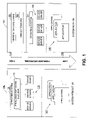
- FIG. 1 is a diagram illustrating a generalized overview of the organization of typical operating system components and corresponding privilege levels
- FIG. 2 is a block diagram illustrating one generalized embodiment of a computer system incorporating the invention, and in which certain aspects of the invention may be practiced;
- FIG. 3 is a flow diagram illustrating certain aspects of a method to be performed by a computing device executing one embodiment of the illustrated invention shown in FIG. 2 ;
- FIG. 4 is a flow diagram illustrating certain other aspects of a method to be performed by a computing device executing one embodiment of the illustrated invention shown in FIG. 2 ;
- FIG. 5 is a flow diagram illustrating certain aspects of a method to be performed by a computing device executing another embodiment of the illustrated invention shown in FIG. 2 ;
- FIG. 6 is a block diagram illustrating one generalized embodiment of a computer system in which certain aspects of the invention illustrated in FIGS. 2-5 may be practiced.
- FIG. 1 is a diagram illustrating a generalized overview of the organization of typical operating system components and corresponding privilege levels.
- the operating system 120 includes a small resident program component called a privileged software nucleus 125 that operates with the highest privilege level 170 , i.e. the privileged software nucleus 125 can execute both privileged and non-privileged instructions and access memory and I/O devices.
- VM virtual-machine
- the device drivers 130 also execute with a high privilege level 170 , particularly if the system supports direct memory access (DMA) transactions, in which a device driver 130 may write the contents of its device directly to memory without involving a processor (e.g. without using the privileged software nucleus 125 to access memory).
- DMA direct memory access
- Still other types of system components, such as the applications 140 operate with a lower privilege level 180 and are only able to execute non-privileged or lesser-privileged instructions or to make supervisory calls (SVCs) to the privileged software nucleus 125 in the operating system 120 to execute the privileged instructions or, more generally, to access privileged system resources on behalf of the application 140 .
- SVCs supervisory calls
- VMM virtual-machine monitor
- the operating system 120 actually executes with less privilege than the VMM 150 .
- the VMM 150 may be broken into a VMM core component 150 and one or more VMM extensions 160 that execute with less privilege than the VMM core component 150 but more than the operating system 120 . In this way, the VMM core component 150 maintains its integrity in the presence of faulty VMM extensions 160 .
- FIG. 2 is a block diagram illustrating one generalized embodiment of a computer system 200 incorporating the invention, and in which certain aspects of the invention may be practiced. It should be understood that the distinction between the various components of computer system 200 is a logical distinction only; in practice, any of the components may be integrated into the same silicon die, divided into multiple die, or a combination of both, without departing from the scope of the invention.
- either the central processing units (CPU) 210 / 220 / 230 or the devices 240 / 245 / 250 have the necessary high privilege levels 170 that enable them to initiate transactions in memory 270 .
- the memory controller 260 is responsible for forwarding the memory transaction from memory 270 to the appropriate destination.
- the computer system 200 further includes a hash digest 280 of cryptographic hash values that identify the contents of one or more operating system components that have been loaded into regions in memory 270 .
- a cryptographic hash value is known in the art as being generated by a one-way function, mathematical or otherwise, which takes a variable-length input string, called a pre-image and converts it to a fixed-length, generally smaller, output string referred to as a hash value.
- the hash function is one-way in that it is difficult to generate a pre-image that matches the hash value of another pre-image.
- a hash digest signing engine 290 has a secure channel to access the hash digest 280 and will sign the contents of the hash digest 280 upon receiving a request to do so.
- Signing the contents of a hash digest 280 is known in the art, and is used to produce a digital signature that can be later used to authenticate the identity of the signer and to ensure that the content of the hash digest 280 has not been tampered with.
- an outside entity may observe the state of system components reported by the hash and decide whether or not to trust the computer system 200 , i.e. whether or not the signed contents of the hash digest 280 match the expected signature of the system components.
- each of the computer system's CPUs 210 / 220 / 230 incorporate or is capable of incorporating an embodiment of the method and apparatus of the present invention to facilitate the installation (or loading) of a trustable operating system.
- the method and apparatus of the present invention include a start secure operation (SSO) 206 and a join secure operation (JSO) 204 , each of which are capable of operating on any of the computer system's CPUs 210 / 220 / 230 .
- the SSO 206 and JSO 204 are logical operations that are performed atomically to insure the integrity of the computer system 200 .
- the SSO 206 and JSO 204 may be implemented as a series of privileged instructions carried out in software, hardware, or a combination thereof without departing from the scope of the invention.
- the SSO 206 takes a region (or regions) of memory 270 that was specified in a memory region parameter 202 and causes the computer system 200 to perform a number of operations that enable one of the CPUs 210 / 220 / 230 to load and register one or more components of operating system code in the specified region of memory 270 while the JSO 204 prevents the other CPUs from interfering.
- the JSO 204 and SSO 206 further force the CPUs 210 / 220 / 230 to jump to a known entry point in the now secured specified region of memory 270 , also referred to as a security kernel 275 , in a known, privileged state, i.e. a known state that allows access to the computer system's 200 resources in accordance with the CPU's corresponding high privilege level 170 .
- the SSO 206 places the code that is to be secured into the identified region in memory 270 , i.e. places the operating system code (or a portion thereof) into the security kernel 275 .
- the code may be any code that is desired to be trusted, such as the privileged software nucleus 125 of the operating system 120 or, in a system with VM 110 , the VMM core 150 , the VM monitor core code.
- the SSO 206 securely launches the operating system by registering the identity of the operating system code, e.g. the privileged software nucleus 125 or the VMM core 150 .
- the SSO 206 registers the identity of the code by computing and recording a hash digest 180 of the code, and cryptographically signing the hash digest 180 using the hash digest signing engine 290 .
- the operating system becomes a trustable operating system, capable of verification by an outside entity.
- each CPU 210 / 220 / 230 is further provided with a JSO 204 .
- the SSO 206 signals the other CPUs 220 / 230 to execute a JSO 204 .
- the JSO 204 forces the respective CPUs 220 / 230 to enter a special halted state and to signal their entry into the halted state to the initiating SSO CPU 210 .
- the initiating SSO CPU 210 receives halted signals from all of the other CPUs 220 / 230 , the SSO 206 commences loading a trustable operating system by placing the desired code in the security kernel 275 and registering it. Once the CPU 210 that initiated the SSO 206 completes loading the trustable operating system, i.e.
- the SSO 206 forces the CPU 210 to jump to a known entry point in the security kernel 275 , which now has a known privileged state as a result of the operation of the SSO 206 .
- the SSO 206 signals the other CPUs 220 / 230 to exit their respective special halted states.
- the JSO 204 forces the CPUs 220 / 230 to also jump to a known entry point in the security kernel 275 .
- the memory region parameter 202 is specified as a range of addresses in memory 270 , and includes one or more pairs of start and stop addresses.
- the memory region parameter 202 may be specified as a starting address and region length.
- FIGS. 3-5 the particular methods of the invention are described in terms of computer software with reference to a series of flow diagrams.
- the methods to be performed by a computer constitute computer programs made up of computer-executable instructions. Describing the methods by reference to a flow diagram enables one skilled in the art to develop such programs including such instructions to carry out the methods on suitably configured computers (the processor of the computer executing the instructions from computer-accessible media).
- the computer-executable instructions may be written in a computer programming language or may be embodied in firmware logic, or in micro-engine code, or the like. If written in a programming language conforming to a recognized standard, such instructions can be executed on a variety of hardware platforms and for interface to a variety of operating systems.
- FIG. 3 is a flow diagram illustrating certain aspects of a method to be performed by a computing device executing one embodiment of the illustrated invention shown in FIG. 2 .
- FIG. 3 illustrates some of the acts to be performed by a computer executing an SSO 206 that incorporates one embodiment of the invention. Processing begins at process 305 , where one of the CPUs of computer system 200 , for example CPU 210 , prepares for executing an SSO 206 by insuring at process 310 that all of the other CPUs 220 / 230 of computer system 200 have performed a JSO 204 .
- the JSO 204 causes the other CPUs 220 / 230 of computer system 200 to enter a halted state so that they cannot interfere with the SSO 206 and CPU 210 during the loading of the trustable operating system.
- the SSO 206 continues at process 315 to cause the CPU 210 , or in some cases, the memory controller 260 , to block the devices 240 / 245 / 250 of computer system 200 from accessing regions in memory 270 specified in memory region parameters 202 , i.e. the security kernel 275 .
- Blocking devices from accessing the security kernel 275 for the duration of the SSO 206 is typically only necessary in a computer system 200 that supports direct memory access (DMA). In one embodiment, blocking devices from accessing the security kernel 275 may also be performed by a standard chipset.
- the SSO 206 erases the current contents of the hash digest 280 in preparation for recording current platform and hash digest information.
- the SSO 206 records the platform information in the hash digest 280 .
- the recording of platform information may or may not be necessary, depending on the architecture of the computer system 200 , and can include the version number of the CPU 210 executing the SSO 206 , and the like.
- the SSO 206 further computes a cryptographic hash digest of the code now present in the security kernel 275 , i.e. the privileged software nucleus 125 or VMM core 150 .
- the SSO 206 further records the information, also in the hash digest 280 .
- the SSO 206 upon recording the necessary information in the hash digest 280 , the SSO 206 places the CPU 210 into a known privileged state. Once the CPU 210 is in the known privileged state, the SSO 206 can further force the CPU 210 to jump to a known entry point in the security kernel 275 .
- the known entry point may be any addressable area of the security kernel 275 .
- an outside entity may send a request to the hash digest signing engine 290 to activate a secure channel to access the hash digest 280 and cause the digest signing engine 290 to read and cryptographically sign the content of the digest 280 recorded by the SSO 206 .
- the outside entity may observe the state of components reported by the hash and decide whether or not to trust the computer system 200 , i.e. whether or not a trustable operating system has been loaded.
- FIG. 4 is a flow diagram illustrating certain aspects of a method to be performed by a computing device executing one embodiment of the illustrated invention shown in FIG. 2 .
- FIG. 4 illustrates some of the acts to be performed by a computer executing a JSO 204 that incorporates one embodiment of the invention.
- Processing begins at process 405 , where each of the computer system's 200 non-SSO CPUs, for example CPUs 220 / 230 , enter a special halted state in response to the actions of the SSO 206 on CPU 210 .
- the halted state prevents the CPUs 220 / 230 from interfering with the SSO 206 and CPU 210 during the loading of the trustable operating system.
- the CPUs 220 / 230 each signal the SSO 206 on CPU 210 as they enter the halted state.
- the JSO 204 continues at decision process 415 , which waits until receiving a signal that the SS 0 206 on CPU 210 has completed the initialization of a trustable operating system. Once the initialization is complete the JSO 204 continues at process 420 causing the CPUs 220 / 230 to exit the special halted state.
- the JSO 204 causes the CPUs 220 / 230 to jump to a known entry point in the security kernel 275 , after which the JSO 204 completes processing at termination 430 and returns control to the respective CPUs 220 / 230 .
- FIG. 5 describes an example implementation of the SSO 206 and JSO 204 on a computer system 200 with VM 110 , including VM systems with 32-bit CPUs and VMM extensions 160 .
- Processing begins at process 505 , where the SSO 206 on one of the computer system's 200 CPUs, say CPU 210 , receives memory region parameters 202 in the form of a start physical address, denoted as parameter EAX, and an end physical address, denoted as parameter ECX. Taken together, the addresses specified in the EAX and ECX parameters specify the region in memory 270 that is to be secured.
- EAX start physical address
- ECX end physical address
- the SSO 206 takes preparatory actions at process 510 to provide the required environment within which the SSO 206 will operate.
- the preparatory actions depend upon the architecture of the computer system 200 and may include, but are not limited to, insuring that the starting physical address, EAX, has a value that is less than the ending physical address, ECX.
- the SSO 206 can insure that the protected mode of the CPU 210 is enabled while the paging, physical address extension and VM extension modes are disabled, and that the privilege level of the CPU 210 is temporarily set to zero.
- Other possible preparatory actions might include disabling direct memory access (DMA) to the region or regions in memory 270 that is or are to be secured, i.e.
- DMA direct memory access
- the security kernel 275 and disabling hardware interruptions to the CPU 210 .
- Disabling hardware interruptions helps to insure that the SSO 206 and JSO 204 are performed atomically.
- the SSO 206 provides the required environment for loading a trustable operating system by causing each of the other CPUs 220 / 230 to commence a JSO 204 in order to insure that all of the non-SSO CPUs are halted, and thereby prevented from interfering with the operation of the SSO 206 .
- the SSO 206 Upon completion of the preparatory actions, the SSO 206 continues at process 515 to create a cryptographic hash 280 for the specified region in memory 270 starting at address EAX and ending at address ECX. When securing multiple regions in memory 270 , process 515 is repeated until all secured regions, i.e. the entire security kernel 275 are included in the cryptographic hash 280 .
- the SSO 206 records the cryptographic hash 280 in a chipset register that functions as the hash digest 280 .
- the SSO 206 continues at process 525 by inducing the CPU 210 to enter a known state, and further at process 530 by causing the CPU 210 to jump to the hashed (i.e.
- the SSO 206 concludes at process 535 , where the CPU 210 will be in the known induced state with all interruptions disabled, and the security kernel 275 will be secured.
- FIG. 6 illustrates one embodiment of an general purpose computer system 600 in which one embodiment of the invention illustrated in FIGS. 2-5 may be practiced.
- One embodiment of the present invention may be implemented on a personal computer (PC) architecture.
- PC personal computer
- FIG. 6 illustrates one embodiment of an general purpose computer system 600 in which one embodiment of the invention illustrated in FIGS. 2-5 may be practiced.
- One embodiment of the present invention may be implemented on a personal computer (PC) architecture.
- PC personal computer
- alternative computer system architectures or other processor, programmable or electronic-based devices may also be employed.
- Such computer systems as illustrated in FIG. 6 include one or more processors 602 coupled through a bus 601 to a random access memory (RAM) 603 , a read only memory (ROM) 604 , and a mass storage device 607 .
- Mass storage device 607 represents a persistent data storage device, such as a floppy disk drive, fixed disk drive (e.g., magnetic, optical, magneto-optical, or the like), or streaming tape drive.
- Processor 602 represents a central processing unit of any type of architecture, such as complex instruction set computer (CISC), reduced instruction set computer (RISC), very long instruction word (VLIW), or hybrid architecture.
- CISC complex instruction set computer
- RISC reduced instruction set computer
- VLIW very long instruction word
- processors 602 are compatible with an Intel Architecture (IA) processor, such as the PentiumTM series, the IA-32TM and the IA-64TM.
- IA Intel Architecture
- the computer system 600 includes any number of processors such as the CPUs 210 / 220 / 230 illustrated in FIG. 2 .
- Display device 605 is coupled to processor(s) 602 through bus 601 and provides graphical output for computer system 600 .
- Input devices 606 such as a keyboard or mouse are coupled to bus 601 for communicating information and command selections to processor 602 .
- Also coupled to processor 602 through bus 601 is an input/output interface 610 which can be used to control and transfer data to electronic devices (printers, other computers, etc.) connected to computer system 600 .
- Computer system 600 includes network devices 608 for connecting computer system 600 to a network 614 through which data may be received, e.g., from remote device 612 .
- Network devices 608 may include Ethernet devices, phone jacks and satellite links. It will be apparent to one of ordinary skill in the art that other network devices may also be utilized.
- One embodiment of the invention may be stored entirely as a software product on mass storage 607 .
- Another embodiment of the invention may be embedded in a hardware product, for example, in a printed circuit board, in a special purpose processor, or in a specifically programmed logic device communicatively coupled to bus 601 .
- Still other embodiments of the invention may be implemented partially as a software product and partially as a hardware product.
- the machine-accessible medium may be any type of magnetic, optical, or electrical storage medium including a diskette, CD-ROM, memory device (volatile or non-volatile), or similar storage mechanism.
- the machine-accessible medium may contain various sets of instructions, code sequences, configuration information, or other data. Those of ordinary skill in the art will appreciate that other instructions and operations necessary to implement the described invention may also be stored on the machine-accessible medium.
- the machine-accessible medium includes instructions that when executed by a machine causes the machine to perform operations comprising the SSO 206 and JSO 204 .
Abstract
Description
Claims (36)
Priority Applications (12)
| Application Number | Priority Date | Filing Date | Title |
|---|---|---|---|
| US10/085,839 US7631196B2 (en) | 2002-02-25 | 2002-02-25 | Method and apparatus for loading a trustable operating system |
| GB0419314A GB2402521B (en) | 2002-02-25 | 2003-02-13 | Method and apparatus for loading a trustable operating system |
| DE10397004.5A DE10397004B4 (en) | 2002-02-25 | 2003-02-13 | Method and device for loading a trusted operating system |
| CNB03804546XA CN100423013C (en) | 2002-02-25 | 2003-02-13 | Method and apparatus for loading a trustable operating system |
| AU2003213080A AU2003213080A1 (en) | 2002-02-25 | 2003-02-13 | Method and apparatus for loading a trustable operating system |
| DE10392320T DE10392320B4 (en) | 2002-02-25 | 2003-02-13 | Operating system loading method in computer system, involves registering identity of component of operating system, which is loaded into memory region by active one of the CPUs |
| DE10397004.5T DE10397004A5 (en) | 2002-02-25 | 2003-02-13 | Method and apparatus for loading a trusted operating system |
| PCT/US2003/004612 WO2003073269A2 (en) | 2002-02-25 | 2003-02-13 | Method and apparatus for loading a trustable operating system |
| DE10394383.8A DE10394383B4 (en) | 2002-02-25 | 2003-02-13 | Method and apparatus for loading a trusted operating system |
| HK04109921A HK1068178A1 (en) | 2002-02-25 | 2004-12-14 | Method and apparatus for loading a trustable operating system |
| US12/615,519 US8407476B2 (en) | 2002-02-25 | 2009-11-10 | Method and apparatus for loading a trustable operating system |
| US12/615,475 US8386788B2 (en) | 2002-02-25 | 2009-11-10 | Method and apparatus for loading a trustable operating system |
Applications Claiming Priority (1)
| Application Number | Priority Date | Filing Date | Title |
|---|---|---|---|
| US10/085,839 US7631196B2 (en) | 2002-02-25 | 2002-02-25 | Method and apparatus for loading a trustable operating system |
Related Child Applications (2)
| Application Number | Title | Priority Date | Filing Date |
|---|---|---|---|
| US12/615,519 Continuation US8407476B2 (en) | 2002-02-25 | 2009-11-10 | Method and apparatus for loading a trustable operating system |
| US12/615,475 Continuation US8386788B2 (en) | 2002-02-25 | 2009-11-10 | Method and apparatus for loading a trustable operating system |
Publications (2)
| Publication Number | Publication Date |
|---|---|
| US20030163723A1 US20030163723A1 (en) | 2003-08-28 |
| US7631196B2 true US7631196B2 (en) | 2009-12-08 |
Family
ID=27753730
Family Applications (3)
| Application Number | Title | Priority Date | Filing Date |
|---|---|---|---|
| US10/085,839 Active 2025-04-07 US7631196B2 (en) | 2002-02-25 | 2002-02-25 | Method and apparatus for loading a trustable operating system |
| US12/615,475 Expired - Lifetime US8386788B2 (en) | 2002-02-25 | 2009-11-10 | Method and apparatus for loading a trustable operating system |
| US12/615,519 Expired - Lifetime US8407476B2 (en) | 2002-02-25 | 2009-11-10 | Method and apparatus for loading a trustable operating system |
Family Applications After (2)
| Application Number | Title | Priority Date | Filing Date |
|---|---|---|---|
| US12/615,475 Expired - Lifetime US8386788B2 (en) | 2002-02-25 | 2009-11-10 | Method and apparatus for loading a trustable operating system |
| US12/615,519 Expired - Lifetime US8407476B2 (en) | 2002-02-25 | 2009-11-10 | Method and apparatus for loading a trustable operating system |
Country Status (7)
| Country | Link |
|---|---|
| US (3) | US7631196B2 (en) |
| CN (1) | CN100423013C (en) |
| AU (1) | AU2003213080A1 (en) |
| DE (4) | DE10394383B4 (en) |
| GB (1) | GB2402521B (en) |
| HK (1) | HK1068178A1 (en) |
| WO (1) | WO2003073269A2 (en) |
Cited By (5)
| Publication number | Priority date | Publication date | Assignee | Title |
|---|---|---|---|---|
| US20080091934A1 (en) * | 2006-10-17 | 2008-04-17 | Independent Security Evaluators, Llc | Method and apparatus for limiting access to sensitive data |
| US20090222835A1 (en) * | 2006-02-22 | 2009-09-03 | Giesecke & Devrient Gmbh | Operating System for a Chip Card Comprising a Multi-Tasking Kernel |
| US8938796B2 (en) | 2012-09-20 | 2015-01-20 | Paul Case, SR. | Case secure computer architecture |
| US9117081B2 (en) | 2013-12-20 | 2015-08-25 | Bitdefender IPR Management Ltd. | Strongly isolated malware scanning using secure virtual containers |
| US9563457B2 (en) | 2013-11-18 | 2017-02-07 | Bitdefender IPR Management Ltd. | Enabling a secure environment through operating system switching |
Families Citing this family (45)
| Publication number | Priority date | Publication date | Assignee | Title |
|---|---|---|---|---|
| US6836839B2 (en) | 2001-03-22 | 2004-12-28 | Quicksilver Technology, Inc. | Adaptive integrated circuitry with heterogeneous and reconfigurable matrices of diverse and adaptive computational units having fixed, application specific computational elements |
| US7249242B2 (en) | 2002-10-28 | 2007-07-24 | Nvidia Corporation | Input pipeline registers for a node in an adaptive computing engine |
| US7752419B1 (en) | 2001-03-22 | 2010-07-06 | Qst Holdings, Llc | Method and system for managing hardware resources to implement system functions using an adaptive computing architecture |
| US7653710B2 (en) | 2002-06-25 | 2010-01-26 | Qst Holdings, Llc. | Hardware task manager |
| US7962716B2 (en) | 2001-03-22 | 2011-06-14 | Qst Holdings, Inc. | Adaptive integrated circuitry with heterogeneous and reconfigurable matrices of diverse and adaptive computational units having fixed, application specific computational elements |
| US6577678B2 (en) | 2001-05-08 | 2003-06-10 | Quicksilver Technology | Method and system for reconfigurable channel coding |
| US7046635B2 (en) | 2001-11-28 | 2006-05-16 | Quicksilver Technology, Inc. | System for authorizing functionality in adaptable hardware devices |
| US8412915B2 (en) | 2001-11-30 | 2013-04-02 | Altera Corporation | Apparatus, system and method for configuration of adaptive integrated circuitry having heterogeneous computational elements |
| US6986021B2 (en) | 2001-11-30 | 2006-01-10 | Quick Silver Technology, Inc. | Apparatus, method, system and executable module for configuration and operation of adaptive integrated circuitry having fixed, application specific computational elements |
| US7215701B2 (en) | 2001-12-12 | 2007-05-08 | Sharad Sambhwani | Low I/O bandwidth method and system for implementing detection and identification of scrambling codes |
| US7403981B2 (en) | 2002-01-04 | 2008-07-22 | Quicksilver Technology, Inc. | Apparatus and method for adaptive multimedia reception and transmission in communication environments |
| US7631196B2 (en) | 2002-02-25 | 2009-12-08 | Intel Corporation | Method and apparatus for loading a trustable operating system |
| US7069442B2 (en) | 2002-03-29 | 2006-06-27 | Intel Corporation | System and method for execution of a secured environment initialization instruction |
| US7328414B1 (en) | 2003-05-13 | 2008-02-05 | Qst Holdings, Llc | Method and system for creating and programming an adaptive computing engine |
| US7660984B1 (en) * | 2003-05-13 | 2010-02-09 | Quicksilver Technology | Method and system for achieving individualized protected space in an operating system |
| US8108656B2 (en) | 2002-08-29 | 2012-01-31 | Qst Holdings, Llc | Task definition for specifying resource requirements |
| US7937591B1 (en) | 2002-10-25 | 2011-05-03 | Qst Holdings, Llc | Method and system for providing a device which can be adapted on an ongoing basis |
| US8276135B2 (en) | 2002-11-07 | 2012-09-25 | Qst Holdings Llc | Profiling of software and circuit designs utilizing data operation analyses |
| US7225301B2 (en) | 2002-11-22 | 2007-05-29 | Quicksilver Technologies | External memory controller node |
| US20050044408A1 (en) * | 2003-08-18 | 2005-02-24 | Bajikar Sundeep M. | Low pin count docking architecture for a trusted platform |
| US7496961B2 (en) * | 2003-10-15 | 2009-02-24 | Intel Corporation | Methods and apparatus to provide network traffic support and physical security support |
| US8239673B2 (en) * | 2004-04-08 | 2012-08-07 | Texas Instruments Incorporated | Methods, apparatus and systems with loadable kernel architecture for processors |
| GB0411654D0 (en) * | 2004-05-25 | 2004-06-30 | Hewlett Packard Development Co | A generic trusted platform architecture |
| US7698552B2 (en) * | 2004-06-03 | 2010-04-13 | Intel Corporation | Launching a secure kernel in a multiprocessor system |
| US7694121B2 (en) * | 2004-06-30 | 2010-04-06 | Microsoft Corporation | System and method for protected operating system boot using state validation |
| US7886293B2 (en) * | 2004-07-07 | 2011-02-08 | Intel Corporation | Optimizing system behavior in a virtual machine environment |
| US7370189B2 (en) | 2004-09-30 | 2008-05-06 | Intel Corporation | Method and apparatus for establishing safe processor operating points in connection with a secure boot |
| WO2006082985A2 (en) * | 2005-02-07 | 2006-08-10 | Sony Computer Entertainment Inc. | Methods and apparatus for providing a secure booting sequence in a processor |
| US7647589B1 (en) * | 2005-02-07 | 2010-01-12 | Parallels Software International, Inc. | Methods and systems for safe execution of guest code in virtual machine context |
| WO2006082988A2 (en) * | 2005-02-07 | 2006-08-10 | Sony Computer Entertainment Inc. | Methods and apparatus for facilitating a secure processor functional transition |
| JP4522372B2 (en) * | 2005-02-07 | 2010-08-11 | 株式会社ソニー・コンピュータエンタテインメント | Method and apparatus for implementing a secure session between a processor and an external device |
| US8984636B2 (en) | 2005-07-29 | 2015-03-17 | Bit9, Inc. | Content extractor and analysis system |
| US8272058B2 (en) | 2005-07-29 | 2012-09-18 | Bit 9, Inc. | Centralized timed analysis in a network security system |
| US7895651B2 (en) | 2005-07-29 | 2011-02-22 | Bit 9, Inc. | Content tracking in a network security system |
| CN100345112C (en) * | 2005-11-25 | 2007-10-24 | 中国科学院软件研究所 | Member extending method for operating system |
| EP2526494B1 (en) | 2010-01-21 | 2020-01-15 | SVIRAL, Inc. | A method and apparatus for a general-purpose, multiple-core system for implementing stream-based computations |
| US20120047580A1 (en) * | 2010-08-18 | 2012-02-23 | Smith Ned M | Method and apparatus for enforcing a mandatory security policy on an operating system (os) independent anti-virus (av) scanner |
| US9830163B2 (en) * | 2012-06-08 | 2017-11-28 | Advanced Micro Devices, Inc. | Control flow in a heterogeneous computer system |
| US9854841B2 (en) | 2012-10-08 | 2018-01-02 | Rai Strategic Holdings, Inc. | Electronic smoking article and associated method |
| US9275248B1 (en) * | 2013-02-13 | 2016-03-01 | Amazon Technologies, Inc. | Updating processor microcode |
| US9652631B2 (en) * | 2014-05-05 | 2017-05-16 | Microsoft Technology Licensing, Llc | Secure transport of encrypted virtual machines with continuous owner access |
| US9519787B2 (en) | 2014-11-14 | 2016-12-13 | Microsoft Technology Licensing, Llc | Secure creation of encrypted virtual machines from encrypted templates |
| US10395039B2 (en) * | 2016-09-12 | 2019-08-27 | Dell Products, L.P. | Customer-owned trust of device firmware |
| CN108595981B (en) * | 2018-05-09 | 2021-07-20 | 深圳市桑格尔科技股份有限公司 | Method for encrypting android system |
| US11537421B1 (en) * | 2019-06-07 | 2022-12-27 | Amazon Technologies, Inc. | Virtual machine monitor providing secure cryptographic operations |
Citations (101)
| Publication number | Priority date | Publication date | Assignee | Title |
|---|---|---|---|---|
| US3699532A (en) | 1970-04-21 | 1972-10-17 | Singer Co | Multiprogramming control for a data handling system |
| US3996449A (en) | 1975-08-25 | 1976-12-07 | International Business Machines Corporation | Operating system authenticator |
| US4037214A (en) | 1976-04-30 | 1977-07-19 | International Business Machines Corporation | Key register controlled accessing system |
| US4162536A (en) | 1976-01-02 | 1979-07-24 | Gould Inc., Modicon Div. | Digital input/output system and method |
| US4207609A (en) | 1978-05-08 | 1980-06-10 | International Business Machines Corporation | Method and means for path independent device reservation and reconnection in a multi-CPU and shared device access system |
| US4247905A (en) | 1977-08-26 | 1981-01-27 | Sharp Kabushiki Kaisha | Memory clear system |
| US4276594A (en) | 1978-01-27 | 1981-06-30 | Gould Inc. Modicon Division | Digital computer with multi-processor capability utilizing intelligent composite memory and input/output modules and method for performing the same |
| US4278837A (en) | 1977-10-31 | 1981-07-14 | Best Robert M | Crypto microprocessor for executing enciphered programs |
| US4307447A (en) | 1979-06-19 | 1981-12-22 | Gould Inc. | Programmable controller |
| US4319323A (en) | 1980-04-04 | 1982-03-09 | Digital Equipment Corporation | Communications device for data processing system |
| US4319233A (en) | 1978-11-30 | 1982-03-09 | Kokusan Denki Co., Ltd. | Device for electrically detecting a liquid level |
| US4347565A (en) | 1978-12-01 | 1982-08-31 | Fujitsu Limited | Address control system for software simulation |
| US4366537A (en) | 1980-05-23 | 1982-12-28 | International Business Machines Corp. | Authorization mechanism for transfer of program control or data between different address spaces having different storage protect keys |
| US4403283A (en) | 1980-07-28 | 1983-09-06 | Ncr Corporation | Extended memory system and method |
| US4419724A (en) | 1980-04-14 | 1983-12-06 | Sperry Corporation | Main bus interface package |
| US4430709A (en) | 1980-09-13 | 1984-02-07 | Robert Bosch Gmbh | Apparatus for safeguarding data entered into a microprocessor |
| US4521852A (en) | 1982-06-30 | 1985-06-04 | Texas Instruments Incorporated | Data processing device formed on a single semiconductor substrate having secure memory |
| US4529870A (en) | 1980-03-10 | 1985-07-16 | David Chaum | Cryptographic identification, financial transaction, and credential device |
| US4571672A (en) | 1982-12-17 | 1986-02-18 | Hitachi, Ltd. | Access control method for multiprocessor systems |
| US4621318A (en) | 1982-02-16 | 1986-11-04 | Tokyo Shibaura Denki Kabushiki Kaisha | Multiprocessor system having mutual exclusion control function |
| US4759064A (en) | 1985-10-07 | 1988-07-19 | Chaum David L | Blind unanticipated signature systems |
| US4795893A (en) | 1986-07-11 | 1989-01-03 | Bull, Cp8 | Security device prohibiting the function of an electronic data processing unit after a first cutoff of its electrical power |
| US4802084A (en) | 1985-03-11 | 1989-01-31 | Hitachi, Ltd. | Address translator |
| US4843541A (en) | 1987-07-29 | 1989-06-27 | International Business Machines Corporation | Logical resource partitioning of a data processing system |
| US4974159A (en) | 1988-09-13 | 1990-11-27 | Microsoft Corporation | Method of transferring control in a multitasking computer system |
| US4975836A (en) | 1984-12-19 | 1990-12-04 | Hitachi, Ltd. | Virtual computer system |
| US5007082A (en) | 1988-08-03 | 1991-04-09 | Kelly Services, Inc. | Computer software encryption apparatus |
| US5022077A (en) | 1989-08-25 | 1991-06-04 | International Business Machines Corp. | Apparatus and method for preventing unauthorized access to BIOS in a personal computer system |
| US5075842A (en) | 1989-12-22 | 1991-12-24 | Intel Corporation | Disabling tag bit recognition and allowing privileged operations to occur in an object-oriented memory protection mechanism |
| US5079737A (en) | 1988-10-25 | 1992-01-07 | United Technologies Corporation | Memory management unit for the MIL-STD 1750 bus |
| US5187802A (en) | 1988-12-26 | 1993-02-16 | Hitachi, Ltd. | Virtual machine system with vitual machine resetting store indicating that virtual machine processed interrupt without virtual machine control program intervention |
| US5230069A (en) | 1990-10-02 | 1993-07-20 | International Business Machines Corporation | Apparatus and method for providing private and shared access to host address and data spaces by guest programs in a virtual machine computer system |
| US5237616A (en) | 1992-09-21 | 1993-08-17 | International Business Machines Corporation | Secure computer system having privileged and unprivileged memories |
| US5255379A (en) | 1990-12-28 | 1993-10-19 | Sun Microsystems, Inc. | Method for automatically transitioning from V86 mode to protected mode in a computer system using an Intel 80386 or 80486 processor |
| US5287363A (en) | 1991-07-01 | 1994-02-15 | Disk Technician Corporation | System for locating and anticipating data storage media failures |
| US5293424A (en) | 1992-10-14 | 1994-03-08 | Bull Hn Information Systems Inc. | Secure memory card |
| US5295251A (en) | 1989-09-21 | 1994-03-15 | Hitachi, Ltd. | Method of accessing multiple virtual address spaces and computer system |
| US5317705A (en) | 1990-10-24 | 1994-05-31 | International Business Machines Corporation | Apparatus and method for TLB purge reduction in a multi-level machine system |
| US5319760A (en) | 1991-06-28 | 1994-06-07 | Digital Equipment Corporation | Translation buffer for virtual machines with address space match |
| US5361375A (en) | 1989-02-09 | 1994-11-01 | Fujitsu Limited | Virtual computer system having input/output interrupt control of virtual machines |
| US5386552A (en) | 1991-10-21 | 1995-01-31 | Intel Corporation | Preservation of a computer system processing state in a mass storage device |
| US5421006A (en) | 1992-05-07 | 1995-05-30 | Compaq Computer Corp. | Method and apparatus for assessing integrity of computer system software |
| US5437033A (en) | 1990-11-16 | 1995-07-25 | Hitachi, Ltd. | System for recovery from a virtual machine monitor failure with a continuous guest dispatched to a nonguest mode |
| US5455909A (en) | 1991-07-05 | 1995-10-03 | Chips And Technologies Inc. | Microprocessor with operation capture facility |
| US5459867A (en) | 1989-10-20 | 1995-10-17 | Iomega Corporation | Kernels, description tables, and device drivers |
| US5459869A (en) | 1994-02-17 | 1995-10-17 | Spilo; Michael L. | Method for providing protected mode services for device drivers and other resident software |
| US5469557A (en) | 1993-03-05 | 1995-11-21 | Microchip Technology Incorporated | Code protection in microcontroller with EEPROM fuses |
| US5473692A (en) | 1994-09-07 | 1995-12-05 | Intel Corporation | Roving software license for a hardware agent |
| US5479509A (en) | 1993-04-06 | 1995-12-26 | Bull Cp8 | Method for signature of an information processing file, and apparatus for implementing it |
| US5488716A (en) | 1991-10-28 | 1996-01-30 | Digital Equipment Corporation | Fault tolerant computer system with shadow virtual processor |
| US5504922A (en) | 1989-06-30 | 1996-04-02 | Hitachi, Ltd. | Virtual machine with hardware display controllers for base and target machines |
| US5506975A (en) | 1992-12-18 | 1996-04-09 | Hitachi, Ltd. | Virtual machine I/O interrupt control method compares number of pending I/O interrupt conditions for non-running virtual machines with predetermined number |
| US5511217A (en) | 1992-11-30 | 1996-04-23 | Hitachi, Ltd. | Computer system of virtual machines sharing a vector processor |
| US5522075A (en) | 1991-06-28 | 1996-05-28 | Digital Equipment Corporation | Protection ring extension for computers having distinct virtual machine monitor and virtual machine address spaces |
| US5555414A (en) | 1994-12-14 | 1996-09-10 | International Business Machines Corporation | Multiprocessing system including gating of host I/O and external enablement to guest enablement at polling intervals |
| US5555385A (en) | 1993-10-27 | 1996-09-10 | International Business Machines Corporation | Allocation of address spaces within virtual machine compute system |
| US5560013A (en) | 1994-12-06 | 1996-09-24 | International Business Machines Corporation | Method of using a target processor to execute programs of a source architecture that uses multiple address spaces |
| US5564040A (en) | 1994-11-08 | 1996-10-08 | International Business Machines Corporation | Method and apparatus for providing a server function in a logically partitioned hardware machine |
| US5574936A (en) | 1992-01-02 | 1996-11-12 | Amdahl Corporation | Access control mechanism controlling access to and logical purging of access register translation lookaside buffer (ALB) in a computer system |
| US5582717A (en) | 1990-09-12 | 1996-12-10 | Di Santo; Dennis E. | Water dispenser with side by side filling-stations |
| US5604805A (en) | 1994-02-28 | 1997-02-18 | Brands; Stefanus A. | Privacy-protected transfer of electronic information |
| US5606617A (en) | 1994-10-14 | 1997-02-25 | Brands; Stefanus A. | Secret-key certificates |
| US5615263A (en) | 1995-01-06 | 1997-03-25 | Vlsi Technology, Inc. | Dual purpose security architecture with protected internal operating system |
| US5628023A (en) | 1993-04-19 | 1997-05-06 | International Business Machines Corporation | Virtual storage computer system having methods and apparatus for providing token-controlled access to protected pages of memory via a token-accessible view |
| US5628022A (en) | 1993-06-04 | 1997-05-06 | Hitachi, Ltd. | Microcomputer with programmable ROM |
| US5633929A (en) | 1995-09-15 | 1997-05-27 | Rsa Data Security, Inc | Cryptographic key escrow system having reduced vulnerability to harvesting attacks |
| US5657445A (en) | 1996-01-26 | 1997-08-12 | Dell Usa, L.P. | Apparatus and method for limiting access to mass storage devices in a computer system |
| US5668971A (en) | 1992-12-01 | 1997-09-16 | Compaq Computer Corporation | Posted disk read operations performed by signalling a disk read complete to the system prior to completion of data transfer |
| US5680547A (en) | 1993-08-04 | 1997-10-21 | Trend Micro Devices Incorporated | Method and apparatus for controlling network and workstation access prior to workstation boot |
| US5684948A (en) | 1995-09-01 | 1997-11-04 | National Semiconductor Corporation | Memory management circuit which provides simulated privilege levels |
| US5706469A (en) | 1994-09-12 | 1998-01-06 | Mitsubishi Denki Kabushiki Kaisha | Data processing system controlling bus access to an arbitrary sized memory area |
| US5717903A (en) | 1995-05-15 | 1998-02-10 | Compaq Computer Corporation | Method and appartus for emulating a peripheral device to allow device driver development before availability of the peripheral device |
| US5729760A (en) | 1996-06-21 | 1998-03-17 | Intel Corporation | System for providing first type access to register if processor in first mode and second type access to register if processor not in first mode |
| US5737760A (en) | 1995-10-06 | 1998-04-07 | Motorola Inc. | Microcontroller with security logic circuit which prevents reading of internal memory by external program |
| US5737604A (en) | 1989-11-03 | 1998-04-07 | Compaq Computer Corporation | Method and apparatus for independently resetting processors and cache controllers in multiple processor systems |
| US5740178A (en) | 1996-08-29 | 1998-04-14 | Lucent Technologies Inc. | Software for controlling a reliable backup memory |
| US5752046A (en) | 1993-01-14 | 1998-05-12 | Apple Computer, Inc. | Power management system for computer device interconnection bus |
| US5757919A (en) | 1996-12-12 | 1998-05-26 | Intel Corporation | Cryptographically protected paging subsystem |
| US5764969A (en) | 1995-02-10 | 1998-06-09 | International Business Machines Corporation | Method and system for enhanced management operation utilizing intermixed user level and supervisory level instructions with partial concept synchronization |
| US5796845A (en) | 1994-05-23 | 1998-08-18 | Matsushita Electric Industrial Co., Ltd. | Sound field and sound image control apparatus and method |
| US5805712A (en) | 1994-05-31 | 1998-09-08 | Intel Corporation | Apparatus and method for providing secured communications |
| US5809546A (en) | 1996-05-23 | 1998-09-15 | International Business Machines Corporation | Method for managing I/O buffers in shared storage by structuring buffer table having entries including storage keys for controlling accesses to the buffers |
| US5815665A (en) | 1996-04-03 | 1998-09-29 | Microsoft Corporation | System and method for providing trusted brokering services over a distributed network |
| US5825880A (en) | 1994-01-13 | 1998-10-20 | Sudia; Frank W. | Multi-step digital signature method and system |
| US5835594A (en) | 1996-02-09 | 1998-11-10 | Intel Corporation | Methods and apparatus for preventing unauthorized write access to a protected non-volatile storage |
| US5844986A (en) | 1996-09-30 | 1998-12-01 | Intel Corporation | Secure BIOS |
| US5852717A (en) | 1996-11-20 | 1998-12-22 | Shiva Corporation | Performance optimizations for computer networks utilizing HTTP |
| US5854913A (en) | 1995-06-07 | 1998-12-29 | International Business Machines Corporation | Microprocessor with an architecture mode control capable of supporting extensions of two distinct instruction-set architectures |
| US5872994A (en) | 1995-11-10 | 1999-02-16 | Nec Corporation | Flash memory incorporating microcomputer having on-board writing function |
| US5890189A (en) | 1991-11-29 | 1999-03-30 | Kabushiki Kaisha Toshiba | Memory management and protection system for virtual memory in computer system |
| US5901225A (en) | 1996-12-05 | 1999-05-04 | Advanced Micro Devices, Inc. | System and method for performing software patches in embedded systems |
| US5919257A (en) | 1997-08-08 | 1999-07-06 | Novell, Inc. | Networked workstation intrusion detection system |
| US5937063A (en) | 1996-09-30 | 1999-08-10 | Intel Corporation | Secure boot |
| US5935247A (en) | 1997-09-18 | 1999-08-10 | Geneticware Co., Ltd. | Computer system having a genetic code that cannot be directly accessed and a method of maintaining the same |
| US5935242A (en) | 1996-10-28 | 1999-08-10 | Sun Microsystems, Inc. | Method and apparatus for initializing a device |
| US5944821A (en) | 1996-07-11 | 1999-08-31 | Compaq Computer Corporation | Secure software registration and integrity assessment in a computer system |
| US5953502A (en) | 1997-02-13 | 1999-09-14 | Helbig, Sr.; Walter A | Method and apparatus for enhancing computer system security |
| US5953422A (en) | 1996-12-31 | 1999-09-14 | Compaq Computer Corporation | Secure two-piece user authentication in a computer network |
| US6330670B1 (en) * | 1998-10-26 | 2001-12-11 | Microsoft Corporation | Digital rights management operating system |
| US6938164B1 (en) * | 2000-11-22 | 2005-08-30 | Microsoft Corporation | Method and system for allowing code to be securely initialized in a computer |
| US7036023B2 (en) * | 2001-01-19 | 2006-04-25 | Microsoft Corporation | Systems and methods for detecting tampering of a computer system by calculating a boot signature |
Family Cites Families (187)
| Publication number | Priority date | Publication date | Assignee | Title |
|---|---|---|---|---|
| US4571972A (en) * | 1984-02-27 | 1986-02-25 | Kinefac Corp. | Skewed-axis cylindrical die rolling |
| FR2592510B1 (en) * | 1985-12-31 | 1988-02-12 | Bull Cp8 | METHOD AND APPARATUS FOR CERTIFYING SERVICES OBTAINED USING A PORTABLE MEDIUM SUCH AS A MEMORY CARD |
| FR2601535B1 (en) * | 1986-07-11 | 1988-10-21 | Bull Cp8 | METHOD FOR CERTIFYING THE AUTHENTICITY OF DATA EXCHANGED BETWEEN TWO DEVICES CONNECTED LOCALLY OR REMOTELY THROUGH A TRANSMISSION LINE |
| FR2601476B1 (en) | 1986-07-11 | 1988-10-21 | Bull Cp8 | METHOD FOR AUTHENTICATING EXTERNAL AUTHORIZATION DATA BY A PORTABLE OBJECT SUCH AS A MEMORY CARD |
| FR2618002B1 (en) * | 1987-07-10 | 1991-07-05 | Schlumberger Ind Sa | METHOD AND SYSTEM FOR AUTHENTICATING ELECTRONIC MEMORY CARDS |
| FR2620248B1 (en) | 1987-09-07 | 1989-11-24 | France Etat | METHODS OF AUTHENTICATING ACCREDITATIONS OR MESSAGES WITH ZERO KNOWLEDGE AND SIGNATURE OF MESSAGES |
| US5434999A (en) | 1988-11-09 | 1995-07-18 | Bull Cp8 | Safeguarded remote loading of service programs by authorizing loading in protected memory zones in a terminal |
| FR2640798B1 (en) | 1988-12-20 | 1993-01-08 | Bull Cp8 | DATA PROCESSING DEVICE COMPRISING AN ELECTRICALLY ERASABLE AND REPROGRAMMABLE NON-VOLATILE MEMORY |
| US5781753A (en) | 1989-02-24 | 1998-07-14 | Advanced Micro Devices, Inc. | Semi-autonomous RISC pipelines for overlapped execution of RISC-like instructions within the multiple superscalar execution units of a processor having distributed pipeline control for speculative and out-of-order execution of complex instructions |
| US5442645A (en) | 1989-06-06 | 1995-08-15 | Bull Cp8 | Method for checking the integrity of a program or data, and apparatus for implementing this method |
| EP0473913A3 (en) | 1990-09-04 | 1992-12-16 | International Business Machines Corporation | Method and apparatus for providing a service pool of virtual machines for a plurality of vm users |
| US5453003A (en) * | 1991-01-09 | 1995-09-26 | Pfefferle; William C. | Catalytic method |
| US5551033A (en) * | 1991-05-17 | 1996-08-27 | Zenith Data Systems Corporation | Apparatus for maintaining one interrupt mask register in conformity with another in a manner invisible to an executing program |
| JPH04348434A (en) | 1991-05-27 | 1992-12-03 | Hitachi Ltd | Virtual computer system |
| US5276863A (en) * | 1991-06-28 | 1994-01-04 | Digital Equipment Corporation | Computer system console |
| US5486529A (en) | 1992-04-16 | 1996-01-23 | Zeneca Limited | Certain pyridyl ketones for treating diseases involving leukocyte elastase |
| US5796835A (en) | 1992-10-27 | 1998-08-18 | Bull Cp8 | Method and system for writing information in a data carrier making it possible to later certify the originality of this information |
| EP0600112A1 (en) | 1992-11-30 | 1994-06-08 | Siemens Nixdorf Informationssysteme Aktiengesellschaft | Data processing system with virtual memory addressing and memory access controlled by keys |
| EP0602867A1 (en) | 1992-12-17 | 1994-06-22 | NCR International, Inc. | An apparatus for securing a system platform |
| FR2700430B1 (en) | 1992-12-30 | 1995-02-10 | Jacques Stern | Method of authenticating at least one identification device by a verification device and device for its implementation. |
| FR2704341B1 (en) | 1993-04-22 | 1995-06-02 | Bull Cp8 | Device for protecting the keys of a smart card. |
| FR2706210B1 (en) | 1993-06-08 | 1995-07-21 | Bull Cp8 | Method for authenticating a portable object by an offline terminal, portable object and corresponding terminal. |
| FR2714780B1 (en) | 1993-12-30 | 1996-01-26 | Stern Jacques | Method for authenticating at least one identification device by a verification device. |
| FR2717286B1 (en) * | 1994-03-09 | 1996-04-05 | Bull Cp8 | Method and device for authenticating a data medium intended to allow a transaction or access to a service or a place, and corresponding medium. |
| US5533123A (en) | 1994-06-28 | 1996-07-02 | National Semiconductor Corporation | Programmable distributed personal security |
| FR2752122B1 (en) | 1994-07-28 | 1998-11-27 | France Telecom | AUTHENTICATION METHOD WITH REDUCED NUMBER OF TRANSMITTED BITS |
| US5978481A (en) | 1994-08-16 | 1999-11-02 | Intel Corporation | Modem compatible method and apparatus for encrypting data that is transparent to software applications |
| EP0706275B1 (en) | 1994-09-15 | 2006-01-25 | International Business Machines Corporation | System and method for secure storage and distribution of data using digital signatures |
| US6058478A (en) * | 1994-09-30 | 2000-05-02 | Intel Corporation | Apparatus and method for a vetted field upgrade |
| FR2725537B1 (en) | 1994-10-11 | 1996-11-22 | Bull Cp8 | METHOD FOR LOADING A PROTECTED MEMORY AREA OF AN INFORMATION PROCESSING DEVICE AND ASSOCIATED DEVICE |
| US5903752A (en) | 1994-10-13 | 1999-05-11 | Intel Corporation | Method and apparatus for embedding a real-time multi-tasking kernel in a non-real-time operating system |
| US6269392B1 (en) | 1994-11-15 | 2001-07-31 | Christian Cotichini | Method and apparatus to monitor and locate an electronic device using a secured intelligent agent |
| FR2731536B1 (en) | 1995-03-10 | 1997-04-18 | Schlumberger Ind Sa | METHOD FOR SECURE INFORMATION RECORDING ON A PORTABLE MEDIUM |
| KR0146438B1 (en) | 1995-05-17 | 1998-09-15 | 조백제 | The method for identification scheme, digital signature giving message recovery and digital signature with appendix |
| US6093213A (en) * | 1995-10-06 | 2000-07-25 | Advanced Micro Devices, Inc. | Flexible implementation of a system management mode (SMM) in a processor |
| IL116708A (en) | 1996-01-08 | 2000-12-06 | Smart Link Ltd | Real-time task manager for a personal computer |
| JP2000503154A (en) | 1996-01-11 | 2000-03-14 | エムアールジェイ インコーポレイテッド | System for controlling access and distribution of digital ownership |
| US5978484A (en) | 1996-04-25 | 1999-11-02 | Microsoft Corporation | System and method for safety distributing executable objects |
| US5978892A (en) | 1996-05-03 | 1999-11-02 | Digital Equipment Corporation | Virtual memory allocation in a virtual address space having an inaccessible gap |
| US6178509B1 (en) * | 1996-06-13 | 2001-01-23 | Intel Corporation | Tamper resistant methods and apparatus |
| US6175925B1 (en) * | 1996-06-13 | 2001-01-16 | Intel Corporation | Tamper resistant player for scrambled contents |
| US6205550B1 (en) | 1996-06-13 | 2001-03-20 | Intel Corporation | Tamper resistant methods and apparatus |
| US6199152B1 (en) * | 1996-08-22 | 2001-03-06 | Transmeta Corporation | Translated memory protection apparatus for an advanced microprocessor |
| US6055637A (en) | 1996-09-27 | 2000-04-25 | Electronic Data Systems Corporation | System and method for accessing enterprise-wide resources by presenting to the resource a temporary credential |
| JPH10134008A (en) * | 1996-11-05 | 1998-05-22 | Mitsubishi Electric Corp | Semiconductor device and computer system |
| DE19649292A1 (en) * | 1996-11-28 | 1998-06-04 | Deutsche Telekom Ag | Access protection method for pay television |
| US5818939A (en) | 1996-12-18 | 1998-10-06 | Intel Corporation | Optimized security functionality in an electronic system |
| GB9626241D0 (en) * | 1996-12-18 | 1997-02-05 | Ncr Int Inc | Secure data processing method and system |
| US6412035B1 (en) | 1997-02-03 | 2002-06-25 | Real Time, Inc. | Apparatus and method for decreasing the response times of interrupt service routines |
| EP1013023B1 (en) | 1997-02-13 | 2005-10-26 | Walter A. Helbig, Sr. | Security coprocessor for enhancing computer system security |
| JP4000654B2 (en) | 1997-02-27 | 2007-10-31 | セイコーエプソン株式会社 | Semiconductor device and electronic equipment |
| US5867658A (en) * | 1997-04-04 | 1999-02-02 | International Business Machines Corporation | Method and apparatus for implementing a stop state for a processor in a multiprocessor system |
| US6272637B1 (en) | 1997-04-14 | 2001-08-07 | Dallas Semiconductor Corporation | Systems and methods for protecting access to encrypted information |
| US6557104B2 (en) * | 1997-05-02 | 2003-04-29 | Phoenix Technologies Ltd. | Method and apparatus for secure processing of cryptographic keys |
| FR2763452B1 (en) | 1997-05-13 | 1999-06-18 | France Telecom | PUBLIC KEY IDENTIFICATION PROCESS |
| US6044478A (en) | 1997-05-30 | 2000-03-28 | National Semiconductor Corporation | Cache with finely granular locked-down regions |
| US6307214B1 (en) | 1997-06-06 | 2001-10-23 | Semiconductor Energy Laboratory Co., Ltd. | Semiconductor thin film and semiconductor device |
| US6075938A (en) | 1997-06-10 | 2000-06-13 | The Board Of Trustees Of The Leland Stanford Junior University | Virtual machine monitors for scalable multiprocessors |
| US5987557A (en) | 1997-06-19 | 1999-11-16 | Sun Microsystems, Inc. | Method and apparatus for implementing hardware protection domains in a system with no memory management unit (MMU) |
| US6175924B1 (en) * | 1997-06-20 | 2001-01-16 | International Business Machines Corp. | Method and apparatus for protecting application data in secure storage areas |
| US6035374A (en) * | 1997-06-25 | 2000-03-07 | Sun Microsystems, Inc. | Method of executing coded instructions in a multiprocessor having shared execution resources including active, nap, and sleep states in accordance with cache miss latency |
| US6584565B1 (en) | 1997-07-15 | 2003-06-24 | Hewlett-Packard Development Company, L.P. | Method and apparatus for long term verification of digital signatures |
| US6014745A (en) * | 1997-07-17 | 2000-01-11 | Silicon Systems Design Ltd. | Protection for customer programs (EPROM) |
| US5978475A (en) | 1997-07-18 | 1999-11-02 | Counterpane Internet Security, Inc. | Event auditing system |
| US6212635B1 (en) * | 1997-07-18 | 2001-04-03 | David C. Reardon | Network security system allowing access and modification to a security subsystem after initial installation when a master token is in place |
| DE19735948C1 (en) | 1997-08-19 | 1998-10-01 | Siemens Nixdorf Inf Syst | Method for improving controllability in data processing equipment with translation-look-aside-buffer (TLB) |
| US6282657B1 (en) | 1997-09-16 | 2001-08-28 | Safenet, Inc. | Kernel mode protection |
| US6148379A (en) | 1997-09-19 | 2000-11-14 | Silicon Graphics, Inc. | System, method and computer program product for page sharing between fault-isolated cells in a distributed shared memory system |
| US6182089B1 (en) * | 1997-09-23 | 2001-01-30 | Silicon Graphics, Inc. | Method, system and computer program product for dynamically allocating large memory pages of different sizes |
| US6061794A (en) * | 1997-09-30 | 2000-05-09 | Compaq Computer Corp. | System and method for performing secure device communications in a peer-to-peer bus architecture |
| US5970147A (en) | 1997-09-30 | 1999-10-19 | Intel Corporation | System and method for configuring and registering a cryptographic device |
| US6357004B1 (en) | 1997-09-30 | 2002-03-12 | Intel Corporation | System and method for ensuring integrity throughout post-processing |
| US6085296A (en) | 1997-11-12 | 2000-07-04 | Digital Equipment Corporation | Sharing memory pages and page tables among computer processes |
| US6219787B1 (en) | 1997-12-22 | 2001-04-17 | Texas Instruments Incorporated | Method and apparatus for extending security model to native code |
| US6378072B1 (en) | 1998-02-03 | 2002-04-23 | Compaq Computer Corporation | Cryptographic system |
| US6308270B1 (en) | 1998-02-13 | 2001-10-23 | Schlumberger Technologies, Inc. | Validating and certifying execution of a software program with a smart card |
| US6108644A (en) * | 1998-02-19 | 2000-08-22 | At&T Corp. | System and method for electronic transactions |
| US6131166A (en) * | 1998-03-13 | 2000-10-10 | Sun Microsystems, Inc. | System and method for cross-platform application level power management |
| US6192455B1 (en) * | 1998-03-30 | 2001-02-20 | Intel Corporation | Apparatus and method for preventing access to SMRAM space through AGP addressing |
| US6374286B1 (en) | 1998-04-06 | 2002-04-16 | Rockwell Collins, Inc. | Real time processor capable of concurrently running multiple independent JAVA machines |
| US6298443B1 (en) | 1998-04-24 | 2001-10-02 | Dell Usa, L.P. | Method and system for supplying a custom software image to a computer system |
| US6173417B1 (en) * | 1998-04-30 | 2001-01-09 | Intel Corporation | Initializing and restarting operating systems |
| US6496847B1 (en) * | 1998-05-15 | 2002-12-17 | Vmware, Inc. | System and method for virtualizing computer systems |
| US6795966B1 (en) * | 1998-05-15 | 2004-09-21 | Vmware, Inc. | Mechanism for restoring, porting, replicating and checkpointing computer systems using state extraction |
| US6397242B1 (en) | 1998-05-15 | 2002-05-28 | Vmware, Inc. | Virtualization system including a virtual machine monitor for a computer with a segmented architecture |
| FR2778998B1 (en) | 1998-05-20 | 2000-06-30 | Schlumberger Ind Sa | METHOD FOR AUTHENTICATING A PERSONAL CODE OF A USER OF AN INTEGRATED CIRCUIT CARD |
| DE69942712D1 (en) | 1998-05-29 | 2010-10-14 | Texas Instruments Inc | Secure computing device |
| US6421702B1 (en) | 1998-06-09 | 2002-07-16 | Advanced Micro Devices, Inc. | Interrupt driven isochronous task scheduler system |
| US6473800B1 (en) * | 1998-07-15 | 2002-10-29 | Microsoft Corporation | Declarative permission requests in a computer system |
| US6339815B1 (en) | 1998-08-14 | 2002-01-15 | Silicon Storage Technology, Inc. | Microcontroller system having allocation circuitry to selectively allocate and/or hide portions of a program memory address space |
| US6505279B1 (en) | 1998-08-14 | 2003-01-07 | Silicon Storage Technology, Inc. | Microcontroller system having security circuitry to selectively lock portions of a program memory address space |
| US6735696B1 (en) * | 1998-08-14 | 2004-05-11 | Intel Corporation | Digital content protection using a secure booting method and apparatus |
| JP2000076139A (en) | 1998-08-28 | 2000-03-14 | Nippon Telegr & Teleph Corp <Ntt> | Portable information storage medium |
| US20020004900A1 (en) * | 1998-09-04 | 2002-01-10 | Baiju V. Patel | Method for secure anonymous communication |
| US6363485B1 (en) | 1998-09-09 | 2002-03-26 | Entrust Technologies Limited | Multi-factor biometric authenticating device and method |
| US6463535B1 (en) | 1998-10-05 | 2002-10-08 | Intel Corporation | System and method for verifying the integrity and authorization of software before execution in a local platform |
| US6230248B1 (en) | 1998-10-12 | 2001-05-08 | Institute For The Development Of Emerging Architectures, L.L.C. | Method and apparatus for pre-validating regions in a virtual addressing scheme |
| US6327652B1 (en) * | 1998-10-26 | 2001-12-04 | Microsoft Corporation | Loading and identifying a digital rights management operating system |
| US6609199B1 (en) * | 1998-10-26 | 2003-08-19 | Microsoft Corporation | Method and apparatus for authenticating an open system application to a portable IC device |
| US7194092B1 (en) * | 1998-10-26 | 2007-03-20 | Microsoft Corporation | Key-based secure storage |
| US6138239A (en) * | 1998-11-13 | 2000-10-24 | N★Able Technologies, Inc. | Method and system for authenticating and utilizing secure resources in a computer system |
| US6445797B1 (en) | 1998-12-16 | 2002-09-03 | Secure Choice Llc | Method and system for performing secure electronic digital streaming |
| US6473508B1 (en) * | 1998-12-22 | 2002-10-29 | Adam Lucas Young | Auto-recoverable auto-certifiable cryptosystems with unescrowed signature-only keys |
| US6463537B1 (en) | 1999-01-04 | 2002-10-08 | Codex Technologies, Inc. | Modified computer motherboard security and identification system |
| US6671808B1 (en) | 1999-01-15 | 2003-12-30 | Rainbow Technologies, Inc. | USB-compliant personal key |
| US6282650B1 (en) | 1999-01-25 | 2001-08-28 | Intel Corporation | Secure public digital watermark |
| US7111290B1 (en) * | 1999-01-28 | 2006-09-19 | Ati International Srl | Profiling program execution to identify frequently-executed portions and to assist binary translation |
| US6560627B1 (en) * | 1999-01-28 | 2003-05-06 | Cisco Technology, Inc. | Mutual exclusion at the record level with priority inheritance for embedded systems using one semaphore |
| US6188257B1 (en) | 1999-02-01 | 2001-02-13 | Vlsi Technology, Inc. | Power-on-reset logic with secure power down capability |
| EP1161716B1 (en) * | 1999-02-15 | 2013-11-27 | Hewlett-Packard Development Company, L.P. | Trusted computing platform |
| EP1030237A1 (en) | 1999-02-15 | 2000-08-23 | Hewlett-Packard Company | Trusted hardware device in a computer |
| US6272533B1 (en) | 1999-02-16 | 2001-08-07 | Hendrik A. Browne | Secure computer system and method of providing secure access to a computer system including a stand alone switch operable to inhibit data corruption on a storage device |
| US7225333B2 (en) * | 1999-03-27 | 2007-05-29 | Microsoft Corporation | Secure processor architecture for use with a digital rights management (DRM) system on a computing device |
| US6615278B1 (en) * | 1999-03-29 | 2003-09-02 | International Business Machines Corporation | Cross-platform program, system, and method having a global registry object for mapping registry equivalent functions in an OS/2 operating system environment |
| US6684326B1 (en) * | 1999-03-31 | 2004-01-27 | International Business Machines Corporation | Method and system for authenticated boot operations in a computer system of a networked computing environment |
| US6651171B1 (en) * | 1999-04-06 | 2003-11-18 | Microsoft Corporation | Secure execution of program code |
| US6389537B1 (en) * | 1999-04-23 | 2002-05-14 | Intel Corporation | Platform and method for assuring integrity of trusted agent communications |
| US6275933B1 (en) | 1999-04-30 | 2001-08-14 | 3Com Corporation | Security system for a computerized apparatus |
| EP1056014A1 (en) | 1999-05-28 | 2000-11-29 | Hewlett-Packard Company | System for providing a trustworthy user interface |
| EP1055989A1 (en) | 1999-05-28 | 2000-11-29 | Hewlett-Packard Company | System for digitally signing a document |
| US6321314B1 (en) | 1999-06-09 | 2001-11-20 | Ati International S.R.L. | Method and apparatus for restricting memory access |
| US6633981B1 (en) | 1999-06-18 | 2003-10-14 | Intel Corporation | Electronic system and method for controlling access through user authentication |
| US6158546A (en) | 1999-06-25 | 2000-12-12 | Tenneco Automotive Inc. | Straight through muffler with conically-ended output passage |
| US6301646B1 (en) | 1999-07-30 | 2001-10-09 | Curl Corporation | Pointer verification system and method |
| US6529909B1 (en) * | 1999-08-31 | 2003-03-04 | Accenture Llp | Method for translating an object attribute converter in an information services patterns environment |
| JP2001148344A (en) | 1999-09-09 | 2001-05-29 | Nikon Corp | Aligner, method for controlling output of energy source, laser using the method and method for manufacturing device |
| EP1085396A1 (en) | 1999-09-17 | 2001-03-21 | Hewlett-Packard Company | Operation of trusted state in computing platform |
| US6535988B1 (en) | 1999-09-29 | 2003-03-18 | Intel Corporation | System for detecting over-clocking uses a reference signal thereafter preventing over-clocking by reducing clock rate |
| US6374317B1 (en) * | 1999-10-07 | 2002-04-16 | Intel Corporation | Method and apparatus for initializing a computer interface |
| US6292874B1 (en) | 1999-10-19 | 2001-09-18 | Advanced Technology Materials, Inc. | Memory management method and apparatus for partitioning homogeneous memory and restricting access of installed applications to predetermined memory ranges |
| AU2001251701A1 (en) | 2000-02-25 | 2001-09-03 | Identix Incorporated | Secure transaction system |
| AU2001243365A1 (en) | 2000-03-02 | 2001-09-12 | Alarity Corporation | System and method for process protection |
| JP3710671B2 (en) * | 2000-03-14 | 2005-10-26 | シャープ株式会社 | One-chip microcomputer, IC card using the same, and access control method for one-chip microcomputer |
| CA2341931C (en) | 2000-03-24 | 2006-05-30 | Contentguard Holdings, Inc. | System and method for protection of digital works |
| US6678825B1 (en) * | 2000-03-31 | 2004-01-13 | Intel Corporation | Controlling access to multiple isolated memories in an isolated execution environment |
| US6507904B1 (en) * | 2000-03-31 | 2003-01-14 | Intel Corporation | Executing isolated mode instructions in a secure system running in privilege rings |
| US6996710B1 (en) * | 2000-03-31 | 2006-02-07 | Intel Corporation | Platform and method for issuing and certifying a hardware-protected attestation key |
| US6633963B1 (en) | 2000-03-31 | 2003-10-14 | Intel Corporation | Controlling access to multiple memory zones in an isolated execution environment |
| US7013481B1 (en) * | 2000-03-31 | 2006-03-14 | Intel Corporation | Attestation key memory device and bus |
| US6990579B1 (en) * | 2000-03-31 | 2006-01-24 | Intel Corporation | Platform and method for remote attestation of a platform |
| US20010056533A1 (en) | 2000-06-23 | 2001-12-27 | Peter Yianilos | Secure and open computer platform |
| US6678833B1 (en) * | 2000-06-30 | 2004-01-13 | Intel Corporation | Protection of boot block data and accurate reporting of boot block contents |
| US6889378B2 (en) * | 2000-07-24 | 2005-05-03 | Sony Corporation | Information processing method, inter-task communication method, and computer-executable program for the same |
| US6594736B1 (en) * | 2000-08-15 | 2003-07-15 | Src Computers, Inc. | System and method for semaphore and atomic operation management in a multiprocessor |
| GB0020416D0 (en) * | 2000-08-18 | 2000-10-04 | Hewlett Packard Co | Trusted system |
| GB0020441D0 (en) | 2000-08-18 | 2000-10-04 | Hewlett Packard Co | Performance of a service on a computing platform |
| KR100613201B1 (en) * | 2000-08-28 | 2006-08-18 | 마이크로코넥트 엘엘씨 | Measuring method for cpu usage |
| DE60115072T3 (en) * | 2000-09-21 | 2010-04-01 | Research In Motion Ltd., Waterloo | SYSTEM AND METHOD FOR SUBMITING A SOFTWARE CODE |
| WO2002078146A1 (en) * | 2001-03-27 | 2002-10-03 | Danfoss A/S | Motor actuator with torque control |
| US7272831B2 (en) * | 2001-03-30 | 2007-09-18 | Intel Corporation | Method and apparatus for constructing host processor soft devices independent of the host processor operating system |
| FR2822971A1 (en) * | 2001-04-03 | 2002-10-04 | St Microelectronics Sa | SYSTEM AND METHOD FOR CONTROLLING ACCESS TO PROTECTED DATA STORED IN A MEMORY |
| US7631160B2 (en) * | 2001-04-04 | 2009-12-08 | Advanced Micro Devices, Inc. | Method and apparatus for securing portions of memory |
| US6976136B2 (en) * | 2001-05-07 | 2005-12-13 | National Semiconductor Corporation | Flash memory protection scheme for secured shared BIOS implementation in personal computers with an embedded controller |
| US7676430B2 (en) * | 2001-05-09 | 2010-03-09 | Lenovo (Singapore) Ptd. Ltd. | System and method for installing a remote credit card authorization on a system with a TCPA complaint chipset |
| EP1271277A3 (en) | 2001-06-26 | 2003-02-05 | Redstrike B.V. | Security system and software to prevent unauthorized use of a computing device |
| US20030002668A1 (en) * | 2001-06-30 | 2003-01-02 | Gary Graunke | Multi-level, multi-dimensional content protections |
| US20030018892A1 (en) | 2001-07-19 | 2003-01-23 | Jose Tello | Computer with a modified north bridge, security engine and smart card having a secure boot capability and method for secure booting a computer |
| US7191440B2 (en) * | 2001-08-15 | 2007-03-13 | Intel Corporation | Tracking operating system process and thread execution and virtual machine execution in hardware or in a virtual machine monitor |
| US7484105B2 (en) * | 2001-08-16 | 2009-01-27 | Lenovo (Singapore) Ptd. Ltd. | Flash update using a trusted platform module |
| FR2830147B1 (en) | 2001-09-24 | 2003-10-31 | Gemplus Card Int | PROCESS AND DEVICE FOR VERIFYING THE HOLDING OF CONFIDENTIAL DATA WITHOUT COMMUNICATION OF IT, ACCORDING TO A PROCESS CALLED "ZERO DISCLOSURE" |
| US7103529B2 (en) * | 2001-09-27 | 2006-09-05 | Intel Corporation | Method for providing system integrity and legacy environment emulation |
| US7191464B2 (en) * | 2001-10-16 | 2007-03-13 | Lenovo Pte. Ltd. | Method and system for tracking a secure boot in a trusted computing environment |
| JP4019266B2 (en) * | 2001-10-25 | 2007-12-12 | 日本電気株式会社 | Data transmission method |
| DE10158531B4 (en) * | 2001-11-29 | 2006-09-28 | Universitätsklinikum Freiburg | Method for measuring magnetic resonance (NMR) by means of spin echoes |
| US7103771B2 (en) * | 2001-12-17 | 2006-09-05 | Intel Corporation | Connecting a virtual token to a physical token |
| US20030126453A1 (en) * | 2001-12-31 | 2003-07-03 | Glew Andrew F. | Processor supporting execution of an authenticated code instruction |
| US7308576B2 (en) * | 2001-12-31 | 2007-12-11 | Intel Corporation | Authenticated code module |
| US7107460B2 (en) * | 2002-02-15 | 2006-09-12 | International Business Machines Corporation | Method and system for securing enablement access to a data security device |
| US7631196B2 (en) | 2002-02-25 | 2009-12-08 | Intel Corporation | Method and apparatus for loading a trustable operating system |
| US7130999B2 (en) * | 2002-03-27 | 2006-10-31 | Intel Corporation | Using authentication certificates for authorization |
| US7343493B2 (en) | 2002-03-28 | 2008-03-11 | Lenovo (Singapore) Pte. Ltd. | Encrypted file system using TCPA |
| US7028149B2 (en) * | 2002-03-29 | 2006-04-11 | Intel Corporation | System and method for resetting a platform configuration register |
| US20030226040A1 (en) * | 2002-06-03 | 2003-12-04 | International Business Machines Corporation | Controlling access to data stored on a storage device of a trusted computing platform system |
| US20030231328A1 (en) * | 2002-06-07 | 2003-12-18 | Xerox Corporation | Multiple printer driver |
| US6879574B2 (en) | 2002-06-24 | 2005-04-12 | Nokia Corporation | Mobile mesh Ad-Hoc networking |
| US6996748B2 (en) | 2002-06-29 | 2006-02-07 | Intel Corporation | Handling faults associated with operation of guest software in the virtual-machine architecture |
| US7165181B2 (en) * | 2002-11-27 | 2007-01-16 | Intel Corporation | System and method for establishing trust without revealing identity |
| US7318141B2 (en) | 2002-12-17 | 2008-01-08 | Intel Corporation | Methods and systems to control virtual machines |
| US7962545B2 (en) * | 2002-12-27 | 2011-06-14 | Intel Corporation | Dynamic service registry for virtual machines |
| US20040128345A1 (en) * | 2002-12-27 | 2004-07-01 | Robinson Scott H. | Dynamic service registry |
| US7624272B2 (en) * | 2003-03-31 | 2009-11-24 | Intel Corporation | Platform information for digital signatures |
| US20050021968A1 (en) * | 2003-06-25 | 2005-01-27 | Zimmer Vincent J. | Method for performing a trusted firmware/bios update |
| US7366305B2 (en) * | 2003-09-30 | 2008-04-29 | Intel Corporation | Platform and method for establishing trust without revealing identity |
| US7299354B2 (en) * | 2003-09-30 | 2007-11-20 | Intel Corporation | Method to authenticate clients and hosts to provide secure network boot |
| US7797544B2 (en) * | 2003-12-11 | 2010-09-14 | Microsoft Corporation | Attesting to establish trust between computer entities |
| US20050137889A1 (en) * | 2003-12-18 | 2005-06-23 | Wheeler David M. | Remotely binding data to a user device |
| EP1737108A1 (en) * | 2005-06-20 | 2006-12-27 | Yi-Yin Lin | Bicycle generator with a plurality of wound poles |
-
2002
- 2002-02-25 US US10/085,839 patent/US7631196B2/en active Active
-
2003
- 2003-02-13 DE DE10394383.8A patent/DE10394383B4/en not_active Expired - Lifetime
- 2003-02-13 CN CNB03804546XA patent/CN100423013C/en not_active Expired - Lifetime
- 2003-02-13 DE DE10397004.5A patent/DE10397004B4/en not_active Expired - Lifetime
- 2003-02-13 DE DE10397004.5T patent/DE10397004A5/en active Granted
- 2003-02-13 DE DE10392320T patent/DE10392320B4/en not_active Expired - Lifetime
- 2003-02-13 GB GB0419314A patent/GB2402521B/en not_active Expired - Lifetime
- 2003-02-13 AU AU2003213080A patent/AU2003213080A1/en not_active Abandoned
- 2003-02-13 WO PCT/US2003/004612 patent/WO2003073269A2/en not_active Application Discontinuation
-
2004
- 2004-12-14 HK HK04109921A patent/HK1068178A1/en not_active IP Right Cessation
-
2009
- 2009-11-10 US US12/615,475 patent/US8386788B2/en not_active Expired - Lifetime
- 2009-11-10 US US12/615,519 patent/US8407476B2/en not_active Expired - Lifetime
Patent Citations (102)
| Publication number | Priority date | Publication date | Assignee | Title |
|---|---|---|---|---|
| US3699532A (en) | 1970-04-21 | 1972-10-17 | Singer Co | Multiprogramming control for a data handling system |
| US3996449A (en) | 1975-08-25 | 1976-12-07 | International Business Machines Corporation | Operating system authenticator |
| US4162536A (en) | 1976-01-02 | 1979-07-24 | Gould Inc., Modicon Div. | Digital input/output system and method |
| US4037214A (en) | 1976-04-30 | 1977-07-19 | International Business Machines Corporation | Key register controlled accessing system |
| US4247905A (en) | 1977-08-26 | 1981-01-27 | Sharp Kabushiki Kaisha | Memory clear system |
| US4278837A (en) | 1977-10-31 | 1981-07-14 | Best Robert M | Crypto microprocessor for executing enciphered programs |
| US4276594A (en) | 1978-01-27 | 1981-06-30 | Gould Inc. Modicon Division | Digital computer with multi-processor capability utilizing intelligent composite memory and input/output modules and method for performing the same |
| US4207609A (en) | 1978-05-08 | 1980-06-10 | International Business Machines Corporation | Method and means for path independent device reservation and reconnection in a multi-CPU and shared device access system |
| US4319233A (en) | 1978-11-30 | 1982-03-09 | Kokusan Denki Co., Ltd. | Device for electrically detecting a liquid level |
| US4347565A (en) | 1978-12-01 | 1982-08-31 | Fujitsu Limited | Address control system for software simulation |
| US4307447A (en) | 1979-06-19 | 1981-12-22 | Gould Inc. | Programmable controller |
| US4529870A (en) | 1980-03-10 | 1985-07-16 | David Chaum | Cryptographic identification, financial transaction, and credential device |
| US4319323A (en) | 1980-04-04 | 1982-03-09 | Digital Equipment Corporation | Communications device for data processing system |
| US4419724A (en) | 1980-04-14 | 1983-12-06 | Sperry Corporation | Main bus interface package |
| US4366537A (en) | 1980-05-23 | 1982-12-28 | International Business Machines Corp. | Authorization mechanism for transfer of program control or data between different address spaces having different storage protect keys |
| US4403283A (en) | 1980-07-28 | 1983-09-06 | Ncr Corporation | Extended memory system and method |
| US4430709A (en) | 1980-09-13 | 1984-02-07 | Robert Bosch Gmbh | Apparatus for safeguarding data entered into a microprocessor |
| US4621318A (en) | 1982-02-16 | 1986-11-04 | Tokyo Shibaura Denki Kabushiki Kaisha | Multiprocessor system having mutual exclusion control function |
| US4521852A (en) | 1982-06-30 | 1985-06-04 | Texas Instruments Incorporated | Data processing device formed on a single semiconductor substrate having secure memory |
| US4571672A (en) | 1982-12-17 | 1986-02-18 | Hitachi, Ltd. | Access control method for multiprocessor systems |
| US4975836A (en) | 1984-12-19 | 1990-12-04 | Hitachi, Ltd. | Virtual computer system |
| US4802084A (en) | 1985-03-11 | 1989-01-31 | Hitachi, Ltd. | Address translator |
| US4759064A (en) | 1985-10-07 | 1988-07-19 | Chaum David L | Blind unanticipated signature systems |
| US4795893A (en) | 1986-07-11 | 1989-01-03 | Bull, Cp8 | Security device prohibiting the function of an electronic data processing unit after a first cutoff of its electrical power |
| US4843541A (en) | 1987-07-29 | 1989-06-27 | International Business Machines Corporation | Logical resource partitioning of a data processing system |
| US5007082A (en) | 1988-08-03 | 1991-04-09 | Kelly Services, Inc. | Computer software encryption apparatus |
| US4974159A (en) | 1988-09-13 | 1990-11-27 | Microsoft Corporation | Method of transferring control in a multitasking computer system |
| US5079737A (en) | 1988-10-25 | 1992-01-07 | United Technologies Corporation | Memory management unit for the MIL-STD 1750 bus |
| US5187802A (en) | 1988-12-26 | 1993-02-16 | Hitachi, Ltd. | Virtual machine system with vitual machine resetting store indicating that virtual machine processed interrupt without virtual machine control program intervention |
| US5361375A (en) | 1989-02-09 | 1994-11-01 | Fujitsu Limited | Virtual computer system having input/output interrupt control of virtual machines |
| US5504922A (en) | 1989-06-30 | 1996-04-02 | Hitachi, Ltd. | Virtual machine with hardware display controllers for base and target machines |
| US5022077A (en) | 1989-08-25 | 1991-06-04 | International Business Machines Corp. | Apparatus and method for preventing unauthorized access to BIOS in a personal computer system |
| US5295251A (en) | 1989-09-21 | 1994-03-15 | Hitachi, Ltd. | Method of accessing multiple virtual address spaces and computer system |
| US5459867A (en) | 1989-10-20 | 1995-10-17 | Iomega Corporation | Kernels, description tables, and device drivers |
| US5737604A (en) | 1989-11-03 | 1998-04-07 | Compaq Computer Corporation | Method and apparatus for independently resetting processors and cache controllers in multiple processor systems |
| US5075842A (en) | 1989-12-22 | 1991-12-24 | Intel Corporation | Disabling tag bit recognition and allowing privileged operations to occur in an object-oriented memory protection mechanism |
| US5582717A (en) | 1990-09-12 | 1996-12-10 | Di Santo; Dennis E. | Water dispenser with side by side filling-stations |
| US5230069A (en) | 1990-10-02 | 1993-07-20 | International Business Machines Corporation | Apparatus and method for providing private and shared access to host address and data spaces by guest programs in a virtual machine computer system |
| US5317705A (en) | 1990-10-24 | 1994-05-31 | International Business Machines Corporation | Apparatus and method for TLB purge reduction in a multi-level machine system |
| US5437033A (en) | 1990-11-16 | 1995-07-25 | Hitachi, Ltd. | System for recovery from a virtual machine monitor failure with a continuous guest dispatched to a nonguest mode |
| US5255379A (en) | 1990-12-28 | 1993-10-19 | Sun Microsystems, Inc. | Method for automatically transitioning from V86 mode to protected mode in a computer system using an Intel 80386 or 80486 processor |
| US5319760A (en) | 1991-06-28 | 1994-06-07 | Digital Equipment Corporation | Translation buffer for virtual machines with address space match |
| US5522075A (en) | 1991-06-28 | 1996-05-28 | Digital Equipment Corporation | Protection ring extension for computers having distinct virtual machine monitor and virtual machine address spaces |
| US5287363A (en) | 1991-07-01 | 1994-02-15 | Disk Technician Corporation | System for locating and anticipating data storage media failures |
| US5455909A (en) | 1991-07-05 | 1995-10-03 | Chips And Technologies Inc. | Microprocessor with operation capture facility |
| US5386552A (en) | 1991-10-21 | 1995-01-31 | Intel Corporation | Preservation of a computer system processing state in a mass storage device |
| US5488716A (en) | 1991-10-28 | 1996-01-30 | Digital Equipment Corporation | Fault tolerant computer system with shadow virtual processor |
| US5890189A (en) | 1991-11-29 | 1999-03-30 | Kabushiki Kaisha Toshiba | Memory management and protection system for virtual memory in computer system |
| US5574936A (en) | 1992-01-02 | 1996-11-12 | Amdahl Corporation | Access control mechanism controlling access to and logical purging of access register translation lookaside buffer (ALB) in a computer system |
| US5421006A (en) | 1992-05-07 | 1995-05-30 | Compaq Computer Corp. | Method and apparatus for assessing integrity of computer system software |
| US5237616A (en) | 1992-09-21 | 1993-08-17 | International Business Machines Corporation | Secure computer system having privileged and unprivileged memories |
| US5293424A (en) | 1992-10-14 | 1994-03-08 | Bull Hn Information Systems Inc. | Secure memory card |
| US5511217A (en) | 1992-11-30 | 1996-04-23 | Hitachi, Ltd. | Computer system of virtual machines sharing a vector processor |
| US5668971A (en) | 1992-12-01 | 1997-09-16 | Compaq Computer Corporation | Posted disk read operations performed by signalling a disk read complete to the system prior to completion of data transfer |
| US5506975A (en) | 1992-12-18 | 1996-04-09 | Hitachi, Ltd. | Virtual machine I/O interrupt control method compares number of pending I/O interrupt conditions for non-running virtual machines with predetermined number |
| US5752046A (en) | 1993-01-14 | 1998-05-12 | Apple Computer, Inc. | Power management system for computer device interconnection bus |
| US5469557A (en) | 1993-03-05 | 1995-11-21 | Microchip Technology Incorporated | Code protection in microcontroller with EEPROM fuses |
| US5479509A (en) | 1993-04-06 | 1995-12-26 | Bull Cp8 | Method for signature of an information processing file, and apparatus for implementing it |
| US5628023A (en) | 1993-04-19 | 1997-05-06 | International Business Machines Corporation | Virtual storage computer system having methods and apparatus for providing token-controlled access to protected pages of memory via a token-accessible view |
| US5628022A (en) | 1993-06-04 | 1997-05-06 | Hitachi, Ltd. | Microcomputer with programmable ROM |
| US5680547A (en) | 1993-08-04 | 1997-10-21 | Trend Micro Devices Incorporated | Method and apparatus for controlling network and workstation access prior to workstation boot |
| US5555385A (en) | 1993-10-27 | 1996-09-10 | International Business Machines Corporation | Allocation of address spaces within virtual machine compute system |
| US5825880A (en) | 1994-01-13 | 1998-10-20 | Sudia; Frank W. | Multi-step digital signature method and system |
| US5459869A (en) | 1994-02-17 | 1995-10-17 | Spilo; Michael L. | Method for providing protected mode services for device drivers and other resident software |
| US5604805A (en) | 1994-02-28 | 1997-02-18 | Brands; Stefanus A. | Privacy-protected transfer of electronic information |
| US5796845A (en) | 1994-05-23 | 1998-08-18 | Matsushita Electric Industrial Co., Ltd. | Sound field and sound image control apparatus and method |
| US5805712A (en) | 1994-05-31 | 1998-09-08 | Intel Corporation | Apparatus and method for providing secured communications |
| US5473692A (en) | 1994-09-07 | 1995-12-05 | Intel Corporation | Roving software license for a hardware agent |
| US5568552A (en) | 1994-09-07 | 1996-10-22 | Intel Corporation | Method for providing a roving software license from one node to another node |
| US5706469A (en) | 1994-09-12 | 1998-01-06 | Mitsubishi Denki Kabushiki Kaisha | Data processing system controlling bus access to an arbitrary sized memory area |
| US5606617A (en) | 1994-10-14 | 1997-02-25 | Brands; Stefanus A. | Secret-key certificates |
| US5564040A (en) | 1994-11-08 | 1996-10-08 | International Business Machines Corporation | Method and apparatus for providing a server function in a logically partitioned hardware machine |
| US5560013A (en) | 1994-12-06 | 1996-09-24 | International Business Machines Corporation | Method of using a target processor to execute programs of a source architecture that uses multiple address spaces |
| US5555414A (en) | 1994-12-14 | 1996-09-10 | International Business Machines Corporation | Multiprocessing system including gating of host I/O and external enablement to guest enablement at polling intervals |
| US5615263A (en) | 1995-01-06 | 1997-03-25 | Vlsi Technology, Inc. | Dual purpose security architecture with protected internal operating system |
| US5764969A (en) | 1995-02-10 | 1998-06-09 | International Business Machines Corporation | Method and system for enhanced management operation utilizing intermixed user level and supervisory level instructions with partial concept synchronization |
| US5717903A (en) | 1995-05-15 | 1998-02-10 | Compaq Computer Corporation | Method and appartus for emulating a peripheral device to allow device driver development before availability of the peripheral device |
| US5854913A (en) | 1995-06-07 | 1998-12-29 | International Business Machines Corporation | Microprocessor with an architecture mode control capable of supporting extensions of two distinct instruction-set architectures |
| US5684948A (en) | 1995-09-01 | 1997-11-04 | National Semiconductor Corporation | Memory management circuit which provides simulated privilege levels |
| US5633929A (en) | 1995-09-15 | 1997-05-27 | Rsa Data Security, Inc | Cryptographic key escrow system having reduced vulnerability to harvesting attacks |
| US5737760A (en) | 1995-10-06 | 1998-04-07 | Motorola Inc. | Microcontroller with security logic circuit which prevents reading of internal memory by external program |
| US5872994A (en) | 1995-11-10 | 1999-02-16 | Nec Corporation | Flash memory incorporating microcomputer having on-board writing function |
| US5657445A (en) | 1996-01-26 | 1997-08-12 | Dell Usa, L.P. | Apparatus and method for limiting access to mass storage devices in a computer system |
| US5835594A (en) | 1996-02-09 | 1998-11-10 | Intel Corporation | Methods and apparatus for preventing unauthorized write access to a protected non-volatile storage |
| US5815665A (en) | 1996-04-03 | 1998-09-29 | Microsoft Corporation | System and method for providing trusted brokering services over a distributed network |
| US5809546A (en) | 1996-05-23 | 1998-09-15 | International Business Machines Corporation | Method for managing I/O buffers in shared storage by structuring buffer table having entries including storage keys for controlling accesses to the buffers |
| US5729760A (en) | 1996-06-21 | 1998-03-17 | Intel Corporation | System for providing first type access to register if processor in first mode and second type access to register if processor not in first mode |
| US5944821A (en) | 1996-07-11 | 1999-08-31 | Compaq Computer Corporation | Secure software registration and integrity assessment in a computer system |
| US5740178A (en) | 1996-08-29 | 1998-04-14 | Lucent Technologies Inc. | Software for controlling a reliable backup memory |
| US5844986A (en) | 1996-09-30 | 1998-12-01 | Intel Corporation | Secure BIOS |
| US5937063A (en) | 1996-09-30 | 1999-08-10 | Intel Corporation | Secure boot |
| US5935242A (en) | 1996-10-28 | 1999-08-10 | Sun Microsystems, Inc. | Method and apparatus for initializing a device |
| US5852717A (en) | 1996-11-20 | 1998-12-22 | Shiva Corporation | Performance optimizations for computer networks utilizing HTTP |
| US5901225A (en) | 1996-12-05 | 1999-05-04 | Advanced Micro Devices, Inc. | System and method for performing software patches in embedded systems |
| US5757919A (en) | 1996-12-12 | 1998-05-26 | Intel Corporation | Cryptographically protected paging subsystem |
| US5953422A (en) | 1996-12-31 | 1999-09-14 | Compaq Computer Corporation | Secure two-piece user authentication in a computer network |
| US5953502A (en) | 1997-02-13 | 1999-09-14 | Helbig, Sr.; Walter A | Method and apparatus for enhancing computer system security |
| US5919257A (en) | 1997-08-08 | 1999-07-06 | Novell, Inc. | Networked workstation intrusion detection system |
| US5935247A (en) | 1997-09-18 | 1999-08-10 | Geneticware Co., Ltd. | Computer system having a genetic code that cannot be directly accessed and a method of maintaining the same |
| US6330670B1 (en) * | 1998-10-26 | 2001-12-11 | Microsoft Corporation | Digital rights management operating system |
| US6938164B1 (en) * | 2000-11-22 | 2005-08-30 | Microsoft Corporation | Method and system for allowing code to be securely initialized in a computer |
| US7036023B2 (en) * | 2001-01-19 | 2006-04-25 | Microsoft Corporation | Systems and methods for detecting tampering of a computer system by calculating a boot signature |
Non-Patent Citations (56)
| Title |
|---|
| "Information Display Technique for a Terminate Stay Resident Program," IBM Technical Disclosure Bulletin, TDB-ACC-No. NA9112156, Dec. 1, 1991, pp. 156-158, vol. 34, Issue No. 7A. |
| "Intel 386 DX Microprocessor 32-Bit CHMOS Microprocessor With Integrated Memory Management," Dec. 31, 1995, Intel, Inc., pp. 32-56; figures 4-14. |
| "M68040 User's Manual," 1993, Motorola, Inc., pp. 1-20. |
| "Trust Computing Platform Alliance (TCPA)," Main Specification Version 1.1a, Compaq Computer Corporation, Hewlett-Packard Company, IBM Corporation, Intel Corporation, Microsoft Corporation, Dec. 2001. |
| "Written Opinion of the International Searching Authority", PCT/US2004/007040, (Oct. 27, 2005), 13 pgs. |
| Ateniese, Giuseppe , et al., "A Practical and Provably Secure Coalition-Resistant Group Signature Scheme", Advances in Cryptology-CRYPTO2000, vol. 1880 of Lecture Notes in Computer Science, Int'; Assoc for Crypt Res, Spring-Verlag, Berlin, Germany,(2000),255-270. |
| B. Lampson, et al., "Authentication in Distributed Systems: Theory and Practice," ACM Transactions on Computer Systems, vol. 10, No. 4, Nov. 1992, pp. 265-310. |
| Berg, C., "How Do I Create a Signed Applet?,"Dr. Dobb's Journal, M&T Publ., Redwood City, CA, US, vol. 22, No. 8, Aug. 1997, pp. 109-111, 122. |
| Brands, Stefan , "Restrictive Blinding of Secret-Key Certificates", Springer-Verlag XP002201306, (1995), Chapter 3. |
| Carvalho, "Subject Domain Organisation and Teaching Strategy for Distance Learning in the UnB Virtual Project", 2002 IEEE, obtained from http://lttf.ieee.org/icalt2002/proceedings/t803-icalt042-End.pdf2002, IEEE, pp. 1-4. |
| Chien, Andrew A., et al., "Safe and Protected Execution for the Morph/AMRM Reconfigurable Processor," 7th Annual IEEE Symposium, FCCM '99 Proceedings Apr. 21, 1999, pp. 209-221, XP010359180, ISBN: 0-7695-0375-6, Los Alamitos, CA. |
| Davida, George I., et al., "Defending Systems Against Viruses through Cryptographic Authentication", Proceedings of the Symposium on Security and Privacy, IEEE Comp. Soc. Press, ISBN 0-8186-1939-2, (May 1989). |
| Goldberg, R., "Survey of virtual machine research," IEEE Computer Magazine 7(6), pp. 34-45, 1974. |
| Gong, L., et al., "Going Beyond the Sandbox: An Overview of the New Security Architecture in the Java Development Kit 1.2," Proceedings of the Usenix Symposium on the Internet Technologies and Systems, Monterrey, CA Dec. 1997, pp. 103-112. |
| Gum, P.H., "System/370 Extended Architecture: Facilities for Virtual Machines," IBM J. Research Development, vol. 27, No. 6, pp. 530-544, Nov. 1983. |
| Hall, Judith S., et al., "Virtualizing the VAX Architecture", ACM SIGARCH Computer Architecture News, Proceedings of the 18th Annual International Symposium on Computer Architecture, vol. 19, Issue No. 3, (Apr. 1991),10 pages. |
| Heinrich, J., "MIPS R4000 Microprocessor User's Manual," 1994, MIPS Technology, Inc., Mountain View, CA, pp. 67-79. |
| Heinrich, J., "MIPS R4000 Microprocessor User's Manual,"Apr. 1, 1993, MIPS Mt. View, XP002184449, pp. 61-97. |
| Karger, Paul A., et al., "A VMM Security Kernel for the VAX Architecture," Proceedings of the Symposium on Research in Security and Privacy, May 7, 1990, pp. 2-19, XP010020182, ISBN: 0-8186-2060-9, Boxborough, MA. |
| Kashiwagi, Kazuhiko , et al., "Design and Implementation of Dynamically Reconstructing System Software", Software Engineering Conference, Proceedings 1996 Asia-Pacific Seoul, South Korea Dec. 4-7, 1996, Los Alamitos, CA USA, IEEE Comput. Soc, US, ISBN 0-8186-7638-8, (1996). |
| Lawton, K., "Running Multiple Operating Systems Concurrently on an IA32 PC Using Virtualization Techniques," http://www.plex86.org/research/paper.txt; Nov. 29, 1999; pp. 1-31. |
| Luke, Jahn , et al., "Replacement Strategy for Aging Avionics Computers", IEEE AES Systems Magazine, XP002190614,(Mar. 1999). |
| Menezes, Oorschot , "Handbook of Applied Cryptography", CRC Press LLC, USA XP002201307, (1997),475. |
| Micciancio, Daniele , et al., "Efficient and COncurrent Zero-Knowledge from any public coin HVZK protocol", XP-002313884, [Online], Retrieved from the Internet: URL:http://eprint.iarc.org/2002/090.pdf>[retrieved on Sep. 2, 2004], (Jul. 8, 2002), 20 pgs. |
| P.C. Clark, et al., "BITS: A Smartcard Protected Operating System," Communications of the ACM, Nov. 1994, pp. 66-94. |
| Prabhakaran, Manoj , et al., "Concurrent Zero Knowledge Proffs with Logarithimic Round-Complexity", XP002313883, [Online] Retrieved from the Internet: URL:http://eprint.iacr.org/2002/055.pdf>[retrieved on Sep. 22, 2004], (May 6, 2002), 20 pgs. |
| R. Uhlig, "MRL Technical Report PRL-98-311," Intel Corporation MicroComputer Resarch Labs, Sep. 1998, pp. 1-10. |
| R.J. Creasy, "The Origin of the VM/370 Time-Sharing System," IBM J. Res. Develop., vol. 25, No. 5, Sep. 1981, pp. 483-490. |
| R.P. Goldberg, "Survey of Virtual Machine Research," Computer, Jun. 1974, pp. 34-45. |
| Richt, Stefan , et al., "In-Circuit-Emulator Wird Echtzeittauglich", Elektronic, Franzis Verlag GMBH, Munchen, DE, vol. 40, No. 16, XP000259620,(100-103),Aug. 6, 1991. |
| Robin, John Scott and Irvine, Cynthia E., "Analysis of the Pentium's Ability to Support a Secure Virtual Machine Monitor," Proceedings of the 9th USENIX Security Symposium, Aug. 14, 2000, pp. 1-17, XP002247347, Denver, CO. |
| Rosenberg, Jonathan B., "How Debuggers Work (Algorithms, Data Structures, and Architecture" Chapters 3 and 5 Hardware Debugger Facilities, Wiley Computer Publishing, United States, (1996),pp. 42-43, 95, 96 and 99. |
| Rosenblum, M. "Vmware's Virtual Platform: A Virtual Machine Monitor for Commodity PCs," Proceedings of the 11th Hotchips Conference, pp. 185-196, Aug. 1999. |
| Saez, Sergio , et al., "A Hardware Scheduler for Complex Real-Time Systems", Proceedings of the IEEE International Symposium on Industrial Electronics, XP002190615, (Jul. 1999),43-48. |
| Schneier, Bruce. Applied Cryptography-Protocols, Algorithms, and Source Code in C. Second Edition. John Wiley & Sons, Inc. 1996. pp. 38-39. * |
| Sherwood, Timothy , et al., "Patchable Instruction ROM Architecture", Department of Computer Science and Engineering, University of California, San Diego, La Jolla, CA, (Nov. 2001). |
| Tetrault, Gregory. ATPM-Review: Virtual PC 4.0. Apr. 2001. Accessed on Feb. 13, 2006. http://www.atpm.com/7.04/virtual-pc.shtml. * |
| Tung, Brian, "The Moron's Guide to Kerberos, Version 1.2.2", [Online] Retrieved on the Internet at: http://www/web.archive.org/web/20000815233731/http://www.is.edu/~brian/security/kerberos.html., Retrieved on Apr. 10, 2006, (Dec. 2006), 11 pgs. |
| U.S. Appl. No. 09/480,844, filed Mar. 31, 2000 by Ellison, et al. |
| U.S. Appl. No. 09/532,951, filed Mar. 31, 2000 by Ellison, et al. |
| U.S. Appl. No. 09/538,954, filed Mar. 31, 2000, Ellison, et al. |
| U.S. Appl. No. 09/539,344, filed Mar. 31, 2000 by Ellison, et al. |
| U.S. Appl. No. 09/540,608, filed Mar. 31, 2000 by Ellison, et al. |
| U.S. Appl. No. 09/540,611, filed Mar. 31, 2000 by Ellison, et al. |
| U.S. Appl. No. 09/540,612, filed Mar. 31, 2000 by Ellison, et al. |
| U.S. Appl. No. 09/540,613, filed Mar. 31, 2000 by Ellison, et al. |
| U.S. Appl. No. 09/541,108, filed Mar. 31, 2000 by Herbert, et al. |
| U.S. Appl. No. 09/541,477, filed Mar. 31, 2000 by Ellison, et al. |
| U.S. Appl. No. 09/541,667, filed Mar. 31, 2000 by Ellison, et al. |
| U.S. Appl. No. 09/618,489, filed Jul. 18, 2000 by Ellison, et al. |
| U.S. Appl. No. 09/618,659, filed Jul. 18, 2000 by Ellison, et al. |
| U.S. Appl. No. 09/618,738, filed Jul. 18, 2000 by Ellison, et al. |
| U.S. Appl. No. 09/822,986, filed Mar. 30, 2001 by Ellison, et al. |
| U.S. Appl. No. 09/823,131, filed Mar. 30, 2001 by Ellison, et al. |
| Wenisch, et al., "Store-Ordered Streaming of Shared Memory", Proceedings of the 14th Int'l Conference on Parallel Architectures and Compilation Techniques (PACT'05) Sep. 2005, IEEE, pp. 75-84. |
| Zemor, Gilles , ""Cours de Crytopgraphy"", XP002313885, Cassinni, Paris, ISBN 2-844225-020-6, (Nov. 2000), 165-173. |
Cited By (7)
| Publication number | Priority date | Publication date | Assignee | Title |
|---|---|---|---|---|
| US20090222835A1 (en) * | 2006-02-22 | 2009-09-03 | Giesecke & Devrient Gmbh | Operating System for a Chip Card Comprising a Multi-Tasking Kernel |
| US20080091934A1 (en) * | 2006-10-17 | 2008-04-17 | Independent Security Evaluators, Llc | Method and apparatus for limiting access to sensitive data |
| US7840795B2 (en) * | 2006-10-17 | 2010-11-23 | Zachary Nathaniel Joseph Peterson | Method and apparatus for limiting access to sensitive data |
| US8938796B2 (en) | 2012-09-20 | 2015-01-20 | Paul Case, SR. | Case secure computer architecture |
| US9122633B2 (en) | 2012-09-20 | 2015-09-01 | Paul Case, SR. | Case secure computer architecture |
| US9563457B2 (en) | 2013-11-18 | 2017-02-07 | Bitdefender IPR Management Ltd. | Enabling a secure environment through operating system switching |
| US9117081B2 (en) | 2013-12-20 | 2015-08-25 | Bitdefender IPR Management Ltd. | Strongly isolated malware scanning using secure virtual containers |
Also Published As
| Publication number | Publication date |
|---|---|
| WO2003073269A3 (en) | 2004-09-23 |
| US8386788B2 (en) | 2013-02-26 |
| DE10397004A5 (en) | 2014-01-30 |
| US20100058076A1 (en) | 2010-03-04 |
| US20100058075A1 (en) | 2010-03-04 |
| DE10392320B4 (en) | 2011-02-24 |
| DE10394383B4 (en) | 2014-01-16 |
| DE10397004B4 (en) | 2024-01-11 |
| HK1068178A1 (en) | 2005-04-22 |
| US8407476B2 (en) | 2013-03-26 |
| CN1723465A (en) | 2006-01-18 |
| CN100423013C (en) | 2008-10-01 |
| GB2402521B (en) | 2005-10-12 |
| AU2003213080A1 (en) | 2003-09-09 |
| AU2003213080A8 (en) | 2003-09-09 |
| GB0419314D0 (en) | 2004-09-29 |
| WO2003073269A2 (en) | 2003-09-04 |
| US20030163723A1 (en) | 2003-08-28 |
| DE10392320T5 (en) | 2005-02-17 |
| GB2402521A (en) | 2004-12-08 |
Similar Documents
| Publication | Publication Date | Title |
|---|---|---|
| US7631196B2 (en) | Method and apparatus for loading a trustable operating system | |
| US11762982B2 (en) | Processor extensions to protect stacks during ring transitions | |
| US7209994B1 (en) | Processor that maintains virtual interrupt state and injects virtual interrupts into virtual machine guests | |
| US7707341B1 (en) | Virtualizing an interrupt controller | |
| US9372993B2 (en) | Methods and apparatus to protect memory regions during low-power states | |
| US7827550B2 (en) | Method and system for measuring a program using a measurement agent | |
| US7467285B2 (en) | Maintaining shadow page tables in a sequestered memory region | |
| US8495354B2 (en) | Apparatus for determining during a power-on sequence, a value to be written to a first register in a secure area and the same value to a second register in non-secure area, which during a protected mode, the value is compared such that if it is equal, enabling writing to a memory | |
| US20080034350A1 (en) | System and Method for Checking the Integrity of Computer Program Code | |
| KR20180099682A (en) | Systems and Methods for Virtual Machine Auditing | |
| EP3961446B1 (en) | Method and apparatus for securely entering trusted execution environment in hyper-threading scenario | |
| US9058163B2 (en) | Known good code for on-chip device management | |
| US20190042730A1 (en) | Systems, Methods, And Apparatus For Detecting Control Flow Attacks | |
| US7287197B2 (en) | Vectoring an interrupt or exception upon resuming operation of a virtual machine | |
| US6754815B1 (en) | Method and system for scrubbing an isolated area of memory after reset of a processor operating in isolated execution mode if a cleanup flag is set | |
| EP1843250B1 (en) | System and method for checking the integrity of computer program code | |
| CN113268447A (en) | Computer architecture and access control, data interaction and safe starting method in computer architecture | |
| US7774758B2 (en) | Systems and methods for secure debugging and profiling of a computer system | |
| US6769058B1 (en) | Resetting a processor in an isolated execution environment | |
| US20060136679A1 (en) | Protected processing apparatus, systems, and methods | |
| CN117150487A (en) | Dynamic link library file injection detection method and device | |
| EP4038535A1 (en) | Secure peripheral component access |
Legal Events
| Date | Code | Title | Description |
|---|---|---|---|
| AS | Assignment |
Owner name: INTEL CORPORATION, CALIFORNIA Free format text: ASSIGNMENT OF ASSIGNORS INTEREST;ASSIGNORS:KOZUCH, MICHAEL A.;SUTTON, JAMES A.;GRAWROCK, DAVID;REEL/FRAME:012927/0501;SIGNING DATES FROM 20020215 TO 20020301 |
|
| STCF | Information on status: patent grant |
Free format text: PATENTED CASE |
|
| CC | Certificate of correction | ||
| FPAY | Fee payment |
Year of fee payment: 4 |
|
| FPAY | Fee payment |
Year of fee payment: 8 |
|
| MAFP | Maintenance fee payment |
Free format text: PAYMENT OF MAINTENANCE FEE, 12TH YEAR, LARGE ENTITY (ORIGINAL EVENT CODE: M1553); ENTITY STATUS OF PATENT OWNER: LARGE ENTITY Year of fee payment: 12 |
|
| AS | Assignment |
Owner name: TAHOE RESEARCH, LTD., IRELAND Free format text: ASSIGNMENT OF ASSIGNORS INTEREST;ASSIGNOR:INTEL CORPORATION;REEL/FRAME:061175/0176 Effective date: 20220718 |