US8073729B2 - Forecasting discovery costs based on interpolation of historic event patterns - Google Patents
Forecasting discovery costs based on interpolation of historic event patterns Download PDFInfo
- Publication number
- US8073729B2 US8073729B2 US12/242,478 US24247808A US8073729B2 US 8073729 B2 US8073729 B2 US 8073729B2 US 24247808 A US24247808 A US 24247808A US 8073729 B2 US8073729 B2 US 8073729B2
- Authority
- US
- United States
- Prior art keywords
- event
- forecasting
- export
- events
- matter
- Prior art date
- Legal status (The legal status is an assumption and is not a legal conclusion. Google has not performed a legal analysis and makes no representation as to the accuracy of the status listed.)
- Expired - Fee Related, expires
Links
- 238000000034 method Methods 0.000 claims abstract description 66
- 238000004519 manufacturing process Methods 0.000 claims abstract description 32
- 238000009826 distribution Methods 0.000 claims description 13
- 230000004931 aggregating effect Effects 0.000 claims description 12
- 230000001932 seasonal effect Effects 0.000 claims description 12
- 238000012552 review Methods 0.000 claims description 11
- 238000007619 statistical method Methods 0.000 claims description 10
- 238000004458 analytical method Methods 0.000 claims description 7
- 238000001914 filtration Methods 0.000 claims description 7
- 230000002776 aggregation Effects 0.000 claims description 6
- 238000004220 aggregation Methods 0.000 claims description 6
- 238000013507 mapping Methods 0.000 claims description 4
- 230000002159 abnormal effect Effects 0.000 claims description 3
- 238000013213 extrapolation Methods 0.000 claims description 2
- 238000009499 grossing Methods 0.000 description 18
- 238000010586 diagram Methods 0.000 description 11
- 230000008569 process Effects 0.000 description 8
- 238000007726 management method Methods 0.000 description 7
- 238000013277 forecasting method Methods 0.000 description 6
- 230000001788 irregular Effects 0.000 description 5
- 238000013459 approach Methods 0.000 description 4
- 239000013256 coordination polymer Substances 0.000 description 3
- 238000013479 data entry Methods 0.000 description 3
- 238000012986 modification Methods 0.000 description 3
- 230000004048 modification Effects 0.000 description 3
- 230000002123 temporal effect Effects 0.000 description 3
- 238000013480 data collection Methods 0.000 description 2
- 230000000694 effects Effects 0.000 description 2
- 239000000463 material Substances 0.000 description 2
- 239000011159 matrix material Substances 0.000 description 2
- 238000013179 statistical model Methods 0.000 description 2
- 238000012360 testing method Methods 0.000 description 2
- 238000012549 training Methods 0.000 description 2
- 235000006508 Nelumbo nucifera Nutrition 0.000 description 1
- 240000002853 Nelumbo nucifera Species 0.000 description 1
- 235000006510 Nelumbo pentapetala Nutrition 0.000 description 1
- 230000008901 benefit Effects 0.000 description 1
- 230000008859 change Effects 0.000 description 1
- 238000004140 cleaning Methods 0.000 description 1
- 238000012937 correction Methods 0.000 description 1
- 238000010219 correlation analysis Methods 0.000 description 1
- 238000007405 data analysis Methods 0.000 description 1
- 238000013501 data transformation Methods 0.000 description 1
- 238000000354 decomposition reaction Methods 0.000 description 1
- 238000005516 engineering process Methods 0.000 description 1
- 230000006870 function Effects 0.000 description 1
- 230000010354 integration Effects 0.000 description 1
- 230000008447 perception Effects 0.000 description 1
- 238000012545 processing Methods 0.000 description 1
- 230000001105 regulatory effect Effects 0.000 description 1
- 238000000714 time series forecasting Methods 0.000 description 1
- 230000009466 transformation Effects 0.000 description 1
- 230000001960 triggered effect Effects 0.000 description 1
Images



Classifications
-
- G—PHYSICS
- G06—COMPUTING; CALCULATING OR COUNTING
- G06Q—INFORMATION AND COMMUNICATION TECHNOLOGY [ICT] SPECIALLY ADAPTED FOR ADMINISTRATIVE, COMMERCIAL, FINANCIAL, MANAGERIAL OR SUPERVISORY PURPOSES; SYSTEMS OR METHODS SPECIALLY ADAPTED FOR ADMINISTRATIVE, COMMERCIAL, FINANCIAL, MANAGERIAL OR SUPERVISORY PURPOSES, NOT OTHERWISE PROVIDED FOR
- G06Q10/00—Administration; Management
- G06Q10/04—Forecasting or optimisation specially adapted for administrative or management purposes, e.g. linear programming or "cutting stock problem"
-
- G—PHYSICS
- G06—COMPUTING; CALCULATING OR COUNTING
- G06Q—INFORMATION AND COMMUNICATION TECHNOLOGY [ICT] SPECIALLY ADAPTED FOR ADMINISTRATIVE, COMMERCIAL, FINANCIAL, MANAGERIAL OR SUPERVISORY PURPOSES; SYSTEMS OR METHODS SPECIALLY ADAPTED FOR ADMINISTRATIVE, COMMERCIAL, FINANCIAL, MANAGERIAL OR SUPERVISORY PURPOSES, NOT OTHERWISE PROVIDED FOR
- G06Q10/00—Administration; Management
- G06Q10/06—Resources, workflows, human or project management; Enterprise or organisation planning; Enterprise or organisation modelling
- G06Q10/063—Operations research, analysis or management
-
- G—PHYSICS
- G06—COMPUTING; CALCULATING OR COUNTING
- G06Q—INFORMATION AND COMMUNICATION TECHNOLOGY [ICT] SPECIALLY ADAPTED FOR ADMINISTRATIVE, COMMERCIAL, FINANCIAL, MANAGERIAL OR SUPERVISORY PURPOSES; SYSTEMS OR METHODS SPECIALLY ADAPTED FOR ADMINISTRATIVE, COMMERCIAL, FINANCIAL, MANAGERIAL OR SUPERVISORY PURPOSES, NOT OTHERWISE PROVIDED FOR
- G06Q30/00—Commerce
- G06Q30/02—Marketing; Price estimation or determination; Fundraising
- G06Q30/0201—Market modelling; Market analysis; Collecting market data
-
- G—PHYSICS
- G06—COMPUTING; CALCULATING OR COUNTING
- G06Q—INFORMATION AND COMMUNICATION TECHNOLOGY [ICT] SPECIALLY ADAPTED FOR ADMINISTRATIVE, COMMERCIAL, FINANCIAL, MANAGERIAL OR SUPERVISORY PURPOSES; SYSTEMS OR METHODS SPECIALLY ADAPTED FOR ADMINISTRATIVE, COMMERCIAL, FINANCIAL, MANAGERIAL OR SUPERVISORY PURPOSES, NOT OTHERWISE PROVIDED FOR
- G06Q30/00—Commerce
- G06Q30/02—Marketing; Price estimation or determination; Fundraising
- G06Q30/0201—Market modelling; Market analysis; Collecting market data
- G06Q30/0202—Market predictions or forecasting for commercial activities
-
- G—PHYSICS
- G06—COMPUTING; CALCULATING OR COUNTING
- G06Q—INFORMATION AND COMMUNICATION TECHNOLOGY [ICT] SPECIALLY ADAPTED FOR ADMINISTRATIVE, COMMERCIAL, FINANCIAL, MANAGERIAL OR SUPERVISORY PURPOSES; SYSTEMS OR METHODS SPECIALLY ADAPTED FOR ADMINISTRATIVE, COMMERCIAL, FINANCIAL, MANAGERIAL OR SUPERVISORY PURPOSES, NOT OTHERWISE PROVIDED FOR
- G06Q30/00—Commerce
- G06Q30/02—Marketing; Price estimation or determination; Fundraising
- G06Q30/0201—Market modelling; Market analysis; Collecting market data
- G06Q30/0206—Price or cost determination based on market factors
-
- G—PHYSICS
- G06—COMPUTING; CALCULATING OR COUNTING
- G06Q—INFORMATION AND COMMUNICATION TECHNOLOGY [ICT] SPECIALLY ADAPTED FOR ADMINISTRATIVE, COMMERCIAL, FINANCIAL, MANAGERIAL OR SUPERVISORY PURPOSES; SYSTEMS OR METHODS SPECIALLY ADAPTED FOR ADMINISTRATIVE, COMMERCIAL, FINANCIAL, MANAGERIAL OR SUPERVISORY PURPOSES, NOT OTHERWISE PROVIDED FOR
- G06Q30/00—Commerce
- G06Q30/02—Marketing; Price estimation or determination; Fundraising
- G06Q30/0283—Price estimation or determination
Definitions
- This invention relates to methods and apparatus for forecasting litigation discovery costs by collecting and analyzing historic data to predict future costs and timing based on interpolation of historic event patterns.
- the present invention uses historic data and probability based forecasting to forecast future discovery matters, events, timing, and costs.
- the present invention automates the process of collecting and statistically analyzing historic data on litigation to predict future outcomes and costs.
- the present invention provides pre-configured reports on projected discovery costs.
- the present invention provides for collection of data from multiple software applications to enable statistical analysis of various variables used to forecast discovery events and expenses.
- the present invention provides a flexible business-event based probabilistic model with a number of features for forecasting future discovery costs.
- the present invention also provides a litigation business-event representation model to capture the volume and the temporal characteristics of a business event.
- the present invention also provides litigation event filtering and weighting to improve forecasting accuracy.
- the present invention provides a sophisticated covariance model to quantify temporal correlation between business events.
- the present invention also provides for automating the process of collecting and analyzing historic data on litigation to predict future outcomes and costs.
- the present invention also provides for collecting data from multiple data sources to enable analysis of all of the variables necessary to forecast discovery costs.
- a computer-implemented method for forecasting litigation discovery costs for a litigation matter that includes a number of business events.
- the method includes capturing historical business events for the litigation matter; aggregating and statistically analyzing the captured historical business events by matter type, time period, and business event type to produce statistical data specific to a time period; aggregating the statistical data for matter type and event type; extrapolating future business events using the statistical data provided by the statistical analysis to calculate probabilities of occurrence of future business events; forecasting an extrapolated volume of production at the time of a forecasted export event; and forecasting costs for future discovery from the extrapolated volume of production.
- the statistical data includes Export Lag, which is the statistical distribution of the duration from an occurrence of a given event to an export event.
- the statistical data includes a statistical distribution export lag for event types within the matter type expressed by a statistical model using one or more predetermined percentiles.
- a probability is provided for export, which is the likelihood of the export event occurring after an event of a given type has occurred in the context of a legal matter.
- One embodiment of the invention provides that the statistical data includes a statistical model using 10 th , 50 th , 90 th percentiles.
- the statistical data for matter type and event type is aggregated across multiple fiscal periods to provide trend and seasonal analysis. Aggregating and statistically analyzing the captured historical business events by matter type and business event types produces statistical data that includes event weighting in which recent data is weighed more heavily that older data. Producing the statistical data includes event filtering that discards events with values outside of an acceptable range and events from the matters identified as abnormal. Extrapolating future business events includes exponential smoothing in which recent events are given relatively more weight in forecasting than older events.
- Forecasting an extrapolated volume of production at the time of a forecasted export event includes: forecasting the number of custodians and data sources involved in collections based on the actual number of custodians and data sources in the scope of the matter; computing the probability of the export within the forecasting period based on the historical event patterns, applying typical collection size per custodian and data source; estimating typical make up of the collection in terms of file types; applying typical collection-to-export volume ratio to estimate the volume of export; and applying a gigabyte per page mapping to the collected volume according to the collection make up ratio to estimate the size of the export in pages.
- Forecasting costs for future discovery from the extrapolated volume of production includes applying a culling rate and average review cost.
- the method includes calibrating by making provisions and adjustments to one or more parameters of a forecasting model.
- the method includes performing matter cost modeling for various scenarios by adjusting parameters of a forecasting model.
- the method includes creating reports for forecasting an extrapolated volume of production at the time of a forecasted export event.
- the method includes creating reports for forecasting costs for future discovery from the extrapolated volume of production as well as creating reports for forecasting costs for future discovery from an extrapolated volume of production.
- Some other examples of statistical data include the number of custodians and data sources in the scope of the legal matter, number of custodians involved in collections and volume collected from both custodians and data sources, timing and number of other various events that help characterize how advanced the legal matter may be in its lifecycle, like existence of one or may request documents, publication of legal hold notices, etc.
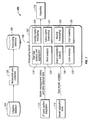
- FIG. 1 is a diagram illustrating a computer-implemented method for forecasting discovery costs using historic data.
- FIG. 2 is a life-cycle diagram illustrating a set of captured historical raw business events for a single legal matter.
- FIG. 3 is histogram illustrating the probability distribution for the number of days between the occurrence of hold and export events.
- FIG. 4 is another histogram illustrating the probability distribution for the number of days between the occurrence of first collection and hold events.
- FIG. 5 is a life-cycle diagram illustrating a number of legal matters, some of which are active at the beginning of a forecasting period.
- FIG. 6 is a life-cycle diagram illustrating the legal events of FIG. 5 and also including extrapolated events for the legal matters that are active at the beginning of the forecasting period.
- FIG. 7 is a life-cycle diagram illustrating the legal events of FIG. 5 and also including two new estimated matters along with their future events.
- FIG. 8 illustrates a user interface having a data-display/entry screen that enables a user to manually adjust parameters of a prediction model.
- FIG. 9 illustrates a user interface having a data-display/entry screen that enables a user to manually adjust parameters of an individual matter.
- FIG. 10 is a bar chart illustrating cost by quarter for four different types of matters.
- FIG. 11 is a pie chart illustrating a yearly estimate of discovery costs for the four different types, of matters illustrated in FIG. 7 .
- FIG. 12 is a pie chart illustrating the yearly distribution of quarterly expenses.
- FIG. 1 is a high level flow system diagram 100 that provides an overview of a forecasting model, or forecasting engine (FE), 102 .
- the forecasting model uses various modules to implement six steps of a forecasting method.
- STEP 1 gathers historical raw business event information.
- STEP 2 statistically analyzes the event information.
- STEP 3 calculates a statistical data matrix for matter types.
- STEP 4 calculates a statistical data matrix for existing matters.
- STEP 5 extrapolates future events including time lag to export and volume of production.
- STEP 6 forecasts costs.
- the forecasting model is based on recognizing business event patterns and their interpolation into the future.
- Various business events occur during the lifecycle of the matter and include both internal and external events.
- Internal events are those events that can be extracted from a litigation knowledge base.
- Some examples of internal events (identified with alphabetical labels) gathered in STEP 1 include but are not limited to: A—legal matters created; R—legal requests created; P—persons added to scope; D—data sources added to scope; H—hold notices created; CP—collection plans created; C—collection logs created; Ex—external events occurred; V—virtual interviews created; I—interview logs created; E—exports occurred; and F—matters finished.
- External events are those events that occur in third party systems and applications. Examples of external events include events occurring in a corporate matter management system, events routed from an outside council system, a billing system, etc. External events include, but are not limited to the following: fee/invoice tracking events; Integration with third party matter management systems; and project management events.
- a litigation database 104 for STEP 1 provides relevant data to an automated data collection module 106 .
- a forecasting database 108 for STEP 1 receives input from the automated data collection module 106 .
- the forecasting data base 108 also has an input/output (I/O) port 100 that communicates with the forecasting module 102 .
- a third party system module 112 provides outside information to the forecasting model 102 including matter management information, billing information, and other external data, as required.
- a model calibration tools module 114 provides various calibration tools for tuning model variables in the forecasting model 102 .
- a reporting module 116 receives information from the forecasting module 102 to provide various reports to users.
- a raw data analysis and aggregation module 118 performs STEP 2 to provide for each matter type statistical analysis of data for each of the six steps.
- This statistical analysis provides for each step of a particular matter type and event type the following values: statistical distribution of Export Lag, in days, from a first occurrence. It also includes the statistical distribution of the number of custodians involved in collections and volume collected from both custodians and data sources. In one embodiment of the invention, any such statistical distribution may be represented throughout the invention using the 10 th , 50 th , and 90 th percentiles of the distribution. Such a mode is further refined to increase accuracy.
- An existing matter forecasting module 120 performs STEP 3 that extrapolates progress for known existing matters.
- a future matter forecasting module 122 performs STEP 4 by forecasting how many new matters are likely to occur over the duration of a forecasting period. The forecasting module 122 also extrapolates the average progress that matters are likely to experience within the forecast period.
- a volume production forecasting module 124 performs STEP 5 by extrapolating quantitative characteristics of the material to be collected and calculates expected export volumes.
- a cost modeling module 126 performs STEP 6 by using the extrapolated collection volume previously calculated and applying a culling rate and average estimated review cost.
- a trend analysis module 128 analyzes historical data to determine if longer term trends occur and if seasonal or cyclical patterns occur.
- An event correlation analysis module 130 analyzes patterns of litigation events in order to establish important relationships between the events and to improve accuracy of the forecasts.
- An error tracking module 132 for costs compares forecasted cost to actual costs and makes appropriate changes to calibrate the forecasting module with historical data.
- the present invention gathers, or collects, historical business-event data using automated methods from the litigation database and other data sources.
- the data is gathered into a forecasting database where it goes through multiple processing stages including aggregation and refinement.
- Legal matters of a given matter type tend to have similar characteristics so that the method groups the gathered data by matter types.
- the data is basically a sequence of business events pertaining to legal matters. Most of the events have a Matter ID and a Timestamp associated therewith.
- a Matter ID identifies that an event has occurred in the context of a legal matter identified by the Matter ID.
- a Timestamp identifies an event as having occurred at a specified date/time.
- Business events may also contain additional information, based on their type.
- a “Collection Log Created” event contains additional information, such as the volume of collected data in gigabytes (GB). Due to the high volume of data gathered as well as unavoidable occurrences of various exceptional cases that are statistical anomalies, there is a need for an automated procedure that cleans, so to speak, the data in order to reduce the statistical noise, or misleading information, from such anomalies. For example, a given matter could be explicitly or automatically selected as being “exceptional” and be excluded from historical trends. Automatic selection can be based, for example, on a definition of normal expected ranges for key matter metrics and how far any given matter deviates from those ranges. Potential errors are reduced by identifying those exceptional events that fall beyond typical values and that are characterized as being so abnormal they should not be used for calculating historical trends.
- the historical data is inputted to a quantitative timing forecasting model.
- the function of the forecasting model is to predict the timing, volume, and likelihood of occurrence of an export event, where the bulk of the costs are incurred.
- the likelihood of future occurrences is based on knowledge of when certain events have occurred to date.
- the forecasting model recognizes business event patterns.
- the forecasting model also recognizes various trends in the patterns of historical events and is capable of adjusting the forecast accordingly. A few business events have more significance than others.
- To predict the likelihood and timing of export most events can be used as reference information. However, only certain events having certain additional parameters, such as collection logs with specific collection volumes that enable prediction of the volume of exports.
- the forecast model also provides several additional stages including: business event filtering and cleaning; event data transformation; temporal probabilistic event correlation; trend analysis; future event forecasting; estimating volume of the future exports; applying culling and other adjustments to the forecasted volume; estimating discovery costs; evaluating forecast accuracy; and model calibration.
- the software is built around a forecast engine (FE) which provides a foundation for reliable forecasting.
- the forecast engine uses historical data as the basis for estimating future discovery costs.
- the methods used for discovery costs forecasting are based on the statistical information and can be classified as a subset of time-series forecasting methods, also known as time-domain methods.
- the FE makes forecasts based on the patterns in the historical events and their correlation in time.
- Historical litigation data typically shows a consistent pattern of events that are expected to recur in the future.
- the FE models the following components when analyzing historical data pertaining to the various types of legal matters: trends, cyclical events, seasonal events, and irregular events.
- trends while the number of new legal matters fluctuates month to month and from one quarter to another, historical data gathered over a long period of time may show that the number of litigations per quarter tends to increase over time.
- Cyclical events are those events in a repeating sequence of events that lasts for more than a year.
- Seasonal events capture the regular pattern of variability in an event time series within a one-year period, in which the number of new litigations may show, for example, a significant decrease during the summer time or a major holiday and an increase at the beginning of the New Year quarter.
- Irregular events represent random variations in the occurrence of events that are triggered by random factors.
- a critical aspect of cost forecasting is insuring the consistency and accuracy of the collected data.
- historical data is collected as automatically as possible.
- Events are aggregated by matter types to enable more precise cost forecasting in subsequent stages.
- One implementation of the forecasting method automatically captures and summarizes business events, using the most reliable historical data available. It is assumed that almost all legal matters and all collection processes are managed and tracked through a single application that can aggregate all this information into a single knowledge base.
- the forecasting method and apparatus has access to that knowledge base, and consequently possess very large amounts of historical data pertaining to the majority of legal matters in a company. This captured data is highly reliable and accurate and improves the accuracy of the overall forecasting model.
- Legal matters are typically categorized into various types. For example, a legal department can choose to categorize matters into types such as employment, securities, etc. Different matter types are characterized by potentially widely dispersed historical data parameters.
- the forecasting model is based on an iterative approach and includes, for example, STEPS 1 through 6.
- the method provides a general business-event based discovery cost forecasting framework that uses a number of forecasting algorithms.
- the approach described below is an example of an algorithm based on extrapolation, where the data for historic events is analyzed and decomposed into current levels, trends, and cycles. The current levels are determined by summarizing the collected events and their statistical properties.
- Table 1 an example of the historical raw business events that are gathered or captured for a single matter. Each data entry is listed as an employment type with a matter ID, an event type, and a date timestamp.
- FIG. 2 is a life-cycle diagram 200 showing an exemplary set of captured historical raw business events for a single legal matter. An entire set of events pertaining to a single matter can also represented by this type of life-cycle diagram:
- a suffix “x” marks subsequent events of a given type that have occurred in the context of a particular matter. For instance, a first collection log is labeled as “C” and a subsequent collection log is labeled as “Cx”. A follow-on export is marked as “Ex”. An initial External event is marked “Ex”.
- the data captured in step 1 is aggregated and statistically analyzed by matter type and event type.
- An example of the results of such an aggregation and analysis are tabulated in Table 2.
- Export Lag is defined as the duration from the occurrence of a given event to the export event E.
- Event weighting provides that the most recent data is weighted more heavily than older data. For example, data from the last two quarters should have a much higher impact on the forecast than data from last year, etc. A technique called exponential smoothing is used for that weighting.
- S 0 X 0
- S t ⁇ X t +(1 ⁇ ) S t ⁇ 1
- ⁇ is a smoothing factor with the value ranging from 0 to 1
- S t ⁇ 1 is a previous smoothed statistic
- X t is the latest observation value.
- Exponential smoothing is applied to variety of variables including lag times, volumes of collection, number of people in scope, etc.
- Event filtering deals with historical data that has irregular characteristics. Event filtering allows for discarding of events with values outside of an acceptable range.
- An irregular event occurs when a user performs a test operation or other activity that is not a part of a normal business process and that should not be used for forecasting.
- Another example of an irregular event occurs when an unusually large volume of collection of a variable falls well outside of the typical range of values for the variable.
- the method provides a way to exclude from the captured historical event data base events such as test export, collection, etc., that were not intended to be a part of the normal business process and are very unlikely to occur frequently. This approach streamlines event filtering management and improves overall forecasting accuracy.
- Correlation is a popular statistical technique that determines whether a pair of variables are related and how strong is the relationship. For example, the event of creation of the collection log can significantly increase the likelihood of export. Correlation tells us how much bearing the creation of the collection log has on the probability of export. For a person who understands legal processes, this correlation is fairly straight forward, but in reality historical events may have unsuspected correlations. A good understanding of the correlations in the historical data provides improved quality for the forecasting model.
- the forecasting model of the present invention calculates the correlation coefficient (r), which ranges from ⁇ 1.0 to +1.0.
- the idea here is to calculate the strength of the relationship between the fact that an event of a given type has occurred and the probability of the event of export happening. The closer the correlation coefficient is to +1 or ⁇ 1, the more tightly an occurrence of a given event contributes to the likelihood of export. If r is close to 0, it means there is no relationship between the events.
- FIG. 5 is a life-cycle diagram 210 illustrating a number of legal matters, some of which are active at the beginning of a forecasting period. The figure shows five active litigations at the beginning of the forecasting period at the beginning of Q 3 .
- the method of the present invention uses statistical data produced in STEP 2 to calculate probabilities of occurrence of business events for a given matter.
- the event that we are the most interested in is the export event E because most of the discovery costs are incurred at the export event E.
- the method of the present invention extrapolates the occurrence of events that are likely to happen during the forecasting period, including the likelihood of export.
- One implementation of the model for extrapolating the future events on existing matters is based on a well known forecasting methods that include but are not limited to: time-series methods, including time-series decomposition and Box-Jenkins, smoothing methods, discrete distribution models, and regression or econometric methods.
- time-series methods including time-series decomposition and Box-Jenkins
- smoothing methods discrete distribution models
- regression or econometric methods One variation of a smoothing method, called triple exponential smoothing, can be used for data smoothing.
- Triple smoothing provides overall smoothing followed by trend and seasonal smoothing.
- FIG. 6 is a life-cycle diagram 220 that illustrates the legal events of FIG. 5 and that also includes extrapolated, future events for the legal matters that are active at the beginning of the forecasting period.
- the model contains probabilistic data on the occurrence of a new “Legal Matter Created” event (A), which is essentially a time series with quarterly periodicity.
- A Legal Matter Created
- the distribution of new matters can be expressed using 10th, 50th, and 90th percentiles with the values of 54, 121 and 213.
- the model identified has a steady upward trend with a 6% increase quarter over quarter.
- seasonal component of the model indicates a 2% downward pattern for the duration of the forecasting period.
- There is a wide variety of well known statistical methods listed above that can be applied to the model to forecast future matters.
- Triple exponential smoothing takes into account trend and seasonal patterns of events.
- F t+k ( L t +k*T t )* S t+k ⁇ c (2)
- L t is the estimate of the base level at time t
- k is the number of time periods in the forecast
- T t is the trend
- c is the number of periods in the seasonal pattern (four quarters or twelve months)
- S t+k ⁇ c is the seasonal index at time.
- smoothing constants used for smoothing equations that get adjusted as part of the forecast calibration.
- a triple exponential smoothing forecasting model can be used since it has an advantage over the other time series methods such as single and double exponential smoothing method because it takes into account trends and seasonality in the data.
- past observations are given exponentially smaller weights as the observations get older. In other words, recent observations are given relatively more weight in forecasting than the older observations.
- a base level L t is included in the base level L t .
- a trend T t is also included in forecasting than the older observations.
- S t a seasonality index
- Initial values for L t , T t , and S t can either be entered into the system or alternatively can be derived from the data. At least two cycles of data are typically required to properly initialize the forecasting model.
- the future matters are estimated including: the number of new matters created within the forecasting period based on the new matter average, trends, and possible seasonal fluctuations. Future events on these matters are estimated using methodology described in the STEP 3.
- FIG. 7 is a life-cycle diagram that illustrates the legal events of FIG. 6 with the addition of two new estimated matters along with their future events.
- the method extrapolates the quantitative characteristics of the collection scope at the time of the forecasted export to forecast the volume of production for a forecasted export event.
- One implementation estimates volume of production using the following methodology: forecasting the number of custodian and data sources for the matters in which the “export” event E is likely to occur during the forecast period; applying typical collection size per custodian and data source; estimating typical make up of the collection in terms of file types, e.g. 60% emails, 20% ms office documents, 10% txt files etc.; and applying GB/page mapping described below to the collected volume according to the collection make up ratio to estimate the size of the collections in pages.
- Collections can contain a large number of various types of files.
- the number of pages per gigabyte of data varies dramatically based on the type of file. For instance, a txt file or a Microsoft (MS) Excel file may be small in sizes but would likely result in large number of pages
- emails may be large in size but result in a small number of pages.
- the method addresses this issue by introducing a simple GB/page mapping that defines average number of pages per GB of collected data for a specified document type.
- Table 3 shows average pages per gigabyte for various document types.
- a cost for future discovery is derived from the extrapolated collection volume calculated in the previous STEP 5 by applying a culling rate and average review cost.
- the review costs are typically estimated based on the number of pages produced, where culling rate and review rate are measured in $/page.
- An implementation of a method to estimate the discovery cost, based on extrapolated collections volume, is described below. For matters where the detailed collected data is not known yet, an average blended page count/GB value is used to convert the estimated data collected volume into a projected page count.
- the total volume is extrapolated based on current volume and additional expected collection.
- the page count equivalent is computed based on the kind of files that are collected.
- Forecast accuracy is measured and calculated based on the predicted and observed data using the following equation:
- the forecasting model is designed to become more accurate over time. This is achieved though the ability to compare the forecasted and actual export volume and review costs and to make appropriate provisions and adjustments to calibrate the forecasting model and the historical data.
- FIG. 8 is a user interface such as a data entry screen 300 for a user interface that enables a user to manually adjust major parameters of the forecasting model.
- Various entry windows are provided for user entry.
- An entry window 302 is provided a user estimation of likelihood of production actually occurring.
- a group 304 of entry windows is provided for a user's estimates of the duration of a matter before first export is required. The estimates are in years, months, and days for estimates of 10%, average, and 90%.
- a group 306 of entry windows is provided for a user's estimates of the volume of export from data sources. These volume estimates are in megabytes (MB) with estimates of 10%, average, and 90%.
- Another group 308 of entry windows is provided for a user's estimates of the volume of export from custodians.
- An entry window 310 is provided for a user's estimation of culling rate per cent.
- FIG. 9 shows another user data entry screen 320 for a user interface that enables a user to manually adjust parameters of an individual matter by entering values into one or more user entry windows that are selected with corresponding checkboxes.
- An entry window 322 is selected to modify the percent of likelihood of production.
- An entry window 324 is selected to modify the estimated date of production.
- An entry window 326 is selected to modify the number of estimated custodians.
- An entry window 328 is selected to modify the number of estimated data sources.
- An entry window 330 is selected to modify the estimated volume in GB.
- An entry window 332 is selected to modify the estimated total cost.
- window 322 has been modified with a different percentage and window 324 has been selected for a user to enter another date.
- the parameters provided by the forecasting model are estimated and a user with enough knowledge can elect to override the estimates with better information to improve forecasting accuracy.
- Data can also be captured from third party systems such as billing and financial systems used for handling payments to external partners. That data is streamlined into the historical database. This can be used to further increase the accuracy of the cost forecasting by correlating review costs to the event of export and increasing the consistency and integrity of the billing data.
- a possible implementation of the method to integrate with third party billing system would allow importing the billing and other financial information from outside counsels and review companies information on the regular basis into the forecasting knowledge base. The information is also used for automatic model calibration based on the forecasted costs and actual costs pertaining to discovery billed by third party vendors.
- the forecasting model embodied in the present invention enables a person with little or no training in finance to produce a forecast that is confident in delivering to a company's management team. Because the data used to create the forecast is complete and specific to the company and was collected in a way that minimizes the risk of human error.
- a system automatically collects and analyzes the data identified above and can automatically creates a cost predictability report. If the system accesses all of the data, it can compile the historic data and produce a forecast of cost by quarter.
- FIG. 10 shows a bar chart reporting the costs for each quarter for each of four different types of matters, such as intellectual property (IP) matters, regulatory matters, commercial matters, and employment matters.
- FIG. 11 shows a pie chart reporting a yearly estimate of discovery costs for the four different types of matters illustrated in FIG. 10 .
- IP intellectual property
- FIG. 11 provides a comparison of the costs for the four types of matters.
- FIG. 12 is a pie chart illustrating the yearly distribution of quarterly expenses.
- FIG. 12 provides a comparison of the quarterly costs. Reports can show costs, for example, by matter type, business unit to which costs may be allocated, and responsible attorney.
- the forecasting model is able to produce a forecast that looks forward for a specified time period.
- reports are produced showing changes in the data such as changes in the percentage of matters that move from stage to stage or the average time it takes to progress, improvements in culling rates, increases in review costs, etc.
- the ideal system automatically collects and analyzes the data identified above and automatically creates a cost predictability report. If the system accesses all of the data, it can compile the historic data and produce a forecast of cost by quarter.
- the report should include the ability to show cost by matter type, business unit (if the company allocates litigation cost), and responsible attorney. Below is a sample report showing projected quarterly expenses by matter type and total projected expenses by matter type for the next fiscal year.
- the model should be able to produce a forecast looking forward for a specified time period.
- the solution can produce reports showing changes in the data such as changes in the percentage of matters that move from stage to stage or the average time it takes to progress, improvements in culling rates, increases in review costs, etc.
Abstract
Description
| TABLE 1 | |||||
| Event | |||||
| Matter Type | Matter | Type | Timestamp | ||
| Employment | 04-1234 | A | Nov. 4, 2006 | ||
| Employment | 04-1234 | R | Nov. 11, 2006 | ||
| Employment | 04-1234 | P | Nov. 12, 2006 | ||
| Employment | 04-1234 | Px | Nov. 13, 2006 | ||
| Employment | 04-1234 | Px | Nov. 14, 2006 | ||
| Employment | 04-1234 | Px | Nov. 15, 2006 | ||
| Employment | 04-1234 | D | Nov. 16, 2006 | ||
| Employment | 04-1234 | H | Nov. 22, 2006 | ||
| Employment | 04-1234 | C | Jan. 5, 2007 | ||
| Employment | 04-1234 | Ext | Jan. 6, 2007 | ||
| Employment | 04-1234 | V | Feb. 3, 2007 | ||
| Employment | 04-1234 | C | Mar. 8, 2007 | ||
| Employment | 04-1234 | CP | Apr. 9, 2007 | ||
| Employment | 04-1234 | Cx | Apr. 10, 2007 | ||
| Employment | 04-1234 | Cx | Apr. 19, 2007 | ||
| Employment | 04-1234 | Cx | Apr. 28, 2007 | ||
| Employment | 04-1234 | Cx | May 7, 2007 | ||
| Employment | 04-1234 | Cx | May 16, 2007 | ||
| Employment | 04-1234 | Cx | May 25, 2007 | ||
| Employment | 04-1234 | Cx | Jun. 3, 2007 | ||
| Employment | 04-1234 | Cx | Jun. 12, 2007 | ||
| Employment | 04-1234 | Cx | Jun. 21, 2007 | ||
| Employment | 04-1234 | Cx | Jun. 30, 2007 | ||
| Employment | 04-1234 | Cx | Jul. 9, 2007 | ||
| Employment | 04-1234 | Cx | Jul. 18, 2007 | ||
| Employment | 04-1234 | Dx | Sep. 19, 2007 | ||
| Employment | 04-1234 | Rx | Sep. 20, 2007 | ||
| Employment | 04-1234 | Px | Oct. 21, 2007 | ||
| Employment | 04-1234 | E | Nov. 22, 2007 | ||
| Employment | 04-1234 | F | Jan. 23, 2008 | ||
-
- A—legal matter created;
- R—legal request created;
- P—person added to scope;
- D—data source added to scope;
- H—hold notice created;
- CP—collection plan created;
- C—collection log created;
- Ex—external event occurred (there might be a large number of external event types);
- V—virtual interview created;
- I—interview log created;
- E—export occurred; and
- F—matter finished.
| TABLE 2 | |||||
| Export | |||||
| Matter | Event | Lag, | Frequency, | ||
| Type | Type | days | per matter | ||
| Employment | A | 342 | 10 | ||
| Employment | R | 339 | 15 | ||
| | P | 337 | 17 | ||
| Employment | D | 334 | 19 | ||
| | H | 316 | 30 | ||
| Employment | V | 289 | 35 | ||
| Employment | C | 266 | 60 | ||
| Employment | Ex1 | 212 | 65 | ||
| Employment | CP | 202 | 50 | ||
| | E | 0 | 100 | ||
| Employment | F | −104 | 0 | ||
| Securities | A | 316 | 10 | ||
| Securities | R | 312 | 15 | ||
| Securities | P | 312 | 17 | ||
| Securities | V | 301 | 19 | ||
| Securities | D | 298 | 30 | ||
| Securities | H | 295 | 35 | ||
| Securities | C | 266 | 60 | ||
| Securities | Ex1 | 212 | 65 | ||
| Securities | CP | 202 | 503 | ||
| | E | 0 | 100 | ||
| Securities | F | −104 | 0 | ||
S0=X0
S t =αX t+(1−α)S t−1
where t is the trend factor P is the number of periods in the season (P=4 quarters per year), and y is the observation. Note that in order to properly establish an initial trend, at least two years worth of data, or 2*P periods is used.
Extrapolate Future Business Events (Step 3)
F t+k=(L t +k*T t)*S t+k−c (2)
where Lt is the estimate of the base level at time t, k is the number of time periods in the forecast, Tt is the trend, c is the number of periods in the seasonal pattern (four quarters or twelve months), and St+k−c is the seasonal index at time. There are smoothing constants used for smoothing equations that get adjusted as part of the forecast calibration.
-
- Lt=α*(Xt/St−c)+(1−α)*(Lt−1+Tt−1), where L, is the estimate of the base value at time t and α is the constant, used to smooth Lt;
- Tt=β*(Lt−Lt−1)+(1−β)*Tt−1, where Tt is the estimated trend at time t and p is the constant used to smooth the trend estimates;
- St=χ*(Xt/Lt)+(1−χ)*St−c, where S, is the seasonal index at time t, χ is the constant used to smooth the seasonality estimates, and c is the number of periods in the season. For example, c=4 for the quarterly data; and
- And finally the forecast at the time t for the period t+k is Ft+k=(Lt+k*Tt)*St+k−C
| TABLE 3 | |||
| Document Type | Average Pages./GB | ||
| Microsoft Word | 65,000 | ||
| 100,100 | |||
| Microsoft Excel | 166,000 | ||
| Lotus 1-2-3 | 290,000 | ||
| Microsoft | 17,500 | ||
| PowerPoint | |||
| Text | 678,000 | ||
| Image | 15,500 | ||
Cost Forecast (Step 6)
-
- At is the actual cost in the interval t
- Ft is the forecasted costs for the interval t
Model Calibration
Claims (19)
Priority Applications (3)
| Application Number | Priority Date | Filing Date | Title |
|---|---|---|---|
| US12/242,478 US8073729B2 (en) | 2008-09-30 | 2008-09-30 | Forecasting discovery costs based on interpolation of historic event patterns |
| US12/553,068 US8484069B2 (en) | 2008-06-30 | 2009-09-02 | Forecasting discovery costs based on complex and incomplete facts |
| US12/553,055 US8489439B2 (en) | 2008-06-30 | 2009-09-02 | Forecasting discovery costs based on complex and incomplete facts |
Applications Claiming Priority (1)
| Application Number | Priority Date | Filing Date | Title |
|---|---|---|---|
| US12/242,478 US8073729B2 (en) | 2008-09-30 | 2008-09-30 | Forecasting discovery costs based on interpolation of historic event patterns |
Related Child Applications (1)
| Application Number | Title | Priority Date | Filing Date |
|---|---|---|---|
| US12/165,018 Continuation-In-Part US20100017239A1 (en) | 2008-06-30 | 2008-06-30 | Forecasting Discovery Costs Using Historic Data |
Publications (2)
| Publication Number | Publication Date |
|---|---|
| US20100082382A1 US20100082382A1 (en) | 2010-04-01 |
| US8073729B2 true US8073729B2 (en) | 2011-12-06 |
Family
ID=42058422
Family Applications (1)
| Application Number | Title | Priority Date | Filing Date |
|---|---|---|---|
| US12/242,478 Expired - Fee Related US8073729B2 (en) | 2008-06-30 | 2008-09-30 | Forecasting discovery costs based on interpolation of historic event patterns |
Country Status (1)
| Country | Link |
|---|---|
| US (1) | US8073729B2 (en) |
Cited By (40)
| Publication number | Priority date | Publication date | Assignee | Title |
|---|---|---|---|---|
| US20090328070A1 (en) * | 2008-06-30 | 2009-12-31 | Deidre Paknad | Event Driven Disposition |
| US20100185875A1 (en) * | 2008-10-27 | 2010-07-22 | Bank Of America Corporation | Background service process for local collection of data in an electronic discovery system |
| US20100250538A1 (en) * | 2009-03-27 | 2010-09-30 | Bank Of America Corporation | Electronic discovery system |
| US20100250484A1 (en) * | 2009-03-27 | 2010-09-30 | Bank Of America Corporation | Profile scanner |
| US20100251149A1 (en) * | 2009-03-27 | 2010-09-30 | Bank Of America Corporation | Positive identification and bulk addition of custodians to a case within an electronic discovery system |
| US20100250474A1 (en) * | 2009-03-27 | 2010-09-30 | Bank Of America Corporation | Predictive coding of documents in an electronic discovery system |
| US20100250512A1 (en) * | 2009-03-27 | 2010-09-30 | Bank Of America Corporation | Search term hit counts in an electronic discovery system |
| US20100250455A1 (en) * | 2009-03-27 | 2010-09-30 | Bank Of America Corporation | Suggesting potential custodians for cases in an enterprise-wide electronic discovery system |
| US20100250266A1 (en) * | 2009-03-27 | 2010-09-30 | Bank Of America Corporation | Cost estimations in an electronic discovery system |
| US20100250644A1 (en) * | 2009-03-27 | 2010-09-30 | Bank Of America Corporation | Methods and apparatuses for communicating preservation notices and surveys |
| US20100250456A1 (en) * | 2009-03-27 | 2010-09-30 | Bank Of America Corporation | Suggesting preservation notice and survey recipients in an electronic discovery system |
| US20100250624A1 (en) * | 2009-03-27 | 2010-09-30 | Bank Of America Corporation | Source-to-processing file conversion in an electronic discovery enterprise system |
| US20100250459A1 (en) * | 2009-03-27 | 2010-09-30 | Bank Of America Corporation | Custodian management system |
| US20100250498A1 (en) * | 2009-03-27 | 2010-09-30 | Bank Of America Corporation | Active email collector |
| US20100250509A1 (en) * | 2009-03-27 | 2010-09-30 | Bank Of America Corporation | File scanning tool |
| US20110131225A1 (en) * | 2009-11-30 | 2011-06-02 | Bank Of America Corporation | Automated straight-through processing in an electronic discovery system |
| US20110321124A1 (en) * | 2010-06-29 | 2011-12-29 | Kisin Roman | Enterprise Evidence Repository |
| US20110320480A1 (en) * | 2010-06-29 | 2011-12-29 | Kisin Roman | Enterprise Evidence Repository |
| US20120089428A1 (en) * | 2010-10-09 | 2012-04-12 | Syamantak Saha | PEN Analysis for Quantified Perspectives in Decision Making |
| US8200635B2 (en) | 2009-03-27 | 2012-06-12 | Bank Of America Corporation | Labeling electronic data in an electronic discovery enterprise system |
| US8250041B2 (en) | 2009-12-22 | 2012-08-21 | International Business Machines Corporation | Method and apparatus for propagation of file plans from enterprise retention management applications to records management systems |
| US8250037B2 (en) | 2009-03-27 | 2012-08-21 | Bank Of America Corporation | Shared drive data collection tool for an electronic discovery system |
| US8275720B2 (en) | 2008-06-12 | 2012-09-25 | International Business Machines Corporation | External scoping sources to determine affected people, systems, and classes of information in legal matters |
| US8402359B1 (en) | 2010-06-30 | 2013-03-19 | International Business Machines Corporation | Method and apparatus for managing recent activity navigation in web applications |
| US8484069B2 (en) | 2008-06-30 | 2013-07-09 | International Business Machines Corporation | Forecasting discovery costs based on complex and incomplete facts |
| US8489439B2 (en) | 2008-06-30 | 2013-07-16 | International Business Machines Corporation | Forecasting discovery costs based on complex and incomplete facts |
| US8515924B2 (en) | 2008-06-30 | 2013-08-20 | International Business Machines Corporation | Method and apparatus for handling edge-cases of event-driven disposition |
| US8655856B2 (en) | 2009-12-22 | 2014-02-18 | International Business Machines Corporation | Method and apparatus for policy distribution |
| US8768867B1 (en) * | 2011-03-11 | 2014-07-01 | WhatsBusy, Incorporated | Crowd Prediction and attendance forecasting |
| US20160282116A1 (en) * | 2015-03-23 | 2016-09-29 | Seiko Epson Corporation | Data processing circuit, physical quantity detection circuit, physical quantity detection device, electronic apparatus, and moving object |
| US20160342910A1 (en) * | 2015-05-18 | 2016-11-24 | International Business Machines Corporation | Automatic time series exploration for business intelligence analytics |
| US9531755B2 (en) | 2012-05-30 | 2016-12-27 | Hewlett Packard Enterprise Development Lp | Field selection for pattern discovery |
| US9830563B2 (en) | 2008-06-27 | 2017-11-28 | International Business Machines Corporation | System and method for managing legal obligations for data |
| US10255085B1 (en) | 2018-03-13 | 2019-04-09 | Sas Institute Inc. | Interactive graphical user interface with override guidance |
| US10331490B2 (en) | 2017-11-16 | 2019-06-25 | Sas Institute Inc. | Scalable cloud-based time series analysis |
| US10338994B1 (en) | 2018-02-22 | 2019-07-02 | Sas Institute Inc. | Predicting and adjusting computer functionality to avoid failures |
| US10552746B2 (en) | 2014-09-25 | 2020-02-04 | International Business Machines Corporation | Identification of time lagged indicators for events with a window period |
| US10929786B2 (en) * | 2016-03-02 | 2021-02-23 | International Business Machines Corporation | System and method for creating a census hub in resource constrained regions |
| US10983682B2 (en) | 2015-08-27 | 2021-04-20 | Sas Institute Inc. | Interactive graphical user-interface for analyzing and manipulating time-series projections |
| US11842252B2 (en) | 2019-06-27 | 2023-12-12 | The Toronto-Dominion Bank | System and method for examining data from a source used in downstream processes |
Families Citing this family (20)
| Publication number | Priority date | Publication date | Assignee | Title |
|---|---|---|---|---|
| US8671102B2 (en) * | 2009-04-22 | 2014-03-11 | The Rand Corporation | Systems and methods for emerging litigation risk identification |
| US8645401B2 (en) * | 2009-08-13 | 2014-02-04 | Cox Communications, Inc. | Technical electronic discovery action model |
| US20120130768A1 (en) * | 2010-11-19 | 2012-05-24 | Accenture Global Services Limited | Work force planning analytics system |
| US8396871B2 (en) | 2011-01-26 | 2013-03-12 | DiscoverReady LLC | Document classification and characterization |
| US20120253886A1 (en) * | 2011-03-28 | 2012-10-04 | Lexisnexis, A Division Of Reed Elsevier Inc. | Systems and Methods for Client Development |
| US8620720B2 (en) * | 2011-04-28 | 2013-12-31 | Yahoo! Inc. | Embedding calendar knowledge in event-driven inventory forecasting |
| US11568331B2 (en) | 2011-09-26 | 2023-01-31 | Open Text Corporation | Methods and systems for providing automated predictive analysis |
| US8813096B2 (en) * | 2011-10-11 | 2014-08-19 | International Business Machines Corporation | Predicting the impact of change on events detected in application logic |
| US10467252B1 (en) | 2012-01-30 | 2019-11-05 | DiscoverReady LLC | Document classification and characterization using human judgment, tiered similarity analysis and language/concept analysis |
| US9667514B1 (en) | 2012-01-30 | 2017-05-30 | DiscoverReady LLC | Electronic discovery system with statistical sampling |
| US20130297540A1 (en) * | 2012-05-01 | 2013-11-07 | Robert Hickok | Systems, methods and computer-readable media for generating judicial prediction information |
| WO2014036027A1 (en) * | 2012-08-27 | 2014-03-06 | Datacert, Inc. | Predictive modeling: litigation decision analysis and optimization |
| US20140180768A1 (en) * | 2012-12-20 | 2014-06-26 | John Hack | Evaluation of proposed enterprise plan |
| US9569739B2 (en) | 2013-03-13 | 2017-02-14 | Risk Management Solutions, Inc. | Predicting and managing impacts from catastrophic events using weighted period event tables |
| JP6212341B2 (en) * | 2013-09-25 | 2017-10-11 | 株式会社日立製作所 | Requirement definition process support method |
| US20150120382A1 (en) * | 2013-10-24 | 2015-04-30 | International Business Machines Corporation | Optimizing a business performance forecast |
| US20150317572A1 (en) * | 2014-05-05 | 2015-11-05 | Sap Ag | On-Demand Enrichment of Business Data |
| US20150379419A1 (en) * | 2014-06-26 | 2015-12-31 | International Business Machines Corporation | Ghost-pattern analyzer |
| CN110209686A (en) * | 2018-02-22 | 2019-09-06 | 北京嘀嘀无限科技发展有限公司 | Storage, querying method and the device of data |
| US20220050929A1 (en) * | 2020-08-13 | 2022-02-17 | Terence Malcolm Kades | Secure forecast system to generate forecasts that prevent unauthorized data modification and includes reports on a target level of integrity traceable to high integrity data sources |
Citations (150)
| Publication number | Priority date | Publication date | Assignee | Title |
|---|---|---|---|---|
| US5355497A (en) | 1992-06-10 | 1994-10-11 | Physiotronics Corporation | File directory structure generator and retrevial tool with document locator module mapping the directory structure of files to a real world hierarchical file structure |
| US5608865A (en) | 1995-03-14 | 1997-03-04 | Network Integrity, Inc. | Stand-in Computer file server providing fast recovery from computer file server failures |
| US5701472A (en) | 1995-06-09 | 1997-12-23 | Unisys Corporation | Method for locating a versioned object within a version tree depicting a history of system data and processes for an enterprise |
| US5903879A (en) | 1996-10-29 | 1999-05-11 | Mitchell; Clark Alan | Method of managing a loan for funding a pension |
| US6115642A (en) | 1996-12-31 | 2000-09-05 | Buildnet, Inc. | Systems and methods for facilitating the exchange of information between separate business entities |
| US6128620A (en) | 1999-02-02 | 2000-10-03 | Lemed Inc | Medical database for litigation |
| US6151031A (en) | 1996-09-09 | 2000-11-21 | Hewlett-Packard Company | Map builder system and method for enabling generic interfacing of an application with a display map generation process in a management system |
| US6173270B1 (en) | 1992-09-01 | 2001-01-09 | Merrill Lynch, Pierce, Fenner & Smith | Stock option control and exercise system |
| US6330572B1 (en) | 1998-07-15 | 2001-12-11 | Imation Corp. | Hierarchical data storage management |
| US6332125B1 (en) | 1998-12-18 | 2001-12-18 | Spincor Llc | Providing termination benefits for employees |
| US20010053967A1 (en) | 2000-01-27 | 2001-12-20 | Robert Gordon | Virtual summary jury trial and dispute resolution method and systems |
| US20020007333A1 (en) | 2000-02-02 | 2002-01-17 | Scolnik Pablo A. | Contract bidding for custom synthesis of a chemical structure |
| US20020010708A1 (en) | 1996-09-23 | 2002-01-24 | Mcintosh Lowrie | Defining a uniform subject classification system incorporating document management/records retention functions |
| US6343287B1 (en) | 1999-05-19 | 2002-01-29 | Sun Microsystems, Inc. | External data store link for a profile service |
| US20020022982A1 (en) | 2000-01-04 | 2002-02-21 | Elliot Cooperstone | Method and system for remotely managing business and employee administration functions |
| US20020035480A1 (en) | 2000-06-28 | 2002-03-21 | Robert Gordon | Alternative dispute resolution preparation method and systems |
| US6401079B1 (en) | 1999-10-01 | 2002-06-04 | Inleague, Inc. | System for web-based payroll and benefits administration |
| US20020083090A1 (en) | 2000-12-27 | 2002-06-27 | Jeffrey Scott R. | Document management system |
| US20020095416A1 (en) | 2001-01-12 | 2002-07-18 | Keith Schwols | Integration of a database into file management software for protecting, tracking, and retrieving data |
| US6425764B1 (en) | 1997-06-09 | 2002-07-30 | Ralph J. Lamson | Virtual reality immersion therapy for treating psychological, psychiatric, medical, educational and self-help problems |
| US20020103680A1 (en) | 2000-11-30 | 2002-08-01 | Newman Les A. | Systems, methods and computer program products for managing employee benefits |
| US20020108104A1 (en) | 2000-09-13 | 2002-08-08 | Xueshu Song | Certification and manual compiling wizard |
| US20020120859A1 (en) | 2000-01-14 | 2002-08-29 | Lipkin Daniel S. | Method and apparatus for an improved security system mechanism in a business applications management system platform |
| US20020119433A1 (en) | 2000-12-15 | 2002-08-29 | Callender Thomas J. | Process and system for creating and administering interview or test |
| US20020123902A1 (en) | 2000-12-15 | 2002-09-05 | Lenore Charles H. | Method, system and storage medium for managing and providing access to legal information |
| US20020143735A1 (en) | 2001-03-30 | 2002-10-03 | Akin Ayi | User scope-based data organization system |
| US20020143595A1 (en) | 2001-02-05 | 2002-10-03 | Frank Theodore W. | Method and system for compliance management |
| US20020147801A1 (en) | 2001-01-29 | 2002-10-10 | Gullotta Tony J. | System and method for provisioning resources to users based on policies, roles, organizational information, and attributes |
| US20020162053A1 (en) | 1999-03-10 | 2002-10-31 | Os Ron Van | User transparent software malfunction detection and reporting |
| US20020178138A1 (en) | 2001-03-15 | 2002-11-28 | Semiconductor Components Industries, Llc | Synergistic directory-based information management system and method of using |
| US20020184068A1 (en) | 2001-06-04 | 2002-12-05 | Krishnan Krish R. | Communications network-enabled system and method for determining and providing solutions to meet compliance and operational risk management standards and requirements |
| US20030004985A1 (en) | 2001-06-29 | 2003-01-02 | Hitachi, Ltd. | Method and apparatus for classifying document information |
| US20030014386A1 (en) | 2001-07-16 | 2003-01-16 | Jurado Anthony J. | Account management module database interface |
| US20030018520A1 (en) | 2001-07-19 | 2003-01-23 | Adam Rosen | Juror research |
| US20030031991A1 (en) | 2001-08-03 | 2003-02-13 | Louis Genevie | Systems and methods for making jury selection determinations |
| US20030033295A1 (en) | 2001-07-11 | 2003-02-13 | Adler Marc Stephen | Method for analyzing and recording innovations |
| US20030036994A1 (en) | 2001-04-12 | 2003-02-20 | Brad Witzig | Automated mortgage lender processing system |
| US20030046287A1 (en) | 2001-08-22 | 2003-03-06 | Joe Harry J. | Immigration status information |
| US20030051144A1 (en) | 2000-12-22 | 2003-03-13 | Williams Terry N. | Dynamic electronic chain-of-trust document with audit trail |
| US6539379B1 (en) | 1999-08-23 | 2003-03-25 | Oblix, Inc. | Method and apparatus for implementing a corporate directory and service center |
| US20030069839A1 (en) | 2000-01-24 | 2003-04-10 | Whittington Barry R. | Method for confirming and reporting financial data |
| US20030074354A1 (en) | 2001-01-17 | 2003-04-17 | Mary Lee | Web-based system and method for managing legal information |
| US20030097342A1 (en) | 2000-01-24 | 2003-05-22 | Whittingtom Barry R. | Method for verifying employment data |
| US20030110228A1 (en) | 2001-12-12 | 2003-06-12 | Ziqiang Xu | Method and apparatus for monitoring activity and presence to optimize collaborative issue resolution |
| US20030139827A1 (en) | 2002-01-18 | 2003-07-24 | Phelps Geoffrey D. | Determining economic effects of hypothetical tax policy changes |
| US6622128B1 (en) | 1999-06-25 | 2003-09-16 | Jerry L. Bedell | Internet-based attorney-client billing system |
| US20030229522A1 (en) | 2001-12-20 | 2003-12-11 | Benefit Resource, Inc. | Benefit management system and method |
| US20040002044A1 (en) | 2001-08-03 | 2004-01-01 | Louis Genevie | Systems and methods for conducting jury selection research |
| US20040019496A1 (en) * | 2002-05-30 | 2004-01-29 | Chevron U.S.A. Inc. | System and method for law practice information management |
| US20040034659A1 (en) | 2002-08-19 | 2004-02-19 | Steger Kevin J. | Automated policy compliance management system |
| US20040060063A1 (en) | 2002-09-24 | 2004-03-25 | Russ Samuel H. | PVR channel and PVR IPG information |
| US20040068432A1 (en) | 2002-05-22 | 2004-04-08 | Meyerkopf Michael H. | Work force management application |
| US20040088283A1 (en) | 2002-10-31 | 2004-05-06 | Elecdecom, Inc. | Data entry, cross reference database and search systems and methods thereof |
| US20040088332A1 (en) | 2001-08-28 | 2004-05-06 | Knowledge Management Objects, Llc | Computer assisted and/or implemented process and system for annotating and/or linking documents and data, optionally in an intellectual property management system |
| US20040088729A1 (en) | 2002-10-30 | 2004-05-06 | Imagic Tv Inc. | Ratings based television guide |
| US6738760B1 (en) | 2000-03-23 | 2004-05-18 | Albert Krachman | Method and system for providing electronic discovery on computer databases and archives using artificial intelligence to recover legally relevant data |
| US20040103284A1 (en) | 2002-11-27 | 2004-05-27 | Barker Thomas N. | System and method for archiving authenticated research and development records |
| US20040133573A1 (en) | 2001-01-11 | 2004-07-08 | Z-Force Communications, Inc. | Aggregated lock management for locking aggregated files in a switched file system |
| US20040138903A1 (en) | 2003-01-13 | 2004-07-15 | Zuniga Sara Suzanne | Employment management tool and method |
| US20040143444A1 (en) | 2003-01-16 | 2004-07-22 | Opsitnick Timothy M. | System and method facilitating management of law related service(s) |
| US20040187164A1 (en) | 2003-02-11 | 2004-09-23 | Logic City, Inc. | Method of and apparatus for selecting television programs for recording and remotely transmitting control information to a recording device to record the selected television programs |
| US20040193703A1 (en) | 2003-01-10 | 2004-09-30 | Guy Loewy | System and method for conformance and governance in a service oriented architecture |
| US20040204947A1 (en) | 2003-03-28 | 2004-10-14 | Ruicheng Li | System and method for generic business scenario management |
| US6805351B2 (en) | 2002-11-21 | 2004-10-19 | Tina Rae Eskreis Nelson | Lawsuit board game |
| US20040215619A1 (en) | 2003-04-24 | 2004-10-28 | Bsquare Corporation | System and method for integrating persistent and non-persistent storage in an integrated storage area |
| US6832205B1 (en) * | 2000-06-30 | 2004-12-14 | General Electric Company | System and method for automatically predicting the timing and costs of service events in a life cycle of a product |
| US20040260569A1 (en) | 2000-09-07 | 2004-12-23 | Cyber Legal Solutions, Inc. | Expert legal task management |
| US6839682B1 (en) * | 1999-05-06 | 2005-01-04 | Fair Isaac Corporation | Predictive modeling of consumer financial behavior using supervised segmentation and nearest-neighbor matching |
| US20050060175A1 (en) | 2003-09-11 | 2005-03-17 | Trend Integration , Llc | System and method for comparing candidate responses to interview questions |
| US20050071251A1 (en) | 1998-09-18 | 2005-03-31 | Linden Gregory D. | Data mining of user activity data to identify related items in an electronic catalog |
| US20050074734A1 (en) | 2001-07-17 | 2005-04-07 | Kuldip Randhawa | Educational game |
| US20050114241A1 (en) | 2003-11-20 | 2005-05-26 | Hirsch Martin J. | Employee stock plan administration systems and methods |
| US20050144114A1 (en) | 2000-09-30 | 2005-06-30 | Ruggieri Thomas P. | System and method for providing global information on risks and related hedging strategies |
| US20050165734A1 (en) | 2004-01-28 | 2005-07-28 | Vicars Paul D. | Electronic document manager |
| US20050187813A1 (en) | 2004-02-25 | 2005-08-25 | Louis Genevie | Systems and methods for conducting jury research and training for estimating punitive damages |
| US20050203821A1 (en) | 2004-03-09 | 2005-09-15 | Paula Petersen | Integrated procurement knowledge tools |
| US6976083B1 (en) | 1999-02-19 | 2005-12-13 | International Business Machines Corporation | Apparatus for providing direct data processing access using a queued direct input-output device |
| US20060036464A1 (en) | 2004-08-12 | 2006-02-16 | Cahoy Daniel R | Method of Reducing Hypothetical Bias in Jury Studies |
| US20060036649A1 (en) | 2004-08-12 | 2006-02-16 | Simske Steven J | Index extraction from documents |
| US20060074793A1 (en) | 2002-02-22 | 2006-04-06 | Hibbert Errington W | Transaction management system |
| US20060095421A1 (en) | 2004-10-22 | 2006-05-04 | Canon Kabushiki Kaisha | Method, apparatus, and program for searching for data |
| US20060126657A1 (en) | 2004-12-15 | 2006-06-15 | Michael Beisiegel | Generating asynchronous interfaces and methods from synchronous interfaces and methods |
| US20060136435A1 (en) | 2004-12-22 | 2006-06-22 | International Business Machines Corporation | System and method for context-sensitive decomposition of XML documents based on schemas with reusable element/attribute declarations |
| US20060143248A1 (en) | 2001-06-27 | 2006-06-29 | Yukio Nakano | Database management system with rebalance architectures |
| US20060149735A1 (en) | 2004-04-29 | 2006-07-06 | Filenet Corporation | Automated records management with enforcement of a mandatory minimum retention record |
| US7076439B1 (en) | 2001-01-10 | 2006-07-11 | Lsi Logic Corporation | Method and apparatus for managing multiple projects |
| US20060156381A1 (en) | 2005-01-12 | 2006-07-13 | Tetsuro Motoyama | Approach for deleting electronic documents on network devices using document retention policies |
| US20060167704A1 (en) * | 2002-12-06 | 2006-07-27 | Nicholls Charles M | Computer system and method for business data processing |
| US20060174320A1 (en) | 2005-01-31 | 2006-08-03 | Microsoft Corporation | System and method for efficient configuration of group policies |
| US20060184718A1 (en) | 2005-02-16 | 2006-08-17 | Sinclair Alan W | Direct file data programming and deletion in flash memories |
| US7103602B2 (en) | 2000-08-31 | 2006-09-05 | Kroll Ontrack Inc. | System and method for data management |
| US7104416B2 (en) | 2000-12-08 | 2006-09-12 | The Procter Gamble Company | Shaped container bottom |
| US7107416B2 (en) | 2003-09-08 | 2006-09-12 | International Business Machines Corporation | Method, system, and program for implementing retention policies to archive records |
| US20060230044A1 (en) | 2005-04-06 | 2006-10-12 | Tom Utiger | Records management federation |
| US20060229999A1 (en) * | 2005-04-11 | 2006-10-12 | Herbert Dodell | Decision support system for litigation evaluation |
| US7127470B2 (en) | 2002-06-24 | 2006-10-24 | Ricoh Company, Ltd. | Documents control apparatus that can share document attributes |
| US7162427B1 (en) | 1999-08-20 | 2007-01-09 | Electronic Data Systems Corporation | Structure and method of modeling integrated business and information technology frameworks and architecture in support of a business |
| US20070016546A1 (en) | 2005-07-15 | 2007-01-18 | Microsoft Corporation | Intelligent container index and search |
| US20070048720A1 (en) | 2005-08-10 | 2007-03-01 | Billauer Barbara P | Method and system for providing interactive legal training |
| US20070061156A1 (en) | 2005-09-09 | 2007-03-15 | Qwest Communications International Inc. | Compliance assurance systems and methods |
| US20070061157A1 (en) | 2005-09-09 | 2007-03-15 | Qwest Communications International Inc. | Obligation assignment systems and methods |
| US7197716B2 (en) | 2000-12-22 | 2007-03-27 | Merchant & Gould, P.C. | Litigation management system and method |
| US20070078900A1 (en) | 2005-10-04 | 2007-04-05 | Adobe Systems Incorporated | Document control |
| US20070100857A1 (en) | 2005-10-31 | 2007-05-03 | International Business Machines Corporation | Computer-implemented method, tool, and program product for storing a business document in an enterprise software application environment |
| US20070099162A1 (en) | 2005-10-28 | 2007-05-03 | International Business Machines Corporation | Systems, methods and tools for aggregating subsets of opinions from group collaborations |
| US20070112783A1 (en) | 2005-10-06 | 2007-05-17 | Mccreight Shawn | Electronic discovery system and method |
| US7225249B1 (en) | 1997-09-26 | 2007-05-29 | Mci, Llc | Integrated systems for providing communications network management services and interactive generating invoice documents |
| US20070156418A1 (en) | 2005-12-29 | 2007-07-05 | Matthias Richter | System and method to model business processes from a template |
| US20070162417A1 (en) | 2006-01-10 | 2007-07-12 | Kabushiki Kaisha Toshiba | System and method for selective access to restricted electronic documents |
| US20070208690A1 (en) | 2002-06-27 | 2007-09-06 | Siebel Systems, Inc. | Detecting and processing cache hits for queries with aggregates |
| US20070220435A1 (en) | 2006-03-03 | 2007-09-20 | Cadcorporation.Com Inc. | System and method for using virtual environments |
| US20070219844A1 (en) | 2006-03-17 | 2007-09-20 | Santorine Adolph W Jr | Event scheduling system |
| US7281084B1 (en) | 2005-01-12 | 2007-10-09 | Emc Corporation | Method and apparatus for modifying a retention period |
| US7283985B2 (en) | 2003-10-29 | 2007-10-16 | Sap A.G. | Prioritizing product information |
| US20070271517A1 (en) | 2006-05-19 | 2007-11-22 | Navigant Consulting, Inc. | System and method for providing a web portal for managing litigation activities |
| US20070282652A1 (en) | 2006-06-05 | 2007-12-06 | International Business Machines Corporation | System, Method and Program Product for Providing Policy Hierarchy in an Enterprise Data Processing System |
| US20070288659A1 (en) | 2006-06-12 | 2007-12-13 | Globalpex, Inc. | System and method for certifying and authenticating correspondence |
| US20080033904A1 (en) | 2006-08-07 | 2008-02-07 | Jeffrey Brian Ghielmetti | Method for culling a litigation discovery file set |
| US20080034003A1 (en) | 2006-08-01 | 2008-02-07 | International Business Machines Corporation | Efficient non-database file-expiration management for document retention |
| US7333989B1 (en) | 1997-03-27 | 2008-02-19 | Hitachi, Ltd. | Method and apparatus for integrating distributed information |
| US20080059265A1 (en) * | 2006-08-29 | 2008-03-06 | International Business Machines Corporation | Estimating and scheduling preparatory work for electronically called meetings |
| US20080059543A1 (en) | 2006-08-31 | 2008-03-06 | Andreas Engel | ESA enablement of records management for application integration |
| US20080070206A1 (en) | 2006-09-05 | 2008-03-20 | Foliofly, Llc | System and method of collaboration among commercial, educational and individual interests |
| US7386468B2 (en) | 2002-01-08 | 2008-06-10 | International Business Machines Corporation | System and method for resource reduction receipt log and audit trail |
| US20080148346A1 (en) | 2006-12-15 | 2008-06-19 | Ravinder Gill | Compliance control system |
| US20080195597A1 (en) | 2007-02-08 | 2008-08-14 | Samsung Electronics Co., Ltd. | Searching in peer-to-peer networks |
| US20080229037A1 (en) | 2006-12-04 | 2008-09-18 | Alan Bunte | Systems and methods for creating copies of data, such as archive copies |
| US7433832B1 (en) | 1999-11-19 | 2008-10-07 | Amazon.Com, Inc. | Methods and systems for distributing information within a dynamically defined community |
| US20080294674A1 (en) | 2007-05-21 | 2008-11-27 | Reztlaff Ii James R | Managing Status of Search Index Generation |
| US20080301207A1 (en) | 2007-05-31 | 2008-12-04 | Marc Demarest | Systems and methods for cascading destruction of electronic data in electronic evidence management |
| US20080319984A1 (en) | 2007-04-20 | 2008-12-25 | Proscia James W | System and method for remotely gathering information over a computer network |
| US20080319958A1 (en) | 2007-06-22 | 2008-12-25 | Sutirtha Bhattacharya | Dynamic Metadata based Query Formulation for Multiple Heterogeneous Database Systems |
| US7478096B2 (en) | 2003-02-26 | 2009-01-13 | Burnside Acquisition, Llc | History preservation in a computer storage system |
| US20090037376A1 (en) | 2007-07-30 | 2009-02-05 | Charles Jens Archer | Database retrieval with a unique key search on a parallel computer system |
| US20090043625A1 (en) * | 2007-08-08 | 2009-02-12 | Hsiao Tung Yao | Process Management System and Method |
| US7502891B2 (en) | 2003-10-30 | 2009-03-10 | International Business Machines Corporation | Storage management based on worklist |
| US7512636B2 (en) | 2000-03-30 | 2009-03-31 | Microsoft Corporation | Transactional file system |
| US20090106815A1 (en) | 2007-10-23 | 2009-04-23 | International Business Machines Corporation | Method for mapping privacy policies to classification labels |
| US20090119677A1 (en) | 2007-02-14 | 2009-05-07 | The Mathworks, Inc. | Bi-directional communication in a parallel processing environment |
| US20090150906A1 (en) | 2007-12-07 | 2009-06-11 | Sap Ag | Automatic electronic discovery of heterogeneous objects for litigation |
| US20090150866A1 (en) | 2007-12-07 | 2009-06-11 | Sap Ag | Enforcing legal holds of heterogeneous objects for litigation |
| US7558853B2 (en) | 1999-06-30 | 2009-07-07 | Blackboard, Inc. | Internet-based education support system and methods |
| US20090193210A1 (en) | 2008-01-29 | 2009-07-30 | Hewett Jeffrey R | System for Automatic Legal Discovery Management and Data Collection |
| US7580961B2 (en) | 2004-01-21 | 2009-08-25 | Emc Corporation | Methods and apparatus for modifying a retention period for data in a storage system |
| US7594082B1 (en) | 2006-03-07 | 2009-09-22 | Emc Corporation | Resolving retention policy conflicts |
| US7596541B2 (en) | 2000-11-10 | 2009-09-29 | Medidata Solutions, Inc. | Method and apparatus of assuring informed consent while conducting secure clinical trials |
| US20100070315A1 (en) * | 2008-09-15 | 2010-03-18 | Roberto Francisco-Yi Lu | Methods and systems for optimizing production forecasts using statistically prioritized discrete modeling methodology |
| US7720825B2 (en) | 2005-10-21 | 2010-05-18 | International Business Machines Corporation | System and method for enabling records management |
| US7730148B1 (en) | 2007-03-30 | 2010-06-01 | Emc Corporation | Backfilling a local email archive store |
| US7895229B1 (en) | 2007-05-24 | 2011-02-22 | Pss Systems, Inc. | Conducting cross-checks on legal matters across an enterprise system |
Family Cites Families (1)
| Publication number | Priority date | Publication date | Assignee | Title |
|---|---|---|---|---|
| US5903873A (en) * | 1996-05-31 | 1999-05-11 | American General Life And Accident Insurance Company | System for registering insurance transactions and communicating with a home office |
-
2008
- 2008-09-30 US US12/242,478 patent/US8073729B2/en not_active Expired - Fee Related
Patent Citations (155)
| Publication number | Priority date | Publication date | Assignee | Title |
|---|---|---|---|---|
| US5355497A (en) | 1992-06-10 | 1994-10-11 | Physiotronics Corporation | File directory structure generator and retrevial tool with document locator module mapping the directory structure of files to a real world hierarchical file structure |
| US6173270B1 (en) | 1992-09-01 | 2001-01-09 | Merrill Lynch, Pierce, Fenner & Smith | Stock option control and exercise system |
| US5608865A (en) | 1995-03-14 | 1997-03-04 | Network Integrity, Inc. | Stand-in Computer file server providing fast recovery from computer file server failures |
| US5701472A (en) | 1995-06-09 | 1997-12-23 | Unisys Corporation | Method for locating a versioned object within a version tree depicting a history of system data and processes for an enterprise |
| US6151031A (en) | 1996-09-09 | 2000-11-21 | Hewlett-Packard Company | Map builder system and method for enabling generic interfacing of an application with a display map generation process in a management system |
| US20020010708A1 (en) | 1996-09-23 | 2002-01-24 | Mcintosh Lowrie | Defining a uniform subject classification system incorporating document management/records retention functions |
| US5903879A (en) | 1996-10-29 | 1999-05-11 | Mitchell; Clark Alan | Method of managing a loan for funding a pension |
| US6115642A (en) | 1996-12-31 | 2000-09-05 | Buildnet, Inc. | Systems and methods for facilitating the exchange of information between separate business entities |
| US7333989B1 (en) | 1997-03-27 | 2008-02-19 | Hitachi, Ltd. | Method and apparatus for integrating distributed information |
| US6425764B1 (en) | 1997-06-09 | 2002-07-30 | Ralph J. Lamson | Virtual reality immersion therapy for treating psychological, psychiatric, medical, educational and self-help problems |
| US7225249B1 (en) | 1997-09-26 | 2007-05-29 | Mci, Llc | Integrated systems for providing communications network management services and interactive generating invoice documents |
| US6330572B1 (en) | 1998-07-15 | 2001-12-11 | Imation Corp. | Hierarchical data storage management |
| US20050071251A1 (en) | 1998-09-18 | 2005-03-31 | Linden Gregory D. | Data mining of user activity data to identify related items in an electronic catalog |
| US6332125B1 (en) | 1998-12-18 | 2001-12-18 | Spincor Llc | Providing termination benefits for employees |
| US6944597B2 (en) | 1998-12-18 | 2005-09-13 | Spincor Llc | Providing termination benefits for employees |
| US20020091553A1 (en) | 1998-12-18 | 2002-07-11 | Spincor Llc, A Delawer Corporation | Providing termination benefits for employees |
| US6128620A (en) | 1999-02-02 | 2000-10-03 | Lemed Inc | Medical database for litigation |
| US6976083B1 (en) | 1999-02-19 | 2005-12-13 | International Business Machines Corporation | Apparatus for providing direct data processing access using a queued direct input-output device |
| US20020162053A1 (en) | 1999-03-10 | 2002-10-31 | Os Ron Van | User transparent software malfunction detection and reporting |
| US6839682B1 (en) * | 1999-05-06 | 2005-01-04 | Fair Isaac Corporation | Predictive modeling of consumer financial behavior using supervised segmentation and nearest-neighbor matching |
| US6343287B1 (en) | 1999-05-19 | 2002-01-29 | Sun Microsystems, Inc. | External data store link for a profile service |
| US6622128B1 (en) | 1999-06-25 | 2003-09-16 | Jerry L. Bedell | Internet-based attorney-client billing system |
| US7558853B2 (en) | 1999-06-30 | 2009-07-07 | Blackboard, Inc. | Internet-based education support system and methods |
| US7162427B1 (en) | 1999-08-20 | 2007-01-09 | Electronic Data Systems Corporation | Structure and method of modeling integrated business and information technology frameworks and architecture in support of a business |
| US6539379B1 (en) | 1999-08-23 | 2003-03-25 | Oblix, Inc. | Method and apparatus for implementing a corporate directory and service center |
| US20020184148A1 (en) | 1999-10-01 | 2002-12-05 | David Kahn | System for web-based payroll and benefits administration |
| US6401079B1 (en) | 1999-10-01 | 2002-06-04 | Inleague, Inc. | System for web-based payroll and benefits administration |
| US7433832B1 (en) | 1999-11-19 | 2008-10-07 | Amazon.Com, Inc. | Methods and systems for distributing information within a dynamically defined community |
| US20020022982A1 (en) | 2000-01-04 | 2002-02-21 | Elliot Cooperstone | Method and system for remotely managing business and employee administration functions |
| US20020120859A1 (en) | 2000-01-14 | 2002-08-29 | Lipkin Daniel S. | Method and apparatus for an improved security system mechanism in a business applications management system platform |
| US20030097342A1 (en) | 2000-01-24 | 2003-05-22 | Whittingtom Barry R. | Method for verifying employment data |
| US20030069839A1 (en) | 2000-01-24 | 2003-04-10 | Whittington Barry R. | Method for confirming and reporting financial data |
| US20010053967A1 (en) | 2000-01-27 | 2001-12-20 | Robert Gordon | Virtual summary jury trial and dispute resolution method and systems |
| US20020007333A1 (en) | 2000-02-02 | 2002-01-17 | Scolnik Pablo A. | Contract bidding for custom synthesis of a chemical structure |
| US6738760B1 (en) | 2000-03-23 | 2004-05-18 | Albert Krachman | Method and system for providing electronic discovery on computer databases and archives using artificial intelligence to recover legally relevant data |
| US7512636B2 (en) | 2000-03-30 | 2009-03-31 | Microsoft Corporation | Transactional file system |
| US20020035480A1 (en) | 2000-06-28 | 2002-03-21 | Robert Gordon | Alternative dispute resolution preparation method and systems |
| US6832205B1 (en) * | 2000-06-30 | 2004-12-14 | General Electric Company | System and method for automatically predicting the timing and costs of service events in a life cycle of a product |
| US7103602B2 (en) | 2000-08-31 | 2006-09-05 | Kroll Ontrack Inc. | System and method for data management |
| US20040260569A1 (en) | 2000-09-07 | 2004-12-23 | Cyber Legal Solutions, Inc. | Expert legal task management |
| US20020108104A1 (en) | 2000-09-13 | 2002-08-08 | Xueshu Song | Certification and manual compiling wizard |
| US20050144114A1 (en) | 2000-09-30 | 2005-06-30 | Ruggieri Thomas P. | System and method for providing global information on risks and related hedging strategies |
| US7596541B2 (en) | 2000-11-10 | 2009-09-29 | Medidata Solutions, Inc. | Method and apparatus of assuring informed consent while conducting secure clinical trials |
| US20020103680A1 (en) | 2000-11-30 | 2002-08-01 | Newman Les A. | Systems, methods and computer program products for managing employee benefits |
| US7104416B2 (en) | 2000-12-08 | 2006-09-12 | The Procter Gamble Company | Shaped container bottom |
| US20020123902A1 (en) | 2000-12-15 | 2002-09-05 | Lenore Charles H. | Method, system and storage medium for managing and providing access to legal information |
| US20020119433A1 (en) | 2000-12-15 | 2002-08-29 | Callender Thomas J. | Process and system for creating and administering interview or test |
| US20030051144A1 (en) | 2000-12-22 | 2003-03-13 | Williams Terry N. | Dynamic electronic chain-of-trust document with audit trail |
| US7197716B2 (en) | 2000-12-22 | 2007-03-27 | Merchant & Gould, P.C. | Litigation management system and method |
| US20020083090A1 (en) | 2000-12-27 | 2002-06-27 | Jeffrey Scott R. | Document management system |
| US7076439B1 (en) | 2001-01-10 | 2006-07-11 | Lsi Logic Corporation | Method and apparatus for managing multiple projects |
| US20040133573A1 (en) | 2001-01-11 | 2004-07-08 | Z-Force Communications, Inc. | Aggregated lock management for locking aggregated files in a switched file system |
| US20020095416A1 (en) | 2001-01-12 | 2002-07-18 | Keith Schwols | Integration of a database into file management software for protecting, tracking, and retrieving data |
| US20030074354A1 (en) | 2001-01-17 | 2003-04-17 | Mary Lee | Web-based system and method for managing legal information |
| US20020147801A1 (en) | 2001-01-29 | 2002-10-10 | Gullotta Tony J. | System and method for provisioning resources to users based on policies, roles, organizational information, and attributes |
| US20020143595A1 (en) | 2001-02-05 | 2002-10-03 | Frank Theodore W. | Method and system for compliance management |
| US20020178138A1 (en) | 2001-03-15 | 2002-11-28 | Semiconductor Components Industries, Llc | Synergistic directory-based information management system and method of using |
| US20020143735A1 (en) | 2001-03-30 | 2002-10-03 | Akin Ayi | User scope-based data organization system |
| US20030036994A1 (en) | 2001-04-12 | 2003-02-20 | Brad Witzig | Automated mortgage lender processing system |
| US20020184068A1 (en) | 2001-06-04 | 2002-12-05 | Krishnan Krish R. | Communications network-enabled system and method for determining and providing solutions to meet compliance and operational risk management standards and requirements |
| US20060143248A1 (en) | 2001-06-27 | 2006-06-29 | Yukio Nakano | Database management system with rebalance architectures |
| US20030004985A1 (en) | 2001-06-29 | 2003-01-02 | Hitachi, Ltd. | Method and apparatus for classifying document information |
| US20030033295A1 (en) | 2001-07-11 | 2003-02-13 | Adler Marc Stephen | Method for analyzing and recording innovations |
| US20030014386A1 (en) | 2001-07-16 | 2003-01-16 | Jurado Anthony J. | Account management module database interface |
| US20050074734A1 (en) | 2001-07-17 | 2005-04-07 | Kuldip Randhawa | Educational game |
| US20030018520A1 (en) | 2001-07-19 | 2003-01-23 | Adam Rosen | Juror research |
| US6607389B2 (en) | 2001-08-03 | 2003-08-19 | Louis Genevie | Systems and methods for making jury selection determinations |
| US20040002044A1 (en) | 2001-08-03 | 2004-01-01 | Louis Genevie | Systems and methods for conducting jury selection research |
| US7284985B2 (en) | 2001-08-03 | 2007-10-23 | Louis Genevie | Computer-implemented method for conducting a jury selection training exercise based on mock trial data |
| US20030031991A1 (en) | 2001-08-03 | 2003-02-13 | Louis Genevie | Systems and methods for making jury selection determinations |
| US20030046287A1 (en) | 2001-08-22 | 2003-03-06 | Joe Harry J. | Immigration status information |
| US20040088332A1 (en) | 2001-08-28 | 2004-05-06 | Knowledge Management Objects, Llc | Computer assisted and/or implemented process and system for annotating and/or linking documents and data, optionally in an intellectual property management system |
| US20030110228A1 (en) | 2001-12-12 | 2003-06-12 | Ziqiang Xu | Method and apparatus for monitoring activity and presence to optimize collaborative issue resolution |
| US20030229522A1 (en) | 2001-12-20 | 2003-12-11 | Benefit Resource, Inc. | Benefit management system and method |
| US7386468B2 (en) | 2002-01-08 | 2008-06-10 | International Business Machines Corporation | System and method for resource reduction receipt log and audit trail |
| US20030139827A1 (en) | 2002-01-18 | 2003-07-24 | Phelps Geoffrey D. | Determining economic effects of hypothetical tax policy changes |
| US20060074793A1 (en) | 2002-02-22 | 2006-04-06 | Hibbert Errington W | Transaction management system |
| US20040068432A1 (en) | 2002-05-22 | 2004-04-08 | Meyerkopf Michael H. | Work force management application |
| US20040019496A1 (en) * | 2002-05-30 | 2004-01-29 | Chevron U.S.A. Inc. | System and method for law practice information management |
| US7127470B2 (en) | 2002-06-24 | 2006-10-24 | Ricoh Company, Ltd. | Documents control apparatus that can share document attributes |
| US20070208690A1 (en) | 2002-06-27 | 2007-09-06 | Siebel Systems, Inc. | Detecting and processing cache hits for queries with aggregates |
| US20040034659A1 (en) | 2002-08-19 | 2004-02-19 | Steger Kevin J. | Automated policy compliance management system |
| US20040060063A1 (en) | 2002-09-24 | 2004-03-25 | Russ Samuel H. | PVR channel and PVR IPG information |
| US20040088729A1 (en) | 2002-10-30 | 2004-05-06 | Imagic Tv Inc. | Ratings based television guide |
| US20040088283A1 (en) | 2002-10-31 | 2004-05-06 | Elecdecom, Inc. | Data entry, cross reference database and search systems and methods thereof |
| US6805351B2 (en) | 2002-11-21 | 2004-10-19 | Tina Rae Eskreis Nelson | Lawsuit board game |
| US20040103284A1 (en) | 2002-11-27 | 2004-05-27 | Barker Thomas N. | System and method for archiving authenticated research and development records |
| US20060167704A1 (en) * | 2002-12-06 | 2006-07-27 | Nicholls Charles M | Computer system and method for business data processing |
| US20040193703A1 (en) | 2003-01-10 | 2004-09-30 | Guy Loewy | System and method for conformance and governance in a service oriented architecture |
| US20040138903A1 (en) | 2003-01-13 | 2004-07-15 | Zuniga Sara Suzanne | Employment management tool and method |
| US20040143444A1 (en) | 2003-01-16 | 2004-07-22 | Opsitnick Timothy M. | System and method facilitating management of law related service(s) |
| US20040187164A1 (en) | 2003-02-11 | 2004-09-23 | Logic City, Inc. | Method of and apparatus for selecting television programs for recording and remotely transmitting control information to a recording device to record the selected television programs |
| US7478096B2 (en) | 2003-02-26 | 2009-01-13 | Burnside Acquisition, Llc | History preservation in a computer storage system |
| US20040204947A1 (en) | 2003-03-28 | 2004-10-14 | Ruicheng Li | System and method for generic business scenario management |
| US20040215619A1 (en) | 2003-04-24 | 2004-10-28 | Bsquare Corporation | System and method for integrating persistent and non-persistent storage in an integrated storage area |
| US7107416B2 (en) | 2003-09-08 | 2006-09-12 | International Business Machines Corporation | Method, system, and program for implementing retention policies to archive records |
| US20050060175A1 (en) | 2003-09-11 | 2005-03-17 | Trend Integration , Llc | System and method for comparing candidate responses to interview questions |
| US7283985B2 (en) | 2003-10-29 | 2007-10-16 | Sap A.G. | Prioritizing product information |
| US7502891B2 (en) | 2003-10-30 | 2009-03-10 | International Business Machines Corporation | Storage management based on worklist |
| US20050114241A1 (en) | 2003-11-20 | 2005-05-26 | Hirsch Martin J. | Employee stock plan administration systems and methods |
| US7580961B2 (en) | 2004-01-21 | 2009-08-25 | Emc Corporation | Methods and apparatus for modifying a retention period for data in a storage system |
| US20050165734A1 (en) | 2004-01-28 | 2005-07-28 | Vicars Paul D. | Electronic document manager |
| US20050187813A1 (en) | 2004-02-25 | 2005-08-25 | Louis Genevie | Systems and methods for conducting jury research and training for estimating punitive damages |
| US20050203821A1 (en) | 2004-03-09 | 2005-09-15 | Paula Petersen | Integrated procurement knowledge tools |
| US20060149735A1 (en) | 2004-04-29 | 2006-07-06 | Filenet Corporation | Automated records management with enforcement of a mandatory minimum retention record |
| US20060036649A1 (en) | 2004-08-12 | 2006-02-16 | Simske Steven J | Index extraction from documents |
| US20060036464A1 (en) | 2004-08-12 | 2006-02-16 | Cahoy Daniel R | Method of Reducing Hypothetical Bias in Jury Studies |
| US20060095421A1 (en) | 2004-10-22 | 2006-05-04 | Canon Kabushiki Kaisha | Method, apparatus, and program for searching for data |
| US20060126657A1 (en) | 2004-12-15 | 2006-06-15 | Michael Beisiegel | Generating asynchronous interfaces and methods from synchronous interfaces and methods |
| US20060136435A1 (en) | 2004-12-22 | 2006-06-22 | International Business Machines Corporation | System and method for context-sensitive decomposition of XML documents based on schemas with reusable element/attribute declarations |
| US20060156381A1 (en) | 2005-01-12 | 2006-07-13 | Tetsuro Motoyama | Approach for deleting electronic documents on network devices using document retention policies |
| US7281084B1 (en) | 2005-01-12 | 2007-10-09 | Emc Corporation | Method and apparatus for modifying a retention period |
| US20060174320A1 (en) | 2005-01-31 | 2006-08-03 | Microsoft Corporation | System and method for efficient configuration of group policies |
| US20060184718A1 (en) | 2005-02-16 | 2006-08-17 | Sinclair Alan W | Direct file data programming and deletion in flash memories |
| US20060230044A1 (en) | 2005-04-06 | 2006-10-12 | Tom Utiger | Records management federation |
| US20060229999A1 (en) * | 2005-04-11 | 2006-10-12 | Herbert Dodell | Decision support system for litigation evaluation |
| US20070016546A1 (en) | 2005-07-15 | 2007-01-18 | Microsoft Corporation | Intelligent container index and search |
| US20070048720A1 (en) | 2005-08-10 | 2007-03-01 | Billauer Barbara P | Method and system for providing interactive legal training |
| US20070061157A1 (en) | 2005-09-09 | 2007-03-15 | Qwest Communications International Inc. | Obligation assignment systems and methods |
| US20070061156A1 (en) | 2005-09-09 | 2007-03-15 | Qwest Communications International Inc. | Compliance assurance systems and methods |
| US20070078900A1 (en) | 2005-10-04 | 2007-04-05 | Adobe Systems Incorporated | Document control |
| US20070112783A1 (en) | 2005-10-06 | 2007-05-17 | Mccreight Shawn | Electronic discovery system and method |
| US7720825B2 (en) | 2005-10-21 | 2010-05-18 | International Business Machines Corporation | System and method for enabling records management |
| US20070099162A1 (en) | 2005-10-28 | 2007-05-03 | International Business Machines Corporation | Systems, methods and tools for aggregating subsets of opinions from group collaborations |
| US20070100857A1 (en) | 2005-10-31 | 2007-05-03 | International Business Machines Corporation | Computer-implemented method, tool, and program product for storing a business document in an enterprise software application environment |
| US20070156418A1 (en) | 2005-12-29 | 2007-07-05 | Matthias Richter | System and method to model business processes from a template |
| US20070162417A1 (en) | 2006-01-10 | 2007-07-12 | Kabushiki Kaisha Toshiba | System and method for selective access to restricted electronic documents |
| US20070220435A1 (en) | 2006-03-03 | 2007-09-20 | Cadcorporation.Com Inc. | System and method for using virtual environments |
| US7594082B1 (en) | 2006-03-07 | 2009-09-22 | Emc Corporation | Resolving retention policy conflicts |
| US20070219844A1 (en) | 2006-03-17 | 2007-09-20 | Santorine Adolph W Jr | Event scheduling system |
| US20070271517A1 (en) | 2006-05-19 | 2007-11-22 | Navigant Consulting, Inc. | System and method for providing a web portal for managing litigation activities |
| US20070282652A1 (en) | 2006-06-05 | 2007-12-06 | International Business Machines Corporation | System, Method and Program Product for Providing Policy Hierarchy in an Enterprise Data Processing System |
| US20070288659A1 (en) | 2006-06-12 | 2007-12-13 | Globalpex, Inc. | System and method for certifying and authenticating correspondence |
| US20080034003A1 (en) | 2006-08-01 | 2008-02-07 | International Business Machines Corporation | Efficient non-database file-expiration management for document retention |
| US20080033904A1 (en) | 2006-08-07 | 2008-02-07 | Jeffrey Brian Ghielmetti | Method for culling a litigation discovery file set |
| US20080059265A1 (en) * | 2006-08-29 | 2008-03-06 | International Business Machines Corporation | Estimating and scheduling preparatory work for electronically called meetings |
| US20080059543A1 (en) | 2006-08-31 | 2008-03-06 | Andreas Engel | ESA enablement of records management for application integration |
| US20080070206A1 (en) | 2006-09-05 | 2008-03-20 | Foliofly, Llc | System and method of collaboration among commercial, educational and individual interests |
| US20080229037A1 (en) | 2006-12-04 | 2008-09-18 | Alan Bunte | Systems and methods for creating copies of data, such as archive copies |
| US20080148346A1 (en) | 2006-12-15 | 2008-06-19 | Ravinder Gill | Compliance control system |
| US20080195597A1 (en) | 2007-02-08 | 2008-08-14 | Samsung Electronics Co., Ltd. | Searching in peer-to-peer networks |
| US20090119677A1 (en) | 2007-02-14 | 2009-05-07 | The Mathworks, Inc. | Bi-directional communication in a parallel processing environment |
| US7730148B1 (en) | 2007-03-30 | 2010-06-01 | Emc Corporation | Backfilling a local email archive store |
| US20080319984A1 (en) | 2007-04-20 | 2008-12-25 | Proscia James W | System and method for remotely gathering information over a computer network |
| US20080294674A1 (en) | 2007-05-21 | 2008-11-27 | Reztlaff Ii James R | Managing Status of Search Index Generation |
| US7895229B1 (en) | 2007-05-24 | 2011-02-22 | Pss Systems, Inc. | Conducting cross-checks on legal matters across an enterprise system |
| US20080301207A1 (en) | 2007-05-31 | 2008-12-04 | Marc Demarest | Systems and methods for cascading destruction of electronic data in electronic evidence management |
| US20080319958A1 (en) | 2007-06-22 | 2008-12-25 | Sutirtha Bhattacharya | Dynamic Metadata based Query Formulation for Multiple Heterogeneous Database Systems |
| US20090037376A1 (en) | 2007-07-30 | 2009-02-05 | Charles Jens Archer | Database retrieval with a unique key search on a parallel computer system |
| US20090043625A1 (en) * | 2007-08-08 | 2009-02-12 | Hsiao Tung Yao | Process Management System and Method |
| US20090106815A1 (en) | 2007-10-23 | 2009-04-23 | International Business Machines Corporation | Method for mapping privacy policies to classification labels |
| US20090150866A1 (en) | 2007-12-07 | 2009-06-11 | Sap Ag | Enforcing legal holds of heterogeneous objects for litigation |
| US20090150906A1 (en) | 2007-12-07 | 2009-06-11 | Sap Ag | Automatic electronic discovery of heterogeneous objects for litigation |
| US20090193210A1 (en) | 2008-01-29 | 2009-07-30 | Hewett Jeffrey R | System for Automatic Legal Discovery Management and Data Collection |
| US20100070315A1 (en) * | 2008-09-15 | 2010-03-18 | Roberto Francisco-Yi Lu | Methods and systems for optimizing production forecasts using statistically prioritized discrete modeling methodology |
Non-Patent Citations (7)
| Title |
|---|
| Human Capital Mangement; "mySAP . . . management"; retrieved from archive.org Aug. 18, 2009 www.sap.com. |
| PSS Systems, Inc., "Industry Leader PSS Systems Launches Third Generation of Atlas Legal Hold and Retention Management Software", pp. 1-2, www.pss-systems.com (Aug. 2007). * |
| PSS Systems, Inc., Atlas LCC for Litigation, pp. 1-2, www.pss-systems.com (Feb. 2008); PSS Systems, Inc., Map Your Data Sources, www.pss-systems.com (Feb. 200*); PSS Systems, Inc., "PSS Systems Provides Legal Hold and Retention Enforcement Automation Solutions for File Shares, Documentum, and other Data Sources" (Feb. 2008). |
| PSS Systems, Inc., Litigation Communications and Collections, www.pss-systems.com (2006), retrieved online on Dec. 8, 2010 from archive.org, 1 page. |
| PSS Systems, Inc., Preservation Benchmarks for 2007 and Beyond, www.pss-systems.com, pp. 1-3 (2007). |
| www.pss-systems.com; retrieved from www.Archive.org any linkage dated Dec. 8, 2005, 130 pages. |
| Zhu, et al.; "Query Expansion Using Web Access Log Files"; Lecture Notes in Computer Science, 2005, vol. 3588/2005, pp. 686-695, Springer-Verlag Berlin Hedelberg. |
Cited By (72)
| Publication number | Priority date | Publication date | Assignee | Title |
|---|---|---|---|---|
| US8275720B2 (en) | 2008-06-12 | 2012-09-25 | International Business Machines Corporation | External scoping sources to determine affected people, systems, and classes of information in legal matters |
| US9830563B2 (en) | 2008-06-27 | 2017-11-28 | International Business Machines Corporation | System and method for managing legal obligations for data |
| US20090328070A1 (en) * | 2008-06-30 | 2009-12-31 | Deidre Paknad | Event Driven Disposition |
| US8515924B2 (en) | 2008-06-30 | 2013-08-20 | International Business Machines Corporation | Method and apparatus for handling edge-cases of event-driven disposition |
| US8489439B2 (en) | 2008-06-30 | 2013-07-16 | International Business Machines Corporation | Forecasting discovery costs based on complex and incomplete facts |
| US8484069B2 (en) | 2008-06-30 | 2013-07-09 | International Business Machines Corporation | Forecasting discovery costs based on complex and incomplete facts |
| US8327384B2 (en) | 2008-06-30 | 2012-12-04 | International Business Machines Corporation | Event driven disposition |
| US20100185875A1 (en) * | 2008-10-27 | 2010-07-22 | Bank Of America Corporation | Background service process for local collection of data in an electronic discovery system |
| US8549327B2 (en) | 2008-10-27 | 2013-10-01 | Bank Of America Corporation | Background service process for local collection of data in an electronic discovery system |
| US20100250498A1 (en) * | 2009-03-27 | 2010-09-30 | Bank Of America Corporation | Active email collector |
| US8572376B2 (en) | 2009-03-27 | 2013-10-29 | Bank Of America Corporation | Decryption of electronic communication in an electronic discovery enterprise system |
| US20100250503A1 (en) * | 2009-03-27 | 2010-09-30 | Bank Of America Corporation | Electronic communication data validation in an electronic discovery enterprise system |
| US20100250308A1 (en) * | 2009-03-27 | 2010-09-30 | Bank Of America Corporation | Initiating collection of data in an electronic discovery system based on status update notification |
| US20100250644A1 (en) * | 2009-03-27 | 2010-09-30 | Bank Of America Corporation | Methods and apparatuses for communicating preservation notices and surveys |
| US20100250456A1 (en) * | 2009-03-27 | 2010-09-30 | Bank Of America Corporation | Suggesting preservation notice and survey recipients in an electronic discovery system |
| US20100250624A1 (en) * | 2009-03-27 | 2010-09-30 | Bank Of America Corporation | Source-to-processing file conversion in an electronic discovery enterprise system |
| US20100250459A1 (en) * | 2009-03-27 | 2010-09-30 | Bank Of America Corporation | Custodian management system |
| US20100250573A1 (en) * | 2009-03-27 | 2010-09-30 | Bank Of America Corporation | Search term management in an electronic discovery system |
| US20100250541A1 (en) * | 2009-03-27 | 2010-09-30 | Bank Of America Corporataion | Targeted document assignments in an electronic discovery system |
| US20100250509A1 (en) * | 2009-03-27 | 2010-09-30 | Bank Of America Corporation | File scanning tool |
| US9934487B2 (en) | 2009-03-27 | 2018-04-03 | Bank Of America Corporation | Custodian management system |
| US20100250538A1 (en) * | 2009-03-27 | 2010-09-30 | Bank Of America Corporation | Electronic discovery system |
| US9721227B2 (en) | 2009-03-27 | 2017-08-01 | Bank Of America Corporation | Custodian management system |
| US9547660B2 (en) | 2009-03-27 | 2017-01-17 | Bank Of America Corporation | Source-to-processing file conversion in an electronic discovery enterprise system |
| US8200635B2 (en) | 2009-03-27 | 2012-06-12 | Bank Of America Corporation | Labeling electronic data in an electronic discovery enterprise system |
| US8224924B2 (en) | 2009-03-27 | 2012-07-17 | Bank Of America Corporation | Active email collector |
| US9542410B2 (en) | 2009-03-27 | 2017-01-10 | Bank Of America Corporation | Source-to-processing file conversion in an electronic discovery enterprise system |
| US8250037B2 (en) | 2009-03-27 | 2012-08-21 | Bank Of America Corporation | Shared drive data collection tool for an electronic discovery system |
| US20100250266A1 (en) * | 2009-03-27 | 2010-09-30 | Bank Of America Corporation | Cost estimations in an electronic discovery system |
| US20100250455A1 (en) * | 2009-03-27 | 2010-09-30 | Bank Of America Corporation | Suggesting potential custodians for cases in an enterprise-wide electronic discovery system |
| US8364681B2 (en) | 2009-03-27 | 2013-01-29 | Bank Of America Corporation | Electronic discovery system |
| US9330374B2 (en) | 2009-03-27 | 2016-05-03 | Bank Of America Corporation | Source-to-processing file conversion in an electronic discovery enterprise system |
| US8417716B2 (en) | 2009-03-27 | 2013-04-09 | Bank Of America Corporation | Profile scanner |
| US20100250512A1 (en) * | 2009-03-27 | 2010-09-30 | Bank Of America Corporation | Search term hit counts in an electronic discovery system |
| US20100250474A1 (en) * | 2009-03-27 | 2010-09-30 | Bank Of America Corporation | Predictive coding of documents in an electronic discovery system |
| US8504489B2 (en) | 2009-03-27 | 2013-08-06 | Bank Of America Corporation | Predictive coding of documents in an electronic discovery system |
| US20100251149A1 (en) * | 2009-03-27 | 2010-09-30 | Bank Of America Corporation | Positive identification and bulk addition of custodians to a case within an electronic discovery system |
| US20100250484A1 (en) * | 2009-03-27 | 2010-09-30 | Bank Of America Corporation | Profile scanner |
| US9171310B2 (en) | 2009-03-27 | 2015-10-27 | Bank Of America Corporation | Search term hit counts in an electronic discovery system |
| US8572227B2 (en) * | 2009-03-27 | 2013-10-29 | Bank Of America Corporation | Methods and apparatuses for communicating preservation notices and surveys |
| US20100250931A1 (en) * | 2009-03-27 | 2010-09-30 | Bank Of America Corporation | Decryption of electronic communication in an electronic discovery enterprise system |
| US8903826B2 (en) | 2009-03-27 | 2014-12-02 | Bank Of America Corporation | Electronic discovery system |
| US8688648B2 (en) | 2009-03-27 | 2014-04-01 | Bank Of America Corporation | Electronic communication data validation in an electronic discovery enterprise system |
| US8868561B2 (en) | 2009-03-27 | 2014-10-21 | Bank Of America Corporation | Electronic discovery system |
| US8805832B2 (en) | 2009-03-27 | 2014-08-12 | Bank Of America Corporation | Search term management in an electronic discovery system |
| US8806358B2 (en) | 2009-03-27 | 2014-08-12 | Bank Of America Corporation | Positive identification and bulk addition of custodians to a case within an electronic discovery system |
| US20110131225A1 (en) * | 2009-11-30 | 2011-06-02 | Bank Of America Corporation | Automated straight-through processing in an electronic discovery system |
| US9053454B2 (en) | 2009-11-30 | 2015-06-09 | Bank Of America Corporation | Automated straight-through processing in an electronic discovery system |
| US8250041B2 (en) | 2009-12-22 | 2012-08-21 | International Business Machines Corporation | Method and apparatus for propagation of file plans from enterprise retention management applications to records management systems |
| US8655856B2 (en) | 2009-12-22 | 2014-02-18 | International Business Machines Corporation | Method and apparatus for policy distribution |
| US8832148B2 (en) * | 2010-06-29 | 2014-09-09 | International Business Machines Corporation | Enterprise evidence repository |
| US20110321124A1 (en) * | 2010-06-29 | 2011-12-29 | Kisin Roman | Enterprise Evidence Repository |
| US8566903B2 (en) * | 2010-06-29 | 2013-10-22 | International Business Machines Corporation | Enterprise evidence repository providing access control to collected artifacts |
| US20110320480A1 (en) * | 2010-06-29 | 2011-12-29 | Kisin Roman | Enterprise Evidence Repository |
| US8402359B1 (en) | 2010-06-30 | 2013-03-19 | International Business Machines Corporation | Method and apparatus for managing recent activity navigation in web applications |
| US20120089428A1 (en) * | 2010-10-09 | 2012-04-12 | Syamantak Saha | PEN Analysis for Quantified Perspectives in Decision Making |
| US8768867B1 (en) * | 2011-03-11 | 2014-07-01 | WhatsBusy, Incorporated | Crowd Prediction and attendance forecasting |
| US9531755B2 (en) | 2012-05-30 | 2016-12-27 | Hewlett Packard Enterprise Development Lp | Field selection for pattern discovery |
| US10552746B2 (en) | 2014-09-25 | 2020-02-04 | International Business Machines Corporation | Identification of time lagged indicators for events with a window period |
| US20160282116A1 (en) * | 2015-03-23 | 2016-09-29 | Seiko Epson Corporation | Data processing circuit, physical quantity detection circuit, physical quantity detection device, electronic apparatus, and moving object |
| US10291215B2 (en) * | 2015-03-23 | 2019-05-14 | Seiko Epson Corporation | Data processing circuit, physical quantity detection circuit, physical quantity detection device, electronic apparatus, and moving object |
| US20160342909A1 (en) * | 2015-05-18 | 2016-11-24 | International Business Machines Corporation | Automatic time series exploration for business intelligence analytics |
| US10453007B2 (en) * | 2015-05-18 | 2019-10-22 | International Business Machines Corporation | Automatic time series exploration for business intelligence analytics |
| US10453008B2 (en) * | 2015-05-18 | 2019-10-22 | International Business Machines Corporation | Automatic time series exploration for business intelligence analytics |
| US20160342910A1 (en) * | 2015-05-18 | 2016-11-24 | International Business Machines Corporation | Automatic time series exploration for business intelligence analytics |
| US10983682B2 (en) | 2015-08-27 | 2021-04-20 | Sas Institute Inc. | Interactive graphical user-interface for analyzing and manipulating time-series projections |
| US10929786B2 (en) * | 2016-03-02 | 2021-02-23 | International Business Machines Corporation | System and method for creating a census hub in resource constrained regions |
| US11468377B2 (en) * | 2016-03-02 | 2022-10-11 | International Business Machines Corporation | System and method for creating a census hub in resource constrained regions |
| US10331490B2 (en) | 2017-11-16 | 2019-06-25 | Sas Institute Inc. | Scalable cloud-based time series analysis |
| US10338994B1 (en) | 2018-02-22 | 2019-07-02 | Sas Institute Inc. | Predicting and adjusting computer functionality to avoid failures |
| US10255085B1 (en) | 2018-03-13 | 2019-04-09 | Sas Institute Inc. | Interactive graphical user interface with override guidance |
| US11842252B2 (en) | 2019-06-27 | 2023-12-12 | The Toronto-Dominion Bank | System and method for examining data from a source used in downstream processes |
Also Published As
| Publication number | Publication date |
|---|---|
| US20100082382A1 (en) | 2010-04-01 |
Similar Documents
| Publication | Publication Date | Title |
|---|---|---|
| US8073729B2 (en) | Forecasting discovery costs based on interpolation of historic event patterns | |
| US20100017239A1 (en) | Forecasting Discovery Costs Using Historic Data | |
| US7249040B1 (en) | Computerized medical underwriting of group life and disability insurance using medical claims data | |
| US7555438B2 (en) | Computerized medical modeling of group life insurance using medical claims data | |
| US10157393B2 (en) | Trust rating metric for future event prediction of an outcome | |
| US8195473B2 (en) | Method and system for optimized real estate appraisal | |
| Heinrich et al. | How to measure data quality? A metric-based approach | |
| US7698213B2 (en) | Method of risk modeling by estimating frequencies of loss and loss distributions for individual risks in a portfolio | |
| US20070027725A1 (en) | Insurance claim management | |
| US7555439B1 (en) | Computerized medical underwriting of group life insurance using medical claims data | |
| US8041585B1 (en) | Computerized medical modeling of group disability insurance using medical claims data | |
| US8014983B2 (en) | Computer-implemented system and method for storing data analysis models | |
| Jobst | Operational Risk: The Sting is Still in the Tail But the Poison Dependson the Dose | |
| US20060136273A1 (en) | Method and system for estimating insurance loss reserves and confidence intervals using insurance policy and claim level detail predictive modeling | |
| US20030149657A1 (en) | System and method for measuring and managing operational risk | |
| US20060100957A1 (en) | Electronic data processing system and method of using an electronic data processing system for automatically determining a risk indicator value | |
| US20090043637A1 (en) | Extended value and risk management system | |
| US20130151423A1 (en) | Valuation of data | |
| US20150254791A1 (en) | Quality control calculator for document review | |
| JP2015222596A (en) | System and method for forecasting frequencies associated to future loss and for related automatic processing of loss determination unit | |
| Madrigal et al. | What longevity predictors should be allowed for when valuing pension scheme liabilities? | |
| US20120016808A1 (en) | Business Review and Volume Optimizer (BRAVO) | |
| WO2008068630A2 (en) | Intelligent collections models | |
| WO2011037997A2 (en) | Method and system for evaluating insurance liabilities using stochastic modeling and sampling techniques | |
| Altavilla et al. | Supply or demand: What drives fluctuations in the bank loan market? |
Legal Events
| Date | Code | Title | Description |
|---|---|---|---|
| AS | Assignment |
Owner name: PSS SYSTEMS, INC.,CALIFORNIA Free format text: ASSIGNMENT OF ASSIGNORS INTEREST;ASSIGNORS:KISIN, ROMAN;RAYNAUD-RICHARD, PIERRE;REEL/FRAME:021619/0667 Effective date: 20080928 Owner name: PSS SYSTEMS, INC., CALIFORNIA Free format text: ASSIGNMENT OF ASSIGNORS INTEREST;ASSIGNORS:KISIN, ROMAN;RAYNAUD-RICHARD, PIERRE;REEL/FRAME:021619/0667 Effective date: 20080928 |
|
| AS | Assignment |
Owner name: INTERNATIONAL BUSINESS MACHINES CORPORATION, NEW Y Free format text: ASSIGNMENT OF ASSIGNORS INTEREST;ASSIGNOR:PSS SYSTEMS, INC.;REEL/FRAME:026855/0308 Effective date: 20110817 |
|
| REMI | Maintenance fee reminder mailed | ||
| LAPS | Lapse for failure to pay maintenance fees | ||
| STCH | Information on status: patent discontinuation |
Free format text: PATENT EXPIRED DUE TO NONPAYMENT OF MAINTENANCE FEES UNDER 37 CFR 1.362 |
|
| FP | Lapsed due to failure to pay maintenance fee |
Effective date: 20151206 |